
Firecracker is easy to flatten into a slogan: "VM isolation with container-like speed." The slogan is directionally useful, but it hides the harder engineering decision that makes the project worth revisiting. Firecracker is not trying to be a general-purpose virtual machine monitor with every device, firmware path, and desktop convenience. It is a deliberately small VMM for running short-lived or densely packed workloads where the platform needs strong tenant isolation without giving up the economics of serverless compute.[2][3][6]
The AWS talk is useful because it frames Firecracker from the service operator's side. Lambda and Fargate needed an isolation layer that could host untrusted customer code, scale quickly, waste little memory, and remain narrow enough to reason about under production pressure.[1][3][6] The official repository keeps that scope visible: Firecracker uses Linux KVM to create microVMs, exposes a host-facing API specified in OpenAPI format, supports a small set of devices, and ships a jailer for production process isolation.[2]
The best way to watch the video, then, is not as a launch demo. Watch it as an argument about contracts. A microVM is the guest boundary. The API is the control boundary. The jailer is the process boundary. Virtio block, net, vsock, and MMDS define the guest's usable surface. Snapshots turn startup latency into a state-management problem. Firecracker's open-source value is that these boundaries are visible enough for engineers outside AWS to study, adapt, and critique.[1][2][4][5][7][8]
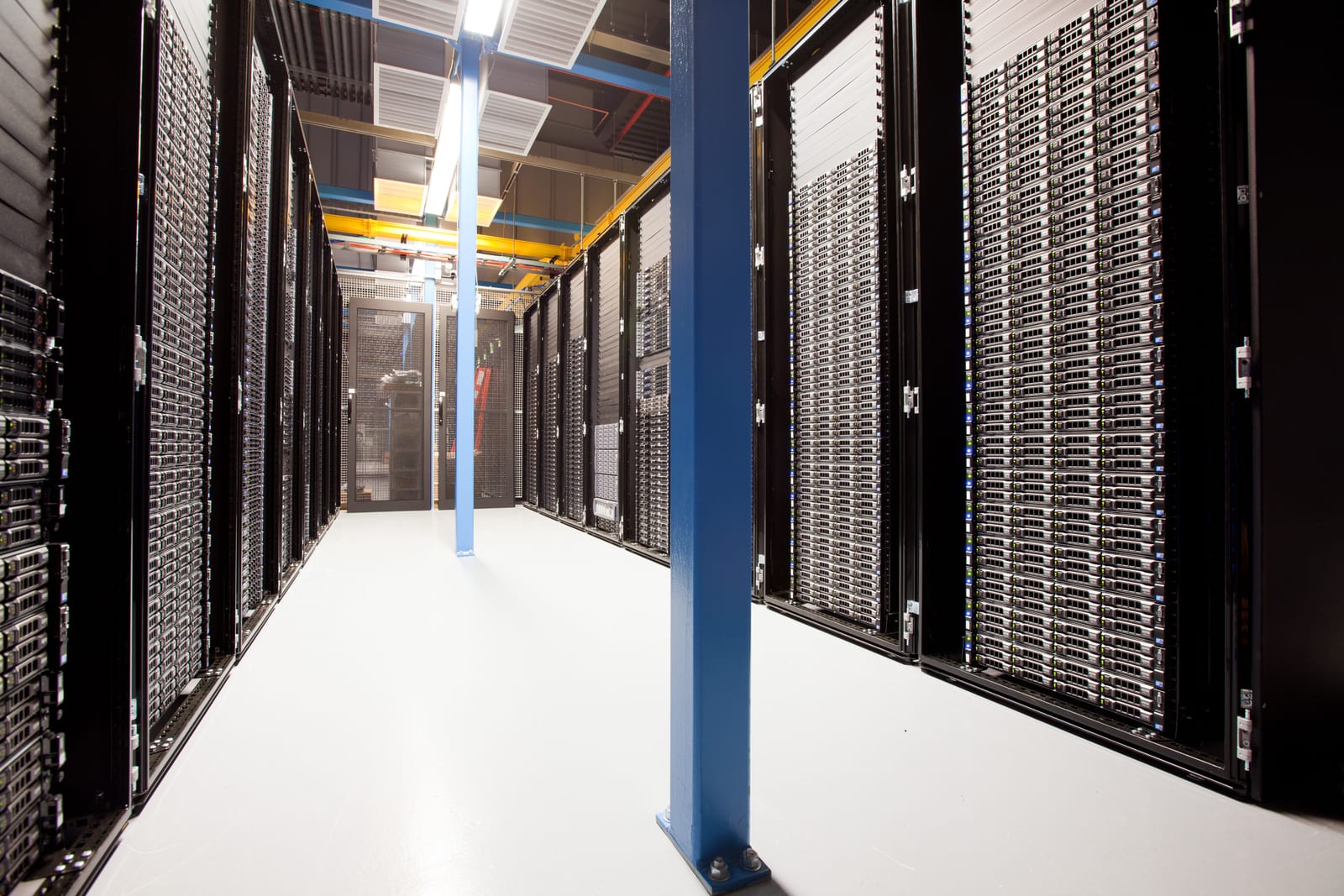
Image context: the cover uses a real Wikimedia server-rack photograph rather than a diagram, logo, or generated visual. It anchors the article in the physical problem Firecracker was designed around: many isolated workloads sharing host hardware, where density only matters if isolation, resource accounting, and operational recovery remain understandable.[9]
The first control surface is an API, not a shell
Early in the talk, the important move is that Firecracker is described less like a hand-operated VM product and more like an engine a higher-level service drives.[1] That framing matches the design documentation. Each Firecracker process encapsulates one microVM, and operators configure the guest through an in-process HTTP API before issuing InstanceStart.[4] The repository's README makes the same control surface explicit: users set vCPU count, memory size, kernel image, boot arguments, network interfaces, block devices, vsock, entropy, pmem, memory hotplugging, logging, metrics, and metadata through documented APIs rather than through an interactive VM console.[2]
That is a bigger design choice than it first appears. Serverless infrastructure does not want a pet VM. It wants a reproducible state machine: create the process, configure the guest, attach the right host resources, start it, observe it, stop it, and clean up. Firecracker's API shape means the platform above it can own scheduling, placement, image selection, network namespace setup, disk files, and lifecycle policy without pretending the VMM is the orchestrator.[2][4][6]
For open-source adopters, that is the first boundary condition. Firecracker is strongest when another system is ready to be the control plane. If a team wants a full virtualization product with device breadth, interactive administration, rich management UI, migration policy, and broad guest hardware emulation, Firecracker will feel intentionally incomplete. If a team already has a scheduler or platform layer and wants a narrow, programmable isolation primitive, the incompleteness is the product.
The jailer is where isolation becomes operational
The talk's security claims are easier to trust when read alongside the jailer documentation.[1][5] KVM gives Firecracker the hardware virtualization boundary, but the host still has a process that must be constrained. The jailer exists to isolate that Firecracker process before the guest starts: it can switch user and group IDs, build a chroot, configure cgroups, join a network namespace, create a new PID namespace, set resource limits, close file descriptors, and then exec the VMM.[5]
That sequence matters because isolation is not a single checkbox. In the NSDI paper, the authors describe the sandbox stack in terms of namespacing, cgroups, chroot, privilege dropping, and seccomp-bpf; the same paper notes that Firecracker was built for AWS Lambda and Fargate-style environments where arbitrary customer code must run with high density and controlled attack surface.[6] The design document also points to seccomp filtering, cgroups, and the jailer as process-level constraints around the VMM.[4]
The engineering lesson is that Firecracker separates "guest isolation" from "VMM process hygiene." A microVM can have a clean guest boundary while the host-side process still needs careful filesystem, namespace, privilege, and resource treatment. The jailer makes that work explicit. It does not eliminate the need for platform discipline, but it gives operators a concrete place to encode that discipline before the microVM is allowed to run.[4][5]
Device restraint is the performance story
Around the architecture section, the most important detail is what Firecracker leaves out. It does not emulate a sprawling PC. The design document says the guest sees a small set of devices: virtio block, virtio net, vsock, a serial console, limited keyboard-controller behavior for reset signaling, and selected KVM-supported interrupt/timer machinery.[4] Network devices are backed by host TAP devices; block devices are backed by files; MMDS gives the guest configured metadata through a narrow service.[4]
This is where the "lightweight" claim becomes concrete. Lightweight is not only a boot-time benchmark. It is a refusal to carry unnecessary surface area into every tenant boundary. Less device emulation means fewer moving parts to secure, fewer performance paths to optimize, and a clearer division between guest concerns and host concerns. Firecracker does not perform network traffic filtering itself; the design notes push that work to the host networking layer around the TAP device.[4] That keeps the VMM from becoming a policy engine.
The NSDI paper's headline numbers are useful but should be read in this context. With a minimal Linux guest, the paper reports memory overhead below 5 MB per microVM and boot to application code below 125 ms, then explains why these figures matter for Lambda's economics and scale-up behavior.[6] Those numbers are not magic properties of virtualization. They are the result of a narrow VMM, a limited device model, careful process isolation, and a service architecture that knows exactly what it needs from the isolation layer.[2][4][6]
Snapshots reveal the real serverless constraint
The later Firecracker story is not just faster cold start. It is state control. The snapshot documentation defines a snapshot as the saved state of a running microVM and its devices, usable later to restore the guest so it can resume execution.[7] Firecracker exposes explicit pause, resume, create-snapshot, and load-snapshot APIs, while the snapshot itself includes files such as guest memory and microVM state.[7]
That sounds straightforward until you read the caveats. Snapshot files and host/API communication are trusted by Firecracker, so users must secure snapshot artifacts themselves with measures such as authentication and encryption. Restored guests may not preserve network connectivity across process boundaries. Configuration for metrics and logs is not saved into the snapshot and must be reconfigured. Loading can use file-backed memory and copy-on-write behavior, which speeds restoration but ties the resumed microVM to the lifetime and protection of the snapshot files.[7]
Those caveats are exactly why the feature matters. Firecracker does not pretend snapshots are a universal checkpointing spell. It exposes a powerful primitive and keeps the operational responsibilities visible. A platform can use snapshots to reduce startup work, pre-warm runtime state, or multiply similar guests, but it must still decide what identity, networking, secrets, metrics, logs, and artifact protection mean after restore.[7] That is the same theme as the rest of Firecracker: the primitive is small because the platform contract is large.
The adoption lesson is density with named boundaries
InfoQ's coverage of the 1.0 milestone is a useful outside reminder that Firecracker matured not as a novelty hypervisor, but as a production microVM layer positioned between traditional VMs and containers.[8] That middle position is the reason it remains interesting for open-source infrastructure. Containers give packaging and process density, but their isolation boundary depends heavily on shared-kernel mechanisms. Traditional VMs give a stronger guest boundary, but their generality can add startup, memory, and management weight. Firecracker's bet is that many serverless and multi-tenant workloads want a carefully reduced VM instead of either extreme.[3][6][8]
The practical adoption filter is therefore strict. Firecracker is a strong fit when a platform team can own kernel images, root filesystems, TAP devices, block files, jailer invocation, cgroup policy, metrics, logs, cleanup, and lifecycle orchestration. It is a weak fit when a small team simply wants a nicer local container runtime or a generic VM manager. The project removes device and management breadth on purpose; the missing breadth has to be replaced by a real control plane, not by wishful thinking.
That is why this video is still worth an annotated viewing. The talk shows an open-source project born from a concrete production constraint, but its lasting lesson is more general: infrastructure primitives should say clearly what they do and what they leave to the layer above. Firecracker's microVM model works because the isolation contract stays named. KVM, API configuration, one process per guest, jailer setup, virtio devices, MMDS, snapshots, and host networking are separate enough to inspect and compose. That is more valuable than a fast-startup slogan, because it tells engineers where the failures will live before the fleet is full.[1][2][4][5][6][7]
Sources
- Amazon Web Services, "Firecracker: A Secure and Fast microVM for Serverless Computing," YouTube video.
- Firecracker project,
firecracker-microvm/firecrackerGitHub repository - README on microVM scope, KVM, OpenAPI control surface, devices, seccomp filters, and jailer. - Jeff Barr, "Firecracker - Lightweight Virtualization for Serverless Computing," AWS News Blog, November 26, 2018 - launch context, open-source scope, Lambda/Fargate framing, startup, and overhead targets.
- Firecracker documentation, "Design" - official design notes on the API, one-process-per-microVM model, VMM/vCPU threads, virtio devices, MMDS, rate limiting, and security layering.
- Firecracker documentation, "Jailer" - production isolation wrapper, uid/gid drop, chroot, cgroup v1/v2 setup, namespaces, resource limits, and process setup.
- Alexandru Agache et al., "Firecracker: Lightweight Virtualization for Serverless Applications," USENIX NSDI 2020 paper PDF - architecture, Lambda migration, isolation tradeoffs, boot, and memory overhead measurements.
- Firecracker documentation, "Snapshotting support" - snapshot contents, pause/resume APIs, memory files, copy-on-write loading, network caveats, and security responsibilities.
- InfoQ, "AWS Firecracker Reaches 1.0, Ready for Production Use," February 2022 - independent OSS coverage of Firecracker maturation and container/microVM positioning.
- Wikimedia Commons, "File:Wikimedia Servers-0051 19.jpg" - source page for the real data-center server-rack photograph used as the cover image.