BOINC can turn a volunteer's spare computing time into useful research, but a calculation finishing on someone's PC is only one stage of the job. Its architecture separates the work being requested, the attempts to perform it, the decision to accept an answer, and the transfer of that answer into a project's own records. Following those stages explains how a distributed research effort can keep moving when computers disappear—or return something wrong.[1][4]
The human setting matters. When Einstein@Home announced its first pulsar discovery in 2010, the credited volunteers included Chris and Helen Colvin in Iowa and Daniel Gebhardt in Germany. Reporting for Scientific American, John Matson found the Colvins preparing for a baby; their successful computer had been moved to the basement to make room for a nursery.[2] These were household machines with other demands on their time. The research infrastructure had to accommodate that ordinary life.
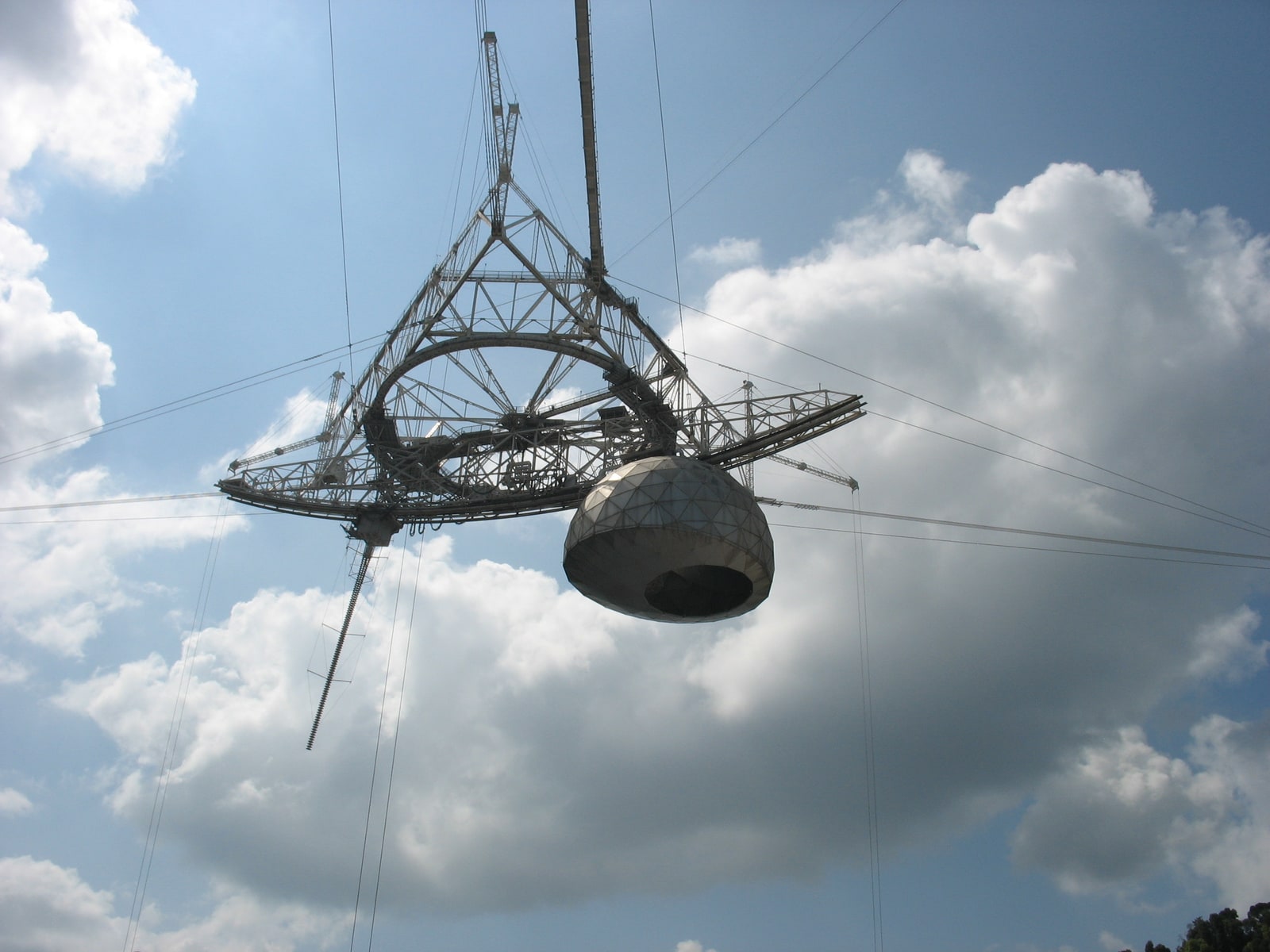
One job can have several attempts
BOINC's terminology contains a useful surprise: a result can exist before anyone has calculated an answer. It is an instance of a job. The job itself is a workunit, and several instances can belong to it.[4]
That distinction lets the server preserve the identity of the scientific task while changing who attempts it. One computer might crash, exceed a resource limit, fail to transfer its files, or simply stop contacting the project. If an instance fails or times out, BOINC can create another, subject to configured limits. A missing volunteer does not have to mean an abandoned workunit.[4]
This also changes how a returned file should be read. It belongs to an attempt, whose output may still need comparison with other attempts. Receiving it answers a transport question. Accepting it requires a separate decision.
Define what counts as agreement
Each application in a BOINC project has a validator. Its first job is a syntax check: are the output files present, and do they have the expected format? When replication is used, it also compares outputs. Under the documented majority rule, equivalent results forming a strict majority are accepted; the others are marked invalid.[5]
The important word is equivalent. A project can supply its own comparison logic, including a tolerance for floating-point values. BOINC provides standard validators and ways to write application-specific ones in C++ or scripting languages.[5] The research team still owns the meaning of a satisfactory answer.
That is a practical division of responsibility. The shared infrastructure manages many attempts and their states. The application decides whether two outputs represent the same calculation closely enough for its purpose. Requiring a valid file format alone would leave that second question unanswered.
Spend extra computation to avoid waiting forever
The project's documented replication example sets min_quorum = 2 and target_nresults = 3: it needs agreement from two results while initially creating three instances. When two successful, agreeing answers have arrived, one becomes the canonical result—the accepted reference output—and the workunit can proceed.[6]
The third computer need not hold everything up. If its answer arrives later, the validator compares it with the canonical result to determine credit. Another example shows how an errored instance can trigger a replacement while other attempts remain outstanding.[6]
Those settings describe an exchange: more donated computation is spent on the same task in return for another route to timely agreement. Three instances do not represent three distinct scientific questions. Nor does the example imply that every BOINC project always runs three copies. The replication policy belongs to the application and workload.
Different machines complicate the vote
Even honest, functioning computers can produce slightly different floating-point answers. BOINC's documentation therefore offers several approaches. A numerically stable application may compare outputs within a tolerance. Homogeneous replication instead directs copies toward machines expected to produce identical numerical results. A separate option keeps a workunit's instances on the same application version, avoiding a mixture of CPU and GPU versions.[7]
Replication itself is optional. An application with a strong independent correctness check can validate one result. Adaptive replication can reduce repeated work for machines with a measured record of low error rates.[7]
These choices prevent a simple equation between “more copies” and “more certainty.” My reading of the design is that the comparison rule deserves as much attention as the copy count. Agreement between executions can expose an unreliable attempt; it cannot, by itself, establish that the algorithm or scientific assumptions shared by those executions are right.
Acceptance still needs a destination
After validation comes assimilation. An assimilator is generally specific to the research application: it might move output files into permanent storage, or parse them and insert information into a database. BOINC runs these programs as server daemons, with an --app argument identifying the application whose jobs they handle.[8]
This final separation is easy to overlook. A validator establishes which output the project accepts. An assimilator puts it where the project's next stage can use it. For an operator investigating a stalled workflow, that suggests distinct questions: has an attempt returned, has an answer been accepted, and has the accepted output reached its destination?
The Colvins' basement computer makes a good image to keep beside that machinery. Volunteer computing asks research to work around people who can move a PC, switch it off, or leave a project. BOINC's explicit stages make those interruptions manageable while preserving a place for the research team's judgment about what an answer means.
Sources
- BOINC, official source repository — open-source volunteer-computing software and project documentation.
- John Matson, “Volunteers' Idle Computer Time Turns Up a Celestial Oddball,” Scientific American, August 12, 2010 — independent reporting and interviews with Einstein@Home participants.
- Paulo Freire, “Pictures of the Arecibo 305-m radio telescope,” Max Planck Institute for Radio Astronomy personal website — February 2007 photographs; the platform photograph is credited to his father.
- BOINC documentation, “Handling completed jobs” — workunits, instances, failure outcomes, retry limits and canonical results.
- BOINC documentation, “Validators” — syntax checks, replica comparison, majority agreement and application-specific validation.
- BOINC documentation, “JobReplication” (headed “Redundancy and errors”) — worked examples of quorum, extra instances, late returns and replacement attempts.
- BOINC documentation, “Job replication” — numerical differences, homogeneous replication, application-version constraints and adaptive replication.
- BOINC documentation, “Assimilation introduction” — application-specific processing of completed outputs and daemon configuration.