Apache OpenDAL becomes interesting at the point where "just use the S3 SDK" stops being a harmless sentence. A single service writing to one bucket can live with provider-native calls. A database engine, build cache, observability pipeline, backup tool, or internal platform that has to support S3, GCS, Azure Blob, HDFS, local files, and sometimes stranger backends is solving a different problem. It is no longer choosing storage. It is choosing where the storage boundary belongs.
OpenDAL's pitch is that the boundary should sit behind one data-access layer. The project describes itself as an open data access layer for interacting with diverse storage services, and its own vision document is careful about the direction of gravity: OpenDAL is object-storage first, optimized for modern HTTP-based storage patterns, while still extending outward through services, language bindings, and layers.[1][7] That makes it less like a database, less like a filesystem, and more like a disciplined adapter plane for software that wants storage pluggability without importing every provider's operational quirks into product code.
This ecosystem map is therefore not about whether OpenDAL is "better than S3." That is the wrong comparison. The right comparison is between three operating models: embedding provider SDKs directly, using a narrower engine-specific storage abstraction, or adopting a common access layer whose public shape is Operator, Service, and Layer.[2][3] OpenDAL matters only if that third model lowers your total system complexity.
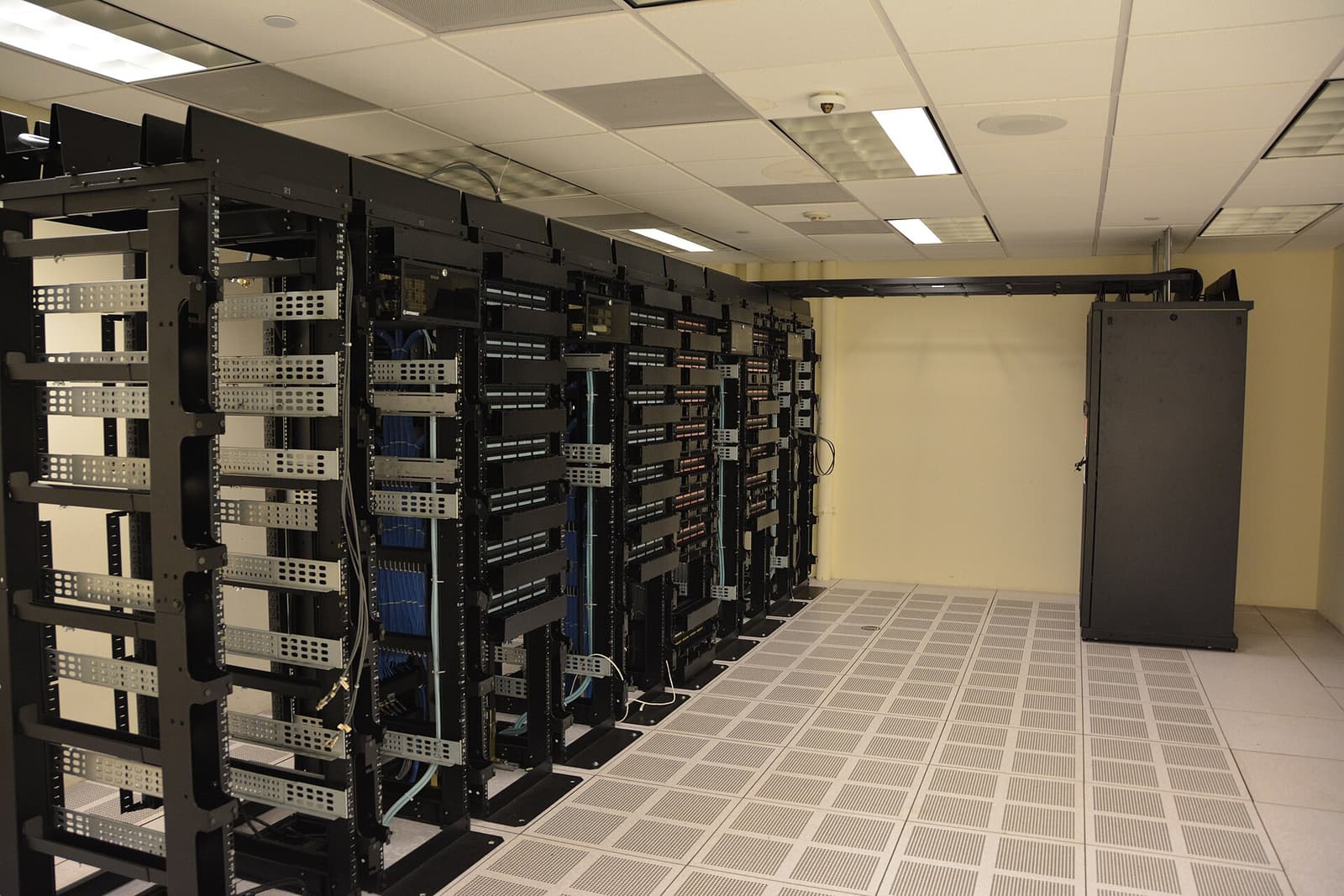
Image context: the cover uses a real photograph of data-center server racks rather than a logo or diagram. The visual point is that OpenDAL's strongest use case is infrastructural. The value appears when storage work sits under databases, pipelines, caches, and platforms that need common policy without pretending all backends behave identically.[8]
The database-engine lane
The first OpenDAL lane is cloud-native data infrastructure. The project's comparison docs name Databend, GreptimeDB, RisingWave, Vector, and other systems as OpenDAL users, while the vision document groups infrastructure builders around databases, data processing pipelines, backup systems, and archive tools.[1][4] That is the natural habitat. These projects do not merely upload a file at the end of a request. They place storage inside query execution, compaction, state management, cache fill, restore, or ingestion paths.
For that class of software, the useful promise is not "write once, run anywhere" in the naive sense. Object stores differ. Filesystems differ. Listing behavior, multipart behavior, copy support, presigning, consistency, latency profile, authentication, and retry economics do not magically converge because a library exposes a common interface. The more realistic promise is that product code can talk to one operator surface while a storage layer owns the ugly comparisons deliberately.
That matters for compute-storage-separated systems. If durable state lives in object storage and compute nodes come and go, then storage access becomes part of the engine contract. A database team does not want every feature team hand-rolling its own S3 client, timeout defaults, tracing setup, pagination behavior, and error translation. OpenDAL's design pushes that logic toward a shared Operator and service configuration model.[2][3] Done well, this keeps storage complexity visible but centralized.
The failure mode is treating abstraction as equivalence. A database that depends on atomic rename, strong list-after-write assumptions, or cheap random small writes cannot wave those requirements away by changing a backend string. OpenDAL can help isolate the decision, but the engine still needs a capability matrix and backend-specific tests. In this lane, OpenDAL is a boundary tool, not a semantic eraser.
The developer-tool lane
The second lane is less glamorous but often more immediately useful: developer tools and operational utilities that need storage as a destination rather than as their core identity. The OpenDAL vision document names application-developer examples such as sccache, Vector, and Rustic, with use cases around CLI tools, web services, and backup/archive work.[1] These tools are not storage companies. They need storage support because users arrive with different buckets, credentials, regions, and procurement constraints.
This is where direct SDK sprawl becomes expensive. A tool that starts with AWS S3 support often gets asked for MinIO, Google Cloud Storage, Azure Blob, local filesystem, WebDAV, HDFS, or enterprise-flavored S3-compatible endpoints. Each new backend can pull in separate authentication paths, dependency trees, retry behavior, documentation, and test fixtures. At small scale, that is annoying. At plugin scale, it becomes product shape.
OpenDAL's operator model gives these tools a way to keep the user-facing contract narrower: configure a service, build an operator, then perform storage operations through one API pattern.[2][3] Layers add the more operational part of the story. OpenDAL's own materials frame layers as the place for cross-cutting behavior such as retry, logging, metrics, tracing, timeout, and throttling.[7] That is exactly the kind of behavior developer tools usually bolt on too late.
The boundary condition is team maturity. If your tool has one storage backend and no credible user demand for a second, OpenDAL may be extra indirection. If your tool already has three or four storage code paths and every new backend opens the same design debate, the abstraction starts paying rent. The sign is not "we dislike SDKs." The sign is "our storage behavior has become product policy."
The platform lane
The third lane is internal platform development. This is where OpenDAL can be more strategically useful and also easier to misuse. Platform teams often want one sanctioned way for services to read and write blob-like data. They want observability hooks, retry policy, credential placement, endpoint allowlists, timeout defaults, and backend substitution to be governed somewhere other than individual service code.
OpenDAL gives that kind of team a concrete vocabulary. Operator is the entry point for public asynchronous APIs; cloned operators share internal state such as HTTP client and runtime, and layers can modify internal context, so the docs recommend adding layers before interacting with storage.[2] That detail is not just API trivia. It says the storage client is part of process architecture. If logging, metrics, tracing, retry, or HTTP client choice are added inconsistently after use begins, the platform has not really standardized the boundary.
The platform win is strongest when OpenDAL sits behind an internal wrapper or paved-road module. Service teams should not have to rediscover which layers are mandatory, which operations are allowed, which backends are production-supported, or which error classes trigger retry. A platform can expose an approved operator construction path and keep the deeper service matrix in one place.
The danger is centralizing before learning. A platform team that declares "all storage goes through OpenDAL" before it understands workload shapes will create a new bottleneck. Some services need raw provider features. Some need streaming behavior. Some need native event hooks or provider-specific lifecycle controls. The adoption pattern should start with repeated pain across backends, not with abstraction enthusiasm.
How OpenDAL differs from adjacent storage abstractions
OpenDAL is not alone in this area. The project's own comparison with Apache Arrow's object_store is useful because it avoids a fake rivalry. Both are Apache-licensed and both address object-storage access, but their center of gravity differs.[4] object_store is part of Apache Arrow and naturally fits the DataFusion and Arrow ecosystem. OpenDAL is also hosted by Apache, but presents itself as a broader data-access layer with many service backends, layers, and language binding ambitions.[4][7]
That means the choice should follow integration gravity. If the storage abstraction is mainly inside an Arrow/DataFusion query stack, object_store may be the more native fit. If the project needs a storage layer across multiple products, languages, provider classes, and operational policies, OpenDAL becomes more plausible. The most expensive mistake is to choose by feature checklist alone. The better question is where the abstraction will be maintained and who will own its production behavior.
The project's 2024 graduation note is relevant here because it shows the community was already thinking about this problem as more than backend count. At graduation, OpenDAL reported support for 59 services, but explicitly said stability should depend on integration tests and production users, and that the post-graduation focus would be improving stable services, documentation for bindings, internal design docs, and production adoption.[7] That is the right maturity signal for an access-layer project. Breadth without stability would be a liability.
Maintenance signal in 2026
As of 2026-05-14T11:02:16Z UTC, the GitHub API reported 5,060 stars, 748 forks, 290 open issues, and a most recent push at 2026-05-14T06:43:11Z for apache/opendal.[5] The release feed showed v0.56.0 published on 2026-05-01, following v0.55.0 on 2025-11-24 and several 2025 releases before it.[6] Those numbers do not prove the project belongs in a production stack, but they do show an active project rather than a stalled adapter experiment.
The governance signal is stronger than the raw star count. OpenDAL graduated from the Apache Incubator to a top-level Apache project in January 2024.[7] For a storage abstraction, that matters because the project has to stay credible across vendors and users. If the abstraction is controlled too tightly by one product's roadmap, adopters will suspect every design decision. Apache governance does not guarantee technical fit, but it lowers one kind of strategic risk.
The adoption checklist should be conservative:
- Use OpenDAL when storage backend diversity is already real or clearly imminent.
- Require backend-specific integration tests for the operations your product actually uses.
- Keep a written capability matrix for list, stat, copy, presign, multipart, streaming, and delete behavior.
- Put retry, timeout, logging, tracing, and metrics policy in the operator construction path, not in call sites.
- Treat language binding maturity as a project-specific risk, especially if you are not building on the Rust core.
- Keep escape hatches for provider-native features that belong outside the common layer.
The conclusion is narrow but useful. Apache OpenDAL is strongest when storage access is becoming a repeated infrastructure decision across engines, tools, or platforms. It gives teams a shared operator surface, a layer model for cross-cutting behavior, and a community-governed place to concentrate backend work.[1][2][3][7] It is weakest when teams expect it to make storage semantics universal. The real value is not pretending every backend is the same. The value is having one explicit place to manage the ways they are not.
Sources
- Apache OpenDAL, "Vision" - object-storage-first design direction, user categories, extensible architecture, and typical infrastructure/application/platform use cases.
- Apache OpenDAL Rust docs, "
Operator" - operator construction, layer behavior, shared internal state, and public API entry-point model. - Apache OpenDAL Rust docs, "Concepts" -
Operator,Service, and abstraction model for unified storage access. - Apache OpenDAL Rust docs, "Comparison with object_store" - comparison with Apache Arrow
object_store, domain overlap, ownership, and listed user projects. - GitHub API,
apache/opendalrepository metadata - stars, forks, open issues, description, default branch, and latest push timestamp at article creation. - GitHub API,
apache/opendalreleases feed - current release cadence includingv0.56.0published on 2026-05-01. - Apache OpenDAL blog, "Apache OpenDAL is now Graduated" (January 22, 2024) - top-level-project graduation, service count, community metrics, and post-graduation stability/documentation priorities.
- Wikimedia Commons, "File:Datacenter Server Racks (22370909788).jpg" - photographic source page for the article image.