In 1976, a church in Halifax advertised ten bronze bells for sale. The asking price was $25,000. The bells lay under canvas on the church lawn, and the woman who had given them in memory of her family had agreed they could go. A Baptist congregation in Wolfville offered $10,000. Had the two churches settled on a price, people in another Nova Scotia town might have spent their Sundays listening to the bells that now sound over Halifax Harbour. [1][2]
Barbara Orr had lost her parents and siblings in the Halifax Explosion on December 6, 1917. The largest bell carries her parents’ names, Samuel and Annie, followed by the names of their children. At the foot of the inscription Barbara identified herself simply as their daughter. A visitor to the memorial on Fort Needham today looks down toward the Narrows, where the ships Imo and Mont Blanc collided. Nothing in the wording on that bell required anyone to put it there. How did a daughter’s gift come to mark this particular spot for a whole city? [2]
What the church could keep
When Orr gave the bells in 1920, their home already commemorated a loss. The explosion had destroyed Grove Presbyterian Church on one slope of Fort Needham and Kaye Street Methodist Church on the other. The surviving congregations pooled funds for a temporary building they called the Tarpaper Church. They worshipped together there and eventually took a common name, United Memorial Church. Orr played the bells herself at their dedication in 1921. Someone listening from the street could hear the gift without ever going inside to read a name. [1][2]
That way of remembering depended on a building strong enough to take the strain. The bells weighed more than three tons between them. By the mid-1960s their weight and vibration had damaged the tower, and the ringing stopped. The bells came down in 1975. Selling them would have let the church buy a lighter set and put the balance toward its expenses. Orr’s consent matters here. It left the congregation free to preserve something a neighbour could hear even if the bronze bearing her family’s names went elsewhere. [1][2]
The Wolfville offer fell below what the church would accept. By 1979 the congregation was asking whether Halifax would buy the bells. City officials were prepared to consider the expense of putting them back into service if the church would donate them. The trustees agreed in principle, then spelled out what they wanted protected. A 1982 resolution instructed negotiators to see that the bells retained their identity and that ownership stayed with the trustees if the city failed to carry out the project. After years on the lawn, handing the bronze to another custodian was worth doing only if that custodian could give it a future. [1]
Two places to play
The hill was a choice people had to argue for. Seaview Memorial Park in Africville was also under consideration. In the winter of 1984 the citizens’ bells committee pressed council for Fort Needham, and a public hearing on February 29 took up the location and design. On Fort Needham the bells would stand between the sites of the two lost churches, within sight of the water where the disaster began. A person attending a civic ceremony and a former parishioner retracing a Sunday walk could recognize quite different things from the same hill. [2][3][4]
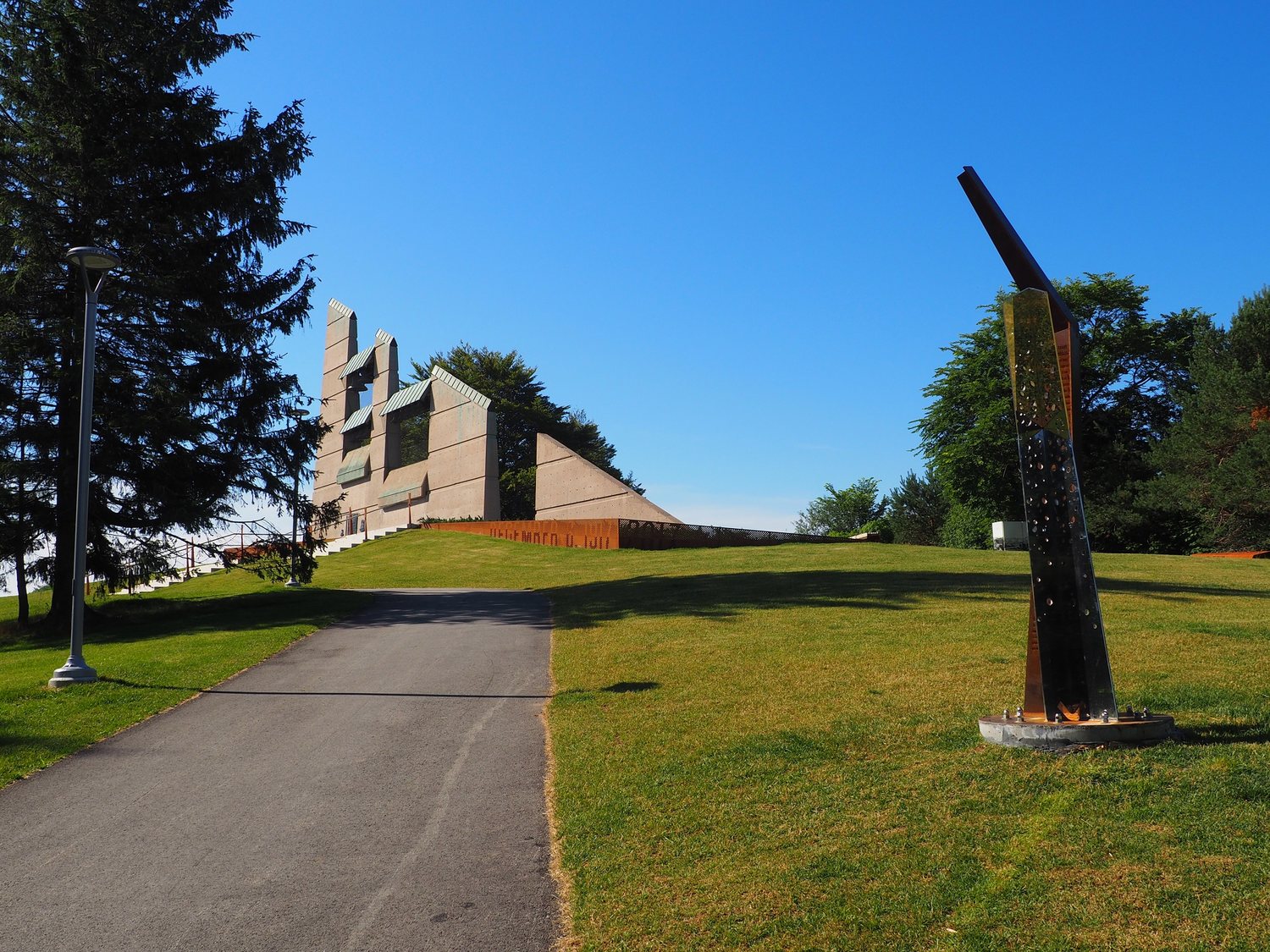
Keith Graham’s winning design gave the bells a row of openings in a steep-sided monument. Electrification allowed a player to sound them from the base of the tower or from a remote keyboard at the church. That second keyboard settled a question a deed of gift could scarcely answer. Once the bells stood on public ground, the congregation could still play them. On June 9, 1985, Barbara herself played at the dedication, sixty-four years after she had done the same in church. [2][4]
When the first December anniversary at the tower came around, survivors and their families put a time capsule inside. Alongside photographs of the ruined city, the committee enclosed the specifications for electrifying the bells and a poster for a fundraising fun run. In 2017, when the capsule was opened, one of those present was Anne Louise Desrosiers, who had helped her grandmother, survivor Millicent Swindells, place it there. The poster and the wiring specifications may seem modest company for the photographs. They answer a question the pictures of 1917 leave open. Once the people who remembered the explosion were gone, who would make it possible for Halifax to hear Barbara Orr’s bells? [4]
Sources
- Halifax City Clerk’s Office, Fort Needham memorial bells file, including the November 30, 1983 memorandum to the mayor and church correspondence. Halifax Municipal Archives, 102-5-1-54.
- Veterans Affairs Canada, Halifax Explosion Memorial Bell Tower. Site photographs, inscription and dedication history.
- Halifax Municipal Archives, public hearing file on the proposed Fort Needham memorial, February 29, 1984.
- Halifax Municipal Archives, Halifax Explosion Memorial Bell Tower time capsule. Committee chronology, custodial history and inventory, collection CR58.