As of 2026-06-24 23:31 UTC, the soft-cheese Listeria outbreak has moved from a narrow product alert into a household and retail cleanup problem. CDC's June 24 advisory lists 12 cases, 10 hospitalizations, one death, and four affected states, with an open investigation and a recall already issued.[1] The immediate instruction is blunt: do not eat recalled soft cheese; throw it out or return it; clean refrigerators, containers, and surfaces that may have touched it.[1]
The reason this story deserves more attention than an ordinary recall notice is that Listeria does not behave like a simple "bad batch" problem once contaminated food has spent time in a refrigerator. CDC says the bacteria can survive in the refrigerator and spread to other foods and surfaces.[1] FDA's own Listeria guidance makes the same point in operational terms: wipe spills, wash refrigerator walls and shelves, clean cutting boards and counters, and sanitize surfaces that may have contacted contaminated food.[5] In other words, the risk boundary is no longer the label alone. It is the cold space around the label.
Fact File
| Item | What is known now | Confidence note |
|---|---|---|
| Current case count | CDC lists 12 cases, 10 hospitalizations, one death, and four states in its June 24 food safety alert.[1] | Strong for CDC's current advisory; outbreak counts can change as testing and interviews continue. |
| Recall scope | Clover Hill Dairy expanded its recall on June 18 to include all Clover Hill Dairy brand cheese products on the market.[3] | Strong for recall scope; consumers still need to check manufacturer information and possible relabeling. |
| Distribution | CDC says affected Clover Hill products were distributed in North Carolina, New York, Virginia, Maryland, New Jersey, and Washington, DC, and could have moved further.[1] | Strong for confirmed distribution; wider movement remains possible. |
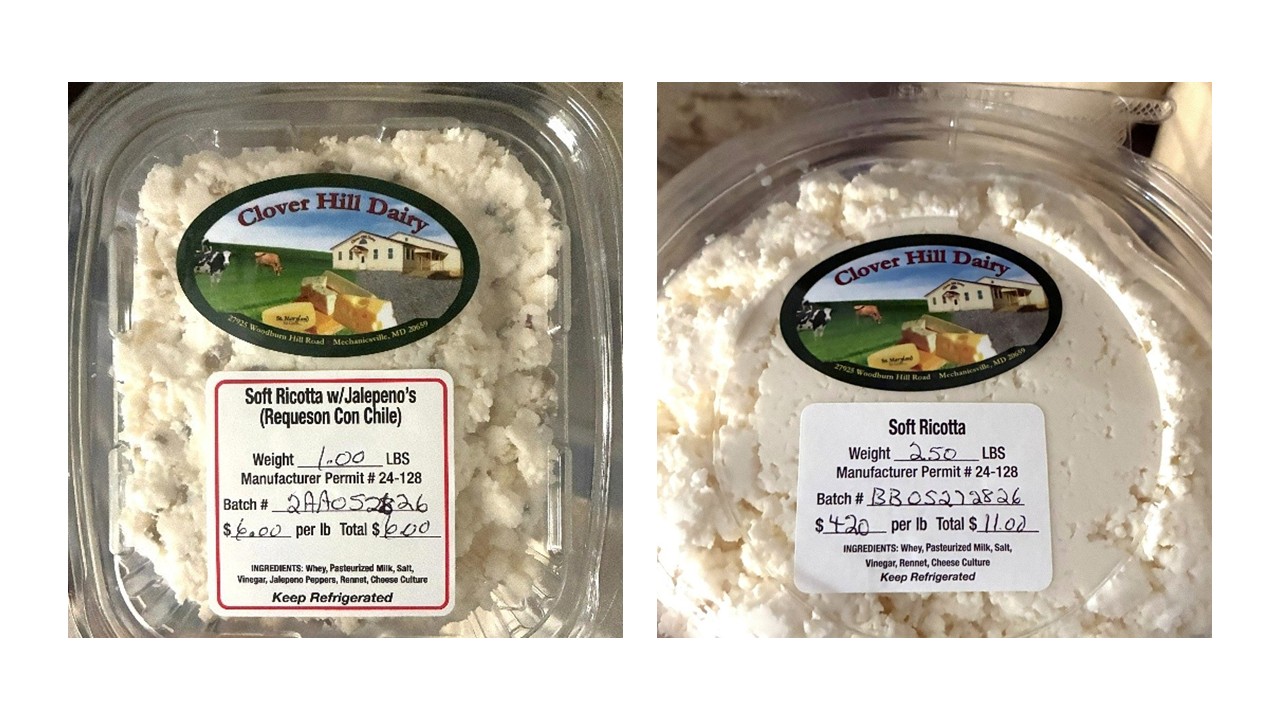
| Product clue | FDA tells consumers to look for Clover Hill Dairy manufacturer permit or plant number 24-128 when package information is available.[2][3] | Useful but incomplete; FDA also warns branding, labeling, and coding may vary. |
| Why cleanup matters | CDC and FDA both say Listeria can survive under refrigeration and spread to other foods or surfaces.[1][5] | Strong; this is the core action boundary after disposal. |
What Changed
The latest change is the CDC case count. FDA's outbreak page still carries detailed sampling and recall history, including earlier reports that requeson product samples and one environmental sample matched the outbreak strain.[2] But CDC's June 24 advisory is the live public-health count: more illnesses than the earlier FDA update, more hospitalizations, and a broader state footprint.[1][2]
That difference is not a contradiction so much as a reminder that outbreak pages move on different clocks. CDC owns the public-health case line. FDA owns much of the product-tracing, recall, and food-safety investigation record. Maryland's health department owns the state advisory for the facility located in Mechanicsville, Maryland. Reading only one page can make the story look smaller than it is.[1][2][4]
The practical shift is from "which tub did I buy?" to "what did that tub touch?" CDC names Clover Hill Dairy soft and semi-soft Spanish-style cheese varieties including cuajada, soft cuajada, ricotta/requeson, and soft ricotta with jalapenos, plus mild, hard, smoked, flavored, and pepper cheese lines after the expanded recall.[1] FDA's recall notice says products may have been relabeled under names including Kesso, Quesos La Ricura, Izalco, De Mi Pueblo, and Rio Lindo, and urges consumers to check the manufacturer permit number when available.[3]
That matters because a relabeled or repacked cheese can defeat the usual consumer habit of scanning only the brand on the front. FDA says the recalled cheese was likely relabeled or repacked before sale, so branding, labeling, and coding may vary by purchase location.[2] CDC separately notes that Nelson & Isa Lacteos recalled requeson sold in one-pound plastic clamshells at New York retail locations from May 15 to May 28, 2026, and that the cheese was likely repacked at stores.[1] The label, then, is a clue, not a guarantee.
Who Should Act First
For households, the first group is anyone who bought fresh soft cheese, ricotta/requeson, cuajada, or Clover Hill-linked cheese in the affected distribution area. The action is not to taste-test, smell-test, or trim. CDC says recalled cheese should not be eaten and should be thrown away or returned.[1] FDA says consumers should check refrigerators and freezers and discard product if they cannot tell whether frozen cheese is part of the recall.[2]
For people at higher risk, the threshold is lower. CDC says Listeria is especially harmful to pregnant people, adults 65 or older, and people with weakened immune systems; in pregnancy, illness may be mild for the pregnant person but can cause pregnancy loss, premature birth, or life-threatening infection in a newborn.[1] CDC's safer-food guidance also treats queso fresco-type cheeses, including requeson or similar fresh soft cheeses, as riskier choices for pregnant people whether made from pasteurized or unpasteurized milk.[6]
For retailers, restaurants, and farmers-market sellers, the issue is inventory plus contact surfaces. CDC says businesses should not sell or serve recalled cheese and should wash and sanitize items and surfaces that may have contacted it.[1] FDA's outbreak food-safety tips add the operational checklist: clean refrigerator walls and shelves, cutting boards, countertops, utensils, display cases, food-storage units, and reusable containers that may have touched recalled or potentially contaminated food.[7]
Decision Impact
Next 24 hours: households in the distribution area should inspect refrigerators and freezers for Clover Hill Dairy-linked products, including repacked or relabeled cheese. The key identifier, if present, is manufacturer permit or plant number 24-128.[2][3] If the cheese is frozen without original packaging and cannot be identified, FDA's advice is to throw it away.[2]
Next 7 days: retailers and restaurants should treat this as a sanitation and communication event, not simply a stock pull. If recalled cheese was cut, repacked, displayed, sampled, served, or stored near other foods, the useful question is what surfaces, cases, knives, boards, containers, and customer-facing packages may have been exposed.[1][7]
Next 30 days: the watch item is whether CDC and FDA identify additional products, states, or retail channels. CDC explicitly says it and FDA are working to identify any other products linked to the outbreak.[1] FDA says its investigation is ongoing and that additional products may be affected as testing continues.[2]
Scenarios
Base case: the expanded recall and surface-cleaning advice contain most consumer exposure. Additional illnesses may still be reported because symptoms can start the same day or as late as 10 weeks after eating contaminated food, but the source trail stays centered on Clover Hill-linked cheeses.[1]
Wider-product case: further testing or traceback links more product lines, relabeling routes, or retail locations to the outbreak. This would make the manufacturer permit number and store-level purchase history more important than the package brand.[2][3]
Household-spread case: the recalled cheese disappears from the refrigerator, but Listeria persists on shelves, containers, cutting boards, or other surfaces. This is the scenario the cleaning guidance is trying to prevent, and it is why the article's main frame is refrigerator risk rather than product recognition alone.[1][5][7]
Action Checklist
- Do not eat, sell, or serve recalled Clover Hill Dairy-linked cheese; return it or throw it away.[1][2]
- Check for manufacturer permit or plant number 24-128, but do not rely on brand name alone because FDA says relabeling and repacking may vary.[2][3]
- Clean and sanitize refrigerator surfaces, containers, utensils, cutting boards, counters, and display areas that may have touched recalled cheese.[1][7]
- People who are pregnant, 65 or older, or immunocompromised should treat fresh queso fresco-type cheeses such as requeson as a higher-risk category and call a healthcare provider promptly if compatible symptoms follow exposure.[1][6]
- Invalidate the base case if CDC adds states, FDA identifies additional product categories, or official guidance shifts from recall cleanup to a broader distribution warning.[1][2]
Sources
- CDC, "Listeria Outbreak Linked to Soft Cheese" (June 24, 2026).
- FDA, "Outbreak Investigation of Listeria monocytogenes: Soft Cheese (June 2026)" (current outbreak advisory).
- FDA, "Clover Hill Dairy Expands Recall to Include All Clover Hill Dairy Brand Cheese Due to Possible Health Risk" (June 18, 2026).
- Maryland Department of Health, "Consumer advisory expanded for all Clover Hill Dairy cheese products due to continued risk of foodborne illness" (June 14, 2026 advisory page).
- FDA, "Listeria (Listeriosis)" (foodborne pathogen guidance).
- CDC, "Safer Food Choices for Pregnant Women" (food-safety guidance).
- FDA, "Food Safety Tips for Consumers & Retailers During an Outbreak of Foodborne Illness."