As of 2026-10-27 03:35 UTC.
UNESCO and Sofitel Legend announced a global heritage partnership on October 26, with Hanoi's Metropole hotel as its first location. The programme proposes pottery workshops, coffee experiences and specialist visits to the Imperial Citadel of Thăng Long, alongside training for hotel staff.[1]
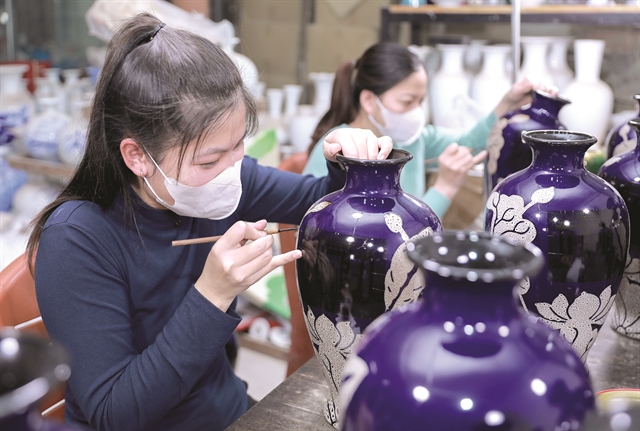
The announcement comes as Hanoi's craft communities develop tourism plans of their own. Two days earlier, Việt Nam News reported on craftswoman Hà Thị Vinh's proposal for a living museum in Bát Tràng: a visitor experience built around residents, working spaces and family histories. Her project has approval in principle but still needs further development and approval.[2]
What the partners have committed to
The announcement sets out four strands: work with local artisans, train hotel teams, host cultural activities inside hotels, and support UNESCO through voluntary guest donations, including loyalty points. The rollout will begin at the Metropole during its 125th anniversary year, then extend to other Sofitel Legend properties.[1]
The status of the evidence matters:
- Confirmed announcement, October 26: Accor's release describes the partnership and initial activities.[1]
- Still unspecified in that release: experience prices, artisan payment arrangements and a dated schedule for expansion.[1]
- Not yet established: whether the programme produces sustained gains for participating communities. An announcement cannot supply that outcome evidence.
The workshop already has a future to negotiate
Vinh's proposal is part of a wider effort to make craft livelihoods viable. The local report describes competition from mass production, changing buying habits and the need to attract younger workers. It also reports a practical warning from tourism executive Lê Hồng Thái: activities need defined prices, durations, group sizes, guides and visitor facilities before operators can reliably sell them.[2]
These are separate initiatives; the reporting does not establish that Vinh's living museum has become part of the hotel programme. Their shared setting nevertheless makes the operational questions immediate. A visit needs to fit the workshop's working day. Someone must decide how many visitors an artisan can teach, what preparation costs, and how that time is paid.
There is an established conservation benchmark for those decisions. The International Council on Monuments and Sites, or ICOMOS, adopted its revised cultural heritage tourism charter in November 2022. Its fourth principle calls for community participation in governance, equitable distribution of tourism benefits and decent employment. It also recognizes communities' own access to, and enjoyment of, heritage.[5]
Applied here, that guidance points toward agreements in which practitioners help design the experience and understand its financial terms. It is a framework for assessing implementation, rather than evidence that these arrangements already exist. A successful booking can be counted immediately; the ability to keep teaching a craft takes longer to demonstrate.
The citadel has a conservation timetable of its own
The proposed citadel visits involve a place with layers that a single historical label can obscure. UNESCO's listing describes an eleventh-century imperial citadel built over an earlier fortress, with archaeological remains and standing structures recording centuries of political life. Its central sector entered the World Heritage List in 2010. The listing concerns that defined property.[3]
That distinction helps readers interpret the partnership: collaboration with UNESCO and inscription on the World Heritage List are different relationships. A hotel's participation does not extend the citadel's designation to the hotel.
The site's conservation work is also subject to continuing scrutiny. In its 2026 decision, the World Heritage Committee supported the first phase of a revised plan, with an exception for reconstructing the Kinh Thien Gate because more evidence was needed. It found the proposed second phase insufficiently substantiated for support at that stage. The committee also sought stronger archaeological and interpretation planning, with a further conservation report due by December 1, 2027.[4]
Those findings concern management of the heritage property; they are not a judgment on the newly announced hotel partnership. They do explain why a visitor programme must work within conservation decisions that have their own evidence requirements and timetable. Privileged access is a description of an experience, not permission to bypass those requirements.
What would count as progress
For travelers and cultural operators, the next useful information is operational. The following are possible paths, not forecasts:
- Base case: the programme becomes bookable as named hosts, dates and prices are published. That would establish delivery, while leaving longer-term benefits to be assessed.
- Upside: practitioners report repeat paid work, influence over presentation and time or resources for teaching successors. Those findings would strengthen the preservation claim.
- Downside: participating workshops report disruption, weak compensation or little say over the programme. That evidence would call for redesign even if visitor demand is strong.
A short follow-up checklist keeps those tests concrete:
- Within 24 hours: treat the release as an announcement; confirm availability directly before making plans.
- Over seven days: look for named local providers and clear terms describing the host's role.
- Over 30 days: seek practitioner accounts and evidence of payment or training, alongside guest feedback.
These are suggested review intervals, not promised launch deadlines. Published operating terms or credible accounts from participating artisans could change this early assessment. For now, the partnership's contribution remains a proposition to be tested in the workshop and at the heritage site.
Sources
- Accor, announcement of the Sofitel Legend–UNESCO heritage partnership, October 26, 2026 — commitments, Hanoi launch and proposed experiences.
- Minh Hằng, “Hà Nội's craft villages seek new lease of life,” Việt Nam News, October 24, 2026 — artisan and tourism-industry reporting; also the source of the VNA/VNS workshop photograph.
- UNESCO World Heritage Centre, Imperial Citadel of Thang Long–Hanoi listing — designated property, historical layers and 2010 inscription.
- UNESCO World Heritage Committee, Decision 48 COM 7B.25, 2026 — paragraphs 7–10 and 13–15 on reconstruction evidence, conservation planning and the next report.
- ICOMOS, cultural heritage tourism charter adopted in November 2022 — particularly Principle 4 on community participation, benefits and employment; English–Spanish PDF.