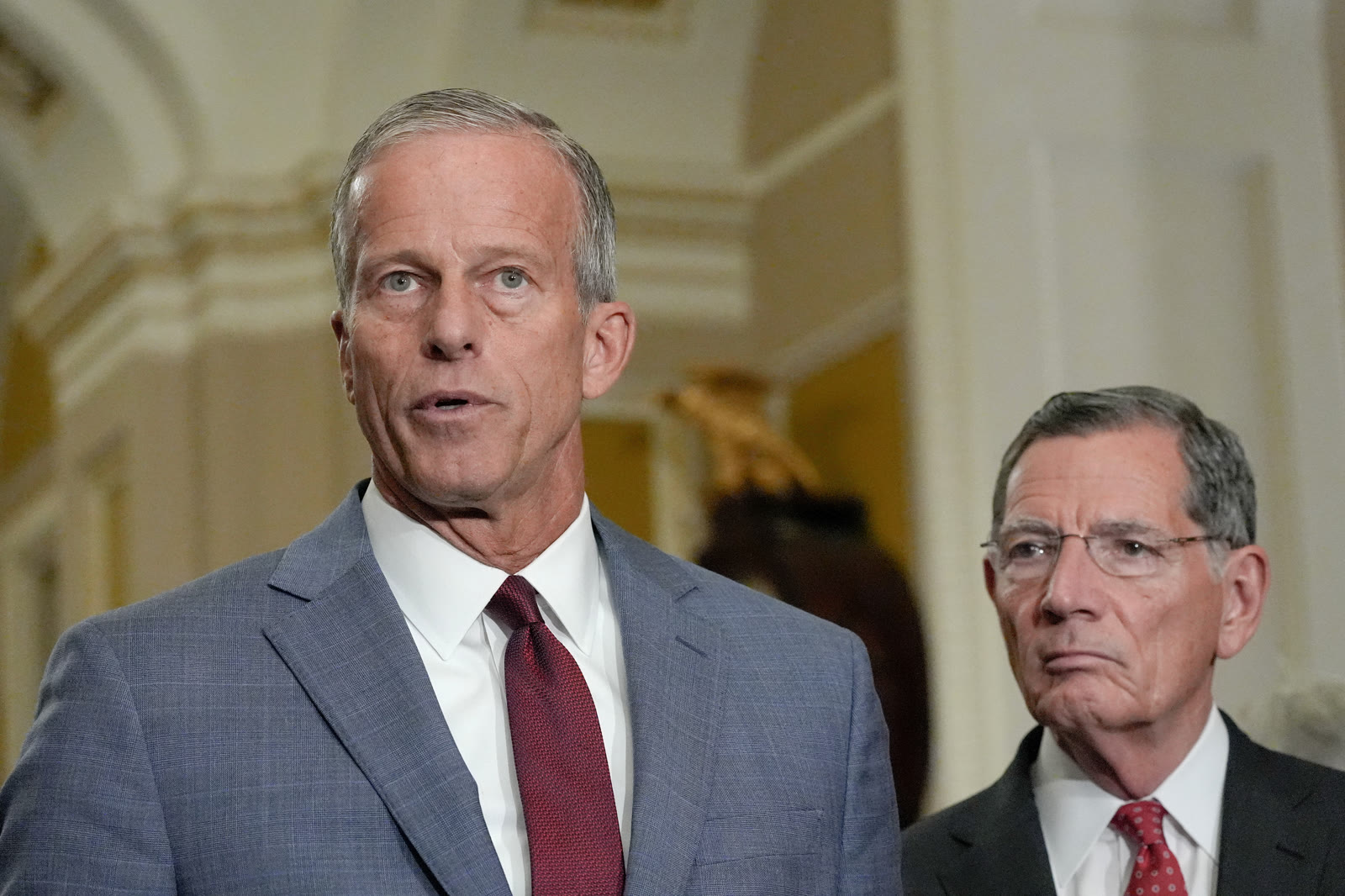
As of 2026-08-09 07:36 UTC, the United States Senate had passed a short-term federal funding measure by 90 votes to 6. If enacted, it would generally hold agency funding at current levels through December 11, moving the next government-wide funding deadline beyond the November midterm election.[1][2]
That is a large bipartisan Senate majority. It is not a completed law.
The House must still agree to the Senate package, and the president must sign it, before the measure can alter the funding calendar. Until those steps occur, the operative boundary remains the end of the current fiscal year on September 30.[1][5]
The precise headline, then, is not “shutdown averted.” It is “Senate clears its version early and sends the decision back to the House.”
What passed, and what did not
| Checkpoint | Verified position at the cutoff | Confidence and boundary |
|---|---|---|
| Senate passage | The Congressional Record reports final passage of H.R. 6500, as amended: 90 yea, 6 nay, 1 present and 3 not voting.[2] | High. This establishes Senate action, not enactment. |
| Funding duration | The Senate package would generally continue current funding through December 11, with negotiated exceptions.[1][5][7] | High for the Senate text. None of it is operative until the remaining legislative steps are complete. |
| House position | The House had passed a separate stopgap on July 21 by 220–205, extending funding through December 4. The Senate returned a different package and date.[3][6] | High. Prior House support for a stopgap does not establish support for every Senate change. |
| Grant rule | The Senate package would block the administration’s proposed government-wide grant regulations for the duration of the stopgap. The underlying OMB proposal would require senior-appointee review of discretionary awards, among many other revisions.[1][4][7] | High on the proposal and Senate provision. This is a temporary legislative pause, not withdrawal or permanent defeat of the rule. |
| Other negotiated terms | The Senate text bars transfers from other programs to the Border Patrol, omits $1 billion requested for initial work on a new battleship class, and delays an intoxicating-hemp restriction by one month.[1][5][7] | High for the Senate package. These are also potential House negotiation points. |
The bill number needs a little care. H.R. 6500 began as the AGOA Extension Act and became the Senate’s carrier for the funding package through amendment. The engrossed Senate amendment strikes the earlier text and names the replacement the Continuing Appropriations and Extensions Act, 2027.[7] The House’s earlier funding bill was a different measure. That legislative routing is why “both chambers voted for a stopgap” does not mean both chambers have approved identical text.
Why 90–6 is strong evidence—but only about the Senate
A margin this wide shows that senators from both parties preferred an early bridge to an election-season funding lapse. It also reduces one source of uncertainty: if the House accepts the package without changing it, the Senate has already demonstrated enough support for passage.[1][2]
The margin cannot answer the House question. The chamber’s July vote concerned a shorter, different package and split largely along party lines. The Senate version adds provisions negotiated with the White House and Democrats, including the temporary grant-rule block and restrictions around Border Patrol transfers.[1][3][6] House leaders may accept those changes, negotiate further or send back altered text. No source available at the cutoff establishes which path they will choose.
This distinction matters because a continuing resolution is unforgiving about textual identity. The House and Senate must pass the same legislation before it can go to the president. A 90–6 vote in one chamber is politically informative; it cannot substitute for a vote in the other.
The grant provision turns a budget bridge into a policy clock
Most of the measure’s function is temporal: keep agencies operating while Congress works on full-year appropriations. The grant provision is different. It attaches a temporary boundary to a live regulatory dispute.
OMB’s May proposal would rewrite government-wide federal financial-assistance rules. Among its provisions, agencies would designate senior appointees to review discretionary awards before issuance and assess whether awards advance the president’s policy priorities. The proposal also addresses termination, peer review, foreign collaboration and other grant conditions.[4] Supporters describe the changes as accountability and alignment; critics warn that they would politicize awards and disrupt research and community programmes.[1][4]
The Senate package does not resolve that argument. Section 157 would prevent agencies from issuing or finalizing the proposed rule—or a substantially similar rule—through December 11; if such a rule were finalized before enactment, the section says it would have no force or effect during that period.[7] Grant applicants should therefore keep two statuses separate: OMB’s rule is still proposed, and Congress’s pause is still unenacted.
Decision impact: 24 hours, 7 days, 30 days
Next 24 hours — do not operationalize a Senate vote as law. Federal agencies, grantees, contractors and employees should continue to rely on enacted funding and official agency guidance. The vote does not by itself change grant procedures, agency budgets or the September 30 boundary. Newsrooms should use “the Senate passed” rather than “Congress passed” or “a shutdown was averted.”[1][2]
Next 7 days — watch commitments, not assumptions. The useful new evidence would be a House leadership statement, a published floor plan or text showing whether the chamber will take up the Senate package unchanged. General support for avoiding a shutdown is weaker evidence than agreement on the December 11 date and the negotiated exceptions.[1][3][5]
Next 30 days — follow the three-gate sequence. The decisive chain is House passage of identical text, presidential signature, then implementation before the fiscal year turns on October 1. If those gates clear, attention shifts from immediate continuity to the full-year appropriations and grant-policy decisions compressed behind the December 11 deadline.[1][5]
Three paths from here
Base path — the House accepts the Senate package. Broad Senate support and both chambers’ prior willingness to use a stopgap make enactment a plausible path, but not a certainty. Trigger: the House schedules and passes the Senate text, followed by a presidential signature. Result: the October funding cliff moves to December 11; the underlying full-year and grant-rule disputes remain.
Faster path — the bridge clears with time left for full-year work. The House takes up the package promptly after returning, avoids amendments that require another Senate round and gives appropriators a usable autumn window. Triggers: an early floor date, unchanged text and visible movement on the regular appropriations bills. Result: lower near-term operational uncertainty, though no guarantee that December negotiations will succeed.
Breakdown path — the two chambers reopen the package. House objections to the grant language, Border Patrol transfer restriction, hemp delay or another exception produce altered text or no scheduled vote. Triggers: a competing House bill, a demand to strip Senate provisions, a veto threat or continued absence of floor time as September advances. Result: the September 30 deadline remains live and another Senate vote may be necessary.
These are conditional routes, not probability forecasts. The current record supports a strong conclusion about Senate intent and a narrow conclusion about what happens next: the House has the next formal move.
The status checklist
- Congressional status: confirm that the House has passed the same text the Senate approved; a previous vote for a different stopgap is not enough.[2][3]
- Executive status: look for a signed measure, not only supportive negotiations or statements.[1]
- Funding status: separate the September 30 legal boundary from the December 11 date that would apply after enactment.[1][5]
- Grant status: distinguish OMB’s proposed rule, the Senate’s temporary block and any final rule or permanent statutory limit.[1][4]
- Negotiation status: treat the 90–6 tally as evidence of Senate coalition strength, not as evidence that the House will accept every provision.[2][3]
Revise this report when the House schedules or votes on the Senate package, when the president signs or threatens to veto it, or if official legislative text materially changes the reported exceptions. The central claim is invalidated once identical text becomes law: at that point, the September 30 government-wide funding cliff will have moved, and December 11 will become the next deadline rather than a conditional one.
Sources
- Kevin Freking and Lisa Mascaro, Associated Press, “Senate approves funding bill to avoid a shutdown before the election” (August 8, 2026) — passage, funding date, House gate, negotiated provisions and provenance for the Mariam Zuhaib cover photograph.
- U.S. Government Publishing Office, Congressional Record for August 7, 2026 — official Roll Call Vote No. 228 and final-passage tally for H.R. 6500, as amended, during the overnight Senate session.
- House Committee on Appropriations, “House Passes H.R. 9770” (July 21, 2026) — official account of the House’s separate December 4 continuing resolution.
- Office of Management and Budget, “Regulation for Federal Financial Assistance,” Federal Register 91 FR 32198 (May 29, 2026) — official proposed rule, senior-appointee review and scope of the grant-policy changes.
- Kevin Freking, Associated Press, “Senate leaders reach deal to fund the government through mid-December” (August 6, 2026) — package terms, the December 11 date and the need for House action.
- Kevin Freking, Associated Press, “House passes temporary government funding bill months early to avoid election season shutdown” (July 21, 2026) — House vote, December 4 endpoint and bicameral differences before the Senate rewrite.
- U.S. Government Publishing Office, H.R. 6500 Senate engrossed amendment (August 8, 2026) — definitive Senate-passed text, including the continuing-appropriations title, December 11 endpoint and Section 157 grant-rule provision.