As of 2026-06-14 16:33 UTC, the wind fight has moved from policy argument to permitting-clock litigation. Renewable energy groups have sued the Department of Defense and Defense Secretary Pete Hegseth, arguing that national-security reviews for new onshore wind farms on private land have effectively frozen and are now holding up projects that otherwise need Federal Aviation Administration determinations before construction can proceed.[1][3][5]
The numbers in the latest filing are large enough to make this more than an industry grievance. Associated Press reports that the plaintiffs' economic analysis identifies at least 106 affected wind projects, nearly 30 GW of possible electricity capacity, more than $47 billion in investment, and over 120,000 jobs at risk across 21 states.[1] The core uncertainty is legal, not technical: DoD says it must protect military missions and that the review process is complex; the developers say the agency has stopped moving ordinary reviews through a process designed to be timely, repeatable, and mitigation-driven.[1][4][6]
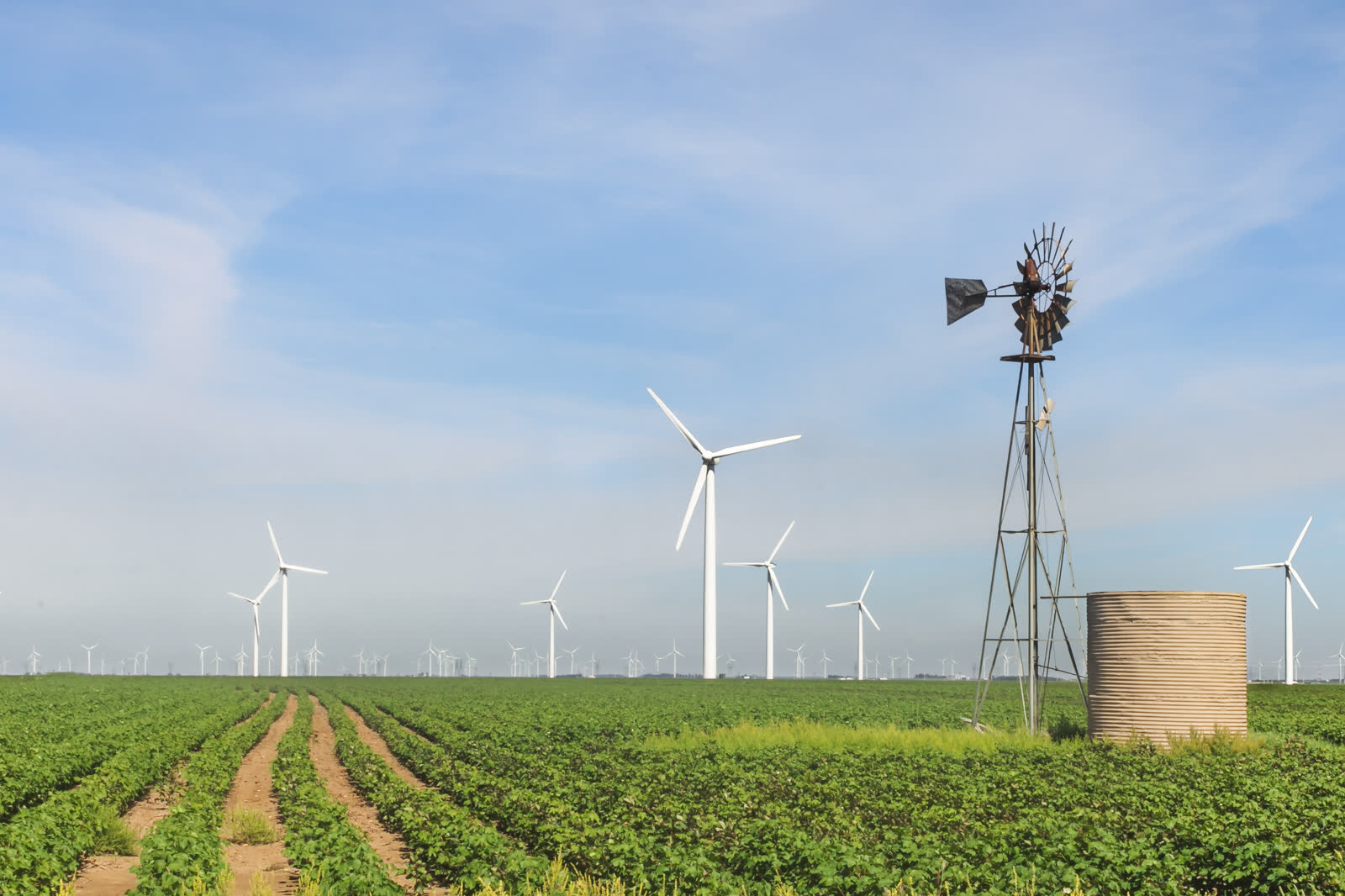
Fact File
| Item | What is known | Confidence |
|---|---|---|
| Lawsuit | Renewable energy groups filed suit in federal court in Oregon over stalled Pentagon wind reviews and sought an order requiring DoD to resume ordinary review activity.[1] | Strong for the existence of the suit and reported relief request. Outcome unknown. |
| Review process | The DoD Clearinghouse reviews wind, solar, transmission, and other energy projects for potential military-mission impacts, and formal review is triggered through the FAA obstruction process.[3] | Strong for process design. |
| Claimed impact | Plaintiffs' analysis identifies at least 106 projects, nearly 30 GW, $47 billion in investment, and more than 120,000 jobs at risk.[1] | Moderate to strong. These are plaintiff-side economic estimates reported by AP, not court findings. |
| Prior warning | A May 12 congressional letter said the review process had stalled at multiple stages and cited nearly 200 projects in the review pipeline, at least 30 GW at risk, about $54 billion in capital investment, and roughly 150,000 jobs.[6] | Strong for the letter's claims; still not an adjudicated finding. |
| Government position | DoD says the siting clearinghouse is actively evaluating land-based wind projects to avoid impairing national security or military operations.[1][2] | Strong for DoD's stated position; disputed by developers. |
What Changed
The wind industry had already been warning that Pentagon reviews were backing up. In May, AP reported that the American Clean Power Association said more than 250 onshore wind projects in more than 30 states were pending, totaling at least 30 GW of capacity.[2] The new lawsuit narrows the active court fight to projects the plaintiffs say can be verified in the FAA database and turns the complaint into a demand for judicial intervention.[1]
That shift matters because the DoD review is not just advisory background. The Clearinghouse says that submitting a project to the FAA automatically triggers the formal military review, with the Clearinghouse serving as the single entry point for military input.[3] The FAA's obstruction system exists to evaluate proposed construction or alterations for compliance with laws, policies, and orders affecting airspace.[5] In practical terms, if DoD does not send the necessary position back through the process, developers say they cannot obtain the final no-hazard determinations they need to reduce legal and financing risk before construction.[1][6]
The plaintiffs' theory is that delay has become policy. AP reports that the renewable groups allege DoD stopped countersigning final agreements beginning in August 2025, then slowed or stopped other review stages until all stages halted in April 2026.[1] The May congressional letter made a similar process claim: developers reported stalled initial risk determinations, canceled or unscheduled mitigation talks, unsigned final agreements, and missing transmittals back to FAA.[6]
DoD's public process description points in the opposite direction: the Clearinghouse was created to provide a "timely, transparent, and repeatable" way to evaluate project impacts and mitigation options while preserving military training, testing, and operations.[4] That is why the court fight is so focused on process. The plaintiffs do not need to prove that every wind project is harmless. They need to persuade the court that the agency cannot convert a review mechanism into an indefinite stop without finishing the work the mechanism requires.
Why It Matters Now
The immediate business risk is timing. Wind projects are capital-heavy, site-specific, and dependent on interconnection queues, turbine procurement, financing commitments, tax-credit qualification, local permits, land leases, and construction windows. A frozen federal review can therefore damage a project even before a formal denial appears. AP reports that the affected projects include sunk costs for turbines, contractors, financing, interconnection, and other development work.[1]
The grid risk is more indirect but still material. The projects identified in the lawsuit would not all start delivering power tomorrow. But nearly 30 GW is a meaningful pipeline number at a time when U.S. electricity demand is rising from data centers, industrial load, electrification, and summer reliability pressure. The May congressional letter framed the issue as both energy-security and national-security relevant, arguing that additional wind generation could help lower costs and support reliability while the review process still protects military missions.[6]
The political risk is that wind is being treated differently from other energy sources. President Trump's January 2025 memorandum withdrew offshore areas from new wind leasing and directed agencies not to issue new or renewed approvals, rights of way, permits, leases, or loans for wind projects while federal wind leasing and permitting practices were reviewed.[7] The current lawsuit concerns onshore wind reviews on private land, not just offshore leasing. Still, the broader policy backdrop matters because developers are arguing that a technical national-security review has become part of a wider administrative campaign against wind energy.[1][7]
There is also a legitimate defense boundary. Wind turbines can create radar and aviation conflicts, and the military has a real mission-readiness interest in siting decisions.[3][4] The question is not whether DoD should review projects. The question is whether it is reviewing them to conclusion. A process built around mitigation, single-entry coordination, and FAA transmittals becomes a choke point if the final steps stop moving.[3][6]
Scenarios
Base case: the court presses DoD for a schedule or record, the agency resumes at least some ordinary transmittals, and the dispute becomes a case-by-case backlog fight. Projects with already negotiated mitigation agreements move first; projects with unresolved radar or training-route issues remain slower.[1][6]
Industry upside: the court grants meaningful interim relief, DoD restarts countersignatures and draft mitigation agreements, and developers recover enough certainty to keep late-stage projects alive before financing or tax-credit deadlines expire. That would not guarantee every project is built, but it would restore the review pipeline as a decision process rather than a waiting room.[1][2][6]
Developer downside: the court declines emergency relief or accepts DoD's national-security discretion broadly. In that case, the freeze could continue without many formal denials, forcing developers to cancel, redesign, or wait while capital migrates to other generation sources. The reported $47 billion and 120,000-job figures would remain plaintiff estimates unless later confirmed, but the investment signal would be clear.[1]
Action Checklist
- For developers: separate projects that are awaiting routine transmittal, draft mitigation, final countersignature, and substantive military-risk resolution. Those categories will matter if the court orders a narrower remedy.[1][6]
- For utilities and buyers: treat delayed wind capacity as a supply-plan risk, not just a climate-policy story. The relevant question is whether replacement capacity is available on the same timeline and price path.
- For state officials: identify which projects in state interconnection and tax-base forecasts depend on DoD-FAA review steps, then quantify exposure by county, megawatt, and construction date.
- For readers tracking the case: watch for an injunction ruling, a DoD status report, or a negotiated schedule. The first concrete movement will be administrative: transmittals, countersignatures, meetings, and determinations, not a grand policy speech.
Falsifier: this report's "review freeze as permitting choke point" reading would weaken if DoD quickly demonstrates a large volume of completed project transmittals, signed mitigation agreements, and FAA determinations across ordinary onshore wind projects. If the pipeline restarts in visible numbers, the story becomes backlog recovery. If it does not, the lawsuit is the clearest test yet of whether national-security review can become a de facto wind moratorium without formal denials.
Sources
- Jennifer McDermott, Associated Press via Winnipeg Free Press, "Pentagon reviews are blocking wind farms, putting jobs at risk, lawsuit says" (June 12, 2026).
- Jennifer McDermott, Associated Press, "Wind projects are stalled because the Pentagon isn't completing its reviews, industry group says" (May 7, 2026).
- U.S. Department of Defense, Military Aviation and Installation Assurance Siting Clearinghouse, "Project Review" - formal and informal review process description.
- U.S. Department of Defense, Military Aviation and Installation Assurance Siting Clearinghouse, "About" - clearinghouse purpose, legal authority, and annual review role.
- Federal Aviation Administration, "Obstruction Evaluation / Airport Airspace Analysis" - FAA system for aeronautical studies of proposed construction or alteration projects.
- Members of Congress, letter to Defense Secretary Pete Hegseth and Assistant Secretary Dale R. Marks regarding delays in wind-energy project mitigation agreements (May 12, 2026).
- The White House, "Temporary Withdrawal of All Areas on the Outer Continental Shelf from Offshore Wind Leasing and Review of the Federal Government's Leasing and Permitting Practices for Wind Projects" (January 20, 2025).
- Wikimedia Commons, "File:Roscoe Wind Farm in West Texas.jpg" - source page for the 2014 Matthew T Rader photographic image used with this article.