As of 2026-11-06 02:36 UTC.
Italy’s tsunami warning centre is taking a newly operational forecasting method into November’s coastal drills, following an October earthquake that prompted an advisory later cancelled after sea-level checks. The exercise programme pairs a simulated Ligurian Sea earthquake on November 5 with a second scenario south of Greece on November 11.[1][4]
Both belong to NEAMWave26, the regional warning exercise scheduled for November 5–19. UNESCO’s revised instructions flag a complication: Italian forecasts can produce different alert levels and affected areas from those issued by the French and Greek centres for the joint scenarios. The methods differ. Receiving authorities will need to understand the messages they get.[6]
An alert that changed as evidence arrived
The new method, Probabilistic Tsunami Forecasting, or PTF, became operational in Italy on October 5. Civil Protection says it replaced the previous decision matrix for potentially tsunami-generating Mediterranean earthquakes of magnitude 5.5 or greater; the matrix remains available as a backup.[2]
Its first live Mediterranean event produced a useful record of how an initial assessment can change. INGV’s account of the October 23 earthquake near the Aeolian Islands gives this sequence, in Italian local time:[4]
- 12:19: the earthquake occurred; its reported moment magnitude was 5.5.
- 12:23: the centre sent an information message, using an initial magnitude estimate of 5.7.
- 12:29: an updated message raised the level to an orange advisory.
- 13:22: the alert was cancelled after tide-gauge observations at Strombolicchio and Ginostra ruled out an ongoing tsunami in the southern Tyrrhenian Sea.
INGV described the procedures as having worked well. That is the operator’s assessment of one event, rather than an independent audit of the system’s performance. The documented sequence nevertheless shows what the warning process must accommodate: an early estimate, a revised threat assessment and a cancellation grounded in observations.[4]
Choosing how cautious to be
Immediately after an earthquake, a warning centre knows little about the rupture that might have displaced the sea. The 2021 paper introducing PTF describes possible tsunami scenarios, weighted by their compatibility with observations and knowledge of the source region.[3]
The result is a distribution of possible coastal impacts. Authorities can then apply an agreed rule to translate that distribution into an alert. Italy has chosen the 98th percentile as a precautionary basis for its warning assessment, according to INGV.[1][3]
That percentile sits near the upper end of the modelled impact distribution. It does not mean a damaging tsunami has a 98 percent chance of occurring. The policy gives weight to a severe plausible outcome while information is incomplete. The research makes the balance between missed and false alarms an explicit choice.[3]
A cancellation therefore cannot, on its own, establish that the initial decision was mistaken. Equally, a cautious method cannot be judged successful simply because it issues warnings. That judgment requires repeated comparisons between forecasts, observations and the consequences of the decisions they prompt.
The warning still has to reach the classroom
Italy’s Civil Protection department identifies a practical limit: its central distribution platform sends messages to institutions and services, rather than directly to the public. Municipal emergency plans provide the arrangements for warning residents. The department also cautions that a nearby tsunami may leave too little time for an official message to arrive before impact.[2]
For November 11, INGV names Gaeta, Minturno, Palmi, Villa San Giovanni and Messina among the participating municipalities. Checking message receipt is the common starting point; some communities will extend their participation to public communication and field evacuations. The announcement does not say every town will conduct every activity.[1]
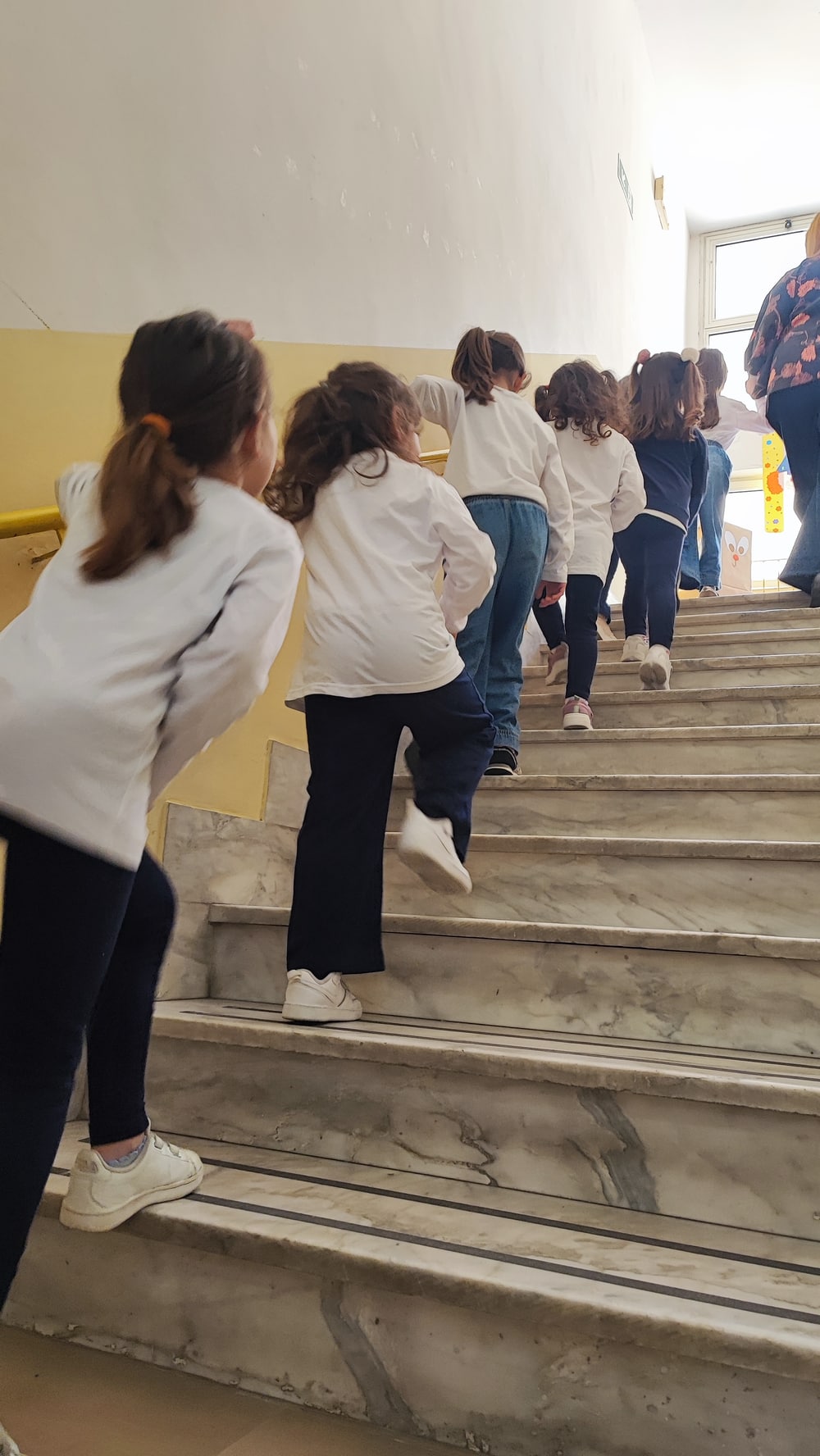
Gaeta offers an earlier, concrete example. On March 10, pupils, teachers and staff at Giuseppe Mazzini nursery and primary school practised moving to upper floors designated by the school’s emergency plan. INGV’s report describes an orderly vertical evacuation within the building. The exercise formed part of Gaeta’s work towards Tsunami Ready preparedness requirements.[5]
That account gives the forecast a physical destination: a class has to move through a particular building to a particular safe area. It also sets a boundary on the example. The school followed its own plan; the report is not a recommendation to use the upper floor of any coastal building as shelter.
What the November tests can establish
The documents reviewed here establish the exercise arrangements and the forecasting change. They do not provide an evaluation of the November 5 scenario. UNESCO’s revised timetable sets December 3 for evaluation questionnaires and January 15, 2027 for the warning centres’ reports.[6]
Three conditional outcomes will help readers assess what follows:
- Base case: message logs confirm that participating authorities received and handled the simulated warnings as planned.
- Upside: community exercise records show that public notification and movement to designated safe areas also worked, with identified problems assigned for correction.
- Downside: missed messages, unclear responsibilities or inconsistent interpretations delay action. Evidence of those failures would invalidate a claim that successful transmission alone demonstrated readiness.
For municipal staff, school managers and reporters following the drills, the immediate checklist is narrow:
- Within 24 hours: check the latest local notice and distinguish an exercise announcement from a results report.
- Over seven days: establish which activities each participating community actually tested, especially around November 11.
- Over 30 days: look for documented findings around the December 3 evaluation deadline; reserve judgments about performance until evidence appears.
Those are suggested review windows, not additional official deadlines. The useful outcome will be a record connecting a forecast to a received message, a local decision and an action people could carry out.
Sources
- INGV Tsunami Alert Centre, “NEAMWave26: Exercises for the Mediterranean Sea Tsunami Warning System using the new PTF method”; November 2026 scenarios, precautionary threshold and participating municipalities.
- Italian Department of Civil Protection, “Rischio maremoto. Le attività”; operational responsibilities, October 2026 PTF adoption and warning limitations, in Italian.
- Jacopo Selva and colleagues, “Probabilistic tsunami forecasting for early warning,” Nature Communications 12, 5677, September 28, 2021; open-access full text.
- INGV Tsunami Alert Centre, “Aeolian Islands earthquake of October 23, 2026, and tsunami alert”; message chronology and sea-level verification.
- INGV Tsunami Alert Centre, “Tsunami Ready @Gaeta (LT): school drill for tsunami risk, remembering the great tsunami in Japan,” March 11, 2026; school exercise account and archival photograph.
- UNESCO Intergovernmental Oceanographic Commission, Circular Letter 3063 Rev., October 8, 2026; revised exercise schedule and attached corrigendum covering different forecasting methods and evaluation deadlines, PDF.