As of 2026-10-26 21:35 UTC.
On October 26, Osaka Metropolitan University publicized a study finding no significant average population or employment benefit from Japan's designation of depopulated municipalities for support. Haruka Kato's research was published in Cities on July 11.[1]
The news arrives as Japan prepares to revise the statistical baseline behind its population estimates. On October 20, the Statistics Bureau reported a provisional population of 122.69 million for October 1. It also said November's release would switch to the final 2025 census population as its base and revise specified earlier estimates. That makes the distinction between demographic change and statistical revision particularly relevant to anyone following local recovery claims.[2]
The delay inside the finding
According to the university's account, Kato compared 771 designated municipalities with 790 non-designated municipalities, using data from 1980–2020. The analysis used a staggered difference-in-differences method to examine outcomes relative to designation at different times.[1]
The overall average effects were not statistically significant. Examining the years after designation separately revealed population declines around the twentieth year, with total employed persons following a similar pattern. Employed residents working inside their home municipality did not show the same aggregate decline.[1]
These are findings reported through the university's announcement. They warrant scrutiny of long-term outcomes, while leaving the value of individual funded services unresolved.
What the designation is meant to do
Japan's policy has always carried more than one ambition. A Korea Legislation Research Institute review traces its origins to a 1970 law intended both to maintain minimum living conditions and to develop industrial infrastructure. Successive laws expanded or revised the approach. Its account of the 2021 framework describes support for employment, transport, communications, education, health care and welfare, alongside efforts to sustain communities.[3]
The distinction matters when evaluating a programme. A population total measures whether a place is growing or shrinking. It cannot, by itself, reveal whether a resident can still reach a clinic, whether a school remains usable, or whether a smaller community can afford its infrastructure. Those are different outcomes, requiring different evidence.
There is also a chronological limit: data ending in 2020 cannot establish the performance of a framework enacted in 2021.[1][3] A contemporary budget debate should identify which generation of policy it is judging before treating a historical finding as a verdict on current provision.
A smaller town still has to function
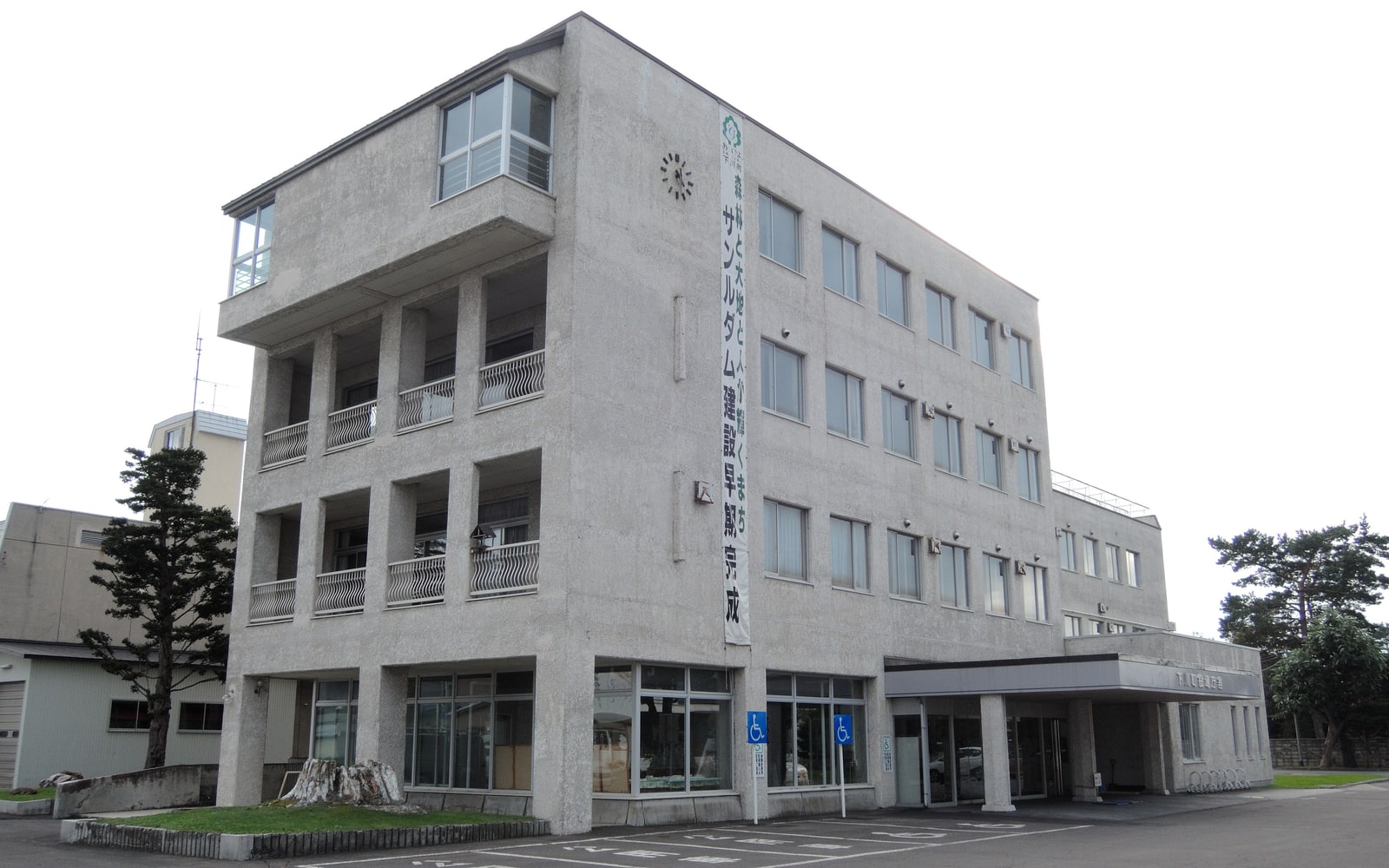
Shimokawa, in northern Hokkaido, makes the service question concrete. A European Commission case study describes the town as formally designated under Japan's depopulation legislation. Its population had fallen from more than 15,000 in 1965 to 3,202 in November 2020, following major changes in its industrial base.[5]
The case study records responses at the scale of everyday life: reorganizing buses, providing reservation-based shared taxis and addressing snow removal for an aging population. In the outlying Ichinohashi community, replacement housing built in 2013 connected residential buildings through an indoor corridor, reducing the need to clear snow around entrances. A biomass boiler supplied heat and hot water.[5]
These are historical descriptions of adaptation, not a current service timetable or a causal evaluation of national designation. Their relevance is practical: a settlement's population can continue falling while the work required to keep its remaining residents safe changes substantially. The case supplies questions to investigate, rather than proof that every intervention succeeded.
The OECD's broader work on shrinking regions similarly separates population growth from well-being. It identifies rising service costs per resident, weaker tax bases and risks to access, while arguing that places with declining populations can maintain high living standards by adapting services and land use to their needs.[4]
That adaptation still has costs. A separate CEPR discussion paper published in May uses Japanese data and an economic model to examine regional decline. Its simulations suggest subsidies can reduce regional inequality while lowering aggregate efficiency and increasing public-service expenditure. This is a modeled tradeoff, rather than an independent test of Kato's designation results.[6]
What would change the assessment
For local officials and residents examining spending plans, the immediate task is to identify the promised outcome. The following scenarios are interpretations for evaluating future evidence, not announced policy changes:
- Base case: continued support faces closer evaluation. The trigger would be assessments that report population, employment and service access separately over longer periods.
- Upside: independently evaluated projects preserve access or improve residents' well-being at sustainable cost, even where population recovery remains elusive.
- Downside: new evidence shows that spending fails to improve either demographic outcomes or essential services, strengthening the case for redesigning the interventions.
Over the next 24 hours, readers can check whether coverage distinguishes research findings from a policy decision. Over seven days, municipal analysts can compare the measured outcomes with the goals in their own plans. Over 30 days, the Statistics Bureau's planned November change deserves attention before new and old population estimates are compared. These are suggested review intervals, not deadlines set by the researcher.[2]
- Check the policy period and population baseline behind a claim of recovery or failure.
- Ask for evidence about service access and cost alongside resident and job counts.
- Reassess this account if corrected estimates or independent replication alter the reported findings. Evidence of benefits under the post-2021 framework would require a separate assessment of that newer policy.
Sources
- Osaka Metropolitan University, “Dear DAD: You can't designate your way out of depopulation,” October 26, 2026, republished by BrightSurf — institutional research announcement, comparison groups, observation period and reported findings; identifies July 11 as the article publication date.
- Statistics Bureau of Japan, “Population Estimates,” updated October 20, 2026 — provisional October population and the planned November switch to the 2025 census baseline; in Japanese.
- Korea Legislation Research Institute, “A Legal Study on Support Systems for Depopulated Areas,” 2025, via the National Knowledge Information System — English abstract, section on Japan's legislation from 1970 through 2021.
- OECD, “Demographic change in regions and cities” — service costs, access and well-being in places with shrinking populations.
- European Commission, “Annex 2: Japan Case Studies,” Shimokawa section, printed pages 44–50 — historical population, designation, transport measures and the Ichinohashi housing project.
- Elisa Giannone and colleagues, “Living in a Ghost Town: The Geography of Depopulation and Aging,” CEPR Discussion Paper 21447, May 6, 2026 — abstract describing the model and its regional subsidy tradeoffs.
- アラツク, “Shimokawa town hall,” September 13, 2013, Wikimedia Commons — original photograph, location, date and licensing record; reproduced at reduced resolution.