As of 2026-05-12 08:36 UTC, the most useful way to read the MV Hondius Andes-virus outbreak is no longer as a shipboard mystery alone. WHO's May 12 interim guidance and the Dutch government's May 12 update show that the file has moved into a narrower, harder phase: controlled disembarkation, repatriation, quarantine, and cross-border follow-up for people who may have had high-risk exposure to Andes virus.[3][4][5] The shipboard case count still matters, but the live operational test is now whether public-health systems can take one mixed-nationality passenger manifest off a vessel and keep the next 42 days orderly.[1][4]
By May 8, WHO said the outbreak had reached eight cases, including six laboratory-confirmed Andes-virus infections and three deaths.[1] WHO's risk line was intentionally narrow: low risk to the global population, but moderate risk for passengers and crew on the ship.[1] That distinction is the center of the story on May 12. The danger is serious enough to justify medical evacuation flights, onboard experts, and daily monitoring after disembarkation, but not broad enough for WHO to recommend travel or trade restrictions or to describe the event as a general cruise-travel alarm.[1][2]
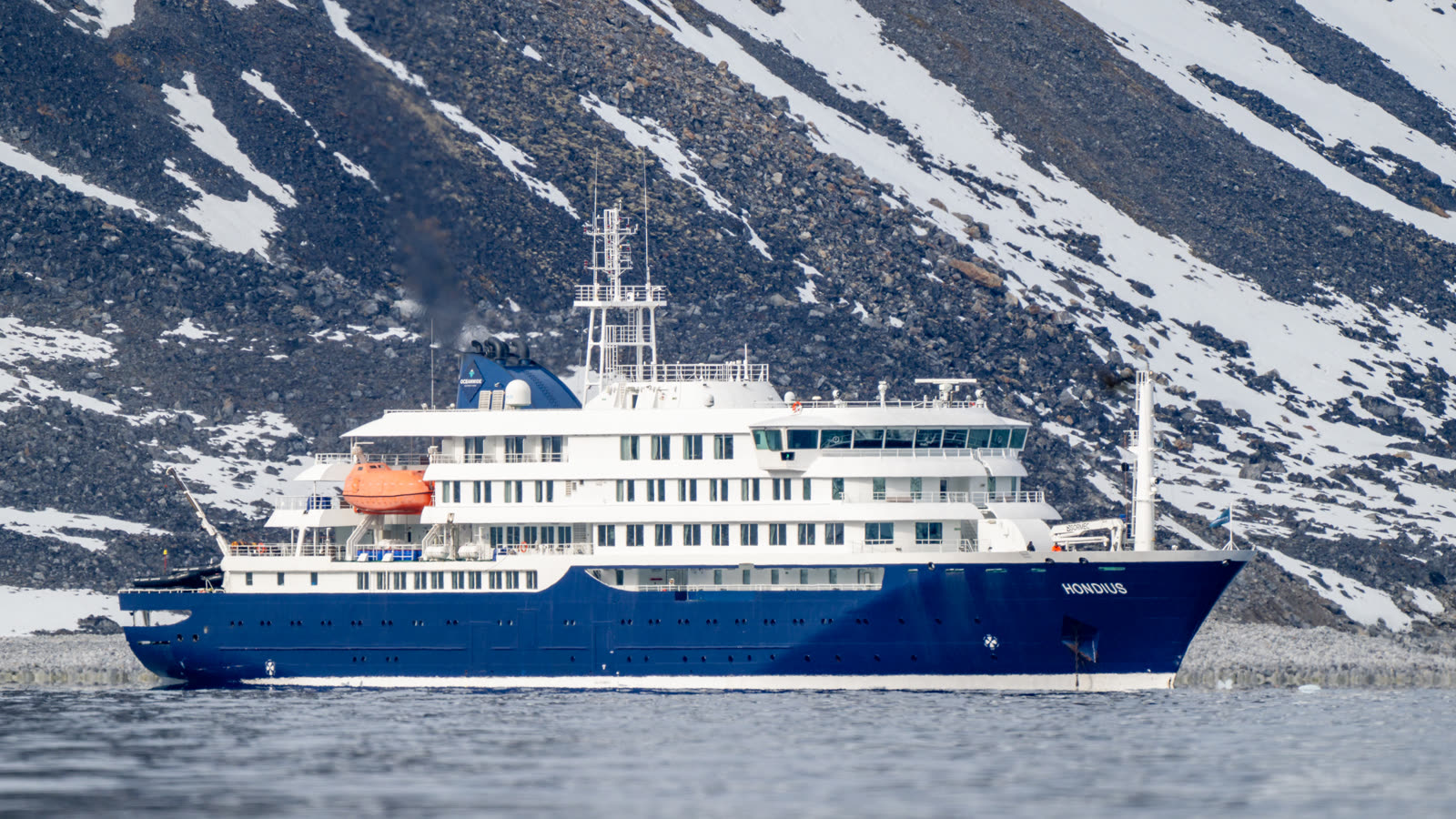
Image context: the cover uses a real 2025 photograph of MV Hondius from Wikimedia Commons.[6] It belongs here because the article is about one actual vessel moving through a public-health protocol, not about a generic virus illustration or an abstract cruise industry symbol.
Fact file
| Item | What is confirmed now | Confidence note |
|---|---|---|
| Current outbreak count | WHO reported eight cases as of May 8, including six confirmed Andes-virus cases and three deaths.[1] | High; direct WHO outbreak notice. |
| Risk posture | WHO assessed the global risk as low and the risk for passengers and crew as moderate.[1] | High; direct WHO language. |
| Ship movement | WHO said the ship left Cabo Verde on May 6 and was heading to the Canary Islands for disembarkation.[1] | High; direct WHO outbreak notice. |
| Repatriation phase | The Dutch government said on May 12 that a Dutch flight had departed Tenerife carrying 26 passengers, after full medical screening.[5] | High; direct same-day government update. |
| Follow-up rule | WHO's May 12 interim guidance says asymptomatic passengers may travel only inside a system of active monitoring and home or facility quarantine with daily follow-up for 42 days after disembarkation.[4] | High; direct WHO technical guidance. |
| Contact logic | WHO's May 10 contact note says Member States should use a risk-based approach because Andes virus has only limited human-to-human transmission, usually tied to close and prolonged contact.[3] | High; direct WHO contact-management update. |
| Lab and coordination support | WHO said on May 7 that it had arranged shipment of 2,500 diagnostic kits from Argentina to laboratories in five countries and had placed an expert on board.[2] | High; direct WHO response note. |
Why the file changed on May 12
The first phase of the story was clinical recognition. WHO's May 8 outbreak notice summarized the cluster, linked all six confirmed infections to Andes virus, and traced the response through medical evacuation, laboratory confirmation, and international contact tracing.[1] The second phase is administrative in the best and hardest sense of the word. Once the ship reaches a port that will receive it, the question becomes who can leave, under what conditions, under whose authority, and with what follow-up obligations in the destination country.[4][5]
That is why the May 12 WHO document matters. It does not mainly add drama to the outbreak count. It lays out a workflow for screening passengers and crew, isolating symptomatic people, handling luggage, arranging onward travel, managing crew, and disinfecting the ship.[4] The most consequential line in that note is that asymptomatic passengers may continue onward only inside an active-monitoring regime that includes designated facility or home quarantine, daily check-ins for 42 days, and advice to avoid contact with other people and to avoid further travel during that period.[4]
Inference from the WHO technical note and the Dutch government's same-day update: this outbreak has become a test of whether countries can turn a virology file into a disciplined border-health handoff without losing track of people once they step off the ship.[4][5] The Dutch side has already begun doing exactly that. On May 12, the Netherlands said a government-chartered flight left Tenerife for Eindhoven with 26 passengers, that everyone had been examined by medical experts beforehand, and that Dutch nationals would quarantine at home for six weeks, while non-Dutch travelers would be placed in quarantine accommodation arranged by public-health authorities.[5]
What WHO is actually asking countries to do
The contact-management logic is more specific than the headline "hantavirus on a cruise ship" suggests. WHO's May 10 emergency update tells Member States to use a risk-based approach to identifying and managing contacts of confirmed or probable Andes-virus cases from the ship.[3] That matters because the public-health response is not built on an assumption that everyone on board faces identical risk. It is built on sorting high-risk contacts from lower-risk ones and then matching restrictions to the exposure pattern.[1][3]
WHO's May 8 Disease Outbreak News already pushed in that direction. It said current evidence does not support routine laboratory testing of asymptomatic contacts for outbreak control, and it said low-risk contacts should use passive self-monitoring rather than automatic quarantine.[1] High-risk contacts are the tighter lane. WHO said they should be actively monitored and placed in home or facility quarantine for 42 days after last exposure, because infectiousness appears highest in the early phase of illness and pre-symptomatic transmission cannot be entirely ruled out as a precautionary matter.[1][4]
This is also why WHO's May 7 response note highlighted logistics rather than only bedside medicine. WHO said it had shipped 2,500 diagnostic kits to five countries, deployed an expert on board, and was developing step-by-step guidance for safe and respectful disembarkation and onward travel.[2] In other words, the organization was already treating the outbreak as a multi-country operations file before the ship reached Tenerife.
Why this is not a generic cruise-travel alarm
The event is serious, but the available evidence still supports a bounded reading. WHO has kept the global risk assessment at low and has advised against travel or trade restrictions.[1] The reason the ship itself still sits in a tighter lane is that Andes virus is unusual within the hantavirus family: WHO says it is the only hantavirus known to be capable of limited human-to-human transmission, usually through close and prolonged contact.[2][3]
That distinction matters for interpreting the quarantine rules. Countries are not building a 42-day follow-up system because WHO thinks casual global spread is underway. They are building it because a ship is a dense social environment, some cabins and caregiving relationships involve prolonged contact, and the outbreak includes a virus for which limited secondary transmission has been documented before.[1][3] The Dutch government underscored the same boundary from another angle when it said there was no reason to assume the virus would become a pandemic like COVID-19, while still maintaining home quarantine and controlled onward transport for people leaving the ship.[5]
What to watch next
The first checkpoint is whether disembarkation stays disciplined across national lines. WHO's guidance is only useful if receiving countries actually keep passengers inside daily follow-up and if repatriation does not break the chain of public-health visibility.[4][5]
The second checkpoint is case classification. WHO's May 8 notice said eight cases had been recorded, but it also showed how fluid that accounting remains: one previously suspected case transferred to Germany later tested negative and was dropped from case status.[1] Additional symptom reports or reclassifications over the next incubation window will matter more than one more headline count.
The third checkpoint is whether the outbreak source becomes clearer. WHO said investigations involving Argentina and Chile were still trying to determine the first case's exposure history and the outbreak's origin.[1] Until that work hardens, the response has to carry two tasks at once: manage the rare human-to-human transmission risk that Andes virus can present among close contacts, and keep open the possibility that some infections were acquired off the ship through rodent exposure before or during the voyage.[1][3]
The narrow conclusion is the right one. On May 12, 2026, the Hondius outbreak is still a health emergency. It is also a live test of disembarkation governance. The question is no longer only how many people got sick on one ship. The question is whether WHO guidance, national quarantine systems, laboratory coordination, and repatriation plans can keep a contained event contained for the full 42-day monitoring horizon.[1][2][4][5]
Sources
- WHO, "Hantavirus cluster linked to cruise ship travel, Multi-country" (Disease Outbreak News, May 8, 2026).
- WHO, "WHO’s response to hantavirus cases linked to a cruise ship" (May 7, 2026).
- WHO, "Management of contacts of Andes virus (ANDV) cases from the MV Hondius cruise ship" (May 10, 2026).
- WHO, Technical note for the disembarkation and onward management of passengers and crew in the context of an Andes virus-associated cluster, MV Hondius cruise ship: Interim guidance (May 12, 2026 PDF).
- Government of the Netherlands, "Updates on Andes virus (hantavirus) outbreak on the cruise ship MV Hondius" (updated May 12, 2026).
- Wikimedia Commons, "File: 2025 Hondius - IMO 9818709 by 2eight - 9SC4311.jpg" (photo page for the ship image used here).