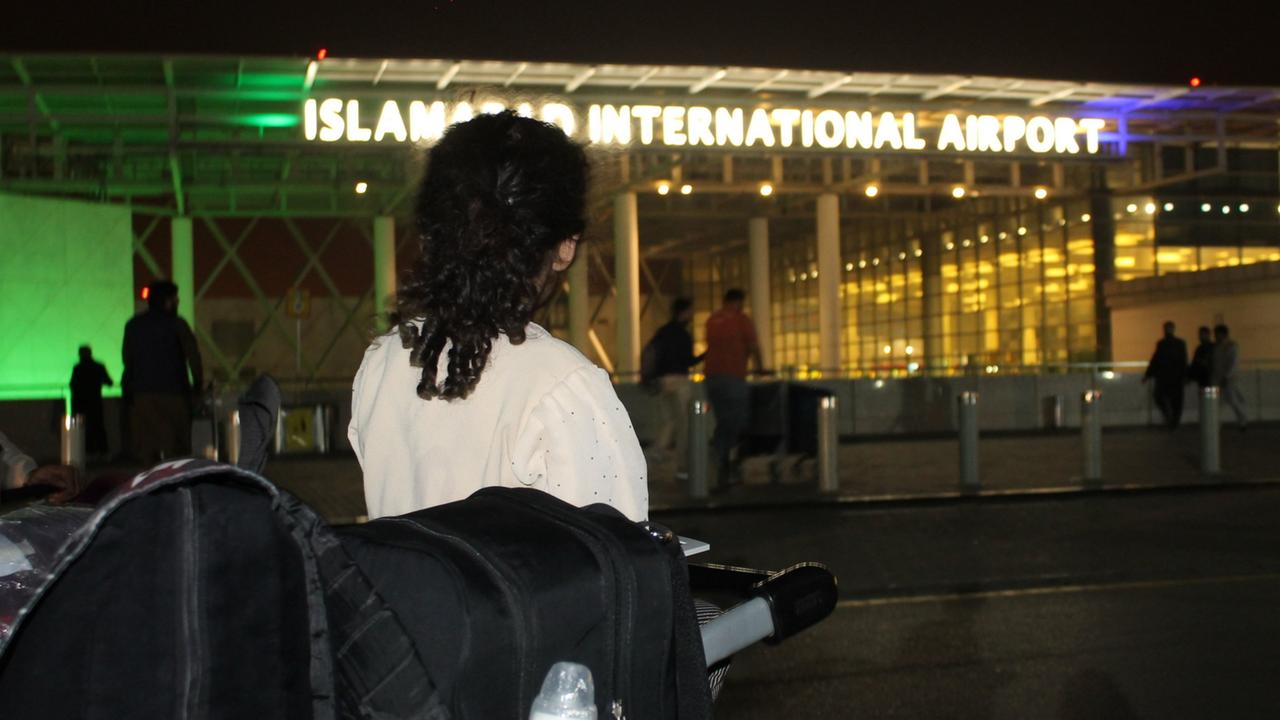
As of 2026-07-25 12:36 UTC, Germany’s Federal Constitutional Court has rejected the government’s attempt to cancel a group of Afghan admission promises with one blanket declaration. Its July 22 decision, published on July 24, upheld the constitutional complaint of an Afghan mother and her two minor sons, set aside the lower court’s ruling, and sent their case back for reconsideration.[1]
The judgment changes the required process, not the guaranteed outcome. The court did not order Germany to issue the family visas. It held that once the state had communicated an admission decision to named people, the executive could not later reverse course without looking at their individual circumstances. Until the family receives visas or a constitutionally adequate individual refusal, Germany must continue supporting them in Pakistan and work to prevent their arrest or removal to Afghanistan.[1]
That distinction is the news. A programme-level “no” has become a file-by-file decision. For people waiting in Pakistan, lawyers handling related cases, and officials who must now build those files, the next test is whether individual review becomes a real administrative process or merely a new wrapper around the same result.
The Verified Record
| Date and record | What is confirmed | Confidence boundary |
|---|---|---|
| December 2021 — admission communicated to the complainants | Germany selected an Afghan woman and her two sons for admission through the “human rights list,” created for people considered at risk after the Taliban returned to power.[1][5] | High for this family. The judgment concerns three named complainants; it does not itself decide every Afghan admission case. |
| December 2025 — Interior Ministry reversal | The ministry declared admission statements from the human-rights-list programme invalid and expired as a group. Reuters reports that roughly 640 promises were voided without individual examination.[1][2] | High on the blanket policy; approximate on the population. Published counts describe different programmes, dates, legal statuses, and family groupings. They are not one live denominator. |
| April 7, 2026 — parliamentary snapshot | The government reported 873 people from Afghan admission procedures receiving support in Pakistan: 55 from the human rights list, 450 from the bridging programme, 261 from the federal admission programme, and 107 in the local-staff procedure. Another 181 were receiving support in Afghanistan.[3] | High for that dated snapshot. It spans four procedures and cannot be read as the number directly covered by this judgment. |
| April 2026 — revocation and litigation record | In the separate federal admission programme, completed revocation or withdrawal decisions covered 294 people in 66 cases as of April 7. The government also reported active litigation and mixed outcomes in the Bavarian administrative courts.[4] | High on the official answer; limited for spillover. Those cases arise from another programme and may turn on different wording or facts. |
| July 22–24, 2026 — constitutional ruling | The court found the blanket reversal constitutionally arbitrary because it ignored the complainants as individuals. It left the executive broad discretion to admit or refuse, provided that discretion is exercised case by case.[1] | High on the legal rule; unsettled on implementation. The Berlin-Brandenburg Higher Administrative Court must decide again, and the ministry has not announced a general processing timetable. |
The official numbers require discipline. Tagesschau reported on July 24 that around 400 Afghans with earlier admission promises were still hoping to enter Germany from Pakistan.[5] Reuters described about 640 human-rights-list promises invalidated in December.[2] The Bundestag’s April figure of 873 covered people supported across four procedures, including cohorts whose statements had already been withdrawn.[3] Those figures can all describe parts of the same policy landscape without measuring the same group.
What Karlsruhe Required—and What It Left Open
The court drew a narrow but consequential line. Germany retains wide political discretion under section 22, sentence 2 of the Residence Act when deciding whether to admit foreigners from abroad. A prior admission statement did not, on the court’s reasoning, create an automatic constitutional right to a visa based on legitimate expectation, equal treatment with people already admitted, or a general state duty to protect the complainants overseas.[1][5]
But broad discretion is still public power. Once officials exercised it for specific people and told them so, the state could not treat those people as an undifferentiated remainder when policy changed. The constitutional defect was the absence of an individual decision that received their circumstances at all.[1]
This leaves both sides with a partial victory and a practical burden. Applicants regain a decision process and, for the three complainants, interim support. The government retains authority to refuse admission after an individual assessment. The Interior Ministry therefore said it viewed the ruling as confirmation of its broad policy latitude and would await the higher administrative court’s next decision.[2][5]
The judgment also exposes why programme labels matter. At a February 4 government briefing, officials distinguished people whose human-rights-list or bridging-programme statements had been revoked from roughly 350 people in the federal admission and local-staff procedures who still held valid statements and were being processed in Pakistan.[6] A lawful implementation cannot collapse those cohorts back into one queue. It must identify the legal instrument, what was communicated, which security and identity checks were completed, what reliance or vulnerability followed, and why the current public interest does or does not support admission in that person’s case.
Who Has to Move Now
For the complainants, the immediate gain is time and continuity rather than a boarding pass. Their support in Pakistan must continue while the renewed decision is pending, and Germany must keep seeking protection against detention or removal to Afghanistan.[1] The higher administrative court must then reconsider their request under the constitutional standard.
For other human-rights-list applicants, the ruling is a strong procedural signal, not a class-wide visa order. Reuters reports around 30 similar constitutional cases pending.[2] Lawyers can invoke the same prohibition on a blanket reversal, but each file may still differ on the admission communication, identity and security material, current risk, and procedural posture.
For the Interior and Foreign ministries, the work shifts from defending a single cancellation to producing reviewable records. Even if the final policy remains restrictive, officials need named case owners, a common evidence checklist, interpreters and notice procedures, a rule for continued support, and reasons tied to each applicant rather than to the existence of a new coalition alone.
For courts, journalists, and civil-society groups, the reporting unit should be the programme and the person—not “Afghans waiting” as one undifferentiated total. The April parliamentary data already show how quickly numbers become misleading when valid statements, revoked statements, pending withdrawals, principal applicants, family members, Pakistan-based cases, and Afghanistan-based cases are merged.[3][4]
Decision Impact: 24 Hours, 7 Days, 30 Days
Next 24 hours: applicants and counsel should preserve the original admission communication, every visa appointment or cancellation, security-screening records, proof of present location and legal status in Pakistan, notices about support, and evidence of individual risk. German agencies should freeze any action against a file that relies only on the December blanket declaration until they determine how the ruling applies.
Next 7 days: the key public signal will be an implementation instruction, not another political reaction. Watch for the Berlin-Brandenburg court’s schedule, ministry guidance on individual assessments, confirmation that support continues where required, and notice to people whose cases are being reopened. A credible instruction will distinguish the human rights list from the bridging, federal admission, and local-staff procedures.
Next 30 days: throughput becomes evidence. Useful measures are the number of individual reviews opened and completed, average processing time, support decisions, visa appointments, refusals with person-specific reasons, and emergency interventions against detention or deportation in Pakistan. Without that record, neither “the programme is open” nor “the programme is over” accurately describes what the court ordered.
Three Conditional Paths
Base path — narrow compliance, slow decisions. The higher administrative court reconsiders the family’s case, while ministries develop individual-review templates and related applicants seek to reopen their files. Few people travel quickly. Trigger: support continues and case-specific notices begin, but visa appointments remain limited.
Applicant-upside path — review becomes a functioning corridor. Officials triage the clearest completed files, extend protection while reviews run, and issue visas where prior screening and current individual circumstances support admission. Trigger: published criteria, assigned caseworkers, resumed consular appointments, and decisions that visibly differ by file.
Applicant-downside path — individual review becomes nominal. Officials replace the blanket declaration with near-identical refusals containing little more than biographical detail, prompting a second wave of litigation while people face expiring status or removal pressure in Pakistan. Trigger: rapid standardized refusals, support termination before legal review, or documented arrests and deportations among people with pending German cases.
These paths are not forecasts. The public record establishes a procedural reset and an interim duty toward the three complainants. It does not yet establish the scale, speed, or outcomes of the government’s response.
Action Checklist and Invalidation Conditions
- Applicants and counsel: build a dated, person-specific file; monitor court and visa deadlines; document every change in support or Pakistani status; seek urgent advice before relying on this judgment as if it were a visa.
- German ministries: publish cohort-specific instructions, preserve support during legally protected review, give reasons in a language the recipient can understand, and report decisions by programme and status.
- Oversight bodies: request a reconciled dashboard that separates principal applicants from relatives and distinguishes valid, withdrawn, under-review, admitted, returned, and no-longer-supported cases.
- Newsrooms and advocates: do not add the 400, 640, 873, and 294 figures together. Label the source date, programme, location, and unit every time a count is used.[2][3][4][5]
- Invalidation conditions: revise this report’s “process, not outcome” reading if the higher administrative court or a later binding judgment establishes a direct visa entitlement for the affected cohort. Narrow the report’s broader operational implications if official guidance and subsequent rulings confine the constitutional rule to these three complainants. Conversely, evidence of individual decisions alone does not prove meaningful compliance if the records never engage with individual circumstances.
Karlsruhe did not reopen an air bridge. It reopened a decision file. Whether that distinction protects people or merely prolongs their wait will be visible in the next set of notices, support decisions, court orders, and visa appointments.
Sources
- Federal Constitutional Court of Germany, “Successful constitutional complaint against a blanket reversal of the ‘human rights list’ admission programme,” press release No. 46/2026 on the order of July 22, 2026 — official summary of individual review, executive discretion, remand, and interim support.
- Miranda Murray and Markus Wacket, Reuters via Internazionale, “Top German court says Afghan resettlement pledges cannot be revoked en masse” (July 24, 2026) — independent report on the ruling, roughly 640 affected promises, the ministry response, and related pending cases.
- German Bundestag, “Afghanische Staatsbürger aus den Aufnahmeverfahren” (May 12, 2026) — official April 7 snapshot of supported people in Pakistan and Afghanistan, disaggregated by admission procedure and status.
- German Bundestag, “Widerrufene Aufnahmezusagen für Afghanen” (April 28, 2026) — official counts of completed federal-programme withdrawals and related administrative-court proceedings.
- Antonetta Stephany and Max Bauer, Tagesschau, “Verfassungsgericht fordert Einzelfallprüfungen” (July 24, 2026) — legal-news analysis of the judgment, current policy response, waiting-population context, and source page for the dpa cover photograph.
- German Federal Government, “Regierungspressekonferenz vom 4. Februar 2026” — official briefing distinguishing revoked human-rights-list and bridging cases from valid federal-admission and local-staff cases then being processed in Pakistan.