As of 2026-10-11 01:33 UTC. ESA announced on October 9 that astronauts were beginning to support final decommissioning of the Fluid Science Laboratory inside the International Space Station’s Columbus module. The work starts a months-long preparation for eventual disposal and will make room for new research equipment.[1]
The laboratory’s last science run had already ended. The Royal Belgian Institute for Space Aeronomy dates the final PASTA-3 experiment to July 17, 2026; astronaut Sophie Adenot’s message to ground teams that day marked the rack’s final deactivation. October’s announcement concerns the next stage in retiring the hardware.[2]
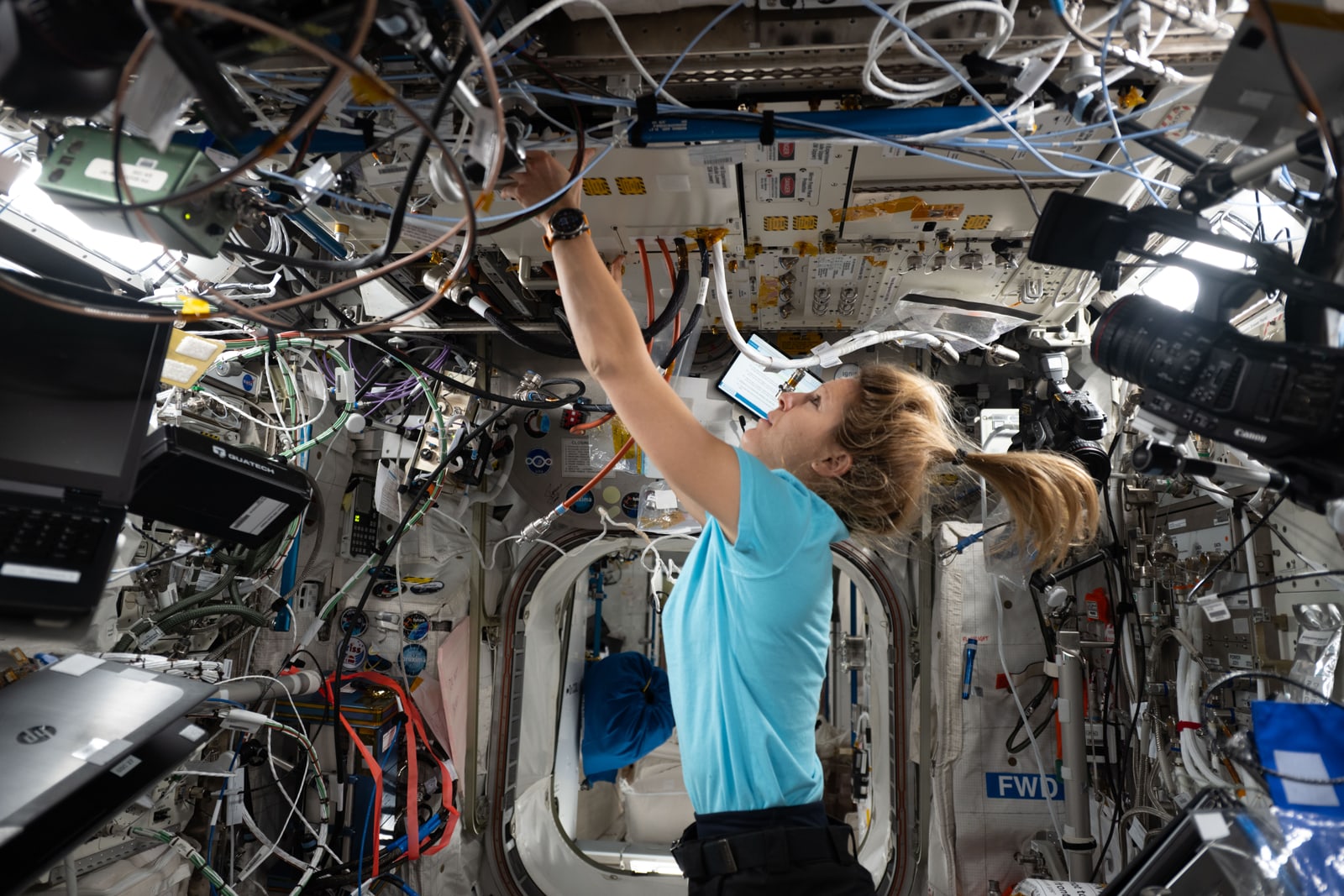
Two endings for one laboratory
The distinction between switching off an experiment and removing its infrastructure is central to the news. FSL arrived inside Columbus in February 2008, and Léopold Eyharts performed its initial activation that month. It went on to support investigations into emulsions, foams, granular matter and boiling.[2]
Three dated records establish the transition:
| Record | What it establishes | What it leaves open |
|---|---|---|
| Belgian institute account, August 12 | PASTA-3 science ended on July 17.[2] | It does not date the hardware’s removal. |
| Brussels farewell event, October 9 | The operators’ event notice also identifies October 9 as the start of decommissioning.[4] | The notice is a programme, not a completion report. |
| ESA announcement, October 9 | Disposal preparation precedes removal and transfer to a future cargo spacecraft for destructive reentry.[1] | No cargo vehicle or disposal date is named. |
For the people who ran the facility, this is also an institutional handover. The farewell gathering at the Royal Observatory of Belgium, hosted by the Belgian space-aeronomy institute, was scheduled to bring the scientific and operational community together around the end of a shared installation.[4]
What the rack made visible
The final emulsion work illustrates why researchers sent ordinary-looking mixtures into orbit. ESA’s March account of the SMD-SEEDS/PASTA investigation describes cartridges containing oil-and-water emulsions, with pistons driving the liquids to create droplets. Instruments then followed how those droplets changed over several days.[5]
On Earth, differences in density help separate a mixture through creaming or sedimentation. Reducing those effects in orbit lets researchers examine other processes governing its stability. Lasers, detectors and cameras made the cartridge a controlled observation chamber; the familiar appearance of its contents concealed the precision of the measurement.[5]
That is a research method with potential uses in products containing emulsions. It does not establish that the final campaign has already delivered a new manufacturing process. ESA’s March description sets out the scientific aim and observations, rather than a measured commercial benefit.[5]
Boiling offered another use for the same orbital platform. TU Darmstadt’s 2020 account of RUBI describes a heater, a laser used to initiate individual vapour bubbles, a high-speed camera and infrared measurements. Researchers could also vary liquid flow and electric fields to examine their effects on bubble development.[6]
In microgravity, bubbles could grow larger and evolve more slowly, allowing detailed observation that was difficult on Earth. The purpose was to improve models of heat transfer, a process relevant to cooling electronics and spacecraft. This was boiling research: liquid changing into vapour, with energy moving through the system.[6]
The university’s account also shows the ground work behind the pictures. After an astronaut connected the experiment, Belgian operators controlled it remotely. Data passed through the station’s communications infrastructure to those operators and onward to researchers. A photograph of an astronaut at the rack captures one necessary part of that distributed laboratory.[6]
A different instrument is next in line
ESA names its X-Ray Facility, or XRF, as the first intended occupant of the space FSL will release. Its announcement does not specify when installation will happen.[1]
A 2024 conference abstract from the German Aerospace Center, DLR, describes XRF as a developing instrument for measurements using X-rays while experiments unfold. Materials science is its central focus, with other possible research uses. DLR’s Microgravity User Support Center identifies itself as responsible for preparing and conducting XRF experiments.[7]
That earlier document explains the intended capability; it cannot establish the facility’s readiness today. The practical implication is a change in the measurements available to researchers, subject to delivery and commissioning. Occupying the same space does not mean a successor can automatically repeat every experiment its predecessor performed.[7]
What researchers should watch next
For research teams and readers following Columbus, the immediate task is to keep science completion, physical removal and successor readiness separate. Over the next 24 hours, any update should be checked for the milestone it actually confirms. Over seven days, watch for crew-work or cargo-assignment details. Over 30 days, an installation or commissioning plan would make the transition easier to assess. These are reporting horizons, not agency deadlines.
The base case, conditional on ESA’s announced sequence holding, is staged retirement before replacement. An upside would be a documented XRF schedule that lets research teams plan around the new capability. A downside would be removal proceeding while successor commissioning slips, extending the wait for that capability. These are monitoring scenarios, not forecasts of station operations.[1][7]
Before treating the handover as complete:
- Check for confirmation of physical removal and the assigned disposal vehicle.
- Look for XRF installation and commissioning evidence before describing it as operational.
- Revise the expected sequence if ESA announces a different replacement or schedule; assess scientific benefits against published results as they appear.
Sources
- European Space Agency, “Farewell to the Fluid Science Laboratory after 18 years in orbit,” October 9, 2026 — decommissioning, disposal sequence and proposed successor.
- Royal Belgian Institute for Space Aeronomy, “Final goodbye from the ISS crew to FSL,” August 12, 2026 — July science shutdown, facility history and experiment descriptions.
- European Space Agency, “Installing PASTA-3 in FSL,” October 9, 2026 — photograph, activity description and ESA/NASA credit.
- Royal Belgian Institute for Space Aeronomy, “Celebrating the Legacy of the Fluid Science Laboratory (FSL),” October 9, 2026 — farewell event programme and decommissioning milestone.
- European Space Agency, “From space to your plate,” March 6, 2026 — SMD-SEEDS/PASTA samples, droplet observations and research aims.
- Jutta Witte, “Weightless research,” TU Darmstadt, March 18, 2020 — RUBI apparatus, heat-transfer questions and the ground operations chain.
- Joachim Bonney and colleagues, “Material Science onboard the International Space Station: Payload Operations at the Microgravity User Support Center MUSC,” DLR, 2024 — public conference abstract describing XRF’s intended capability and operational responsibility.