As of 2026-04-26 18:05 UTC, the FDA's approval of Otarmeni is both bigger and narrower than the headline version. Bigger, because the agency has now cleared the first gene therapy for a form of genetic hearing loss and the first dual-AAV gene therapy product, which is a genuine platform milestone.[1] Narrower, because the actual label does not cover "deafness" in the broad popular sense. It covers a specific group of pediatric and adult patients with severe-to-profound or profound sensorineural hearing loss, molecularly confirmed biallelic variants in the OTOF gene, preserved outer hair cell function, and no prior cochlear implant in the same ear.[1][2]
That distinction is the center of the news file. The FDA did approve a treatment. It did not announce a general solution for congenital hearing loss. The most useful way to read the April 23 action is as the opening of a narrow, evidence-bound lane: a therapy with a real label, a fast review, an ongoing confirmatory burden, and a patient-identification problem that now matters more than it did a week ago.[1][2][5]
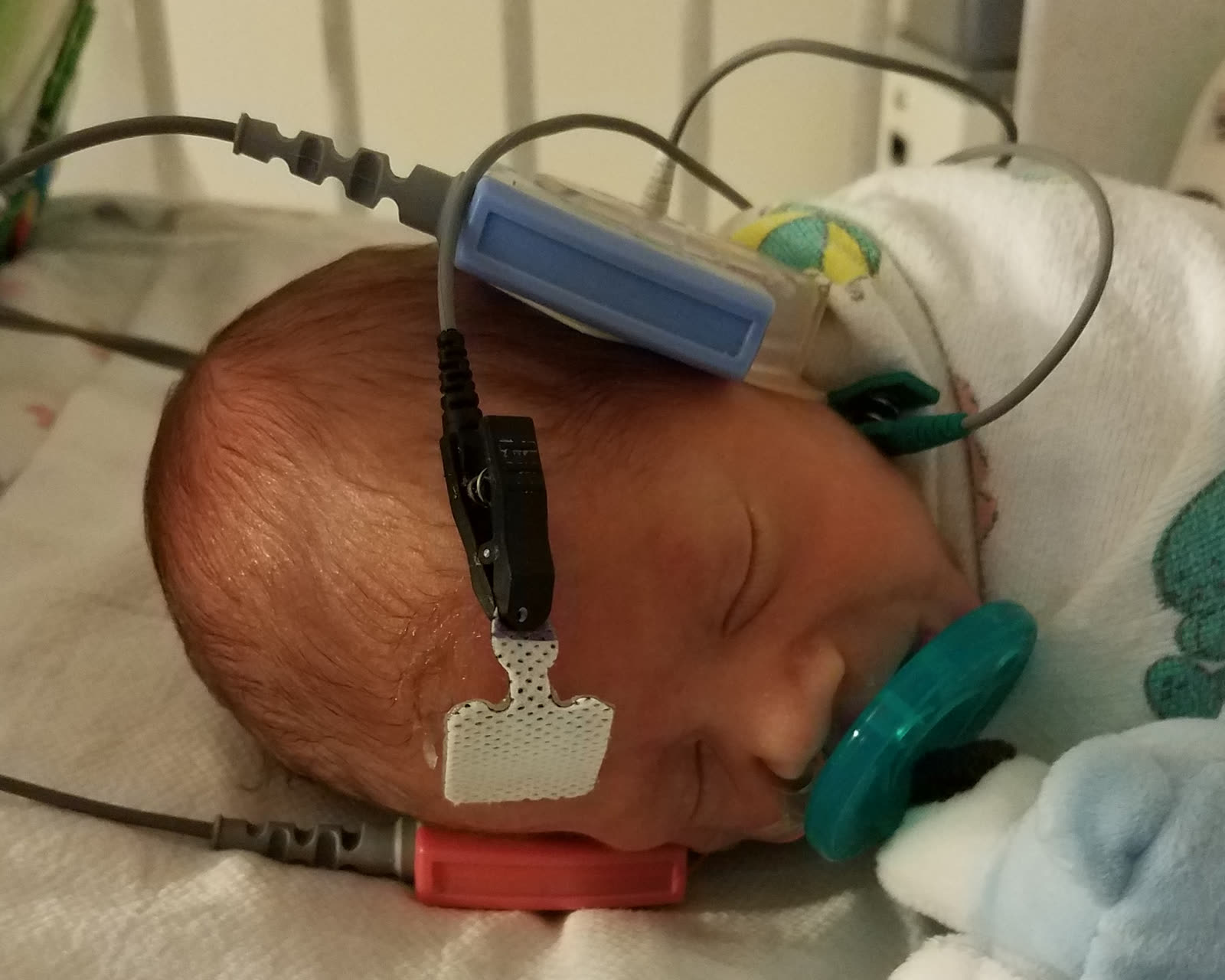
Image context: the cover photo shows a newborn hearing screening in progress. It fits this article because the new treatment does not begin with surgery or with a biotech ticker. It begins much earlier, with detecting congenital hearing loss, confirming the subtype, and deciding whether a patient actually falls inside the OTOF-specific lane the FDA has now opened.[1][5]
What changed on April 23
The FDA's press release made three points that matter immediately. First, Otarmeni became the first-ever dual adeno-associated virus (AAV) vector-based gene therapy approved by the agency.[1] Second, the agency said the product moved through review in 61 days after BLA filing, making it the sixth approval under the Commissioner's National Priority Voucher pilot program and the first gene therapy product approved under that program.[1] Third, the approval arrived with an ordinary but important regulatory qualifier: this is an accelerated approval, and continued approval may depend on later proof about the durability of hearing improvement and the treatment's effect on speech development and quality of life.[1]
Those points together explain why this story belongs in news rather than in a timeless biotech explainer. The event is current, the process was unusually fast, and the next regulatory steps are already date-bearing. The FDA has scheduled a June 4, 2026 public meeting on the voucher program that carried this product through review, which means the agency is not treating Otarmeni as an isolated one-off. It is also using the approval to validate a broader speed pathway.[1]
The label is much tighter than the celebratory version
The product page is where the real boundaries become impossible to miss. Otarmeni is indicated only for patients whose hearing loss is associated with biallelic OTOF variants, whose hearing threshold meets the severe-to-profound or profound cut the label specifies, whose outer hair cells are preserved, and who have not already received a cochlear implant in the same ear.[2]
That is a very different statement from "gene therapy for hearing loss has arrived." It means the treatment sits inside a molecular and anatomic filter. A patient must fit the right gene, the right severity band, and the right ear-specific status. The FDA's own release also notes why timing matters: delayed diagnosis can mean missed treatment windows and lasting speech and language delays.[1]
This is also why the 2024 NIDCD background page on hearing-loss gene therapy still matters, even though it predates approval. Before Otarmeni was cleared, NIDCD had already framed OTOF as one of the clearest monogenic targets in the field and said variants in that gene account for roughly 1% to 8% of congenital hearing-loss cases.[5] The approval does not erase that narrowness. It confirms it.
Why the evidence file is still open
The approval is real, but the evidence burden did not end on April 23. FDA said its decision relied on a single ongoing, multi-center, single-arm trial in 24 pediatric patients, with 20 evaluable for efficacy, and that 80% of those efficacy-evaluable patients experienced improved hearing.[1] Regeneron described the same result as the pivotal CHORD readout and added that longer follow-up showed some participants reaching normal-hearing levels that included whispers, but that claim still lives inside a company framing rather than a final settled standard of care.[6]
The more stable regulatory point is the one FDA already wrote into the approval terms: continued approval may depend on showing that hearing gains hold up and translate into broader clinical benefit, especially speech and quality-of-life measures.[1] That is the right place to keep attention. In a field where an intervention can produce dramatic early response narratives, the harder question is whether those gains remain durable, generalizable, and operationally reproducible across centers.
The scientific backdrop helps explain why the agency could move while still keeping those conditions in place. A new Nature paper published on April 22, 2026 reported multicenter follow-up of OTOF-related gene therapy out to 2.5 years, underscoring that the field now has more than proof-of-concept anecdotes behind it.[3] But the U.S. trial record is still unfolding, and the ClinicalTrials.gov listing for NCT05821959 shows the main Akouos/Regeneron program remains active, with primary completion estimated in 2028.[4] In other words, the FDA judged the evidence strong enough to open the lane and unfinished enough to keep the lane conditional.
Why access is still an operating question
There is also a practical layer beneath the science. Regeneron says it will provide Otarmeni for free in the U.S., which could remove one obvious barrier at the drug-acquisition level.[6] But "free drug" does not mean frictionless treatment. The product is still a one-time biologic-device combination product delivered surgically into the cochlea.[1] That implies specialized centers, surgical capacity, diagnostic workups, and follow-up care. For patients and families, the access story is therefore less about a pharmacy price tag than about referral networks, molecular testing, imaging, operative feasibility, and post-treatment monitoring.
That is why the newborn-screening image is not decorative. The bottleneck has moved upstream. Once a narrow but meaningful therapy exists, the system's ability to identify the right child quickly becomes part of the treatment story itself.
What to watch next
The first watch item is the confirmatory file. If later updates keep showing durable hearing improvement plus better speech and quality-of-life outcomes, the regulatory meaning of this approval will strengthen.[1][4]
The second is patient routing. The label's dependence on gene confirmation and preserved outer hair cell function means hospitals and specialists will need a cleaner diagnostic path from failed hearing screen to molecular workup to surgical candidacy.[1][2][5]
The third is the voucher pathway. Otarmeni moved through FDA in 61 days, and the agency has already calendared a June 4 meeting about the pilot program that enabled that speed.[1] If the program gains credibility from this case, more sponsors will try to design for it.
The clean bottom line is this: the FDA has approved the first hearing-loss gene therapy in the United States, and that milestone is real. The stronger reporting point, though, is not "deafness cured." It is that a very specific OTOF-linked form of severe congenital hearing loss now has an FDA-cleared treatment path, while durability, speech outcomes, center capacity, and patient-finding remain the live gates that will decide how large this breakthrough really becomes.[1][2][3][4][5][6]
Sources
- FDA, "FDA Approves First-Ever Gene Therapy for Treatment of Genetic Hearing Loss Under National Priority Voucher Program" (April 23, 2026).
- FDA, "OTARMENI" product page, including indication summary, package insert, and approval letter (accessed April 26, 2026).
- Luoying Jiang et al., "Multicentre gene therapy for OTOF-related deafness followed up to 2.5 years," Nature (published April 22, 2026).
- ClinicalTrials.gov, "A Trial of AAVAnc80-hOTOF Gene Therapy in Individuals With Sensorineural Hearing Loss Due to Otoferlin Gene Mutations" (NCT05821959; accessed April 26, 2026).
- NIDCD, "The Future of Gene Therapy for Hearing Loss" (October 2024 background page on OTOF and monogenic hearing-loss targets).
- Regeneron Pharmaceuticals, "Otarmeni (lunsotogene parvec-cwha) Approved by FDA as First and Only Gene Therapy for Genetic Hearing Loss; Regeneron to Provide Otarmeni for Free in the U.S." (April 23, 2026).