As of 2026-04-26 02:33 UTC, the useful way to read WHO's April 24 malaria announcement is to keep its scale narrow.[1] The organization did something genuinely important: it prequalified the first antimalarial treatment developed specifically for newborns and young infants weighing 2 to 5 kilograms.[1][6] Until now, babies in that weight range were often treated with formulations intended for older children, which WHO says raises the risk of dosing errors, side effects, and toxicity.[1]
That is real progress. It is also not the same thing as solved access. WHO's own language points to a more precise conclusion: prequalification clears a public-sector procurement gate for a missing formulation, but impact at bedside still depends on whether countries update treatment practice, whether buyers actually procure the product, and whether clinicians can reliably detect malaria in the first place.[1][5][6]
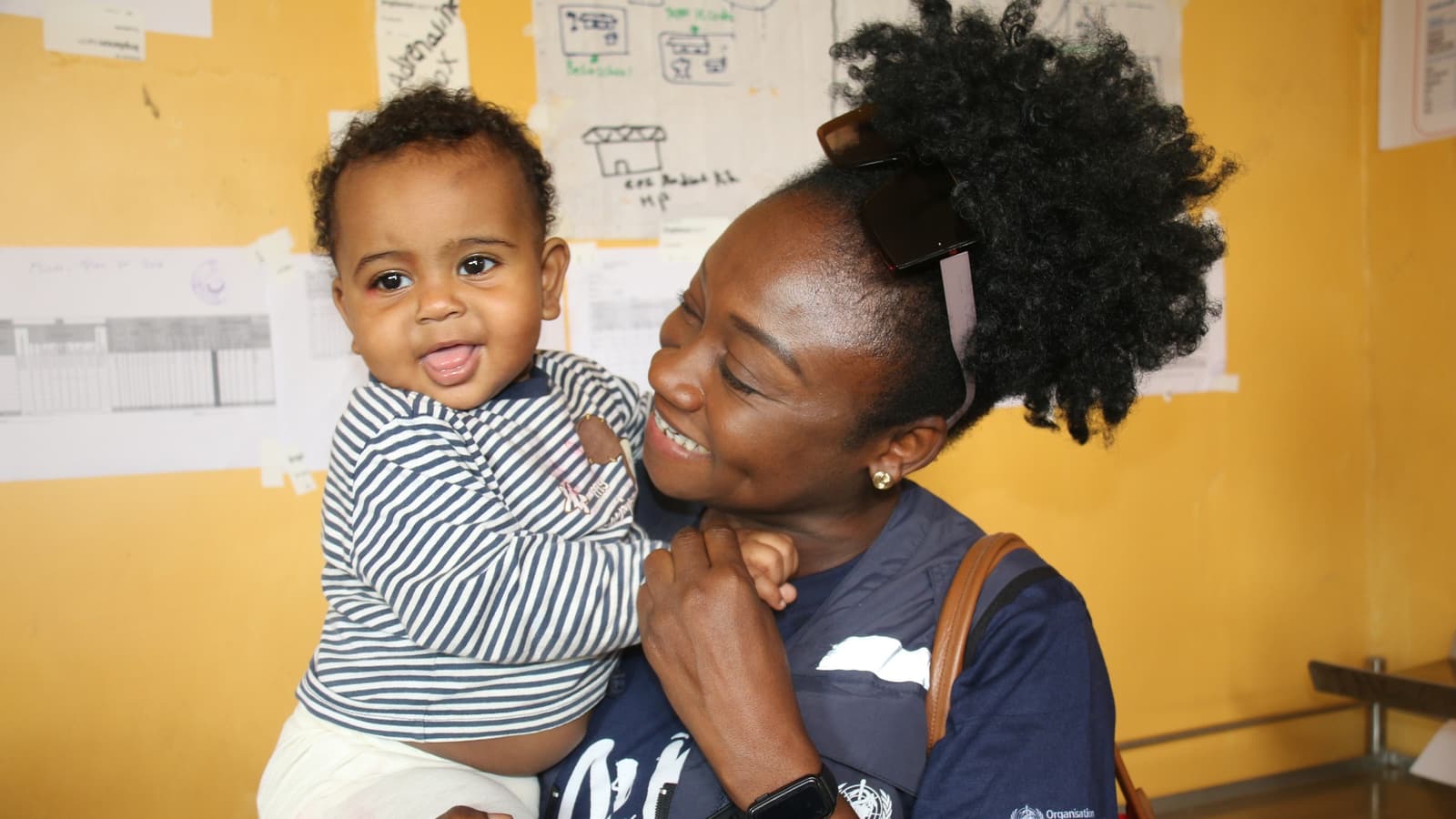
Image context: the cover photo shows a WHO staff member holding a baby in a malaria-related field setting. It fits this article because the live issue is not abstract innovation but whether very small infants can move from clinical neglect into usable treatment pathways inside real health systems.[1][2]
What changed on April 24
The new treatment is an infant-specific artemether-lumefantrine formulation, prequalified by WHO as meeting international standards for quality, safety, and efficacy.[1] WHO describes it as the first antimalarial tailored to the youngest malaria patients, and says the decision should help close a long-standing treatment gap affecting babies who were previously managed with repurposed older-child formulations.[1]
The public-health significance is not hard to see. WHO says about 30 million babies are born each year in malaria-endemic areas of Africa.[1] The broader malaria burden remains heavy: the WHO fact sheet says there were an estimated 282 million cases and 610,000 deaths in 2024, with the African Region carrying about 95% of both cases and deaths.[2] Children under five still account for about 75% of malaria deaths in that region.[2] In other words, a formulation gap at the bottom of the age-and-weight ladder is not a niche inconvenience. It sits inside the highest-burden part of the disease map.[2][3]
Novartis, which developed the product with Medicines for Malaria Venture (MMV), adds one more operational detail that matters for near-term uptake: it says WHO prequalification is a key step for donor-funded and public-sector purchasing by UN and other procurement agencies, and that it plans to make the treatment available on a largely not-for-profit basis in endemic areas.[6] That does not guarantee scale, but it makes the post-approval path more concrete than a regulatory win without a supply channel.
Why procurement is the right immediate lens
The shortest explanation is that prequalification changes who is allowed to buy with confidence, not who is already being treated tomorrow morning. WHO's April 24 release says the designation will enable public-sector procurement.[1] That matters because malaria treatment in high-burden settings often flows through ministries of health, donor-backed tenders, UNICEF, the Global Fund ecosystem, and other large purchasing channels rather than through affluent retail markets.[1][6]
So the practical shift is this: before prequalification, there was no WHO-cleared infant-specific product in the standard public lane. After prequalification, there is one.[1][6] That is why the story is better framed as a procurement breakthrough than as an instant access breakthrough.
Several other steps still sit between that gate and routine use. Countries need product registration and ordering cycles. Treatment guidelines and training materials need to make frontline staff comfortable diagnosing and dosing malaria in very small infants. Supply chains need to carry the product to the facilities where newborn febrile illness is first seen. None of those tasks is implied complete by the WHO announcement itself.[1][2][6]
This is also where the World Malaria Day framing matters. WHO's 2026 campaign language says science is moving faster, that ending malaria in our lifetime is now a real possibility, and that the world should act on that opening now.[3] The caution built into the same WHO information stack is that progress is still fragile. The December 2025 malaria update says new tools prevented an estimated 170 million cases and 1 million deaths in 2024, but it also warns that drug resistance, diagnostic failure, and funding cuts threaten to reverse gains.[4] New products help only when systems can buy them, move them, and use them.
Why the diagnostics announcement matters in the same breath
WHO did not pair the infant-treatment announcement with new diagnostic tests by accident. The same April 24 release says WHO had already prequalified three new rapid diagnostic tests on April 14, 2026 to address failures in common HRP2-based malaria testing.[1]
That detail is easy to overlook and central to the story. WHO says reported studies and surveys in 46 countries have found P. falciparum strains that lack the gene targeted by standard HRP2-based RDTs, which can make infections effectively invisible to those tests and lead to false negatives.[1] The release adds that in parts of the Horn of Africa, up to 80% of cases were missed under those conditions.[1] WHO's procurement guidance sharpens the policy threshold: where 5% or more of cases are missed because of pfhrp2/3 gene deletions, countries should move away from the failing HRP2 test pattern and procure appropriate alternatives.[5]
Put differently, the April file is a two-part case-management story. One part fixes a treatment formulation gap at the smallest end of pediatric care. The other part addresses diagnostic blindness in places where the parasite has adapted around the most common test logic.[1][5] If a health system cannot reliably identify malaria, the new infant formulation arrives too late to matter. If it can diagnose but has no safe, quality-assured product for the 2-to-5-kilogram band, diagnosis still runs into a treatment gap. WHO is trying to narrow both weak points at once.[1][5]
What this does and does not mean yet
The strongest reading is not "WHO solved malaria for newborns." The strongest reading is that one of the oldest excuses for under-serving this group has become weaker. There is now a WHO-prequalified formulation designed for them, and the main international buyers no longer need to treat the category as an off-label afterthought.[1][6]
The weaker reading would be to assume the presence of a prequalified product means broad clinical use is imminent. WHO's own malaria materials argue against that complacency. The burden is still rising globally, official development assistance cuts are disrupting surveillance and campaigns, and resistant parasites are pressuring both treatment and diagnosis.[2][4] The infant-treatment milestone is therefore best understood as one clean improvement inside a much messier control environment.
What to watch next
The first signal is procurement: whether UNICEF, Global Fund-linked buyers, and endemic-country programmes begin ordering the infant formulation at meaningful scale.[1][6]
The second is national implementation: whether high-burden countries update protocols fast enough that frontline workers stop defaulting to older-child formulations for the smallest babies.[1][2]
The third is diagnostics: whether countries with documented pfhrp2/3 deletion problems actually switch purchasing patterns once the 5% missed-case threshold is crossed, rather than leaving HRP2-based failure in place.[1][5]
The April 24 announcement deserves attention precisely because it is narrower than a victory narrative. WHO cleared the first malaria treatment built for newborns and young infants, which is a real change in the purchasing and quality-assurance landscape.[1][6] The harder part begins after the headline: getting the product bought, distributed, recognized, and paired with diagnostics good enough to find the children it is supposed to save.[1][4][5]
Sources
- WHO, "WHO prequalifies first-ever malaria treatment for newborns and infants, adds new diagnostic tests" (April 24, 2026).
- WHO, "Malaria" fact sheet (December 4, 2025).
- WHO, "World Malaria Day 2026" campaign page.
- WHO, "New tools saved a million lives from malaria last year but progress under threat as drug resistance rises" (December 4, 2025).
- WHO Global Malaria Programme, "Selection and procurement" for malaria rapid diagnostic tests.
- Novartis, "Novartis malaria treatment Coartem Baby receives WHO prequalification, paving way for greater access for newborns and young infants" (April 24, 2026).