As of 2026-05-02 02:04 UTC, the Federal Communications Commission's April 30 action on equipment testing is being flattened into an easy headline: Washington wants to kick Chinese labs out of the U.S. electronics approval process. That headline is directionally true, and Reuters described the vote that way after the open meeting.[5] But it misses the more useful distinction for manufacturers, compliance teams, retailers, and telecom buyers. The FCC did not finalize a blanket location-based prohibition on Thursday. What it finalized immediately was a tighter operating regime around equipment authorization: faster review for devices tested in trusted U.S. or reciprocal-jurisdiction labs, new disclosure obligations about foreign testing staff and sites, stronger post-market enforcement, and a more explicit screening system for prohibited actors.[1][2]
The bigger geographic move remains in the proposal stage. Chairman Brendan Carr's statement says the commission now wants to "cease recognizing any lab in a country without a reciprocal agreement," arguing that more than 75% of testing migrated into countries that refuse reciprocal treatment for U.S. labs.[1] The circulated item asks whether the FCC should phase out recognition for test labs, certification bodies, and accreditation bodies in non-reciprocal territories, whether it should delay implementation to give industry time to adjust, and whether it should impose extra fees or longer review for applicants that still rely on those labs before any outright prohibition takes effect.[2] That means the live story is not just a China-policy story. It is an approvals-capacity story.
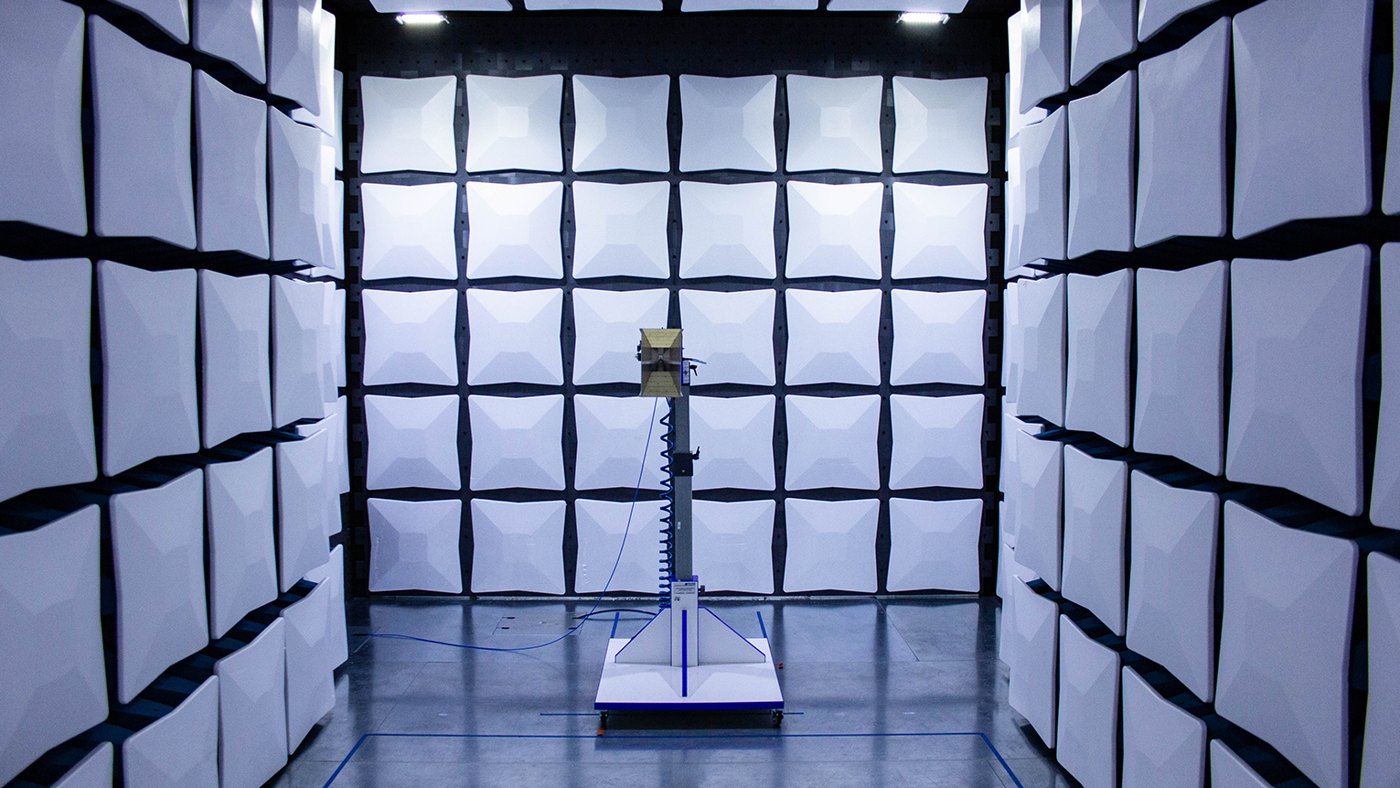
Image context: the cover uses a real RF/EMC anechoic-chamber photograph rather than a diagram or generic cybersecurity image. That is the right visual here because equipment authorization ultimately runs through physical testing rooms, accredited labs, and finite chamber capacity.[6]
Fact file
| Item | What is live now | Confidence note |
|---|---|---|
| April 30 action | The FCC advanced a broader proposal aimed at Chinese labs, while also adopting immediate changes to speed review for trusted labs and tighten oversight.[1][2][5] | Strong. Reuters and FCC materials align on the split between adopted rules and proposed next steps. |
| Immediate rule change | Devices in the PAG system that are tested in the U.S. or in reciprocal-agreement jurisdictions get a fast-track review lane.[2] | Strong. The draft item spells out the adopted fast-track process. |
| Immediate disclosure change | Test labs and TCBs must disclose the location and number of employees involved in FCC-recognized testing and certification, including foreign-based staff.[2] | Strong. This is part of the adopted order. |
| Existing enforcement baseline | Since the 2025 "Bad Labs" order, the FCC has already moved against labs it says were controlled by foreign adversary governments; Carr says 23 labs have been denied or had recognition withdrawn.[1][3] | Strong. The 2025 press release sets the baseline, and Carr updates the current count. |
| Main structural proposal | The FCC is seeking comment on ending recognition for labs in non-reciprocal territories, with questions about phase-outs, delays, extra fees, and longer review for applicants that keep using them.[1][2] | Strong. This is explicit in the FNPRM questions. |
| Broader policy direction | In March, the FCC bureau also expanded the Covered List to include routers produced in foreign countries, showing the agency is willing to move from entity-based controls toward place-of-production controls in some lanes.[4] | Moderate to strong. It is an official FCC notice, but it addresses a related rather than identical program. |
What the FCC actually did on April 30
The cleanest way to read Thursday's vote is to separate adopted mechanics from proposed geography.[1][2] On the mechanics side, the commission is trying to make its trusted lanes more attractive before it finishes deciding how hard to hit its untrusted lanes. The adopted item creates priority review for PAG applications when equipment is tested in the United States or in a jurisdiction that already gives reciprocal treatment through a mutual recognition agreement or comparable trade arrangement.[2] It also expands disclosure about where testing and certification work is actually being performed, reinforces post-market surveillance, and sharpens enforcement against false certifications and fraudulent test reports.[2]
That combination matters because equipment authorization is a chokepoint most end users never see. The FCC requires authorization for radio-emitting products across a wide range of consumer and industrial categories, and the 2025 "Bad Labs" release makes clear that private labs and telecommunications certification bodies do the testing and certification work that lets those devices enter the U.S. market.[3] If Washington hardens trust rules without building a faster trusted lane, it creates a political win and an operational jam at the same time. The April 30 order is an attempt to avoid exactly that trap.[2]
On the geography side, the agency is plainly signaling where it wants to go. Carr's statement says the FCC "takes the next step to restore reciprocity" after excluding foreign-adversary-controlled labs and now proposes to stop recognizing labs in countries without reciprocal agreements.[1] The circulated item asks bluntly whether the commission should phase out recognition for non-reciprocal territory labs and whether applicants that keep using them should face a fee, a more rigorous review process, or additional waiting periods before any final prohibition takes effect.[2] Reuters translated that political direction into the simpler headline that the commission is moving to bar Chinese labs from testing devices for the U.S. market.[5]
Why this is an approvals story before it becomes a ban story
The key number in this file is not 23; it is 75%.[1][5] If more than three quarters of testing has migrated into jurisdictions the FCC no longer trusts or no longer wants to treat as structurally acceptable, the agency is confronting a throughput problem as much as a security problem. Its own order says the recent de-recognitions have already reduced supply and highlighted the risks of reliance on foreign labs, which is why it is now trying to incentivize a stronger U.S. and reciprocal-territory ecosystem with faster processing.[2]
That makes the next stage of this fight unusually concrete. The legal and political rhetoric is about national security, reciprocity, and foreign adversaries.[1][2][3] The business consequence is about queue formation. If importers and device makers start shifting test work into a smaller pool of trusted labs before the United States has enough accredited capacity, then review times rise, launch calendars slip, and smaller hardware companies get squeezed first. The FCC's own questions about delay periods, added fees, and alternative transition tools show that it understands the risk of a sudden cutover.[2]
There is also a second-order signal in the March 23 Covered List notice on foreign-produced routers.[4] That order is not about test labs, but it shows the commission moving beyond named firms toward broader location-based restrictions in at least some categories. In other words, the China-tech crackdown inside the FCC is no longer only a blacklist story. It is becoming a rule-architecture story in which geography, reciprocity, production origin, and testing venue are all being pulled closer to the same national-security frame.[1][2][4]
Who should care in the next 24 hours, 7 days, and 30 days
In the next 24 hours, the people who should care most are device makers, importers, lab operators, and outside counsel who manage FCC approvals. The immediate operational question is simple: which current product programs already rely on PAG review, and which of those can realistically be shifted into U.S. or reciprocal-jurisdiction labs without blowing up launch timing or test budgets?[2][3]
Over the next 7 days, watch for comment-cycle positioning. Trade groups, labs, and certification bodies now have incentives to argue for three different outcomes at once: a narrower definition of non-reciprocal territory, a longer phase-in window, and more practical transition tools than an abrupt cutoff.[2] If the commission starts hearing that trusted-lab capacity is too thin, the real negotiation will move from ideology to implementation.
Over the next 30 days, the most important signal will be whether the FCC keeps framing this as a China-only security file or as a more durable reciprocity doctrine for equipment authorization.[1][2] That distinction changes how global manufacturers respond. A China-only story invites tactical rerouting. A reciprocity doctrine forces a more permanent redesign of where testing, certification, and launch sequencing happen.
Scenarios
Base case: the FCC's proposal stays pointed at non-reciprocal jurisdictions, but the eventual final rule comes with a transition period and the fast-track trusted-lab lane becomes the practical bridge.[1][2] This is the most institutionally coherent path because it preserves the security message while giving industry a migration mechanism.
Upside case: U.S. and reciprocal-jurisdiction lab capacity expands quickly enough that the FCC can tighten recognition rules without causing major approval delays.[2] In that version, the April 30 order looks less like a bottleneck warning and more like a successful industrial-policy nudge inside a regulatory program.
Downside case: the proposal hardens faster than capacity does. Then the commission's security move turns into a product-timing tax, with longer queues, higher compliance spend, and disproportionate pain for smaller hardware firms that cannot easily reserve trusted-lab capacity in advance.[2][5]
Action checklist
For hardware companies: map every active and near-term FCC authorization program by testing venue, PAG exposure, and backup-lab availability. The firms that do this first will know whether this is a paperwork issue or a launch-calendar issue.[2][3]
For recognized labs and TCBs in the U.S. and reciprocal jurisdictions: prepare for demand migration rather than waiting for a final prohibition. The new fast-track lane only matters if trusted capacity actually exists when applicants try to move.[2]
For investors, retailers, and telecom buyers: treat this as a lead-time story, not only as a geopolitics story. If the rule changes keep stacking up across the Covered List, routers, and lab recognition, hardware launch timing may become the first visible stress point.[2][4]
The invalidation condition is clear. If the FCC backs away from the non-reciprocal-territory proposal or leaves it as a symbolic consultation exercise, then the immediate significance of April 30 shrinks to process tightening and faster review for trusted labs. If, instead, the comment cycle confirms a serious path to location-based recognition limits, the important question will no longer be whether Washington wants fewer Chinese labs in the system. It will be whether the United States can replace that testing geography without turning equipment authorization into the next hardware bottleneck.[1][2][5]
Sources
- Federal Communications Commission, "Statement of Chairman Brendan Carr" in Promoting the Integrity and Security of Telecommunications Certification Bodies, Measurement Facilities, and the Equipment Authorization Program, ET Docket No. 24-136 (April 30, 2026).
- Federal Communications Commission, Second Report and Order, Order on Reconsideration, and Second Further Notice of Proposed Rulemaking, ET Docket No. 24-136 (circulated April 9, 2026; considered at the April 30, 2026 open meeting).
- Federal Communications Commission, "FCC Bans 'Bad Labs' from U.S. Equipment Authorization Process" (May 22, 2025).
- Federal Communications Commission Public Safety and Homeland Security Bureau, "FCC's Public Safety and Homeland Security Bureau Announces Addition of Routers Produced in Foreign Countries to FCC Covered List" (March 23, 2026).
- Reuters, "US telecom agency votes to expand tech crackdown on China" via MarketScreener (April 30, 2026).
- VPI Technology, "FCC Part 15 Compliance Support" - source page for the RF anechoic chamber photograph used as the article image and an example of the type of lab capacity involved in FCC testing.