As of 2026-05-02 09:33 UTC, President Donald Trump's new Cuba order is being reduced to the easiest headline available: Washington has tightened sanctions again and added another layer of travel pressure.[1][2][5] That is true as far as it goes. The May 1 order blocks property of a wide range of foreign persons tied to the Cuban government, suspends entry for covered people, and presents the move as the next step after January's national-emergency declaration on Cuba.[1][3] But the more important operational change sits one layer deeper. This order is also a foreign-financial-institution tool. It authorizes the Treasury Department, in consultation with the State Department, to impose sanctions on foreign banks that conduct or facilitate significant transactions for blocked persons, including restrictions on correspondent or payable-through accounts in the United States.[1]
That distinction matters because sanctions policy becomes harder, and usually more consequential, once it moves from speeches and visa bans into banking channels. Reuters' May 1 report captured the key shift cleanly: White House officials said the order authorizes secondary sanctions for conducting or facilitating transactions with targeted parties.[5] The order text shows how that would work. Section 4 lets Treasury either restrict access to U.S. correspondent-account plumbing or block the foreign financial institution's own U.S.-reachable property interests if it is found to be handling significant transactions for sanctioned persons.[1] In other words, the story is no longer only about who in Havana is condemned. It is about whether foreign intermediaries decide the Cuba business is no longer worth the dollar-clearing risk.
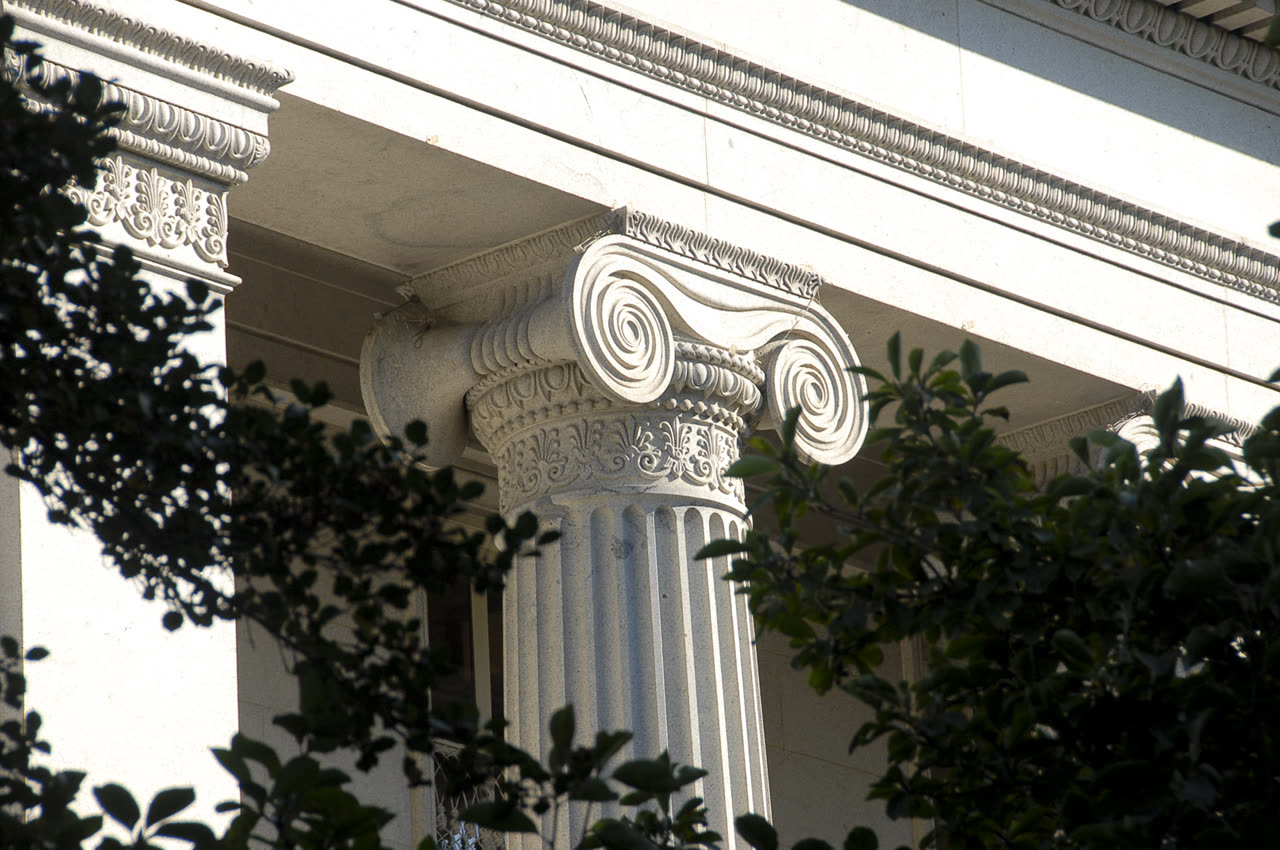
Image context: the cover uses a real U.S. Treasury building photograph from the Treasury Department's Flickr stream via Wikimedia Commons. That is the right visual here because the live issue is financial enforcement architecture, not symbolic Cold War imagery or a generic map of the Caribbean.[6]
Fact file
| Item | What is live now | Confidence note |
|---|---|---|
| New order signed | Trump signed a new Cuba sanctions order on May 1, 2026, and the White House says it broadens existing sanctions under IEEPA.[1][2] | Strong. The order and fact sheet are primary documents. |
| Who can be targeted | The order covers foreign persons operating in Cuba's energy, defense and related materiel, metals and mining, financial services, or security sectors, plus other sectors Treasury may later specify.[1] | Strong. These sectors are listed directly in Section 2. |
| Travel consequence | Covered persons can also face immigrant and nonimmigrant entry suspension into the United States.[1] | Strong. Section 3 states this directly. |
| Banking consequence | Treasury may sanction a foreign financial institution that conducts or facilitates significant transactions for blocked persons, including by restricting or prohibiting U.S. correspondent or payable-through accounts.[1] | Strong. This is the core text of Section 4. |
| Policy chain | The White House frames the order as a further step after June 2025 Cuba-policy tightening and the January 29, 2026 Cuba national emergency in Executive Order 14380.[2][3] | Strong on chronology. The White House states both links explicitly. |
| What is still missing | Reuters reported on May 1 that it was not immediately clear which specific people or entities had been hit under the new order.[5] | Strong as a description of the current disclosure gap, not of future enforcement. |
| Existing licensing baseline | OFAC's Cuba program still sits on multiple legal authorities, and the new order says activities already authorized under licenses in 31 CFR part 515 remain unaffected.[1][4] | Strong. The order preserves licensed activity; OFAC describes the broader framework. |
Why this is a banking tool before it is a travel-ban story
The most important sentence in the new order is not the travel section. It is the part that reaches foreign financial institutions.[1] Visa suspensions are visible and politically legible, but they are usually narrower in commercial effect. Correspondent-account pressure is different. It forces banks outside Cuba to ask whether servicing a client, sector, or transaction connected to Havana is worth even a remote chance of losing frictionless access to U.S. dollar channels.
That is why the White House fact sheet and the Reuters account matter together.[2][5] The fact sheet lays out the administration's broad rationale around repression, corruption, hostile intelligence, and regional security.[2] Reuters supplies the immediate market-relevant point: officials are treating this as a secondary-sanctions order, not merely as a direct-designation order.[5] Once that is true, the compliance perimeter widens. The practical audience is no longer only Cuban officials, state-linked entities, or their direct commercial partners. It now includes foreign banks, payment intermediaries, insurers, and cross-border counterparties deciding whether a Cuba-linked relationship could become sanctionable if Treasury starts naming parties aggressively.
The sector list inside Section 2 makes that wider reach more obvious.[1] Energy, defense-related materiel, metals and mining, financial services, and security are not narrow moral categories. They are operational categories through which an administration can shape commercial choke points. The order also allows Treasury, in consultation with State, to name other sectors later.[1] That means the order is best read as an expandable enforcement frame rather than as a complete sanctions list on day one.
What has changed, and what has not
The order does not mean every Cuba-linked transaction is instantly blocked. Reuters was clear that named targets were not yet obvious on May 1, and the White House materials focus more on authority than on a same-day designation roster.[2][5] That matters. There is a real difference between building a bigger legal tool and immediately swinging it at scale.
At the same time, the change is not cosmetic. The order gives Treasury a larger ladder to climb later. It can move from direct designations to pressure on the institutions that clear, finance, or facilitate activity for those designees.[1] That is the part compliance teams will care about, especially because foreign-bank sanctions can alter behavior well before a long public target list appears. The threat alone can cause de-risking.
The other important continuity point is licensing. OFAC's Cuba page reminds readers that the Cuba program already operates through overlapping statutes, executive actions, regulations, and licenses.[4] The new order does not wipe that away. Section 4 explicitly says sanctions on foreign financial institutions do not affect activities authorized by licenses issued under part 515 of the Code of Federal Regulations.[1] So the live story is not "all prior Cuba exceptions vanished overnight." It is that a more aggressive overlay has been added on top of the existing architecture.
Decision impact by horizon
Next 24 hours
Banks, trade-finance teams, insurers, and sanctions counsel should treat this as a scope-mapping exercise first. The immediate question is whether any current counterparties, customer sectors, or payment flows touch the categories the order names, especially energy, financial services, security, and state-linked Cuban activity.[1][4]
Next 7 days
Watch for the first real implementation signal: new Treasury designations, OFAC guidance, Federal Register action, or a clarification of what counts as a significant transaction in this context.[1][4] Without that layer, the order is powerful but still partly abstract.
Next 30 days
The deeper question is whether the administration uses the order narrowly, against a selected group of Cuban-linked actors, or turns it into a broader deterrent aimed at third-country intermediaries. If the latter happens, the order becomes less a bilateral Cuba pressure file and more a cross-border banking-risk file.[1][5]
Scenarios
Base case: Treasury starts with a limited set of designations and uses the order mainly as a deterrent signal to foreign intermediaries while preserving licensed humanitarian and otherwise authorized lanes.[1][4]
Upside case for the administration's strategy: the threat of correspondent-account pressure causes rapid voluntary de-risking by foreign institutions before Treasury needs to impose many visible penalties.[1][5]
Downside case: broad legal authority arrives faster than operational guidance, leaving banks and counterparties to over-correct, freeze routine dealings, and widen compliance friction without much clarity on where Treasury actually intends to draw the line.[1][4][5]
Action checklist
- For sanctions and banking teams: map Cuba-linked exposure by counterparty, sector, payment path, and any dependence on U.S. correspondent-account access.[1][4]
- For non-U.S. financial institutions: review whether any customers or transactions could be read as materially supporting blocked persons if Treasury begins designating under the new order.[1]
- For businesses using licensed Cuba-related channels: confirm which activities still rest on existing OFAC authorizations and which ones depend on counterparties that may now de-risk even before formal guidance appears.[1][4]
The narrow conclusion is more useful than the loud headline. As of May 2, 2026, Trump's Cuba order is not most important because it adds one more layer of travel pressure. It matters because it gives Treasury a clearer path to punish or deter foreign financial institutions that keep servicing blocked Cuba-linked parties. The next move to watch is no longer rhetorical escalation. It is implementation: designations, guidance, and the first sign of how hard Washington intends to squeeze the banking channels around Cuba.[1][2][4][5]
Sources
- The White House, "Imposing Sanctions on Those Responsible for Repression in Cuba and for Threats to United States National Security and Foreign Policy" (May 1, 2026).
- The White House, "Fact Sheet: President Donald J. Trump Imposes Sanctions on Cuban Regime Officials Responsible for Repression and Threats to U.S. National Security and Foreign Policy" (May 1, 2026).
- The White House, "Addressing Threats to the United States by the Government of Cuba" (Executive Order 14380, January 29, 2026).
- U.S. Department of the Treasury, Office of Foreign Assets Control, "Cuba Sanctions" (accessed May 2, 2026).
- Reuters via MarketScreener, "Trump expands U.S. sanctions on Cuban government" (May 1, 2026).
- Wikimedia Commons, "File:Treasury Building (32648233951).jpg" (source page for the U.S. Treasury building photograph from the Treasury Department's Flickr stream).