As of 2026-05-01 20:05 UTC, the live Iberian blackout story is no longer a fight over first causes in the abstract. ENTSO-E's final report from March, Spain's own committee report, and April's new accountability moves have pushed the file into a harder phase: who failed to absorb or control voltage when the system was already unstable, and how quickly operators and regulators can convert that diagnosis into enforceable operating practice.[1][2][3][5][6] The most important shift is conceptual. The April 28, 2025 collapse is no longer best read as a generic renewables panic or a one-off freak event. The official record now describes a multifactor over-voltage cascade in which oscillations, gaps in reactive-power control, generator disconnections, and uneven stabilisation capacity interacted fast enough to bring down the peninsular system.[1][2][3][7]
That matters because accountability in power systems is not mainly a courtroom question. It is an operating question. If the reports are right, the weakest point was not that Spain lacked electricity in the gross sense. It was that the system did not have enough dependable voltage-control behavior at the precise moment it needed it most, and some plant responses appear to have worsened the problem rather than absorbing it.[1][2][3] Once a blackout of that size has already happened, the next policy test is whether those findings become contracts, obligations, supervision, and verified behavior before the next stress day arrives.
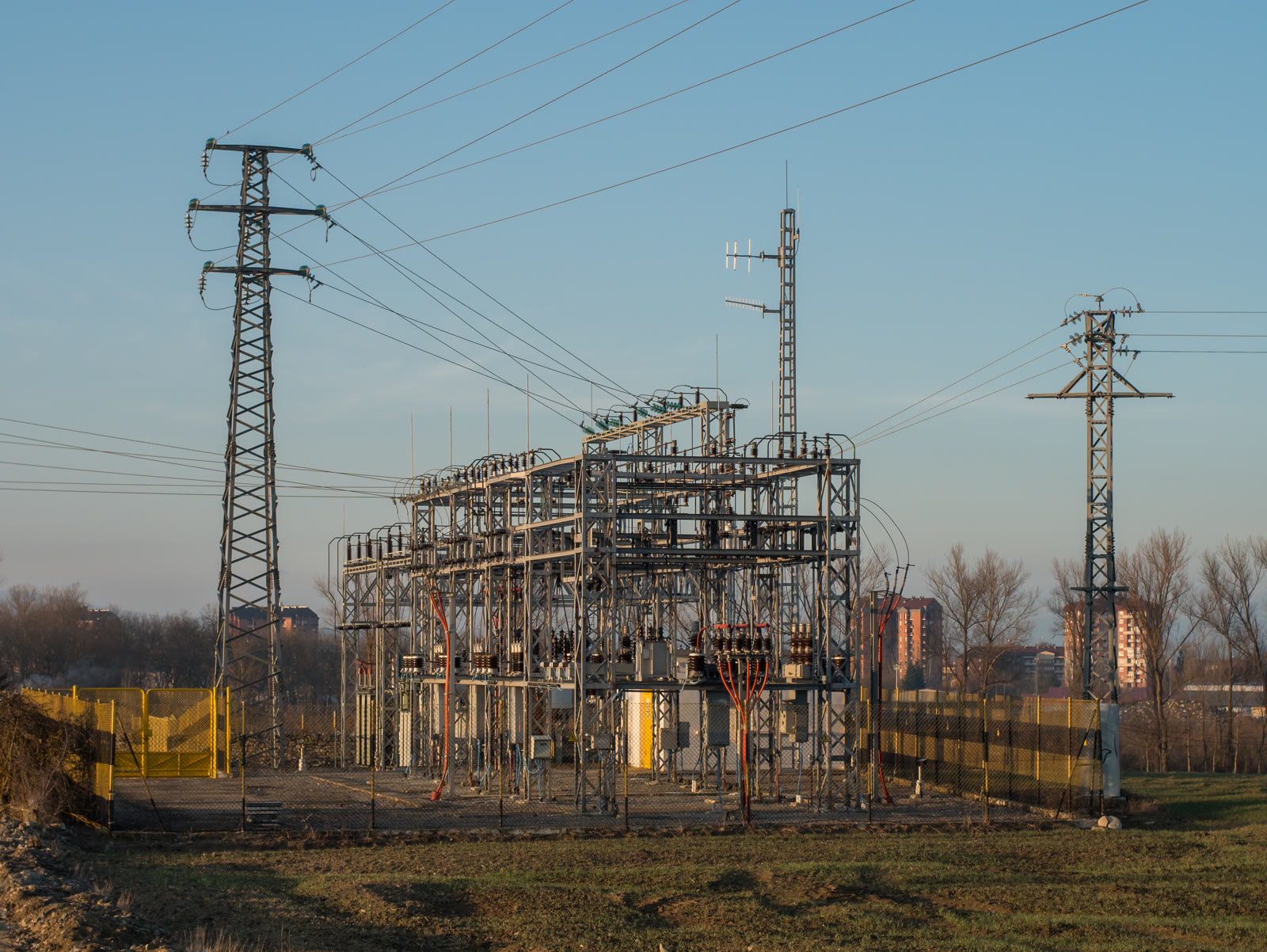
Image context: the cover uses a real photograph of a Spanish high-voltage substation because this story lives inside grid equipment and operating discipline, not in a generic "energy transition" illustration. The live question is whether the transmission system and the plants connected to it can keep voltage inside safe boundaries when conditions turn unstable.[9]
Fast facts
| Item | What is live now | Confidence note |
|---|---|---|
| Official European diagnosis | ENTSO-E says the blackout resulted from many interacting factors, including oscillations, gaps in voltage and reactive-power control, differences in voltage-regulation practices, rapid output reductions, and generator disconnections in Spain.[1][2] | Primary European investigation published March 20, 2026. |
| Official Spanish diagnosis | Spain's government says the peninsular zero-voltage event came from a multifactor over-voltage problem, with insufficient voltage-control capability, oscillations, and generation disconnections, some apparently improper.[3] | Primary government committee materials presented June 17, 2025. |
| Cyberattack question | Spain's committee said its cyber workstream ruled out a cyberattack at the system operator, control centres, or analysed generation centres.[3] | Stated in the official committee press note. |
| Accountability phase | Reuters reported in April 2026 that a Spanish Senate inquiry assigned blame to the grid operator, the government, and the watchdog for failing to act on known vulnerabilities.[5] | Secondary report on preliminary political conclusions, not a technical root-cause report. |
| Regulatory enforcement phase | Another April 2026 report says CNMC opened formal investigations after finding indications of power-sector rule breaches that may have affected system functioning.[6] | Secondary report summarizing the regulator's announced inquiries; proceedings remain ongoing. |
| Why the stakes are broader than energy policy | Banco de Espana says retail payment transactions fell sharply during the blackout, with card transactions down about 55% versus a comparable reference day.[8] | Primary central-bank analysis of downstream operational impact. |
What the official record has already settled
The cleanest way to misread the story now is to act as if investigators are still stuck at the question of whether anyone knows what happened. That phase is largely over. ENTSO-E's public summary is explicit that the blackout came out of a combination of oscillations, reactive-power and voltage-control gaps, rapid output reductions, and cascading generator disconnections in Spain.[1] Spain's own committee used different institutional language but landed in the same zone: over-voltage, insufficient control capability, oscillations that shaped system operations, and disconnections that progressively tipped the system into collapse.[3]
That does not mean every political fight has ended. It does mean the center of gravity has moved. The live dispute is no longer whether the event deserves technical analysis. It is which actors had obligations that were not met, which of those obligations need to be rewritten, and how much of the answer sits in operator practice versus market rules versus plant capabilities. MITECO's public-consultation note on urgent measures to reinforce the electricity system is revealing on this point. The ministry did not treat the blackout as an historical curiosity; it treated it as justification for urgent resilience measures because electricity supply touches health, transport, commerce, industry, security, and defence.[4]
IEA's 2026 electricity reliability analysis reinforces why this has become a European systems story rather than a Spanish one.[7] It describes the Iberian event as the largest European blackout since the 2003 Italian outage, notes that the grid was cut off from the Continental European system in seconds, and highlights that restoration was accelerated by interconnections with France and Morocco plus domestic black-start capability.[7] Interconnection helped save the recovery. It did not erase the need for stronger local voltage discipline before the separation happened.
Why the file is now about accountability, not explanation
The April 2026 developments matter because they shift the story from diagnosis into consequences. Reuters' account of the Senate inquiry says the upper house's probe treated the blackout as a known vulnerability rather than an unforeseeable accident, citing repeated voltage swings in the weeks and months beforehand.[5] That is a different kind of accusation from "the grid failed on one bad day." It implies that warnings were visible before April 28, 2025 and that the real policy failure may have been tolerated instability rather than one isolated misstep.
The CNMC investigations point the same way from a regulatory angle. The regulator reportedly opened formal inquiries after finding evidence of possible breaches that may have influenced how the system functioned, even while stopping short of saying those breaches alone explain the blackout.[6] That distinction is important. In complex infrastructure, responsibility often does not arrive in a single guilty act. It arrives as a stack of tolerated weaknesses: settings that are too rigid, plants that do not respond as expected, supervision that is too slow, markets that do not reward the right stabilising service, and procedures that were technically legal until the day they were obviously insufficient.
That is why the Iberian file now matters beyond Spain and Portugal. It is a case study in how high-renewables systems can still fail on an old-fashioned engineering truth: voltage has to be actively controlled, not assumed away. The policy lesson is not that renewables are impossible. The lesson is that a system with fast-changing power flows, weak reactive-power margins, and uneven plant behavior needs more explicit operating obligations and tighter verification than a looser, more synchronous system once did.[1][2][3][7]
What should change before the next stress window
The most useful thing in MITECO's urgent-measures track is not any single draft line. It is the decision to treat the blackout as a resilience problem requiring faster regulatory treatment.[4] That is the right frame. A serious response needs at least four things.
First, voltage-control responsibility has to become more legible. When the next unstable day arrives, operators need to know which assets are supposed to absorb reactive power, how quickly, and under what settings. Second, those obligations need real supervision rather than trust by default. A plant that is contracted or expected to stabilise voltage should be measured against performance that can be audited after an event. Third, interconnection policy should be treated as a recovery and flexibility asset, not as a substitute for local readiness. Fourth, downstream resilience has to stay in the conversation. Banco de Espana's payment-system paper is a reminder that a grid incident quickly becomes a commerce, communications, and cash-access story.[8]
That last point is why the article's stakes are not abstract. Banco de Espana says card transactions fell by about 55% relative to a comparable day, with some small-retailer activity falling more than 80% at the worst moments.[8] The blackout was therefore not just a technical embarrassment inside the control room. It became a live test of how quickly essential services can keep operating when electricity and communications fail together. If accountability produces only blame allocation and not a stronger operating model, the system will have learned the wrong lesson.
Decision impact by horizon
Next 24 hours
Grid watchers should treat April's Senate and CNMC moves as a signal that the file has entered an evidence-and-remedy phase.[5][6] The key question is no longer whether another report will describe over-voltage. It is which concrete obligations, sanctions, or technical requirements follow from the reports already on the table.
Next 30 days
The useful watchpoints are implementation signals: whether Spain advances hardening measures, whether regulators clarify plant-performance expectations, and whether operators or ministries publish a more explicit compliance path around voltage control, reactive-power support, and event monitoring.[4][6] If the story remains trapped at the level of public blame, that is a weak sign.
Next 90 days
The larger test is whether the blackout changes how Europe treats grid-stability services in practice.[1][2][7] A strong outcome would make voltage-control capacity easier to procure, easier to verify, and harder to treat as an implicit free good. A weak outcome would leave the same ambiguities in place until the next period of low load, heavy transfers, or abnormal oscillation exposes them again.
Scenario map
- Base case: the official diagnosis holds, ongoing investigations continue, and Spain translates the blackout into stricter operating and supervisory expectations without a single dramatic political reset.[1][3][4][6]
- Upside case: the blackout accelerates a clearer market-and-operations framework for voltage control, so future plant behavior is more explicit, measurable, and enforceable before the next major stress event.[2][4][7]
- Downside case: the debate hardens into a culture-war argument about energy mix, while the harder engineering problem of reactive-power discipline remains under-specified.[1][2][3][7]
Action checklist
- For policymakers and regulators: separate blame assignment from system repair, and make voltage-control obligations auditable rather than rhetorical.[3][4][6]
- For grid and utility readers: watch for evidence that plant behavior, protection settings, and supervisory rules are being rewritten in operational terms, not just defended in public statements.[1][2][6]
- For businesses and resilience planners: treat the blackout as a continuity case, not only an energy story; payments, communications, retail operations, and transport all moved with the grid.[7][8]
The practical bottom line is narrower and more useful than a generic energy argument. As of May 1, 2026, the Iberian blackout has entered its accountability phase. The official reports have already narrowed the technical problem to voltage instability, reactive-power control, and cascading disconnections. The next serious question is whether Spain and Europe can turn that diagnosis into enforceable operating discipline before the next day that pushes the system toward the edge.[1][2][3][4][5][6][7]
Sources
- ENTSO-E, "28 April 2025 Blackout" (summary page, last updated March 20, 2026).
- ENTSO-E Expert Panel, Final Report on the Grid Incident in Spain and Portugal on 28 April 2025 (March 20, 2026 PDF).
- Spanish Ministry for the Ecological Transition and the Demographic Challenge, "Se presenta el informe del Comite de analisis de la crisis electrica del 28 de abril" (June 17, 2025 PDF press note).
- Spanish Ministry for the Ecological Transition and the Demographic Challenge, "Audiencia e informacion publica sobre el proyecto de Real Decreto por el que se aprueban determinadas medidas urgentes para el refuerzo del sistema electrico" (public consultation page).
- Reuters, "Spain's Blackout Probe Blames Grid Operator, Government, Watchdog" via Insurance Journal (April 17, 2026).
- Energy Market Price, "Spain's regulator launches investigations into the historic blackout after discovering violations of regulations" (April 17, 2026).
- International Energy Agency, "Reliability" in Electricity 2026 (2026 analysis).
- Banco de Espana, "The impact of the 28 April 2025 blackout on payment systems in Spain" (Financial Stability Review, Autumn 2025 PDF).
- Wikimedia Commons, "File:Vitoria - Olarizu - Estacion de transformadores 01.jpg" (photograph by Basotxerri).
Editor’s Pick Review
This piece wins the standard Editor’s Pick slot because it is the strongest 24-hour candidate on timeliness, evidence discipline, and reader utility. It turns a live blackout story away from generic energy-politics noise and toward the operational question that now matters: whether voltage-control and reactive-power obligations become enforceable before the next grid stress window. The source mix is unusually strong for a news analysis—primary ENTSO-E and Spanish-government material, regulator/accountability reporting, IEA reliability context, and Banco de España downstream-impact data—and the article keeps uncertainty boundaries visible without dulling the argument. Its visual choice also clears the stricter image policy: a real Spanish substation photograph grounds the story in infrastructure and operating discipline rather than using an analytical diagram or decorative abstraction. The Chinese edition carries the same argument with high readability, stable terminology around 电压控制 / 无功功率 / 运行纪律, and low translationese, which makes it the most complete bilingual pick in the current 24-hour pool.