As of 2026-06-12 09:01 UTC, the European Commission's order against Meta is not just a fight over one messaging integration. It is an early test of whether a dominant consumer messaging platform can decide which general-purpose AI assistants reach users through its business API while the assistant market is still young.[1][2]
On June 9, the Commission imposed interim measures requiring Meta to restore free access to WhatsApp for rival general-purpose AI assistants. The order says Meta must return those providers to the same terms that applied before October 15, 2025, maintain that access while the antitrust investigation continues, and comply within five working days.[1]
The immediate target is WhatsApp Business access. The broader issue is distribution. If users increasingly reach assistants through chat surfaces rather than standalone apps, then a platform that controls a default messaging channel can shape the AI market before any final competition decision arrives.[1][6]
Verified Facts
| Point | What is verified | Confidence |
|---|---|---|
| Order date | The Commission announced interim measures on June 9, 2026. | High: direct Commission release.[1] |
| Required action | Meta must reinstate third-party AI-assistant access to WhatsApp Business under pre-October 15, 2025 terms, notably free access for those assistants. | High: direct Commission release.[1] |
| Compliance clock | The Commission says Meta has five working days to comply and must maintain the access terms until a final decision. | High: direct Commission release.[1] |
| Earlier case path | The investigation opened in December 2025; the Commission issued a Statement of Objections in February 2026 and a supplementary charge sheet in April 2026. | High: direct Commission timeline and reporting.[1][6] |
| Meta's response | Meta said it would appeal and framed the order as forcing free use of a paid WhatsApp Business product. | Medium-high: reported by AP; Meta's full legal appeal is not yet resolved.[3] |
| Legal posture | The order is temporary and does not decide whether Meta ultimately breached EU competition law. | High: direct Commission framing and Regulation 1/2003 interim-measures structure.[1][5] |
What Happened
The case began with a change to WhatsApp's business terms. Meta's current WhatsApp Business Solution Terms include an "AI Providers" section saying that providers of large language models, generative AI platforms, general-purpose assistants, and similar technologies are barred from using the WhatsApp Business Solution when the AI technology is the primary function being made available, with specific treatment for users registered with EEA or Brazil numbers.[4]
The Commission's preliminary view is that this shifted WhatsApp from a business messaging channel into a guarded distribution surface. According to the Commission, Meta appeared to hold a dominant position in the EEA-wide market for consumer communication applications through WhatsApp, and appeared to abuse that position by preventing competing general-purpose AI assistants from reaching users through the WhatsApp for Business API.[1]
Meta later revised the policy on March 4, 2026, allowing third-party AI assistants back onto WhatsApp for a fee. That did not settle the case. The Commission said the fee was, at first sight, equivalent in practice to the earlier access ban, because it could still shut smaller assistants out of a channel that mattered for scale.[1][6]
The Verge described the order as a rare use of emergency competition powers, and AP reported that Brussels has turned to temporary orders partly because slower antitrust cases have struggled to restrain large technology platforms in time.[2][3] That explains why the move matters beyond this one API dispute.
Why It Matters
The Commission is trying to intervene before market structure hardens. A final antitrust investigation can take years; an AI assistant market can reorder itself in months. If rivals lose distribution during that window, later remedies may arrive after users, integrations, business workflows, and investor attention have already moved elsewhere.[1][3]
That is why the word "interim" is doing so much work. Under Article 8 of Regulation 1/2003, EU competition authorities can order temporary measures in urgent cases where there is a risk of serious and irreparable harm to competition, based on a prima facie finding rather than a final infringement decision.[5] The Commission is effectively saying that waiting for the full case could make the eventual remedy less useful.
The dispute also exposes a boundary problem for AI distribution. WhatsApp Business was built for companies communicating with customers, not necessarily for open-ended assistants competing as consumer products. Meta's position, as reported by AP, is that the order makes some large AI companies free riders on a paid business product.[3] The Commission's counterpoint is that a dominant messaging channel cannot use pricing or terms to exclude rival assistants while Meta AI remains available.[1]
Both claims can be partly true. A business API needs cost recovery, anti-spam controls, data restrictions, and product boundaries. But if those controls are written so broadly that Meta's own assistant keeps the inside lane while rivals face a ban or uneconomic fees, the API stops looking like neutral infrastructure and starts looking like a gate.
Who Should Care
AI assistant companies should care first. WhatsApp is not just another endpoint; in Europe it is a daily-use communications layer. Losing that surface can mean losing lightweight consumer access, reactivation loops, and the habit of asking an assistant inside the conversation stream where the user already lives.[1][6]
Enterprise software teams should care because the order draws a line between customer-service automation and general-purpose assistant distribution. Meta's terms still allow businesses to retain AI providers as third-party service providers, but the terms restrict the use of Business Solution Data to build or improve AI models outside narrow conditions.[4] Any company building on WhatsApp now has to separate support workflows, AI-assistant product access, and training-data governance more carefully.
Other platform owners should care because the Commission is signaling speed. This is not the Digital Markets Act lane; it is classic competition enforcement applied to an AI access dispute. The lesson is that regulators may use emergency antitrust tools when platform policy changes look likely to decide a fast-forming AI market before the merits case finishes.[5][6]
Decision Impact
Next 24 hours: the live question is procedural. Meta has said it will appeal, but the interim order sets a short compliance window unless a court or the Commission changes the position.[1][3]
Next 7 days: watch whether rival assistants visibly return to WhatsApp Business on pre-ban terms, and whether Meta publishes any operational conditions around rate limits, data use, abuse prevention, or business verification. Those implementation details will show whether "restore access" means practical parity or a formal doorway with new friction.[1][4]
Next 30 days: watch for appeal filings, developer-policy updates, and evidence from affected AI providers. The strongest evidence will not be slogans about openness. It will be whether smaller assistants can acquire and serve European users through WhatsApp without paying fees that make the channel unusable.[2][6]
Scenarios
Base case: Meta restores free access while continuing to challenge the decision. The investigation continues, rival assistants regain a key European channel, and the Commission uses the case as a warning that AI distribution restrictions will be tested before markets mature.[1][6]
Upside case for rivals: restored WhatsApp access becomes commercially meaningful, the Commission's final case reinforces the interim logic, and platform owners become more careful about writing AI-assistant exclusions into business APIs.[1][5]
Downside case for the Commission: Meta wins procedural relief or proves that the prior terms created unsustainable technical, security, or cost burdens. In that branch, regulators would still scrutinize AI platform access, but this particular interim tool would look harder to use.[3][5]
The falsifier is practical: if third-party AI assistants technically regain access but cannot operate at usable cost, reliability, or scale, the order will have preserved formal access without preserving competitive access.
Sources
- European Commission, "Commission imposes interim measures on Meta to preserve free access to WhatsApp for rival AI assistants" (June 9, 2026).
- Jess Weatherbed, "WhatsApp ordered to host rival AI assistants for free," The Verge (June 10, 2026).
- Kelvin Chan, Associated Press via ABC News, "EU orders Meta to restore WhatsApp access for rival AI chatbots" (June 9, 2026).
- WhatsApp, "WhatsApp Business Solution Terms" (last modified March 6, 2026).
- EUR-Lex, Council Regulation (EC) No 1/2003, Article 8 interim-measures framework.
- Digital Watch Observatory, "EU orders Meta to restore access for AI assistants" (June 10, 2026).
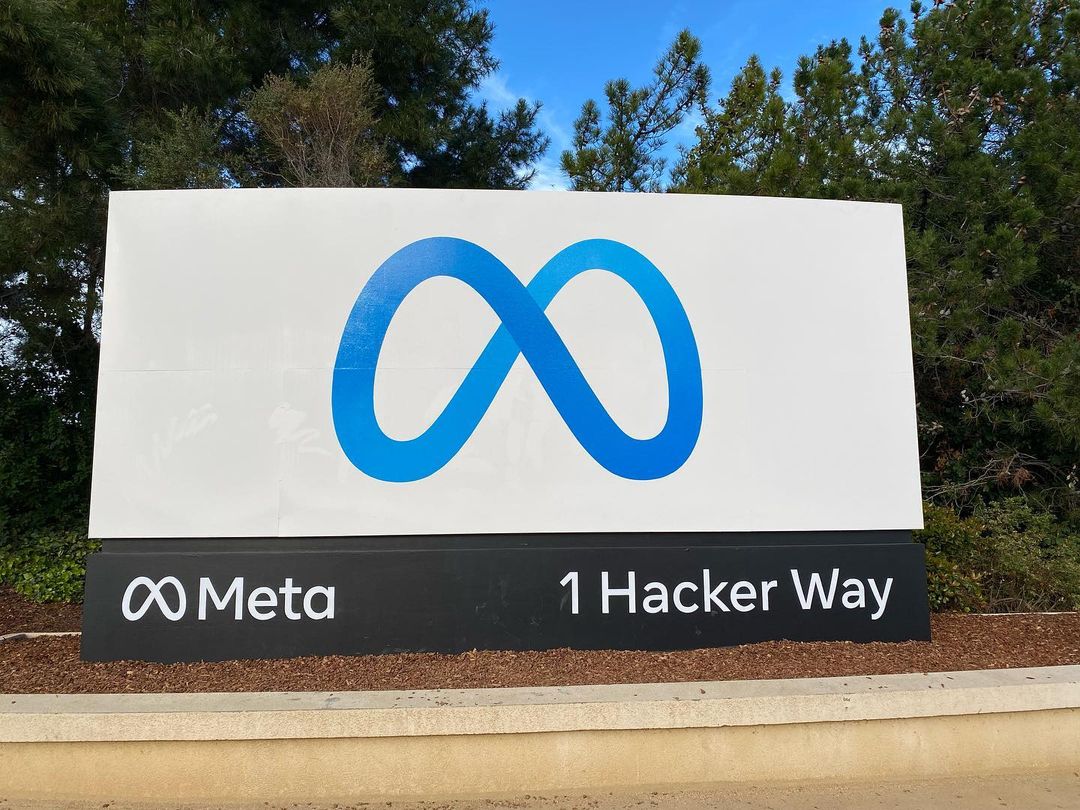
- Nokia621, "Meta Headquarters Sign.jpg," Wikimedia Commons, photographed May 12, 2022.