As of 2026-05-20 07:32 UTC, the Justice Department's latest antisemitism move is not a new law, a final rule, or a completed enforcement action. It is the planned launch of the Anti-Semitism Advisory Committee, or ASAC, a body DOJ says will advise the Attorney General and department leadership on coordinated responses to antisemitism in the United States.[1]
That makes the announcement easy to overstate and too important to ignore. The committee is an advisory layer, not a prosecutor's office. But it is being placed on top of a live enforcement architecture: a February 2025 multi-agency DOJ task force, a 2025 executive order demanding inventories of civil and criminal authorities, and the older 2019 Title VI framework that treats some antisemitic discrimination as actionable under civil-rights law when it is tied to race, color, or national origin.[2][3][4]
The practical question is therefore narrow. ASAC will matter if it turns diffuse concern into usable operating guidance: what counts as a coordinated threat response, how campus complaints move through federal channels, when local incidents become federal civil-rights matters, and how DOJ separates protected speech from unlawful harassment, threats, vandalism, and violence.[1][3][4] If it only produces broad statements, the May 19 announcement will be more signal than machinery.
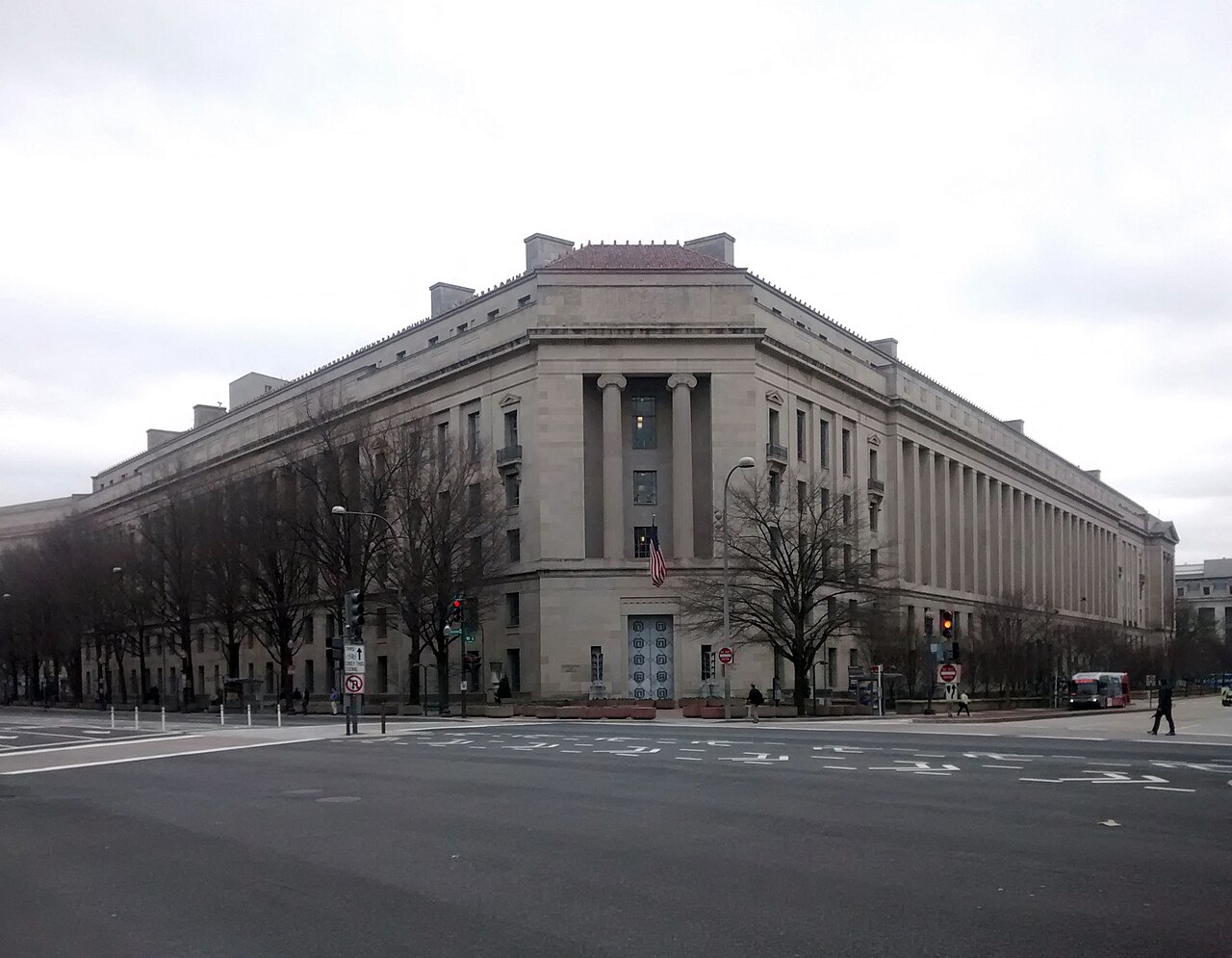
Image context: the cover uses a real photograph of the Robert F. Kennedy Department of Justice Building by Gunnar Klack.[7] It fits this report because the story is institutional rather than scene-driven: the new committee's significance depends on how advice travels through DOJ leadership, the Civil Rights Division, task-force coordination, and public-facing complaint channels.[1][2]
Fact File
| Item | What is known now | Confidence note |
|---|---|---|
| Announcement | DOJ announced on May 19, 2026 that it will launch the Anti-Semitism Advisory Committee.[1] | High; direct DOJ press release. |
| Function | DOJ says ASAC will advise and recommend strategies to the Attorney General and department leadership for coordinated, timely, and effective responses to antisemitism.[1] | High; direct DOJ description. |
| Leadership | DOJ says Leo Terrell, chair of the DOJ Task Force to Combat Anti-Semitism, will lead ASAC.[1] | High; direct DOJ statement. |
| Membership | DOJ says members will be citizen leaders from a wide range of backgrounds, subject to presidential approval.[1] | High on the stated design; actual membership is not yet public in the announcement. |
| Existing task force | DOJ formed a multi-agency Task Force to Combat Anti-Semitism in February 2025, coordinated through the Civil Rights Division, with an initial focus on schools and college campuses.[2] | High; direct DOJ release. |
| Legal frame | Executive Order 14188 reaffirmed Executive Order 13899 and directed agencies to identify civil and criminal authorities to combat antisemitism.[3][4] | High; primary legal sources. |
| Evidence backdrop | ADL's 2025 audit reported the third-highest annual count in its series and said physical assaults were higher than ever in that dataset; DOJ's hate-crime portal notes FBI's 2024 count of 11,679 reported hate-crime incidents from participating agencies.[5][6] | Medium-high; ADL and FBI/DOJ data measure different things and should not be merged as one statistic. |
What Changed
DOJ already had a task force. The February 2025 announcement put that task force inside a multi-agency frame, with representatives from DOJ, Education, Health and Human Services, and other agencies as the work developed.[2] It also put the Civil Rights Division at the coordination center and named schools and college campuses as the first priority.[2]
The May 19 announcement adds a different kind of body. ASAC is described as a citizen-leader advisory committee that will provide advice to DOJ leadership, not as another agency unit performing investigations itself.[1] That difference matters. A task force can coordinate departments and enforcement offices. An advisory committee can bring outside political, community, legal, educational, and security perspectives into the department's priority-setting process. The risk is that advice can stay abstract. The opportunity is that it can reveal where communities, schools, and prosecutors experience the current system as slow, fragmented, or unclear.
The legal foundation is not new. Executive Order 13899, signed in 2019, directed agencies enforcing Title VI to consider the IHRA working definition of antisemitism and examples where useful as evidence of discriminatory intent, while also stating that agencies must not diminish First Amendment or other legal rights.[4] Executive Order 14188, signed in 2025, reaffirmed that policy and ordered agencies to inventory civil and criminal authorities that could be used against antisemitic harassment and violence, especially in post-October 7 campus contexts.[3]
ASAC therefore sits at the boundary between law and administration. It cannot by itself expand Title VI, create new crimes, or decide cases. But it can influence how DOJ understands patterns, triages complaints, shares information with other agencies, and frames public guidance. In civil-rights enforcement, that administrative layer often determines whether a policy is felt as a working system or merely a statement of intent.
The Enforcement Boundary
The hardest line is speech. The 2019 order is explicit that the use of the IHRA definition and examples should not diminish or infringe rights protected by federal law or the First Amendment.[4] That caveat is not decorative. Any DOJ strategy in this field has to distinguish between protected political expression, discriminatory exclusion, targeted harassment, vandalism, threats, assaults, and other conduct that can trigger civil or criminal authority.[3][4]
That boundary is why ASAC's eventual advice matters more than its title. If the committee pushes DOJ toward clearer intake standards, faster interagency routing, and better public explanations of what conduct falls inside or outside federal authority, it could reduce confusion on campuses and in local communities. If it blurs speech, safety, and discrimination into one undifferentiated category, it will invite legal fights and weaken confidence in the enforcement project.
The press release gives only the outline. It says the committee will advise on coordinated responses, consist of citizen leaders, and support the administration's policy of combating antisemitism vigorously.[1] It does not list members, meeting cadence, public reporting rules, deliverables, or how recommendations will be accepted, rejected, or translated into department practice. Those missing details are the live file.
Why The Timing Matters
The announcement comes against a measurement backdrop that is serious but not simple. ADL's 2025 audit says antisemitic incidents declined from the record highs of 2023 and 2024, yet 2025 was still the third-highest year in ADL's series, with an average of 17 incidents per day and physical assaults higher than ever in that dataset.[5] That supports the claim that the problem remains acute even if some categories fell from their peak.
DOJ's hate-crime statistics page points to another lane: the FBI's 2024 national hate-crime release, which reported 11,679 hate-crime incidents involving participating law-enforcement agencies.[6] That figure is broader than antisemitism and narrower than ADL's full incident audit. Hate-crime data usually depends on law-enforcement reporting, statutory definitions, and agency participation; ADL's audit includes harassment, vandalism, and assault incidents tracked through its own methodology.[5][6]
The distinction is important because federal policy should not treat all numbers as interchangeable. ASAC's strongest contribution could be to help DOJ talk more precisely about the problem: criminal cases, civil-rights complaints, campus climate, public threats, local security needs, and incident audits are related but not identical. Different measurements imply different interventions.
The 24-Hour, 7-Day, and 30-Day Impact
In the next 24 hours, the concrete impact is mostly institutional. DOJ has created a new expected point of advice around antisemitism policy, and civil-rights lawyers, campus administrators, Jewish organizations, civil-liberties advocates, and local officials now have a new body to watch.[1]
Over the next 7 days, the key question is membership. A committee made up mainly of legal, community-security, education, campus, civil-liberties, and local-government voices would signal a broad operating brief. A narrower membership list would suggest a more political or advocacy-centered role. The press release says citizen leaders will come from a wide range of backgrounds, but the actual roster will decide what that phrase means.[1]
Over the next 30 days, watch for procedural details: whether ASAC meetings are public or summarized, whether recommendations are published, whether DOJ links the committee to complaint intake, and whether the task force's school-and-campus work produces new guidance or enforcement announcements.[1][2] The practical test is not whether DOJ says antisemitism is a priority. It already has. The test is whether this advisory layer changes the department's response time, clarity, and coordination.
What To Watch
Base case: ASAC becomes a structured advice channel feeding DOJ leadership and the existing task force. It sharpens priorities but does not itself transform enforcement.
Upside case: the committee helps DOJ define clearer pathways between community reports, campus complaints, FBI hate-crime data, Civil Rights Division referrals, and public guidance. That would make the enforcement system easier to navigate for both complainants and institutions trying to comply.[1][2][6]
Downside case: ASAC becomes a symbolic body, or its advice collapses difficult distinctions between speech, discrimination, harassment, and violence. Either outcome would reduce its utility and increase legal friction.[3][4]
The invalidation condition is straightforward. If DOJ later gives ASAC formal operating authority beyond advice, or publishes binding policy directly from the committee, the "advisory layer" framing would be too cautious. As of now, the department's own language supports the narrower reading: ASAC is a recommendation body whose significance depends on what DOJ does with the recommendations.[1]
Sources
- U.S. Department of Justice, "Justice Department Announces Formation of Advisory Committee on Anti-Semitism" (May 19, 2026).
- U.S. Department of Justice, "Justice Department Announces Formation of Task Force to Combat Anti-Semitism" (Feb. 3, 2025).
- The White House, "Additional Measures to Combat Anti-Semitism" (Executive Order 14188, Jan. 29, 2025).
- Federal Register, "Combating Anti-Semitism" (Executive Order 13899, Dec. 11, 2019; published Dec. 16, 2019).
- Anti-Defamation League, "Audit of Antisemitic Incidents 2025" (2026).
- U.S. Department of Justice, "Hate Crime Statistics," including FBI's 2024 hate-crime release summary.
- Wikimedia Commons, "File:2014-04-04-Robert-F-Kennedy-Department-of-Justice-Building-Washington-DC.jpg" - source page for the DOJ building photograph by Gunnar Klack.