As of 2026-04-20 23:33 UTC, the Department of Justice has moved the near-term compliance clock for state and local government web and mobile app accessibility. An interim final rule effective today extends the deadline for public entities with a total population of 50,000 or more from April 24, 2026 to April 26, 2027, and extends the deadline for smaller public entities and special district governments from April 26, 2027 to April 26, 2028.[1]
The important part is what did not change. The 2024 Title II rule still points state and local governments toward WCAG 2.1 Level AA for covered web content and mobile apps, and DOJ's April 20 action describes itself as a one-year compliance-date extension rather than a replacement standard.[1][2][3]
That makes this a calendar shock, not a technical reset. Counties, courts, schools, public hospitals, transit agencies, election offices, libraries, and city service portals now have more time before the federal deadline bites. Residents who use screen readers, captions, keyboard navigation, magnification, Braille displays, or other assistive technology wait longer for the rule's enforceable date to arrive.
Facts on the File
| Item | What is now live | Confidence note |
|---|---|---|
| Regulatory action | DOJ published an interim final rule revising Title II ADA regulations to extend web and mobile app accessibility compliance dates.[1] | Published in the Federal Register on April 20, 2026. |
| Larger public entities | The deadline moves from April 24, 2026 to April 26, 2027 for public entities with total population of 50,000 or more.[1] | Date and population threshold are explicit in the rule summary. |
| Smaller entities and special districts | The deadline moves from April 26, 2027 to April 26, 2028.[1] | The same extension appears in DOJ's rule and sector summaries.[1][5] |
| Comment window | Written comments are due by June 22, 2026.[1] | DOJ is requesting comments even though the IFR is already effective. |
| Technical standard | WCAG 2.1 Level AA remains the named technical standard for covered state and local government web content and apps.[2][3] | DOJ's fact sheet and WCAG documentation define the standard being referenced. |
What Happened Today
DOJ's interim final rule lands four days before the original April 24 deadline for larger public entities. The agency says the rule is effective immediately and invites comments through June 22.[1] The practical result is that a city, county, state agency, public university, court, school district, library system, transit authority, or public hospital that was racing toward the 2026 date now has a federal deadline in 2027 if it falls into the larger-entity category.[1][2]
The 2024 rule was broader than a website refresh mandate. DOJ's ADA.gov fact sheet says Title II applies to state and local government services, programs, and activities, including those offered online and through mobile apps.[2] It also gives concrete examples: benefits offices, public schools, police departments, courts, election offices, healthcare clinics, public parks, libraries, and transit agencies.[2] That breadth is why the delay matters beyond technology departments. It touches online forms, PDF archives, scheduling tools, payment portals, meeting videos, public records, mobile apps, and vendor-run interfaces that a government makes available to residents.
The standard itself remains familiar to accessibility teams. WCAG 2.1 organizes accessibility around content that can be perceived, operated, understood, and implemented robustly enough to work with user agents and assistive technologies.[3] In practice, that means alt text for meaningful images, captions for video, keyboard access, text resizing, usable focus order, labels for form controls, sufficient contrast, and error handling that does not leave a resident stranded halfway through a service.
The 24-Hour, 7-Day, and 30-Day Impact
In the next 24 hours, the first job is communication. Public entities should separate three messages that can easily blur: the deadline moved, the 2024 rule was not repealed, and inaccessible services still create ADA exposure under existing obligations.[1][2] Accessibility teams that were preparing a launch-week status memo should rewrite it around the new date without treating existing work as optional.
Over the next 7 days, procurement and vendor management become the critical path. DOJ's fact sheet says covered web content includes content made available directly or through contractual, licensing, or other arrangements.[2] That puts county CMS vendors, payment processors, permit systems, court filing portals, public-meeting platforms, transportation apps, and learning systems back in scope. The extension gives agencies room to demand test evidence, remediation plans, and contract language, but it also gives weak vendors room to slow-walk work unless public buyers keep pressure on.
Over the next 30 days, the policy fight shifts into the comment docket. Disability advocates are already objecting. The American Council of the Blind says it strongly opposes the delay and plans formal comments, arguing that people with disabilities are being asked to wait longer for access to essential government services and information.[4] Government technology leaders, meanwhile, are framing the extra year as breathing room for document remediation, procurement changes, and operating discipline rather than a reason to stop.[5]
What to Watch
Base case: the new dates hold. Larger covered public entities work toward April 26, 2027; smaller entities and special district governments work toward April 26, 2028. In this scenario, the smart move is a staged remediation plan: current high-use services first, then heavily used documents, then legacy content that does not fit an exception.[1][2]
Advocacy-pressure case: comments and litigation risk reshape the political posture around the delay. The rule is already effective, so the near-term calendar still changes, but the docket could become a record of who kept building and who treated the extra year as a pause.[1][4]
Operational-failure case: the date extension produces visible drift. If governments stop audits, vendor pressure, captioning, PDF remediation, and mobile app testing, the 2027 deadline will arrive with the same bottleneck that made April 2026 hard. The warning sign is not a missed press release. It is a procurement queue with no accessibility acceptance criteria.
Action Checklist
For public entities, the first action is to update the compliance calendar and preserve the work already done. Keep the inventory of websites, apps, PDFs, videos, forms, and vendor systems active; rank services by public use and legal sensitivity; and keep remediation owners assigned.
For procurement teams, the next action is to make accessibility evidence routine. Ask vendors for WCAG 2.1 Level AA conformance support, testing methods, unresolved defects, remediation dates, and maintenance commitments. The extension makes negotiation easier, but only if buyers use the time.
For residents and advocates, the immediate action is to document barriers with enough specificity to be actionable: page, app, service, assistive technology used, expected task, and what blocked completion. The comment window also matters because DOJ has asked for written comments by June 22.[1]
The invalidation condition is straightforward. If DOJ changes the rule again or courts alter the effective posture, the calendar analysis changes. Until then, the live news is narrower and more concrete: state and local governments have one more year, but the accessibility work still points at the same services, the same residents, and the same WCAG 2.1 Level AA rulebook.[1][2][3]
Sources
- Department of Justice, Extension of Compliance Dates for Nondiscrimination on the Basis of Disability; Accessibility of Web Information and Services of State and Local Government Entities, Federal Register interim final rule, 91 FR 20902 (April 20, 2026).
- U.S. Department of Justice ADA.gov, "Fact Sheet: New Rule on the Accessibility of Web Content and Mobile Apps Provided by State and Local Governments" (April 8, 2024).
- World Wide Web Consortium, Web Content Accessibility Guidelines (WCAG) 2.1.
- American Council of the Blind, "Notice of Title II Interim Final Rule Publication on April 20, 2026" (April 17, 2026).
- Julia Edinger, "Federal Accessibility Deadline Will Be Delayed One Year," Government Technology (April 17, 2026).
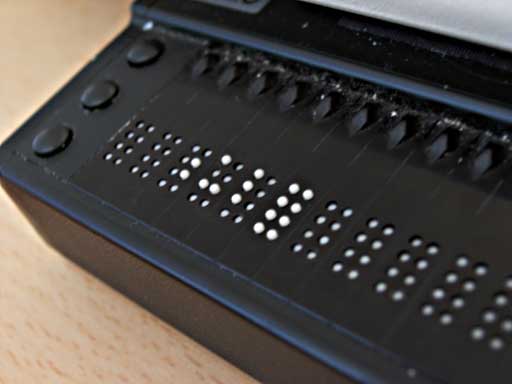
- Wikimedia Commons, "File:Refreshable Braille display.jpg," photograph by Ralf Roletschek.