As of 2026-04-20 21:31 UTC, EPA's Water Infrastructure Finance and Innovation Act office was at the close of a public-comment window for the South Coast Water District's Doheny Ocean Desalination Project. EPA posted a preliminary Finding of No Significant Impact and adoption package for review and said comments had to be received on or before April 20, 2026.[1]
That sounds procedural because it is. The news is not that a desalination plant is suddenly approved today. California agencies have already spent years reviewing permits, intake design, discharge mechanics, and local water-supply need.[3][4][5] The live issue is narrower and more useful: whether the federal financing track can accept the existing environmental record and move a small coastal desalination project closer to construction finance without turning the review into another statewide desalination referendum.
Fast facts
| Item | What is known | Confidence note |
|---|---|---|
| Federal step | EPA listed a preliminary FONSI and adoption for the Doheny project under WIFIA and directed comments to its WIFIA mailbox by April 20.[1] | High for deadline and process; final treatment depends on EPA's review of the record and comments. |
| NEPA record | EPA's NEPA database identifies document N2026067, issued March 19, 2026, with project components including beach wells, conveyance, desalination, brine disposal, storage, distribution, and offsite power.[2] | High for federal docket metadata and component list. |
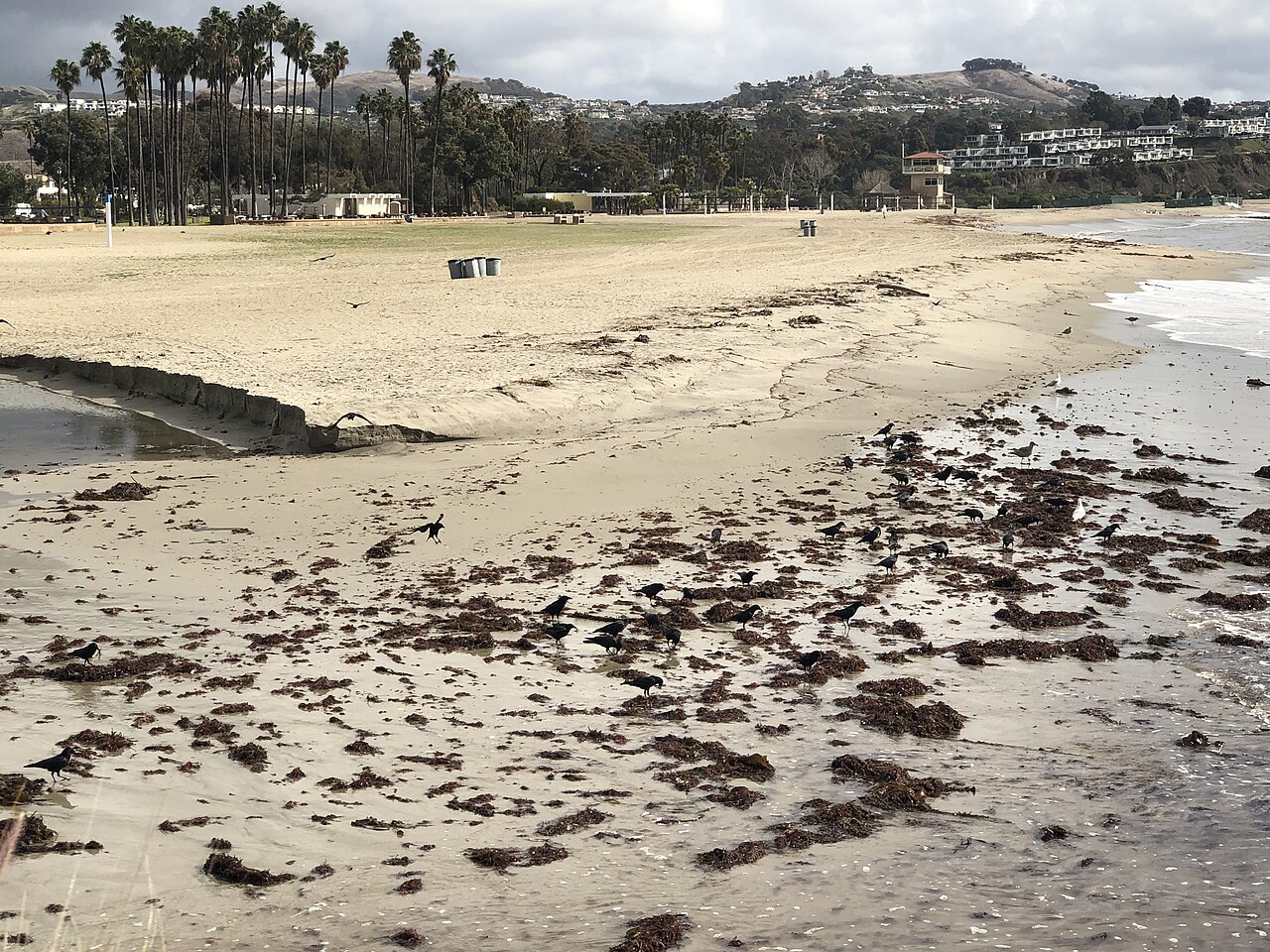
| Project sponsor | The CEQA record names South Coast Water District as lead agency and places the project at Doheny State Beach in Dana Point.[3] | High for sponsor and site. |
| Capacity | The CEQA record describes an initial facility of up to 5 million gallons per day, with a possible future expansion up to 15 MGD.[3] | High for environmental-review envelope; actual buildout can differ by phase and partner commitments. |
| Intake design | State review materials describe subsurface slant wells buried below the ocean floor as the project's preferred intake approach.[4][5] | High for current design premise; construction performance remains the operational test. |
| Discharge | The San Diego Water Board's 2022 action tied the project to a combined ocean outfall discharge of about 43.8 MGD from several member-agency sources.[4] | High for the permit action; water-quality performance remains monitored through permits. |
| WIFIA context | EPA's project page lists South Coast Water District as borrower, an invited WIFIA loan amount of $60 million, and 37,134 people served by the project.[6] | High for EPA's project-page metadata; it is not the full financing plan. |
| Funding context | Reclamation selected the project for $7.7495 million in FY 2024 Title XVI desalination construction funding, describing expected output of 5,321 acre-feet per year once completed.[7] | High for that federal selection; it is only one layer of the capital stack. |
Why this deadline matters
The April 20 deadline matters because Doheny sits at the intersection of three problems that usually move on different clocks: drought-resilience planning, coastal environmental review, and public infrastructure finance. A local water district wants a reliable supply that is less exposed to imported-water disruption. Coastal regulators want intake and discharge designs that avoid the familiar ecological harms of older open-ocean desalination concepts. Federal lenders need a defensible environmental record before subsidized debt can become real project financing.[1][2][4]
That makes the EPA window a gate rather than a ribbon-cutting. The WIFIA program can help water agencies borrow for large infrastructure at favorable terms, but the loan process still has to sit on top of federal environmental compliance. EPA's NEPA record for Doheny is explicit about the physical scope: beach wells, raw-water pipeline, desalination facility, brine-disposal system, product-water storage, distribution, support facilities, and power supply.[2] The comment period gives opponents, neighbors, agencies, and project partners one more federal forum to challenge whether adopting the existing review record is enough.
The project has been framed by its supporters as the smaller, more careful version of California ocean desalination. Instead of a huge open intake pulling seawater and marine organisms directly through screens, Doheny relies on subsurface slant wells. The Water Board described the buried intake approach as a way to protect marine life, while the Coastal Commission staff report details the project around slant wells, a desalination facility, and brine discharge through existing outfall infrastructure.[4][5] That design choice is the heart of the project's political argument: desalination remains energy-intensive and expensive, but this version tries to remove the most visible ecological objection.
The constraint is scale. A 5 MGD initial plant is meaningful for south Orange County but small compared with regional imported-water systems.[3][7] Reclamation's project description translates the initial output into 5,321 acre-feet per year, enough to matter locally and in emergencies, not enough to rewrite Southern California water supply by itself.[7] That limited scale is part of the appeal. It also means ratepayer economics, partner commitments, and construction risk matter as much as the environmental theory.
What changes for decision-makers
For South Coast Water District, the practical question after April 20 is whether the federal review produces a clean enough path to keep funding work synchronized. EPA's WIFIA project page lists the borrower as South Coast Water District, an invited WIFIA loan amount of $60 million, a project type of drinking water, and 37,134 people served.[6] Reclamation separately selected the project for $7.7495 million in FY 2024 Title XVI desalination construction funding.[7] Those figures make the project less abstract. A desalination plant does not become useful because it clears one review; it becomes useful when a stack of permits, grants, debt, construction packages, and committed water demand line up.
For coastal regulators, the decision impact is more precedent than volume. California rejected or slowed larger desalination ideas when ecological and cost questions overwhelmed the supply argument. Doheny has survived longer because its design is narrower, its intake is buried, and its output is sized as a local reliability asset rather than a regional cure-all.[3][4][5][6] If EPA finalizes adoption without major changes, backers will read that as confirmation that small, subsurface-intake desalination can pass federal review when the state record is deep enough.
For residents and ratepayers, the live issue is not a simple yes-or-no on desalination. It is a tradeoff among imported-water exposure, local control, drought insurance, beach disruption, energy use, brine management, and future water bills. The CEQA record lists a broad set of reviewed issues, from biological resources and coastal-zone effects to hydrology, recreation, noise, transportation, and wetlands.[3] The strong case for Doheny is resilience. The strongest counterweight is whether a costly local supply remains worth it if construction, energy, or financing costs rise faster than imported-water risk.
Scenarios from here
The base case is that EPA receives comments, resolves or responds to them within the federal financing process, and lets the WIFIA environmental review continue on the adopted record. Under that scenario, the project still has to convert environmental clearance into financing close, final design, construction procurement, and water-demand commitments. The decision signal would be administrative progress rather than immediate ground work.[1][2][6]
The upside case is that the deadline closes without a challenge serious enough to reopen the review, giving project sponsors a cleaner financing lane. That would strengthen the argument that Doheny is not another maximalist desalination proposal, but a bounded supply project using the state's preferred intake approach and an existing discharge framework.[4][5][6]
The downside case is that comments expose enough unresolved risk around beach construction, slant-well performance, brine blending, power supply, cost allocation, or cumulative coastal impacts to slow the federal path. That would not automatically kill the project, but it would weaken the key promise of the current phase: that years of state and local review can be carried into federal financing without another long reset.
Action checklist
Water agencies should watch for EPA's final handling of the FONSI/adoption package, then map that answer against the project finance calendar.[1][2] Public board materials should make the capital stack visible so ratepayers can see how much water, debt exposure, grant support, and shortage protection the project is actually buying.[6][7]
Coastal and environmental groups should focus on the design claims that make Doheny different from older desalination fights: subsurface intake performance, brine dilution through the existing ocean outfall, beach construction footprint, and monitoring conditions.[4][5] The important evidence will be engineering and permit-specific, not generic desalination rhetoric.
Residents should track three concrete items: the final EPA environmental decision, the next partner cost-share actions, and any updated water-cost estimate as financing terms harden. The falsifier for the optimistic reading is simple: if the project cannot hold its local-cost, low-intake-impact, and emergency-supply claims together through final financing, then the April 20 deadline will look less like a turning point and more like another checkpoint in California's long argument over making seawater drinkable.
Sources
- U.S. EPA, "WIFIA Program Announcements," public-comment notice for the preliminary FONSI/adoption on the Doheny project (last updated April 7, 2026).
- U.S. EPA, NEPA Compliance Documents, "Preliminary Finding of No Significant Impact and Adoption for the South Coast Water District's Doheny Ocean Desalination Project," document N2026067 (issued March 19, 2026).
- California CEQAnet, "Doheny Ocean Desalination Project," SCH No. 2016031038, project description and CEQA document record.
- California State Water Resources Control Board, "San Diego Water Board approves nation's first ocean desalination facility that eliminates harm to fish" (March 10, 2022).
- California Coastal Commission, staff report for Coastal Development Permit No. 9-21-0488 / South Coast Water District Doheny Ocean Desalination Project (October 2022).
- U.S. EPA, "Doheny Ocean Desalination Project," WIFIA project page with borrower, invited loan amount, population served, and project description.
- U.S. Bureau of Reclamation, FY 2024 WaterSMART Title XVI Congressional Authorized Project Selections, Doheny project funding and output summary.
- Wikimedia Commons, "File:Doheny State Beach birds.jpg," photograph by Sewageboy (January 29, 2021).