As of 2026-05-08 22:34 UTC, Britain's grid-connections debate has moved past the stage of saying the queue is too long. The government opened a March consultation on strategic demand, closed it on April 15, and is now deciding whether to give itself sharper tools to strip speculative demand out of the queue while moving priority loads forward.[1][2][3] Ofgem, for its part, says it received more than 100 responses and plans an early-summer consultation on further measures, including how to curb data-centre speculation and how to let some large users build more of their own connection assets.[5] The live question is no longer whether the queue is a problem. It is whether Britain can turn queue reform into a credible industrial-policy filter without replacing one opaque bottleneck with another.
The scale problem is already clear. Ministers say demand applications to the transmission network rose 460% in the six months to June 2025, while some applicants face waits of up to 15 years for a connection.[1][7] That growth includes the loads government wants more of, such as data centres and large industrial sites, and the loads it worries may be less real than they first appear. Inference from the official papers: power access is becoming a test of state prioritisation. The queue is no longer just a technical sequence. It is turning into a ranking of which future projects Britain considers economically or strategically important enough to move first.[1][3][5]
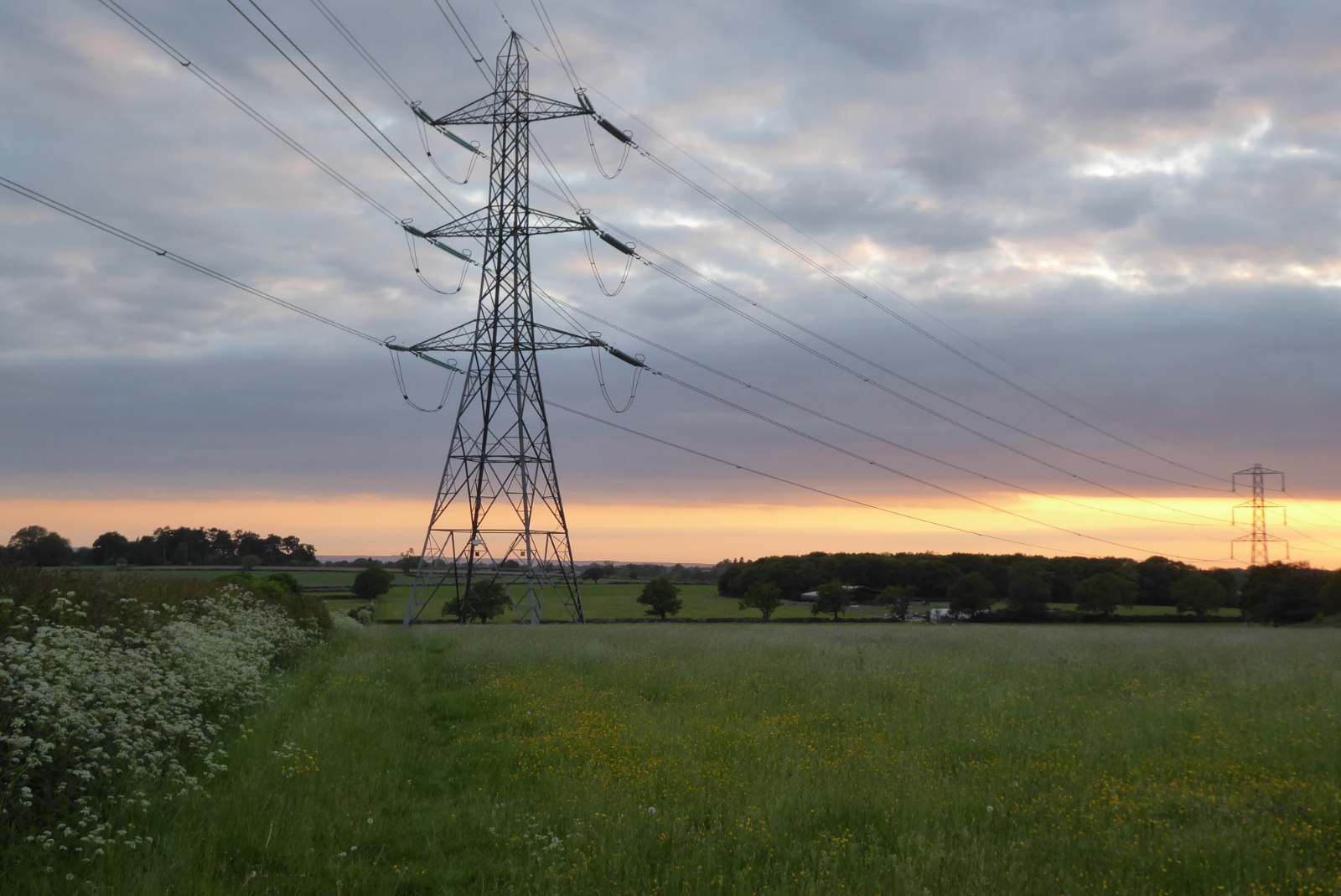
Image context: the cover uses a real photograph of transmission pylons in England because the story is about physical grid capacity and network access discipline. A stylised AI image or a symbolic server-room visual would blur the actual operating constraint.[8]
Fast facts
| Item | What is live now | Confidence note |
|---|---|---|
| Queue shock | Government says demand applications to the transmission network rose 460% in the six months to June 2025.[1][7] | Primary policy announcement and Reuters summary align on the figure. |
| Delay reality | Some projects face waits of up to 15 years for connection.[1][7] | Stated in the government announcement and repeated by Reuters. |
| Policy stage | The strategic-demand consultation opened on March 11, 2026 and closed on April 15, 2026.[1][2] | Primary government pages. |
| Strategic lever | Ministers propose using powers in the Planning and Infrastructure Act 2025 to tackle speculative demand and prioritise strategic projects, including AI Growth Zones.[1][3] | Primary government sources. |
| Existing fast-lane pilot | The Connections Accelerator Service pilot launched in December 2025 and government says it has already secured or safeguarded more than GBP 35 billion of investment.[3] | Primary consultation text. |
| Regulatory next step | Ofgem says it received more than 100 consultation responses and plans an early-summer consultation on demand-side reforms, including anti-speculation measures for data centres and greater self-build options.[5] | Primary Ofgem blog post. |
What changed when queue reform reached the demand side
Britain's earlier connections reform story focused on generation and storage: how to clear a clogged queue so shovel-ready clean-power projects could actually get dates and costs.[4][6] What changed this spring is that ministers started treating large electricity demand the same way. The accessible consultation makes the policy ambition unusually explicit. It says strategic demand projects such as data centres, manufacturers, prisons, and hospitals may need faster access, and it asks whether some of them should be allowed to build their own transmission connections, substations, or high-voltage lines in order to move faster.[3]
That is a meaningful shift in the operating baseline. A first-come, first-served queue can be defended as rough but neutral. A strategic-demand queue is different. It requires the state to decide which projects count as real, which are speculative, which are nationally valuable, and what evidence should move them forward. Reuters' March report captured the political edge of that change by tying the reform directly to AI data centres and the risk that speculative applications are blocking more serious users.[7] The government press release says the same thing in institutional language: priority should move to projects that matter for economic growth, clean power, and public services.[1]
Why this is now industrial policy, not queue administration
The most important thing in the official documents is not any single administrative tweak. It is the admission that power access has become a scarce national input. Once that happens, queue reform stops being clerical. It becomes industrial policy by another name. If ministers reserve faster access for AI Growth Zones, advanced manufacturing, or major public-service loads, they are effectively deciding which categories of demand deserve earlier access to constrained network capacity.[1][3]
That could be sensible. Long waits can kill investment long before a planning refusal does, and the Connections Accelerator Service is evidence that Whitehall already thinks selected projects merit hands-on help.[3] But the risks are real. If the criteria for "strategic" status are vague, lobbying will replace discipline. If anti-speculation rules are too blunt, they may catch legitimate projects that have real demand but complex phasing. If self-build rights expand without clear system standards, speed gains for one project could create coordination burdens elsewhere. Ofgem's early-summer follow-up therefore matters because it is where the reform will start to look either operationally legible or politically improvised.[5]
Decision impact by horizon
Next 24 hours
Watch for any post-consultation signals on timing. The key near-term question is whether government publishes a clear response path quickly or lets the file drift after the consultation close.[2][3]
Next 7 days
The useful question is whether ministers and Ofgem narrow the criteria. Which projects get priority treatment, what proof of seriousness will be required, and how sharply will data-centre speculation be separated from real committed demand?[1][5][7]
Next 30 days
The most important trigger is Ofgem's promised early-summer consultation and any detail on self-build, queue-cleansing tests, and the timetable for reform implementation.[5][6] If those details land cleanly, Britain moves from political messaging into operating rules. If they slip, queue reform remains a headline without a working filter.
Scenario map
- Base case: Britain proceeds with strategic-demand reform, narrows the queue with stronger anti-speculation tests, and gives selected priority projects a faster connection path, but keeps the process contested because not every sector will like the ranking criteria.[1][3][5]
- Upside case: government and Ofgem publish transparent eligibility rules, self-build options are expanded carefully, and queue reform starts converting scarce network access into visible progress for credible AI, industrial, and public-service projects.[3][5][6]
- Downside case: the rhetoric outruns the rules, speculative demand is reduced only marginally, and the system swaps a first-come bottleneck for a slower political one in which projects spend months arguing over strategic status.[1][5][7]
Action checklist
- For developers and large-load applicants: prepare evidence of project maturity, financing, land control, and delivery timelines; a weaker paper trail becomes more dangerous once the queue stops being neutral.[3][5]
- For policymakers and regulators: publish criteria early and keep them auditable; the reform only works if market participants can tell why one project moved and another did not.[1][2][5]
- For local and infrastructure planners: treat power access as a front-end constraint on AI campuses, factories, and public facilities, not as a late-stage utility detail.[1][3][7]
The invalidation condition is straightforward. If the government retreats from strategic prioritisation and Ofgem's summer follow-up does not produce a workable anti-speculation screen, this article's core claim weakens. Until then, the sharper read is that Britain is no longer merely managing a connection queue. It is deciding how much industrial policy should be embedded inside that queue, and who gets power first when future growth projects all want the same wires at the same time.[1][3][5][7]
Sources
- UK Government, "Government to tackle speculative demand grid connection requests" (March 11, 2026).
- UK Government, "Accelerating electricity network connections for strategic demand" consultation page (closed April 15, 2026).
- UK Government, "Accelerating electricity network connections for strategic demand" accessible consultation webpage (2026).
- Ofgem, "Demand Connections Reform" call for input page (February 12, 2026).
- Ofgem, "Strategic energy planning and connections reform in 2026: putting plans into action" (April 23, 2026).
- Ofgem, "Moving to a reformed grid: the connections process in 2025 and beyond" (December 17, 2025).
- Reuters, "Britain aims to curb speculative grid requests to prioritise AI centres" via LSE (March 11, 2026).
- Wikimedia Commons, "File:Electricity pylons - geograph.org.uk - 7674230.jpg" (photograph by Michael Joyce).