As of 2026-05-09 00:05 UTC, EPA's March 25 emergency fuel waiver has been live for more than a week. Since May 1, the agency has allowed nationwide summer sales of E15 and has also waived federal enforcement of state boutique fuel requirements so gasoline with 9% to 15% ethanol can move under a common 10 psi Reid Vapor Pressure (RVP) standard for an initial 20-day window.[1][4] Read only as an ethanol headline, this can sound like a temporary favor to corn-country politics. The more useful reading is narrower and more operational: EPA has tried to make more of the summer gasoline system fungible at a moment when officials say they are worried about fuel disruption and price pressure.[1][2][5]
That distinction matters because the waiver does not settle the underlying law. It does not make year-round nationwide E15 permanent, it does not require every station to carry the blend, and it does not change the long-standing vehicle-use boundary around the fuel itself. E15 remains approved for model year 2001 and newer conventional vehicles and flexible-fuel vehicles, while older passenger vehicles, motorcycles, boats, lawn equipment, and other small-engine uses remain outside the approved lane.[2][3] The live shift is therefore a short-term summer rulebook simplification, not a durable rewrite of federal fuel policy.
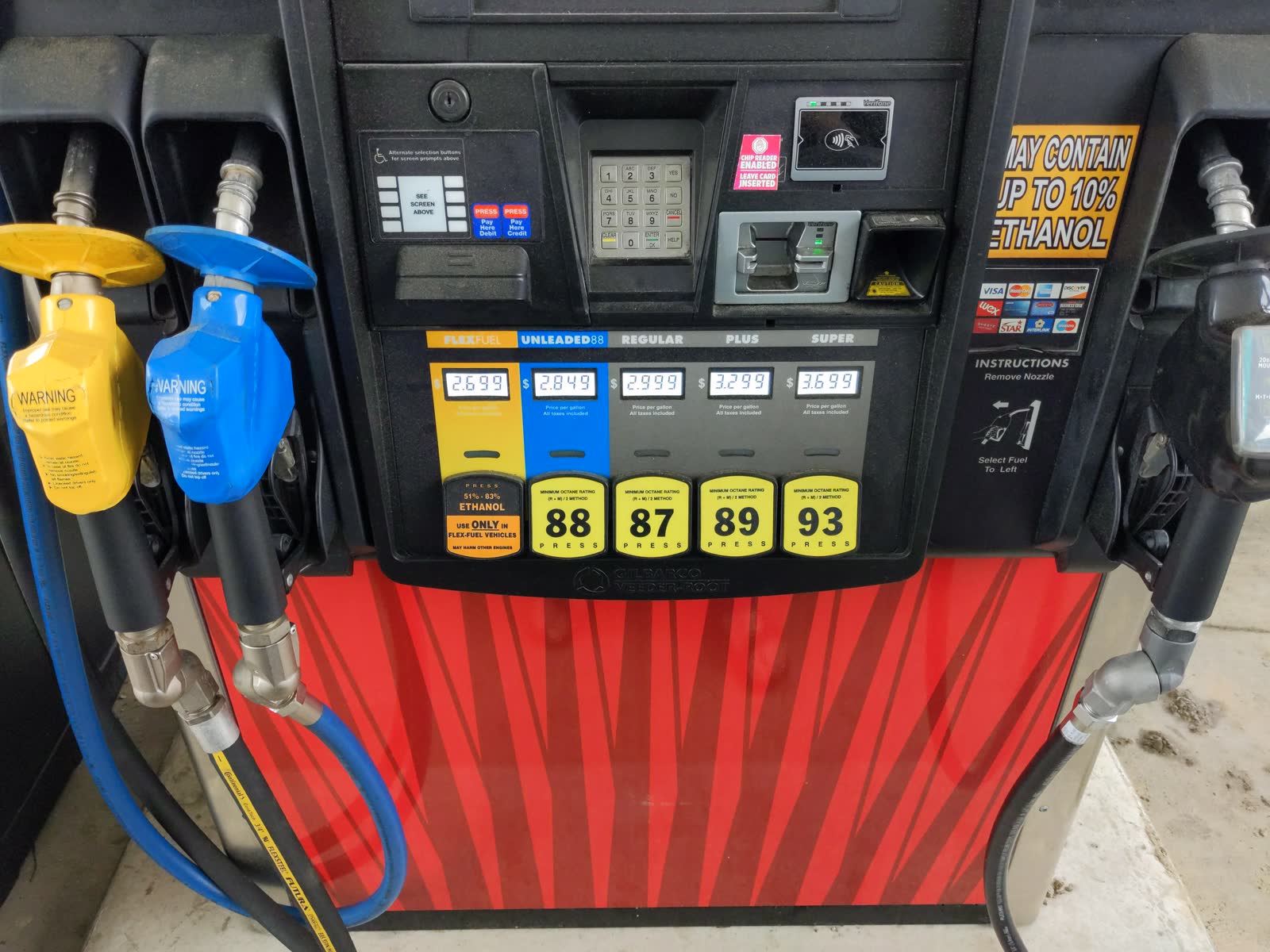
Image context: the cover uses a documentary photo of a retail gas pump whose blue nozzle is labeled for E15 / Unleaded 88.[6] That is the right visual here because the core policy question is what retailers and distributors can legally keep flowing through the summer, not a generic farm or refinery mood shot.
Fact file
| Item | What is live now | Confidence note |
|---|---|---|
| Emergency action | On March 25, 2026, EPA said it issued a temporary emergency fuel waiver, in consultation with DOE and under the Clean Air Act, to allow nationwide E15 sales and remove federal impediments to E10 sales.[1] | Strong. Direct from EPA's release. |
| Effective window | EPA said the action would begin on May 1, 2026 for most states and initially remain in place through May 20, 2026, the maximum 20-day period allowed under the Clean Air Act for that action.[1] | Strong. Stated directly in the release. |
| Operational fuel effect | EPA also waived federal enforcement of state boutique-fuel requirements, allowing gasoline with 9% to 15% ethanol to move under a common 10 psi RVP standard.[1] | Strong. Direct from EPA's release. |
| Why summer sales are a problem in the first place | EPA's gasoline rules include summer RVP controls, and E15 has its own separate regulatory history because those evaporative-emissions rules predate E15's market entry.[2][3] | Strong. This is explicit in EPA and DOE reference material. |
| Vehicle-use boundary | E15 is approved for model year 2001 and newer conventional vehicles and flexible-fuel vehicles, but not for older passenger vehicles, motorcycles, boats, or gasoline-powered nonroad equipment.[2][3] | Strong. DOE's AFDC and EPA's registration page match on the boundary. |
| Retail availability | DOE's AFDC says E15 is sold in 31 states at just over 3,000 stations, and stations are not required to sell it.[2] | Strong. Direct from AFDC. |
| Market backdrop | Reuters reported the administration framed the waiver as part of a response to higher pump prices and war-related pressure on fuel markets, while analysts expected a modest retail-price effect rather than a structural reset.[5] | Moderate to strong. Reuters is a secondary source on market interpretation, not the legal text itself. |
What the waiver actually changes
EPA's March 25 release did two things at once. The headline item was the familiar one: it kept E15 on the market into the summer driving season.[1] The less glamorous but arguably more important piece was the boutique-fuel decision. Boutique fuels are specialized gasoline blends tied to state or metro-area volatility and air-quality requirements. When those carve-outs stack up during the summer season, they reduce interchangeability across terminals, pipelines, and retail markets. EPA's waiver temporarily relaxes part of that fragmentation by letting gasoline with 9% to 15% ethanol move under one federal 10 psi RVP standard.[1][4]
That is why this should be read as a supply-standardization move before it is read as a farm-belt symbolism story. A fuel system under stress benefits from flexibility at the distribution layer: fewer separate blend constraints, fewer regional incompatibilities, and more ways to keep product moving when inventories or logistics tighten. EPA's own language is consistent with that interpretation. The agency says the waiver is meant to prevent fuel-supply disruption, keep E15 available, and provide "additional flexibility to the fuel marketplace."[1]
Reuters' reported context sharpens the same point.[5] The administration announced the move while talking openly about pump-price pressure and supply risks tied to the war with Iran and the resulting energy-market strain.[5] Even if one discounts the rhetoric about direct price relief, the operating logic is plain enough: emergency waivers are useful when Washington wants the gasoline system to behave more like one pool and less like a patchwork of seasonal exceptions.
What it does not change
The waiver is temporary by design. EPA said the initial action would run through May 20 for most states, though it also said it would be prepared to extend the waivers if supply conditions warranted further action.[1] That leaves the underlying legal problem exactly where it was before: year-round national E15 still depends on either repeated emergency action, more durable rulemaking, or legislation.
The waiver also does not universalize E15 use. DOE's AFDC and EPA's own E15 registration guidance both keep the same equipment boundary in place.[2][3] E15 is approved for 2001-and-newer passenger vehicles and flexible-fuel vehicles. It remains outside the approved use case for model year 2000 and older passenger vehicles, all motorcycles, heavy-duty highway engines, boats, snowmobiles, chain saws, and gasoline lawn mowers.[2][3] So the policy expands what can be sold and distributed during the summer window; it does not turn every gasoline-consuming machine into an E15 customer.
Finally, the waiver does not force adoption at the pump. AFDC says stations are not required to sell E15, even though the blend is already available in 31 states at more than 3,000 stations.[2] The live question is therefore not simply whether the product is legally allowed. It is whether retailers, wholesalers, and terminal operators actually find it commercially useful to stock and move more of it during the waiver window.
Why the boutique-fuel piece is the real story
Retail political language usually treats E15 as a simple consumer-choice issue: one more grade, one more number on the pump, one more way to shave a few cents off the posted price. That is only part of the story. The bigger operational value in this waiver sits in how it reduces distribution complexity during the hardest part of the gasoline calendar.
EPA's gasoline-regulations page is a reminder that summer fuel law is not one rule but a layered system of volatility standards, exemptions, special provisions, fuel registration requirements, recordkeeping, and compliance obligations under 40 CFR Part 1090 and related authorities.[3][4] Every extra carve-out reduces flexibility. When EPA suspends part of that structure on an emergency basis, the short-run gain is not only that E15 can remain on sale. It is that a larger share of the fuel system can be treated as operationally interchangeable.
That is also why this episode still falls short of a stable policy solution. Emergency standardization helps for a moment, but it does not eliminate the annual uncertainty that market participants face when they plan summer blending, equipment, labeling, and inventory decisions. The waiver creates breathing room. It does not create permanence.
The 24-hour, 7-day, and 30-day watchlist
In the next 24 hours, watch whether EPA or states signal an extension path beyond the initial May 20 ceiling for most states.[1] If supply concerns remain the public justification, the first clue will be whether officials keep describing this as a short-lived bridge or as the opening stage of a longer summer accommodation.
In the next 7 days, watch retail and wholesale behavior rather than rhetoric. The useful evidence will be whether more terminals or stations actually lean into E15 and common-standard distribution, not whether trade groups celebrate the waiver in press releases.[2]
In the next 30 days, the structural question returns: does Washington keep solving summer E15 through emergency authority, or does Congress move toward a permanent nationwide rule? EPA's own announcement contains that tension. The agency used short-term authority, while the agriculture secretary explicitly argued that year-round E15 still needs a longer-run solution.[1]
Scenario map
- Base case: the waiver functions as a short seasonal flexibility valve, keeps E15 on sale in more places, and modestly reduces distribution friction without changing the long-run legal structure. Trigger: EPA extends only as needed and the broader debate returns to Congress after the immediate supply window.[1]
- Upside case: the waiver demonstrates that a more standardized summer gasoline rulebook can operate smoothly enough to strengthen the case for permanent national treatment of E15. Trigger: stable supply, no major compliance confusion, and visible retailer uptake.[1][2]
- Downside case: the market treats the waiver as too temporary to justify broader operational shifts, leaving the legal headline intact but the practical effect thinner than advertised. Trigger: limited station participation, minimal distribution change, or rapid re-fragmentation when the waiver window ends.[2][5]
Action checklist
- Retailers and distributors should separate the two moving pieces: E15 shelf legality during the summer window, and the wider distribution benefit from temporarily flattening boutique-fuel constraints.
- Fleet managers and ordinary drivers should keep the vehicle boundary in mind. The waiver changes market availability, not the approved-use list for older cars, motorcycles, boats, or small engines.[2][3]
- Policy watchers should track extension signals and legislative signals separately. Emergency authority answers the summer timing problem; it does not answer the permanence problem.[1]
- Analysts should watch physical market behavior more closely than slogans about pump savings. The most durable evidence of success would be smoother supply movement and broader retail availability, not only supportive press statements.[2][5]
The narrow conclusion is the useful one. EPA's nationwide E15 action is best read as a temporary effort to standardize more of the summer gasoline system under stress, not as a settled national resolution of the E15 debate. The government made the rulebook simpler for a short window. The harder legal question of whether that simplification becomes permanent remains open.[1][2][3][4][5]
Sources
- U.S. Environmental Protection Agency, "EPA Fortifies Domestic Fuel Supply, Provides Americans with Relief at the Pump by Approving Nationwide E15 and Removing Boutique Fuel Markets for E10" (March 25, 2026).
- U.S. Department of Energy, Alternative Fuels Data Center, "E15" reference page.
- U.S. Environmental Protection Agency, "E15 Fuel Registration" guidance page.
- U.S. Environmental Protection Agency, "Federal Gasoline Regulations" and linked fuel-waiver framework pages.
- Reuters, syndicated by Investing.com, "US suspends anti-smog fuel rules in bid to ease pump prices" (March 25, 2026).
- Wikimedia Commons, "File:Flex Fuel and Unleaded 88 gas pump.jpg" - source page for the cover photograph by Jleedev.