As of 2026-05-08T04:03:16Z (UTC), the EU-Mercosur Interim Trade Agreement is no longer a signing-ceremony promise. Since May 1, it is being provisionally applied, which means the first commercial consequences have already moved from Brussels language into importer paperwork and tariff treatment.[1][2] Cars, pharmaceuticals, wine, spirits, and olive oil are the easy headlines, because the Commission says those are among the exports receiving immediate cuts or new quota access on day one.[1] The more important headline is narrower. This deal starts not with a summit tableau but with rules of origin, statements on origin, transit treatment, and safeguards.
That is why the day-one story is less geopolitical than it first looks. The EU has chosen to split the Mercosur package into two clocks. The Interim Trade Agreement sits inside the EU's exclusive competence and can be provisionally applied now, while the broader EU-Mercosur Partnership Agreement still needs a slower ratification path that runs through the European Parliament and every EU member state.[3][5] Brussels has therefore started the trade and customs machinery early, while leaving the wider political settlement on a longer track.
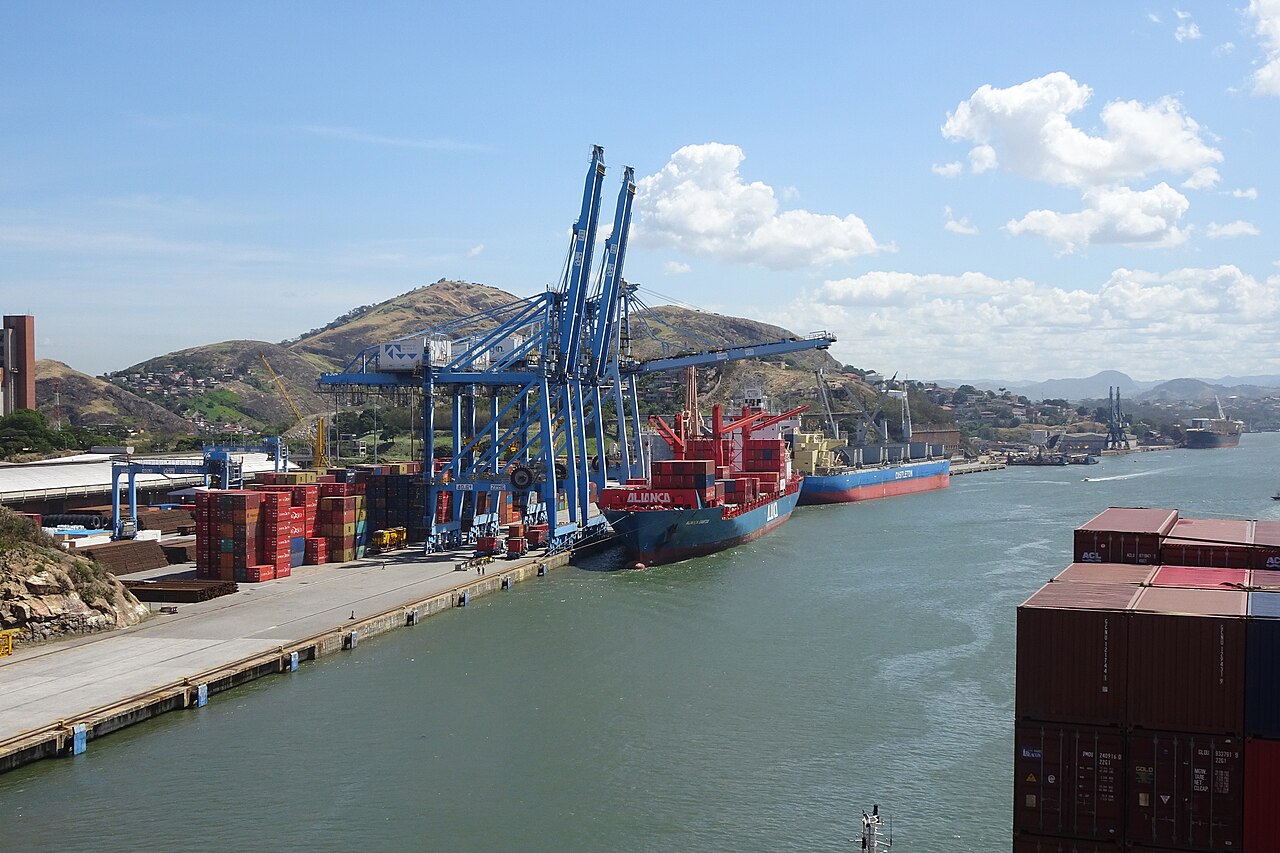
Image context: the cover uses a real port photograph from Vitoria, Brazil, because the agreement's first effects are operational rather than symbolic. A negotiation-room image would overstate the political drama; the live change is that goods moving between the EU and Mercosur now face a different tariff and origin regime at the port and customs level.[6]
Fact file
- What changed on May 1: the EU-Mercosur Interim Trade Agreement began provisional application.[1][2][5]
- What day one already affects: immediate tariff relief begins for key industrial exports, a first tariff cut starts for most agri-food products, and Mercosur countries begin protecting 344 EU geographical indications.[1]
- Why customs teams care immediately: products in transit or in temporary storage on the date of entry can still qualify for preferential treatment if importers submit a statement on origin within six months.[2]
- Why the agreement could start early: the iTA falls within the EU's exclusive competence, so it does not need ratification by individual member states; the broader partnership agreement does.[3][5]
- What the EU added on the defensive side: a dedicated Mercosur safeguard regime now lets the EU investigate sensitive import surges using a 5% threshold over a three-year average, conclude investigations within four months, and impose provisional measures within 21 days in urgent cases.[4]
- What scale the EU is chasing: Council materials describe the broader EU-Mercosur framework as covering a market of more than 700 million consumers.[3]
What actually started on day one
The Commission's April 30 notice is written like an exporter brief, and that is exactly how it should be read. From May 1, industrial exporters begin to benefit from immediate tariff relief, services firms get new market-opening language around licensing and worker movement, and EU companies gain access to Mercosur public tenders on terms the Commission says are more equal to local bidders.[1] The same notice says non-tariff and technical barriers also begin to shift, with rules on conformity assessment, labelling, and international standards starting to apply.[1]
That list matters because it shows what "provisional application" means in practice. It is not an abstract legal halfway house. It is the moment at which customs treatment, procurement access, and regulatory friction begin to change for actual traders. The trade story therefore does not wait for the broader political agreement to finish every ratification step. It starts at the point where an importer can claim a tariff preference, a company can read a tender differently, or a shipment can clear under a new origin rule.[1][2]
The Taxation and Customs Union page makes this even plainer. Chapter 3 of the iTA supplies the legal test for whether a product counts as originating in the EU or Mercosur for preferential treatment, and it specifically covers goods that were already in transit or sitting in bonded warehouses or free zones when the agreement took effect.[2] The first practical question is therefore not "Does Mercosur matter strategically?" It is "Can this shipment actually qualify, and what documentation does customs now expect?"[2]
Why provisional application is the real political compromise
The second day-one story sits in the institutional design. The Council's January 9 press release explained that the EU and Mercosur deliberately split the package into two legally distinct instruments: the EMPA, which bundles political dialogue, cooperation, and trade, and the iTA, which isolates the trade and investment commitments so they can start earlier.[3] The iTA is supposed to deliver the economic benefits "as early as possible," while the EMPA remains subject to the much slower national-ratification track.[3]
That split is the real political compromise. Brussels gets to harvest early trade effects without pretending that every issue around the broader partnership has been politically settled. That matters because the package is trying to do several things at once: deepen ties with Argentina, Brazil, Paraguay, and Uruguay, create openings for EU exporters and service providers, and still reassure sensitive sectors inside Europe that the Union kept protective tools ready.[1][3][5]
Read that way, provisional application is not a technical afterthought. It is the policy choice. The EU is telling exporters to move, while telling domestic skeptics that the heavier constitutional and political parts of the partnership still face a slower democratic filter.[3][5]
Why the safeguard regime matters as much as the tariff cuts
If supporters only talk about market access, they miss half the architecture. The Council's March 5 safeguard release explains that the EU already built a faster-response agricultural backstop into law. For sensitive products, the Commission can launch an investigation when imports rise more than 5% over a three-year average; the investigation must finish within four months; and in urgent cases provisional measures can be imposed within 21 days.[4] The Council's background page adds that the EU can temporarily suspend tariff preferences on agricultural imports from Mercosur if those imports harm EU producers, with enhanced monitoring for quota-sensitive products such as beef, poultry, pork, sugar, ethanol, rice, honey, maize, and sweetcorn.[5]
That is why the first week of the iTA should not be framed as "free trade, full stop." It is a managed-opening story. The Commission is using day one to advertise export upside, while the Council is equally explicit that European farmers and sensitive food sectors were given a faster brake pedal.[1][4][5]
This matters for interpretation. The agreement's supporters are not betting that politics disappears once tariffs fall. They are betting that trade gains and defensive monitoring can coexist. The real test is not whether Brussels can write both ideas into one package. It is whether officials can administer the opening quickly enough for exporters to feel the upside and cautiously enough that politically exposed farm sectors do not revolt at the first import surge.[1][4][5]
Decision impact
Next 30 days
Exporters, customs brokers, and in-house trade teams should focus first on eligibility, not on macro rhetoric. The immediate operational questions are whether a shipment qualifies as originating, whether goods already in transit can claim preference, and whether the required statement-on-origin paperwork is filed within the six-month window.[2]
Next 90 days
The second phase is commercial rather than documentary. Industrial exporters will learn quickly whether the tariff relief and procurement openings described by the Commission translate into real tenders, cleaner price positions, and easier regulatory handling in Mercosur markets.[1] Agri-food exporters will also test whether the first quota slices and first tariff cuts create meaningful openings rather than just symbolic ones.[1]
Next 12 months
The political test runs on a different clock. The iTA can keep functioning while the EMPA awaits the European Parliament's consent and national ratifications, but that split only works smoothly if the economic benefits become visible before the broader politics harden again.[3][5] If day-one implementation is messy, critics gain oxygen. If it is administratively clean, the early-start design looks smarter.
Scenario map
- Base case: the iTA operates as intended, customs teams absorb the new origin and tariff rules, and the political argument shifts from whether the agreement exists to who captures its early benefits.[1][2][3] Trigger: importers and exporters use the new preferences without major implementation disputes.
- Upside case: industrial exporters, service firms, and agri-food producers quickly translate the first tariff cuts, procurement access, and GI protection into visible contracts and market share gains.[1] Trigger: early tender wins, smoother customs clearance, and credible evidence that the deal lowers commercial friction.
- Downside case: the agreement's first public life is dominated by safeguard politics, sensitive-import monitoring, and complaints that practical use is too complex or too slow.[2][4][5] Trigger: difficult origin claims, politically salient farm pressure, or early calls to use the safeguard mechanism.
Action checklist
- Recheck origin documentation for any EU-Mercosur shipments that were in transit or in temporary storage on May 1; the six-month filing window matters.[2]
- Separate the iTA clock from the broader EMPA ratification clock in internal planning; day-one trade benefits do not mean the full political agreement is finished.[3][5]
- For food and agriculture exposure, watch both the quota access upside and the safeguard-monitoring downside at the same time.[1][4][5]
- Treat procurement and services openings as live opportunities now, not as post-ratification hypotheticals.[1][3]
Sources
- European Commission Directorate-General for Trade and Economic Security, "EU-Mercosur interim trade agreement starts to provisionally apply" (April 30, 2026).
- European Commission Directorate-General for Taxation and Customs Union, "Provisional Application of the EU-Mercosur Interim Trade Agreement Begins 1 May 2026" (April 24, 2026).
- Council of the European Union, "EU-Mercosur: Council greenlights signature of the comprehensive partnership and trade agreement" (January 9, 2026).
- Council of the European Union, "EU-Mercosur: Council greenlights safeguards for agricultural products" (March 5, 2026).
- Council of the European Union, "EU-Mercosur agreements explained" (last reviewed May 1, 2026).
- Wikimedia Commons, "File:Déchargement porte conteneurs Vitoria.jpg" - source page for the port photograph used with this article.