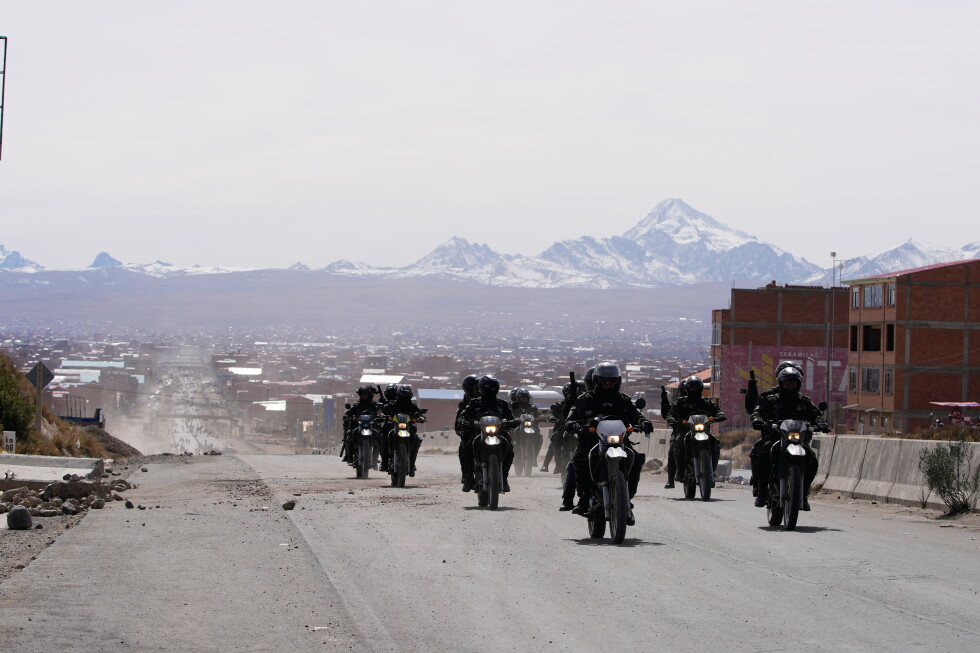
As of 2026-06-21 08:33 UTC, Bolivia's crisis has moved from protest management to emergency governance. President Rodrigo Paz declared a 90-day state of emergency on June 20, giving the armed forces temporary authority to support police in clearing road blockades that have cut off La Paz and other cities from food, fuel, medicine, and hospital access [1][2].
The hinge is not only whether roads reopen. It is whether the government can prove that emergency power is being used to restore circulation without deepening the political rupture that produced the blockades. Paz says the decree is meant to give people back freedom of movement; opponents see a militarized answer to economic grievances, subsidy cuts, and demands for his resignation [1][3][4].
Verified Facts
| Point | What is verified | Confidence |
|---|---|---|
| Emergency order | Paz declared a state of emergency on June 20, 2026, after weeks of road blockades and shortages [1][2]. | High: AP reporting, echoed by Al Jazeera. |
| Duration and powers | The decree is reported as a 90-day measure that allows armed forces to assist police in reopening roads and protecting the population [1][4]. | High: multiple news reports citing the decree and government framing. |
| Human toll | AP reports at least 17 deaths, 37 injuries, and 365 arrests tied to the protest crisis, while noting that many deaths were linked to blocked access to medical care [1]. | Medium-high: casualty figures remain politically sensitive and can change. |
| Supply pressure | Roadblocks have isolated La Paz and disrupted food, fuel, medicines, medical oxygen, transport, and hospital access [1][3][5]. | High: consistent across AP, DW, and earlier AP background reporting. |
| Political split | Paz signed an agreement with one labor union before the decree, but other protesters, including Indigenous and rural groups, continued to demand his resignation [1][4]. | Medium-high: factional alignment is fluid. |
What Happened
Paz's decree came after a protest wave that AP describes as lasting five weeks and Al Jazeera frames as roughly 50 days of disruption [1][2]. The immediate grievance set is economic: austerity measures, the cancellation of fuel subsidies, demands for wage increases, and anger over the quality and cost of fuel. The political demand has widened beyond any single policy. Some protesters are calling for Paz to leave office less than a year after he ended nearly two decades of Movement Toward Socialism rule [1][3].
That timing is why the decree is so risky. A normal public-order dispute asks whether police can clear a road. Bolivia's present dispute asks whether the state can still move goods, keep hospitals supplied, and maintain consent at the same time. AP reports that barricades effectively isolated La Paz, emptied shelves, stranded fuel tankers, and prevented patients from reaching hospitals [1]. Earlier AP background reporting had already described the capital as under siege, with hospitals warning about oxygen constraints and protesters expanding a movement powered by economic crisis and opposition to Paz [5].
The government is trying to draw a legal and rhetorical boundary around the measure. Paz said in a televised address that the state of emergency was not intended to restrict daily life but to restore freedom of movement [1][2]. AP reports that the decree does not limit due process rights or constitutional guarantees and that people can continue daily activities [1]. Le Monde emphasizes the political complication: the decree followed an agreement with the main trade union federation, but the blockade crisis was already broader than one negotiating table [4].
Why It Matters
The first test is logistical. If roads reopen and fuel, food, medical oxygen, and medicine move quickly, the decree may buy Paz time. The public will not judge the emergency only by speeches from La Paz. It will judge by whether buses run, tanker trucks reach stations, hospitals stop rationing critical supplies, and families can move patients across blocked routes [1][3][5].
The second test is political legitimacy. Paz campaigned as a centrist correction after years of leftist rule and inherited the country's worst economic crisis in decades, according to AP and DW [1][3]. His fuel-subsidy changes and investment-oriented reforms were meant to stabilize finances, but they also concentrated pain in transport, rural, labor, and Indigenous constituencies. That makes the emergency a governing gamble: force can clear a highway, but it cannot by itself settle the price, wage, fuel-quality, and representation disputes behind the blockade.
The third test is escalation control. The decree gives the military a role in internal order, which raises the stakes of every clearing operation. If commanders reopen roads with restraint and prosecutors can distinguish violent coercion from peaceful protest, the emergency may look like a supply rescue. If operations produce new deaths, mass detentions, or images of soldiers confronting communities that already feel excluded, the decree could turn a fragmented protest movement into a broader legitimacy front against Paz [1][4].
What Changes In The Next 24 Hours, 7 Days, And 30 Days
In the next 24 hours, watch the roads around La Paz, El Alto, Cochabamba, and the La Paz-Oruro corridor. The decree's first measurable output should be passage: fuel tankers, food trucks, ambulances, and intercity transport moving through previously blocked points [1][5]. If the government announces cleared roads but hospitals and stations still report shortages, the decree will be operating more as a security signal than as supply repair.
In the next seven days, the key issue is whether the labor-union agreement becomes a bridge or a wedge. If union leaders can persuade enough affiliated groups to lift blockades, Paz gets a de-escalation route. If rejected groups treat the agreement as a betrayal, the emergency could harden the divide between negotiated actors and communities still outside the deal [1][4].
In the next 30 days, Bolivia's Congress and courts become part of the story. AP reports that the president must notify Congress of the emergency and that lawmakers have a review role [1]. The legal handling matters because the decree is supposed to preserve constitutional guarantees. A transparent review and clear rules for military support would reduce the risk of arbitrary enforcement; vague or open-ended operations would feed claims that a supply crisis is being used to consolidate power.
Scenarios
Base case: the government reopens key routes in stages, supplies begin moving, and the protest map shrinks but does not disappear. Paz still faces economic anger, but the emergency shifts from acute shortages to negotiations over fuel, wages, and reforms.
Upside case: the COB agreement becomes a template for more sectoral deals. The government pairs road clearance with visible relief for hospitals, transport operators, and food distribution, while avoiding a major casualty event. That would let Paz argue that emergency power was temporary and operational rather than punitive [1][4].
Downside case: military-supported clearing operations trigger new deaths or a wider mobilization by rural and Indigenous groups. In that scenario, shortages may improve unevenly while the political cost rises, leaving Paz with roads partly reopened but authority more contested than before.
Action Checklist
Bolivian authorities should publish daily route, fuel, hospital-supply, detention, and injury updates so the decree can be judged by evidence rather than rumor [1][3].
Congress should review the emergency order publicly and clarify limits on military involvement, especially rules of engagement around blockades, arrests, and protection of medical passage [1].
Hospitals and local governments should be treated as the priority beneficiaries of any road clearance: oxygen, medicine, ambulances, and patient transfers are the clearest humanitarian test [1][5].
Mediators should separate urgent supply corridors from broader political demands. A road can reopen before every economic grievance is settled, but only if protesters see a credible negotiation channel for fuel prices, wages, damaged vehicles, and representation [3][4].
The main invalidation condition is clear: if the next week brings cleared-road claims without measurable relief in fuel, food, and medical access, or if enforcement produces a new wave of casualties, the emergency decree will have failed its stated purpose.
Sources
- Paola Flores and Isabel Debre, Associated Press, "Bolivia's president declares a state of emergency as road blockades choke supplies" (June 20, 2026).
- Al Jazeera, "Bolivia declares state of emergency amid blockade crisis" (June 20, 2026).
- Deutsche Welle, "Bolivia's Paz declares state of emergency over blockades" (June 20, 2026).
- Le Monde with AFP, "Bolivia's president declares state of emergency after six weeks of protests" (June 20, 2026).
- Paola Flores and Isabel Debre, Associated Press, "Bolivia's capital under siege as protests deepen crisis for President Paz" (May 2026).