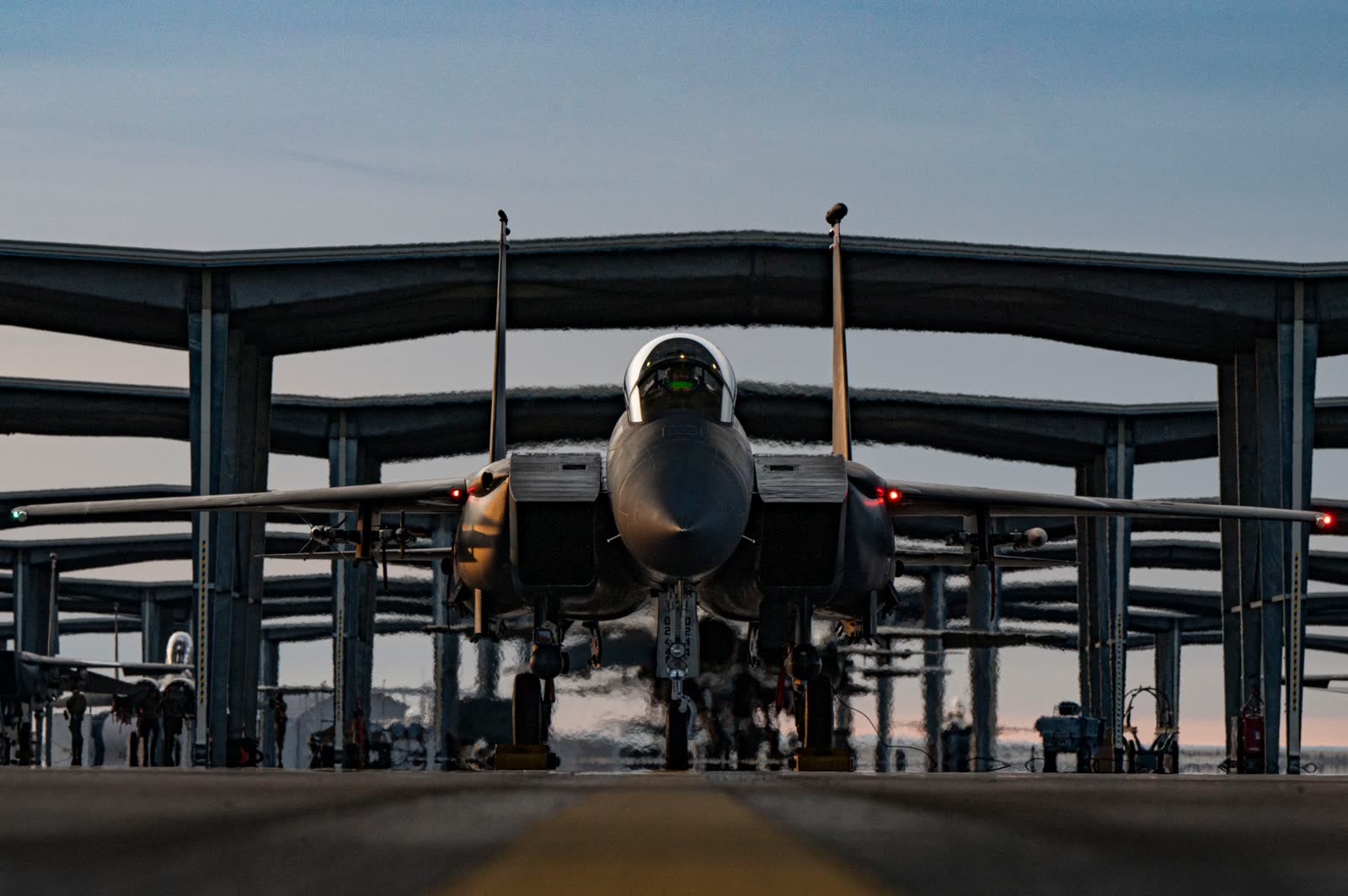
As of 2026-04-21 20:02 UTC, the White House had turned a desert-airspace lawsuit into a national-readiness exemption. A presidential determination signed April 20 exempts U.S. Air Force jet fighter training operations in Idaho, Oregon, and Nevada from Federal, State, interstate, and local water-pollution control requirements and related administrative process for one year, from April 20, 2026 to April 20, 2027.[1]
The memo cites section 313 of the Federal Water Pollution Control Act, the Clean Water Act provision that normally puts federal facilities and activities under water-pollution requirements in the same manner as non-federal actors, while also allowing the President to grant one-year exemptions when he determines that the exemption is in the paramount interest of the United States.[1][3]
The immediate impact is narrower than the political language around it. The determination does not exempt the Air Force from Clean Water Act sections 306 and 307, and it says the action does not decide whether the law would otherwise require permits for the operations.[1][3] The unresolved question is practical: which permit duties, state enforcement channels, administrative processes, and litigation remedies now pause while the waiver is live.
Facts on the File
| Item | What is now live | Confidence note |
|---|---|---|
| Presidential action | The April 20 memorandum grants a one-year section 313 exemption for Air Force jet fighter training operations in Idaho, Oregon, and Nevada.[1] | High: the White House published the signed determination text. |
| Duration | The exemption runs from April 20, 2026 through April 20, 2027.[1] | High: the dates are explicit in the memo. |
| Legal basis | Clean Water Act section 313 makes federal entities comply with water-pollution requirements, then permits presidential exemptions of up to one year, with sections 306 and 307 carved out.[3] | High for statutory text; application to each operation remains fact-specific. |
| Litigation hook | The memo identifies Oregon Natural Desert Ass'n v. Meink, No. 2:23-cv-01898, as litigation involving aspects of the operations.[1][4] | High for the case link; the next procedural effect depends on court filings. |
| Underlying airspace file | The Mountain Home AFB Airspace Optimization EIS site says the Air Force signed a Record of Decision on July 14, 2023, after preparing a Final EIS for Mountain Home Range Complex airspace modifications.[5] | High for the EIS process; the memo itself controls the exemption scope. |
What Changed
The determination changes the enforcement posture around a specific set of training operations, not the basic structure of federal water law. Section 313 starts from a broad rule: federal departments, agencies, officers, and employees must comply with federal, state, interstate, and local requirements respecting water-pollution control and abatement.[3] The same subsection gives the President an escape valve for executive-branch effluent sources when the paramount-interest finding is made, capped at one year at a time.[3]
The April 20 memo uses that valve directly. It names Air Force jet fighter training operations across three western states, invokes the litigation in Oregon, excludes Clean Water Act sections 306 and 307 from the exemption, and directs the Secretary of the Air Force to publish the determination in the Federal Register.[1] The accompanying White House fact sheet frames the move as a readiness measure intended to remove regulatory barriers to training.[2]
That leaves a tight boundary for readers, agencies, and litigants. The memo is not a general defense exemption for every Air Force activity. It is also not a finding that chaff, flares, residue, or training flights have no water-quality consequence. The text says the exemption itself should not be read as an admission that permits were legally required without it.[1] In administrative terms, the action buys time and changes leverage while the underlying legal disagreement continues.
What the Lawsuit Adds
The court record explains why a water-law exemption is attached to air combat training. In August 2025, the U.S. District Court for the District of Oregon denied the Air Force's motion to dismiss a Clean Water Act citizen suit brought by Oregon Natural Desert Association.[4] The order describes the Paradise North Military Operations Area as roughly one million acres in southeastern Oregon and says Air Force aircraft sometimes deploy chaff and flares during exercises there.[4]
The plaintiff's theory, as summarized by the court, is that materials from chaff and flares are landing in rivers and streams and harming native fish and wildlife. The Air Force had argued for dismissal on standing and failure-to-state-a-claim grounds; the court adopted a magistrate judge's recommendation to let the case proceed, with clarifications on standing and informational injury.[4]
The presidential memo does not erase that background. It changes the next legal conversation. Air Force lawyers can point to a live one-year exemption from many water-pollution control requirements. The plaintiff can point to the carveouts, the memo's limited duration, the absence of a merits ruling on water-quality effects, and the statute's requirement that each exemption be renewed by a new presidential determination if it continues beyond a year.[1][3][4]
The 24-Hour, 7-Day, and 30-Day Impact
In the next 24 hours, the key move is procedural. Watch for a Federal Register publication, Air Force notices, EPA or state water-agency statements, and any filing in the Oregon case that tells the court how the government thinks the exemption affects pending claims.[1][4] The memo says publication is the Secretary of the Air Force's job, so the first operational signal should come from the federal side.[1]
Over the next 7 days, state and local water regulators in Idaho, Oregon, and Nevada have to separate what the memo reaches from what it leaves intact. The exemption text covers requirements, administrative authority, process, and sanctions respecting water-pollution control and abatement, while preserving sections 306 and 307.[1][3] That split matters because regulators and plaintiffs will need to know whether monitoring, reporting, notice, permit, inspection, and enforcement tools remain available for specific activities.
Over the next 30 days, the case posture matters more than the press statement. If the Air Force asks for a stay, narrowed briefing, or dismissal of particular remedies, the exemption becomes a litigation management issue. If the case continues toward factual development, the live dispute may shift from whether the Clean Water Act applies today to what evidence survives for future permits, renewed exemptions, or state-law responses after April 20, 2027.[1][4]
What to Watch
Base case: the one-year exemption holds, the government uses it to blunt near-term Clean Water Act pressure, and the court asks for briefing on what claims or remedies remain live. This is the most direct reading of the memo and statute.[1][3][4]
Narrow-boundary case: regulators or plaintiffs focus on what the memo excludes. Sections 306 and 307 remain outside the exemption, and the memo does not purport to suspend unrelated environmental statutes, airspace approvals, safety rules, tribal consultation duties, or the NEPA record behind the Mountain Home airspace decision.[1][3][5]
Renewal case: the one-year date becomes the real clock. Section 313 allows additional exemptions only for new one-year determinations, so a continued waiver after April 20, 2027 would require another presidential action and another public explanation to Congress in the annual reporting cycle.[3]
Action Checklist
For agencies, the first action is to issue plain-scope guidance. The useful version would identify covered operations, excluded statutory provisions, affected permits or administrative steps, and the point of contact for state and tribal questions. Ambiguous field guidance would turn a one-year waiver into a coordination problem.
For litigants, the next action is to test the memo against the pleadings. Claims tied directly to section 313-covered water-pollution control requirements now face a new defense. Claims tied to excluded provisions, future relief, record development, or other statutes may need a different procedural lane.
For communities and conservation groups, the immediate task is documentation. The waiver changes legal leverage during the exemption year, but field observations, water-quality sampling, fire reports, fish and wildlife observations, and dated location records still matter for what happens after the waiver expires or if a narrower claim survives.
The invalidation condition is concrete. If the Federal Register publication, a court order, or agency guidance narrows or expands the memo's practical effect, this analysis changes. Until then, the news is a one-year presidential water-law exemption, attached to Air Force fighter training and a still-active fight over what happens when high-desert airspace meets streams, fish habitat, and citizen-suit enforcement.
Sources
- The White House, "Presidential Determination Concerning the Air Force's Jet Fighter Training Operations in Idaho, Oregon, and Nevada" (April 20, 2026).
- The White House, "Fact Sheet: President Donald J. Trump Issues Presidential Determination to Support U.S. Air Force Jet Fighter Training Operations" (April 20, 2026).
- Legal Information Institute, Cornell Law School, 33 U.S. Code section 1323, "Federal facilities pollution control."
- govinfo, Oregon Natural Desert Association v. Kendall et al, No. 2:23-cv-01898-HL, Document 38, U.S. District Court for the District of Oregon (August 26, 2025).
- Department of the Air Force, "Mountain Home AFB Airspace Optimization EIS," project site and documentation page.
- DVIDS, "F-15E Strike Eagles in the morning," photograph by Senior Airman Trevor Bell, 366th Fighter Wing (March 5, 2025).