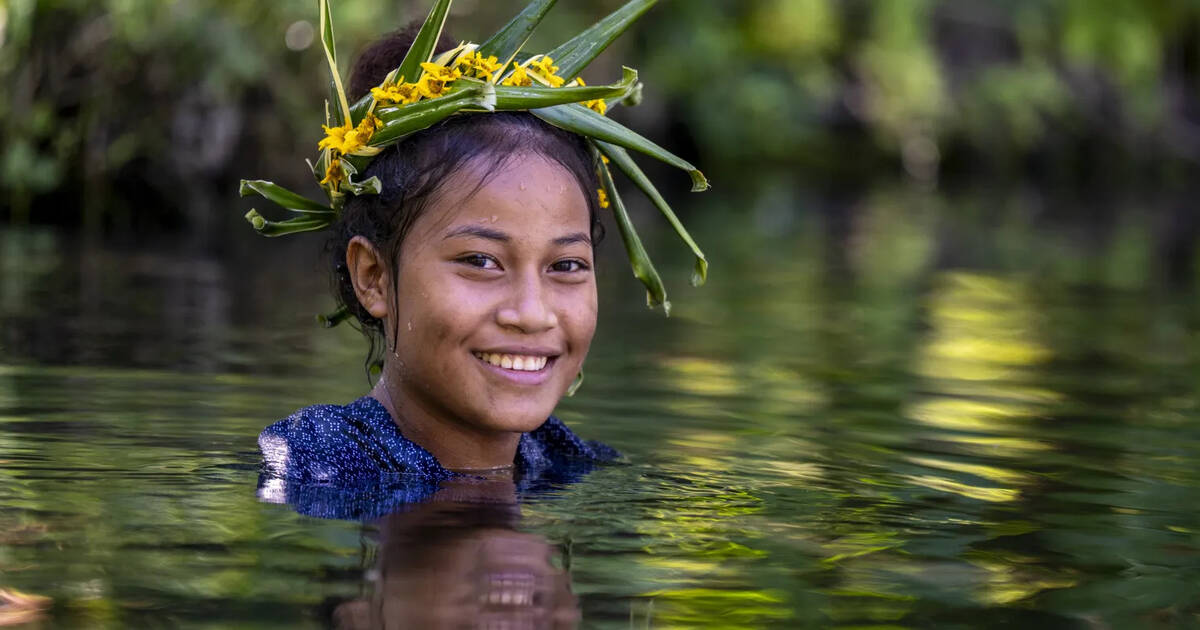
As of 2026-04-22 04:32 UTC, UNESCO's new People and nature in UNESCO-designated sites: Global and local contributions report has shifted the conservation story from prestige labels to operating performance. The headline is encouraging: monitored wildlife populations inside UNESCO-designated sites have remained stable on average, even as global monitored wildlife populations have fallen sharply since 1970.[1][3][6]
The risk is that readers hear only the first half. UNESCO is not saying that every World Heritage site, Biosphere Reserve, or Global Geopark is healthy. The report's sharper signal is conditional resilience: a network of more than 2,260 sites can protect wildlife, carbon, water, culture, and livelihoods when management keeps working, yet nearly 90% of those sites face growing environmental stress, and more than one in four could reach critical climate tipping points by 2050 if pressures keep rising.[1][2][4]
Fast Facts
| Item | What is known | Confidence note |
|---|---|---|
| Publication timing | UNESCO published the report on April 21, 2026, ahead of Earth Day coverage.[1][2] | High; primary UNESCO pages and news coverage align. |
| Network scale | The assessment covers more than 2,260 UNESCO-designated sites across more than 175 countries, spanning over 13 million square kilometers and supporting around 900 million people.[1][4] | High; figures come from the report launch materials and wire coverage. |
| Biodiversity signal | UNESCO says monitored wildlife populations in these sites have stayed stable on average, while the global Living Planet Index shows a 73% decline in monitored wildlife populations from 1970 to 2020.[1][3][6] | Medium-high; the contrast is clear, but "stable on average" can hide local losses and recoveries. |
| Climate and land-use pressure | UNESCO says nearly 90% of sites face growing risks from climate change, land-use pressure, and other human impacts; The Guardian reports more than 300,000 square kilometers of tree cover lost inside designated sites since 2000.[2][4] | Medium; the direction is clear, but site-level exposure varies widely. |
| Carbon and species role | UNESCO says the sites harbor more than 60% of the world's mapped animal species and that their forests absorb about 15% of all forest carbon uptake worldwide.[2] | Medium-high; useful as scale markers, not proof that every site is adequately protected. |
What Changed
The news value is not only that UNESCO put a large number on its protected-site network. It is that the report treats the network as measurable infrastructure. World Heritage sites, Biosphere Reserves, and Global Geoparks are often discussed as cultural or scenic designations. This report puts them into a wider ledger: species abundance, forest carbon, Indigenous and local knowledge, water systems, food security, languages, tourism, and local economies.[1][2]
That matters because the global biodiversity baseline is grim. WWF's 2024 Living Planet Report, summarized by the Natural History Museum, found a 73% average decline in monitored wildlife populations between 1970 and 2020.[6] UNESCO's claim that monitored populations inside its designated sites have stayed broadly stable therefore becomes a practical question: what is happening inside these landscapes that is not happening outside them, and can those practices survive heat, deforestation, poaching, invasive species, and development pressure?
The report's answer points toward governance rather than branding. UNESCO's World Heritage Centre describes these sites as living landscapes shaped by community stewardship and Indigenous knowledge, from Cameroon's Dja Faunal Reserve to East Rennell in the Solomon Islands and Kujataa in Greenland.[2] Anadolu's coverage of the launch emphasizes the same operational spread: the network covers an area larger than China and India combined, supports about 10% of the global population, and is asked to deliver biodiversity, climate, and livelihood benefits at once.[5]
Decision Impact
For conservation funders, the short-term decision is whether to treat UNESCO status as a finished achievement or as a maintenance contract. The report favors the second reading. Stable average wildlife trends are useful evidence that long-running protection can work, but the pressure numbers mean the funding case is not "these sites are saved." It is "these sites are where additional management capacity has a plausible return."[1][4]
For national governments, the next 7 to 30 days are about budget and permitting signals. Sites facing agricultural expansion, logging, tourism strain, mining pressure, wildfire risk, coral bleaching, glacier loss, or heat stress need enforcement and adaptation plans that match the specific threat. UNESCO's own framing says local action can have global impact, but that statement only holds when local managers have authority, money, monitoring, and political cover.[2]
For readers and campaigners, the boundary is important. The 73% global decline figure does not mean 73% of species have vanished, and UNESCO's stable-site average does not mean individual places are safe.[6] Both metrics are population-abundance indicators. They are useful because they track pressure and recovery, but they should not be flattened into either despair or celebration.
Scenarios
Base case: the report becomes an Earth Day proof point for protected-area management. Policymakers cite the stable wildlife signal, NGOs use the pressure figures to argue for site funding, and the next test shifts to whether governments can reduce land-use pressure and climate exposure before 2050.[1][2][4]
Upside case: the report becomes a prioritization tool. Sites with high biodiversity value, strong community governance, and visible climate risk receive targeted investment for restoration, fire prevention, anti-poaching work, invasive-species control, and climate adaptation. The trigger would be new funding or national implementation plans that name specific UNESCO sites and measurable management actions.[2][5]
Downside case: the resilience headline is overused while stress accelerates. If governments treat designation as a substitute for enforcement, the stable average can erode as tree-cover loss, heat, water stress, reef decline, and tourism pressure compound. The invalidating sign would be new site-level data showing population declines inside the network despite the current average.[1][4]
Action Checklist
Read the report as a management audit, not a badge list. The useful question is which governance practices are keeping populations stable and where they are failing.[1][2]
Separate averages from local conditions. A stable global average can coexist with severe losses in individual sites, and site-level monitoring should decide priorities.[1][4]
Watch the finance signal. If Earth Day statements do not turn into site-specific budgets, enforcement capacity, Indigenous and local governance support, or restoration targets, the report's upside case weakens quickly.[2][5]
Keep the global baseline in view. The UNESCO contrast matters because the broader Living Planet Index is still moving in the wrong direction, so a resilient network is evidence for action rather than permission to relax.[3][6]
Sources
- UNESCO, People and nature in UNESCO-designated sites: Global and local contributions launch page (April 21, 2026) — report scope, site count, population reach, and pressure framing.
- UNESCO World Heritage Centre, "People and nature: UNESCO safeguarding life and heritage" (April 21, 2026) — site examples, climate-risk framing, species and carbon scale, and image credit.
- UNESCO, "Snapshots (April 2026)" — pre-launch summary of the People and Nature report and the stable wildlife-population contrast.
- Fiona Harvey, "Wildlife and humans thriving in Unesco-protected sites." The Guardian (April 21, 2026) — tree-cover loss, stress levels, tipping-point risk, and species examples.
- Anadolu Agency, "UNESCO sites protect wildlife, climate, livelihoods despite growing pressure, report finds" (April 21, 2026) — launch remarks and headline site-scale figures.
- Natural History Museum, "Wildlife populations have plummeted by 73% in half a century" (October 10, 2024) — explanation of the Living Planet Report's global wildlife-abundance baseline.