As of 2026-03-13 06:46 UTC.
The Supreme Court answered the legal question faster than the U.S. government has answered the operational one. The legal question was whether the International Emergency Economic Powers Act let President Trump impose the global tariffs he announced. The Court said no.[1] The operational question is harder: can U.S. Customs and Border Protection build a refund process large enough, legible enough, and fast enough to return illegal collections at national scale without recreating the dispute as back-office friction?
My view is that the tariff-refund story has already stopped being mainly a constitutional-law story. It is now a customs-systems capacity story. Until CBP can reliably identify claimants, map more than 53 million tariff-bearing shipments to the right importers, calculate interest, and issue payments without forcing another litigation wave, the legal win remains only partially real in commercial terms.[2][3]
What changed, in hard numbers
Five anchors define the current phase.
- On 2026-02-20, the Supreme Court ruled 6-3 that Trump exceeded his authority by using IEEPA to impose the tariffs at issue.[1]
- Reuters reported that CBP is working to return about $166 billion in tariff collections tied to roughly 330,000 importers.[2][3]
- Those duties were spread across more than 53 million shipments, which helps explain why CBP told the trade court that its existing process was not built for this workload.[2]
- In its March 6 filing, CBP said a purpose-built refund system could be ready within 45 days; by March 12, Reuters reported the four-part build was between 40% and 80% complete, with the least-developed portion being mass processing.[2][3]
- Out of more than 330,000 importers who paid the duties, only 21,423 had signed up for the electronic refund system cited in the March 6 reporting.[2]
Those numbers matter because they change the shape of the problem. This is no longer a debate over whether a tariff was valid in the abstract. It is a problem of identity matching, entry-level validation, interest calculation, and payout sequencing at very high volume.
Why the refund bottleneck sits inside systems, not slogans
Reuters’ March 6 reporting gives the clearest explanation for why the refund phase could drag even after the Court ruled. CBP told the court that the existing administrative procedures and technology were “not well-suited to a task of this scale,” and that using the old lane would require manual review across every shipment, adding up to more than 4 million hours of labor.[2]
That warning is easy to underestimate. Refunds at this scale are not one spreadsheet and one Treasury wire. CBP’s own description points to a four-part workflow: an online claim portal, processing, review, and refunding.[3] Each step has a different failure mode:
- Claim intake can fail if importer identity, broker authority, or account registration is incomplete.
- Validation can fail if entry data, duty records, and claimant identity do not line up cleanly.
- Review can slow down when edge cases pile up around interest, partial claims, or importer-of-record complexity.
- Payment can still lag even after approval if Treasury-side batching and reconciliation do not scale smoothly.
The practical issue is that tariffs were collected one shipment at a time, but the court and the market are asking for a refund process that feels simple at importer scale. That compression is exactly where large administrative systems tend to break.
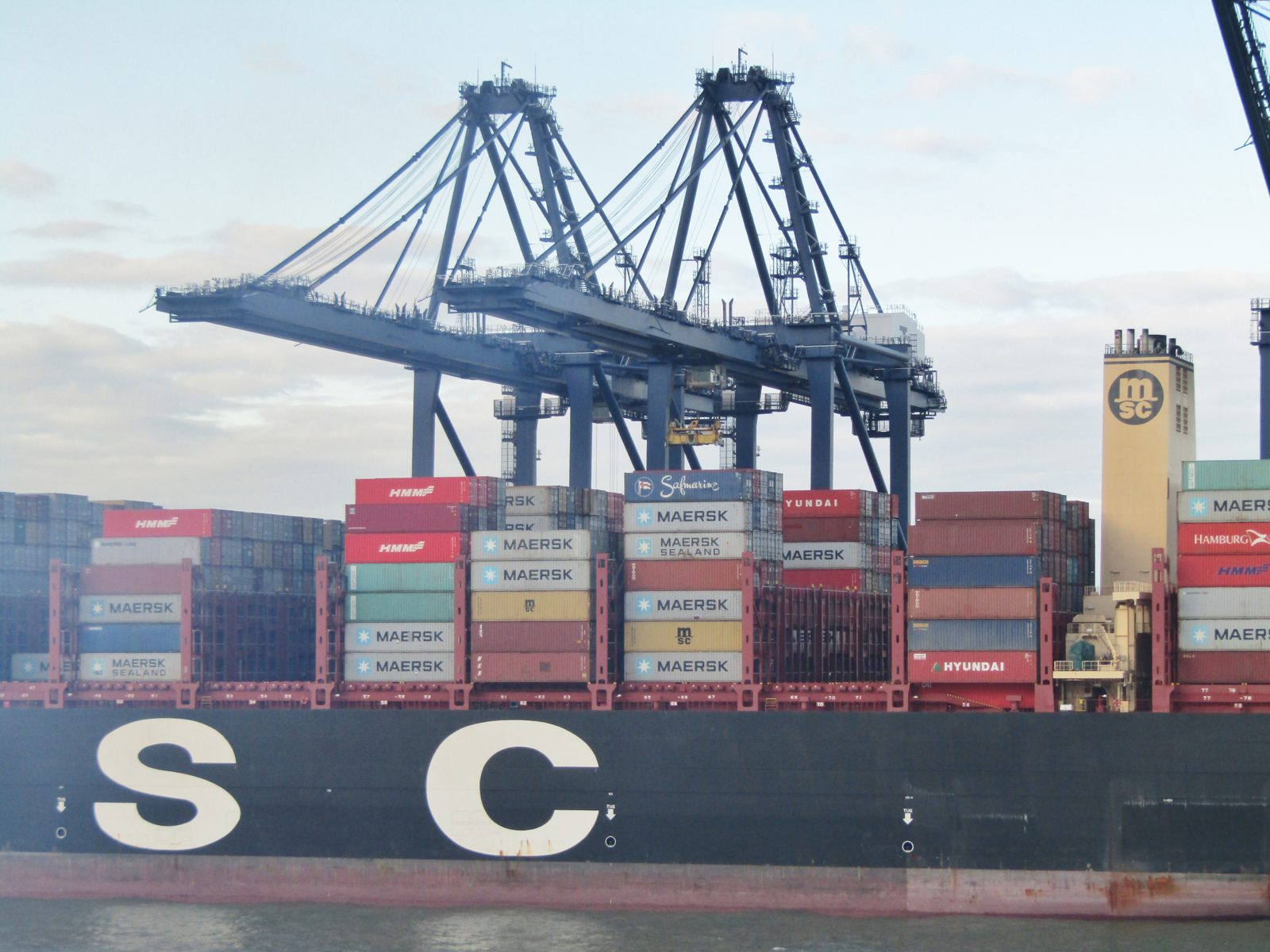
If you ground the operational problem in a real port scene, the pipeline logic becomes clearer than a single repayment event:
That is also why the 21,423 registrations Reuters cited on March 6 matter more than they first appear to. They are not just an adoption count; they are the first visible proxy for how much of the eventual refund base can even enter the machine without manual rescue.
Why small importers are the real stress test
The strongest reason this matters beyond trade law is distributional. Reuters reported on March 4 that 97% of U.S. importers are small businesses and that Penn Wharton researchers estimated they paid about $55 billion of the tariff total.[4] In the same piece, owners described the prospect of refund litigation as a time-and-cash drain they may not be able to absorb.[4]
That is why I think the real success metric is not whether the largest filers get repaid. Large companies were always more likely to mobilize counsel, preserve documentation, and sue early. Reuters said roughly 2,000 companies had already filed refund suits by early March, including FedEx, Costco, and L’Oreal, with more expected.[4] FedEx’s own lawsuit, reported on February 23, showed how quickly sophisticated operators moved to protect refund rights once the Court ruled.[5]
A workable national process has to do something more demanding: make recovery realistic for firms that do not have in-house trade counsel, spare operating time, or tolerance for a months-long claims fight. If that does not happen, the refund story turns into a familiar American split-screen outcome: legal relief exists on paper, but the firms best equipped to capture it are the ones that needed the least help.
The next argument will be about pass-through, not legality
There is a second operational layer already forming. Reuters reported on March 12 that refunds will go only to the importers who paid the tariffs, while consumers and lawmakers are separately pressing companies to share the benefit downstream.[3] FedEx has said it will reimburse customers; Costco has said it will use refunds to lower prices; but there is no universal obligation forcing pass-through.[3]
This matters because the public story around tariffs was always partly a price story. Once refunds start flowing, the political and commercial question becomes who actually receives the economic reversal. The customs system may solve the first-mile problem—returning money to the importer of record—while leaving the second-mile distribution fight unresolved.
That is another reason I read this as a systems story. Even after the legal defect was established, the recovery path still depends on how records, contracts, invoices, and customer pricing were structured when the tariffs were originally charged.
Counterweight worth taking seriously
There is a fair argument on the other side. CBP did not simply insist that refunds were impossible; it proposed a purpose-built path designed to avoid forcing every importer into court, and the trade judge appears to have given the agency room to build it.[2][6] Reuters’ March 12 update also suggests the project is materially underway rather than hypothetical.[3]
If the portal launches on the timeline CBP outlined, importer registration climbs quickly, and single-payment processing works for the long tail of smaller claimants, this article will look too skeptical. That is a real possibility.
But until those conditions are visible, optimism is still a forecast rather than an achieved operating result.
What to watch next
Three signals matter more than tariff rhetoric from here.
- Portal readiness and registration conversion: whether the claim system actually goes live near the promised window and whether the registered-importer count rises sharply from the 21,423 level Reuters reported on March 6.[2]
- Payment speed, not just application intake: whether CBP starts disclosing how long approved refunds take to clear once claims enter the system.[3]
- Small-business usability: whether firms without dedicated trade staff can recover funds without separate litigation, claim sales, or specialist law-firm intervention.[4]
Bottom line
The Supreme Court already said the tariff authority failed. What remains unsettled is whether the refund machinery can work at commercial scale. That is why the central U.S. tariff story in mid-March 2026 is no longer simply who won in court. It is whether CBP can turn a legal reversal into a functioning mass-payment system before delay, complexity, and unequal claimant capacity eat away at the value of the win.
Sources
- Supreme Court of the United States, Learning Resources, Inc. v. Trump (24-1287, decided Feb. 20, 2026)
- Reuters, US customs agency expects tariff refund system to be ready in 45 days (Mar. 6, 2026)
- Reuters, US customs agency says building system for tariff refunds is 40% to 80% complete (Mar. 12, 2026)
- Reuters, For some small businesses, a tariff refund isn't worth the pain of pursuing it (Mar. 4, 2026)
- Reuters, FedEx sues US for refund on Trump's emergency tariffs (Feb. 23, 2026)
- Reuters, US Court of International Trade suspends March 5 order on tariff refunds (Mar. 6, 2026)
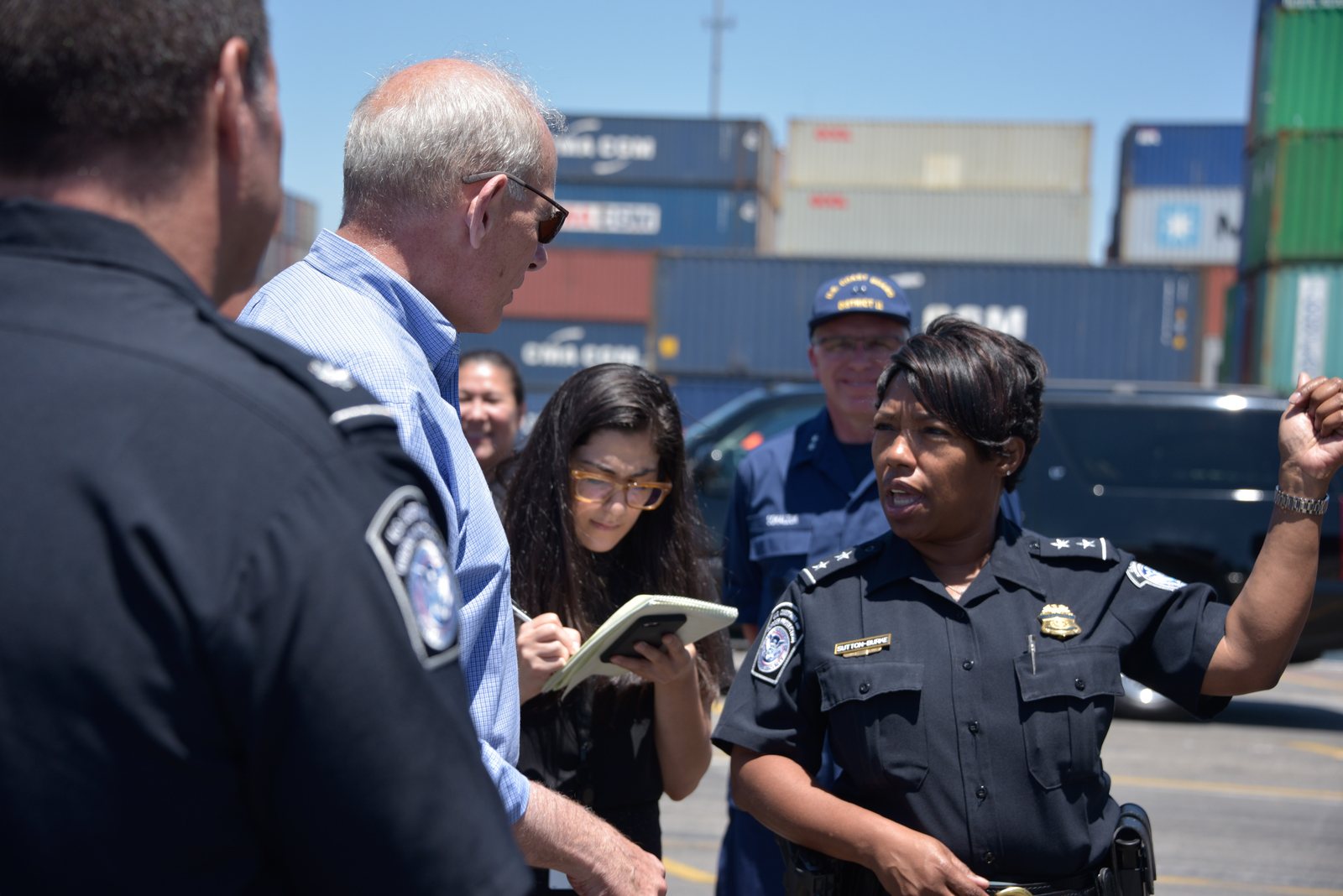
- Wikimedia Commons image source, Touring CBP Operations at Port of LA-Long Beach (35517473284).jpg (DHS photo by Jetta Disco)