As of 2026-03-13 12:09 UTC, Washington’s possible Jones Act waiver reads less like a grand energy policy turn than a very specific domestic-routing intervention. The White House says it is considering a limited waiver so energy products and agricultural necessities can move more freely between U.S. ports during a Middle East supply shock.[1] Fuel analysts, however, are describing a much tighter benefit band: the move may relieve pressure in import-reliant coastal markets and smooth some Gulf-to-coast transfers, but it does not repair the global oil disruption now pushing prices higher.[2][6][7]
That distinction matters because the political headline is bigger than the physical mechanism. A waiver can change who is allowed to carry cargo between U.S. points for a short window. It cannot reopen the Strait of Hormuz, and it cannot manufacture crude molecules that are no longer moving.
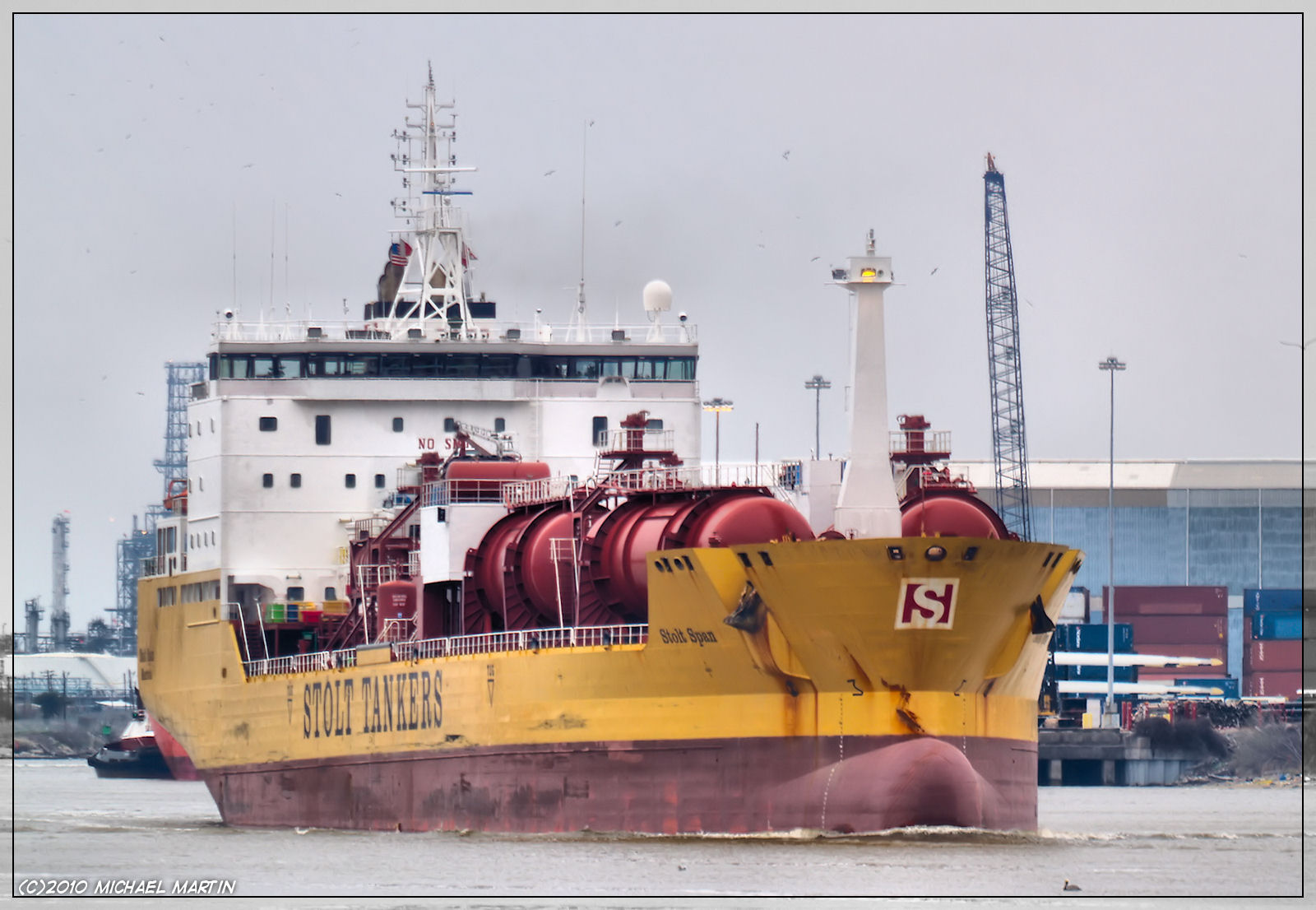
Image context: the cover photo shows tanker traffic on the Houston Ship Channel, which is the right physical setting for this article. The live question is whether temporary access to additional foreign-flag tonnage can help move fuel and farm inputs from U.S. Gulf supply points into tighter domestic markets fast enough to matter.
Voice 1: The White House view — buy flexibility inside the domestic leg
Reuters reports that the administration is considering a 30-day Jones Act waiver and has framed it as a national-defense step to keep vital energy products and agricultural necessities flowing between U.S. ports.[1] In practical terms, that means temporarily loosening the coastwise rule that normally reserves domestic waterborne cargo moves to vessels that are U.S.-built, U.S.-flagged, and mostly U.S.-owned.[1][3]
MARAD’s own explanation is useful here because it strips away the slogan layer. The agency notes that Jones Act exemptions are rare and that the legal basis is the interest of national defense under 46 U.S.C. § 501.[3] MARAD also makes clear that it does not issue the waiver itself; the final decision sits with the Secretary of Homeland Security after the government evaluates whether there is sufficient national-defense basis and whether qualified U.S.-flag capacity is available.[3][4]
So the first interview answer is narrow: Washington is not redesigning U.S. cabotage. It is trying to buy short-duration flexibility in the domestic leg of the supply chain.
Voice 2: The fuel-market view — useful in the Northeast and West Coast, small against the global shock
The strongest evidence for a waiver’s usefulness is regional rather than national. Reuters cites StoneX saying additional flexibility could help markets that are chronically short of supply and poorly connected by pipeline to the Gulf Coast refining system, including the West Coast and the Northeast.[2] Patrick De Haan of GasBuddy told Reuters the effect might amount to slowing price increases by roughly 5 cents per gallon per day at the margin, rather than changing the underlying trend.[1]
That estimate fits the broader market numbers. Reuters reports that roughly 20 million barrels per day normally move through the Strait of Hormuz, about 20% of global oil consumption.[2] Against that, the domestic shipping rule is a distribution constraint inside the United States, not the core global supply loss.
The latest AAA data keep the pressure visible. On 2026-03-13, the national average regular gasoline price was $3.630 per gallon and diesel was $4.892.[6] AAA’s March 12 market note also said regular gasoline had risen nearly 35 cents week over week, while U.S. gasoline demand increased from 8.29 million b/d to 9.24 million b/d and domestic gasoline supply fell from 253.1 million barrels to 249.5 million barrels.[7]
In other words, the waiver can matter operationally even if it remains too small to matter strategically. It can improve routing flexibility where domestic shipping scarcity bites hardest, while still leaving the national pump narrative dominated by the oil shock itself.
Voice 3: The farm-supply view — fertilizer timing gives the waiver a second constituency
The most interesting expansion of this story sits outside gasoline. In its March 9, 2026 letter to President Trump, the American Farm Bureau Federation argued that fertilizer markets were also being hit by Strait of Hormuz disruption and explicitly asked for a Jones Act waiver to improve domestic transportation capacity between U.S. ports.[5]
That letter matters because it broadens the waiver’s political coalition. Farm Bureau warned that higher prices for urea, ammonia, nitrogen, phosphate, and sulfur-based products could hit the spring planting season, with downstream consequences for crop output and food inflation.[5] Once the request is read through that lens, this stops being only a refinery-and-retail-gasoline story. It becomes a coastal logistics story with agricultural timing risk attached.
That also explains the White House phrasing about both energy products and agricultural necessities.[1] The administration appears to be treating the domestic shipping bottleneck as a shared lane used by more than one politically sensitive supply chain.
Voice 4: The waiver-process view — ambition is screened by law, paperwork, and available vessels
CBP’s waiver-request page shows how specific the process is. A requester must identify the cargo, the vessel, the flag, loading and delivery dates, lading and unlading ports, shipper and consignee, and explain why the waiver is necessary in the interest of national defense.[4] CBP also requires a statement that the requester does not already control a coastwise-qualified vessel able to carry the cargo.[4]
That list is revealing for two reasons.
First, the government is not being asked to endorse a general market theory. It is being asked to approve concrete voyages with concrete timing, ports, vessels, and cargo descriptions.[4] Second, the process itself imposes a discipline on overclaiming. If suitable domestic tonnage can be found, or if the national-defense case is weak, the waiver logic narrows quickly.[3][4]
This is why the policy works better as an interview of constraints than as a promise. Each applicant is effectively being asked the same question: what exact cargo movement is blocked, on what dates, on which route, and why does national-defense necessity justify foreign-flag relief?
What this interview says right now
Taken together, these voices point to four decision-grade conclusions.
- The waiver is real as a routing tool. Additional foreign-flag tonnage could ease pressure in coastal markets where pipeline alternatives are thin and domestic coastwise vessel supply is constrained.[1][2]
- The waiver is small relative to the oil shock. A domestic-shipping measure cannot neutralize a disruption measured in roughly 20 million barrels per day of global flows.[2]
- Agriculture is now part of the operating case. Fertilizer timing and spring planting give the waiver a second practical constituency beyond retail fuel politics.[1][5]
- Execution will be route-specific, not slogan-specific. The legal and administrative process favors narrowly justified cargo moves over broad ideological declarations.[3][4]
That is why the right read is operational rather than theatrical. The waiver could matter, especially for certain coasts and certain cargoes. It just matters on a different scale than the headline suggests.
If you operate in these lanes over the next 30 days
A serious watchlist is shorter than the television debate.
- Watch Gulf-to-coast arbitrage windows, not only national average prices. If the waiver arrives, the first meaningful change should show up in routes where domestic marine capacity has been the limiting factor.[1][2]
- Separate fuel relief from oil-shock relief. If crude markets keep repricing Middle East disruption upward, a better domestic routing map can still coexist with higher pump prices.[2][6][7]
- Track fertilizer routing and inland handoff risk. Farm Bureau’s letter makes clear that port access is only one step; rail, barge, and inland distribution still determine whether product reaches planting windows in time.[5]
- Expect case-by-case operational detail. Because the waiver process turns on named cargoes, named vessels, dates, and ports, execution friction may sit in paperwork and voyage matching as much as in politics.[3][4]
Numbers and dates that anchor the file
- 30 days — Reuters’ reported expected waiver window.[1]
- 20 million barrels per day — approximate oil volume moving through the Strait of Hormuz before disruption, according to Reuters’ summary of the current shock.[2]
- 172 million barrels — U.S. strategic petroleum reserve release announced by the administration.[8]
- 400 million barrels — total emergency stock release recommended by the IEA, according to Reuters reporting.[2][8]
- $3.630 — AAA national average regular gasoline price on 2026-03-13.[6]
- $4.892 — AAA national average diesel price on 2026-03-13.[6]
- 8.29 million b/d to 9.24 million b/d — week-over-week U.S. gasoline demand change cited by AAA on March 12.[7]
- 253.1 million to 249.5 million barrels — week-over-week decline in U.S. gasoline supply cited by AAA on March 12.[7]
These anchors support a clean reading: the administration is pulling both a distribution lever and a stockpile lever, but neither one is large enough to erase the external supply shock on its own.
What would change this framing
This interview-style reading weakens if the Strait of Hormuz disruption eases quickly, if crude markets retrace, or if U.S. coastal price spreads narrow without meaningful waiver use. It also weakens if the government issues a broader or longer relief package than currently reported.
For now, the tighter interpretation still holds. The proposed Jones Act waiver is best understood as a domestic-routing intervention during an international energy shock. That is a meaningful tool. It is just a smaller tool than the headline implies.
Sources
- Reuters, Trump administration considers loosening US shipping rules to combat fuel price spike (March 12, 2026)
- Reuters, US shipping waiver and release of stockpiles will not ease pain at the pumps, analysts say (March 12, 2026)
- U.S. Maritime Administration (MARAD), Domestic Shipping
- U.S. Customs and Border Protection (CBP), Requests to Waive the Navigation Laws
- American Farm Bureau Federation, Letter to President Donald J. Trump on fertilizer supply disruption (March 9, 2026)
- AAA, AAA Fuel Prices (accessed March 13, 2026)
- AAA, Rising Pump Prices, Higher Gas Demand as Spring Break Begins (March 12, 2026)
- Reuters, US to release 172 million barrels of oil from strategic petroleum reserve (March 11, 2026)