As of 2026-03-12 21:07 UTC, the EU’s Import Control System 2 story for road and rail reads less like a software rollout and more like a live border-readiness interview. The policy direction is already fixed: for goods brought to or through the EU, operators need complete Entry Summary Declaration data before arrival, and customs authorities will use that data for safety-and-security risk analysis.[1][2]
What is still being interviewed in public is something narrower and more operational: which actor in the chain can actually assemble the data on time, through which filing path, and under which national readiness conditions.
That is why the road-and-rail file matters in March 2026. The legal requirement is now easier to describe than the operating reality.
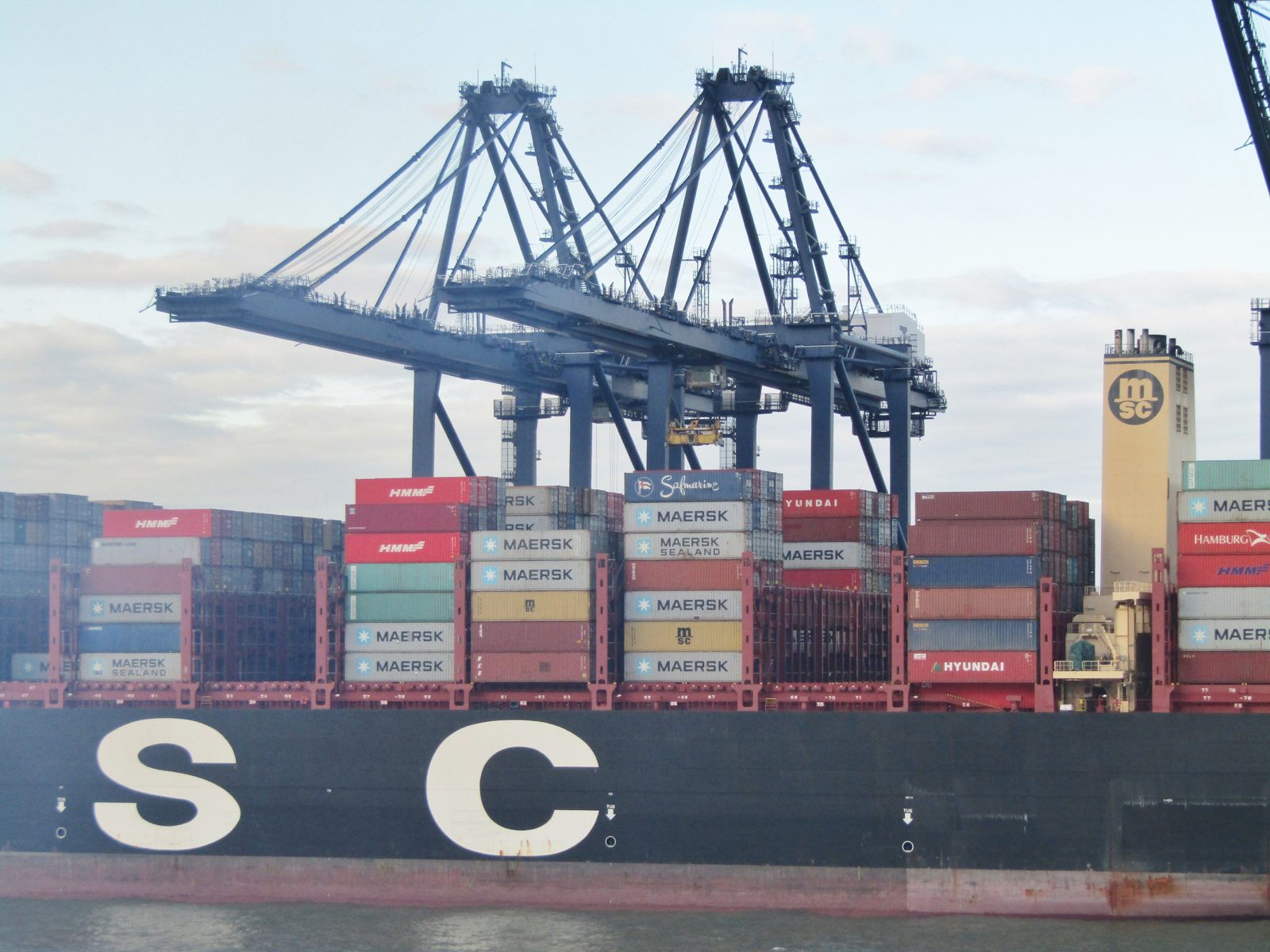
Image context: the hero photo keeps the focus on border-terminal execution, where operator handoffs, derogation paths, NCTS6 timing, and multiple-filing readiness all converge into one live checkpoint decision.
Voice 1: The Commission view — the clock is no longer theoretical
On the Commission’s ICS2 page, the core rule is stated in plain operating language: economic operators must submit a complete ENS for goods transported to or through the EU before arrival, and customs authorities use that information for pre-arrival or pre-loading risk analysis, referrals, and possible sanctions when data requirements are not met.[1]
The deeper legal sequencing sits in Commission Implementing Decision (EU) 2023/2879. That decision says the Commission changed the ICS2 Release 3 approach after feasibility concerns and moved to a gradual implementation sequence, with road and rail operators connecting in the final step from 1 April 2025.[2]
In other words, the public-law question has mostly been answered already. Road and rail are in scope. The remaining debate is not whether the mode belongs inside ICS2. It is whether readiness at the edge of the network became too uneven to make the rule feel simple in practice.
Voice 2: The trader and border-operations view — this became a data-handoff problem
The Northern Ireland business guidance is useful because it shows what the rule feels like away from Brussels. The page explains that traders and logistics operators moving goods from Great Britain into Northern Ireland must use ICS2 for ENS declarations and, crucially, must be ready to provide concrete shipment data to the haulier or logistics business in time for filing.[5]
That list is revealing. It includes:
- goods description
- 6-digit commodity code
- total mass
- buyer and seller information
- place of delivery
- supporting documents where relevant[5]
This is the interview question hidden inside the broader customs program. If the filing obligation sits with the carrier or haulier, but the usable data still lives upstream with the shipper, exporter, parcel operator, or intermediary, then the actual risk sits in the handoff design.
That is also why the story is larger than one customs portal. The operating test is whether commercial actors can make shipment data complete, legible, and early enough before the border moment.
Voice 3: The operator view — patchwork readiness changed the real bottleneck
Trade-body reporting in 2025 made the friction visible. BIFA said the Commission had confirmed that a common EU-wide delay was not legally possible, while individual Member States could apply for derogations from the 1 September 2025 implementation deadline.[3]
That same update is what turned the story into an operator-readiness issue rather than a clean central deadline. BIFA summarized the practical picture this way:
- in Member States without a derogation, ICS2 filings for road and rail had to begin from 1 September 2025
- multiple filing for rail was expected only in Q2 2026
- multiple filing for road was expected only in Q4 2026[3]
CLECAT pushed the argument further. Its August 2025 statement warned that the misalignment between ICS2 and NCTS6 would force some road and rail operators into duplicate or awkward filing behavior, especially on complex land-border routes. CLECAT also said the Commission’s 22 August communication carried readiness updates from only 12 of the 27 Member States, which, in its telling, left operators with an incomplete map just days before the deadline.[4]
That reporting came from an advocacy group, so it should be read as a pressure document rather than neutral administrative text. But the operational logic is hard to dismiss. Once road and rail entered the final ICS2 phase, the bottleneck stopped being abstract compliance awareness and became one of route design, filing ownership, and upstream data quality.
What the interview now says
Taken together, these voices point to three decision-grade conclusions.
- The legal endpoint is firmer than the operating path. The Commission’s direction is clear: road and rail belong inside the ENS and risk-analysis architecture.[1][2]
- The burden has moved upstream into supply-chain choreography. Traders, shippers, and logistics partners now have to deliver better data earlier, because the carrier cannot file accurately with missing or vague inputs.[1][5]
- The most expensive failures now happen at the border edge. Derogation logic, NCTS6 timing, and delayed multiple filing do not change the policy objective; they change where queues, rework, and confusion appear first.[3][4]
This is why the article reads as an interview. Every stakeholder is effectively being asked the same question in a different accent: are you truly ready to produce, pass, and file complete ENS data before the truck or train reaches the EU border?
If you operate in this lane over the next 30 days
A practical watchlist is shorter than the legal file:
- Name the filing owner per lane. If a shipment changes hands across shipper, forwarder, haulier, and carrier, someone has to own the final ENS packet before border arrival rather than assuming the next actor will fill the gap.
- Map derogations route by route, not abstractly. The real question is not whether a Member State has policy flexibility in general, but whether your exact road or rail path still depends on a derogation or grace arrangement at one edge of the corridor.[3][4]
- Test the NCTS6 / multiple-filing edge before the live movement. A filing chain that works in one-country theory can still fail once rail multiple filing, road multiple filing, or transit-system timing diverges in practice.[3][4]
- Freeze a minimum upstream data packet. Goods description, 6-digit commodity code, mass, buyer/seller data, delivery place, and any supporting documents need to be treated as pre-border operating inputs, not as paperwork to chase after dispatch.[5]
That is the uncomfortable upgrade hidden inside the policy story. The operators who turn ICS2 into a routine process fastest will usually be the ones that reduce ambiguity in data ownership first.
Numbers and dates that anchor the file
- 1 April 2025 — the date from which road and rail operators were scheduled to connect in the final step of ICS2 Release 3 under Implementing Decision (EU) 2023/2879.[2]
- 1 September 2025 — the operational date BIFA identified for road-and-rail filings in Member States without derogations, and the point from which the Commission’s road-and-rail guidance applied after full deployment.[1][3]
- Q2 2026 — BIFA’s reported expectation for rail multiple filing.[3]
- Q4 2026 — BIFA’s reported expectation for road multiple filing.[3]
- 12 of 27 Member States — the number CLECAT said were covered in the Commission’s 22 August 2025 communication on derogation requests and readiness updates.[4]
These anchors matter because they show that the problem in March 2026 is less about whether a deadline existed and more about how many supporting pieces arrived on the same rhythm.
What would change this framing
This interview-style reading becomes too pessimistic if the remaining operator frictions close faster than expected — for example, if multiple filing support is fully available, NCTS6 alignment becomes routine, and Member State derogation handling stops feeling like a fragmented route-planning exercise.
For now, the opposite message still dominates. ICS2 for road and rail is not mainly a future customs-modernization story anymore. It is a present-tense border-readiness test, and the people being tested are not only customs IT teams, but carriers, shippers, hauliers, and every commercial actor responsible for making ENS data usable before arrival.
Sources
- European Commission, Taxation and Customs Union — Import Control System 2 (ICS2)
- European Commission — Commission Implementing Decision (EU) 2023/2879 of 15 December 2023 establishing the Work Programme relating to the development and deployment for the electronic systems provided for in the Union Customs Code
- BIFA — ICS2 Release 3 for Road and Rail – Update on Implementation Timeline (7 Aug. 2025)
- CLECAT — CLECAT calls on the European Commission to announce non-enforcement grace period for ICS2 Release 3 Road and Rail (27 Aug. 2025)
- NI Business Info — Moving goods from Great Britain to Northern Ireland – entry summary declarations (first published 9 July 2025)