As of 2026-04-05 16:05 UTC, the White House's April 2 pharmaceutical tariff order should not be read as a simple "100% tariff on foreign drugs" story. The new regime is narrower, more conditional, and more strategic than that headline suggests. It is aimed at patented pharmaceuticals and associated ingredients, it leaves generics and biosimilars outside the tariff lane for now, it creates multiple exemption paths, and it ties the most favorable treatment to two separate bargains: lower U.S. drug prices through Most-Favored-Nation (MFN) agreements and credible U.S. onshoring commitments.[1][2][3]
My view is that this is now a negotiation architecture first and a reshoring policy second. The administration is trying to use tariff threat, drug-pricing leverage, and domestic-investment promises as one combined instrument. That may change boardroom behavior quickly. It does not mean the United States can rewire pharmaceutical supply chains on the same calendar. The administration's own prior orders, and FDA's own manufacturing data, describe a slower physical reality: building plants and redundant API capacity still runs on a multi-year clock.[4][6][7]
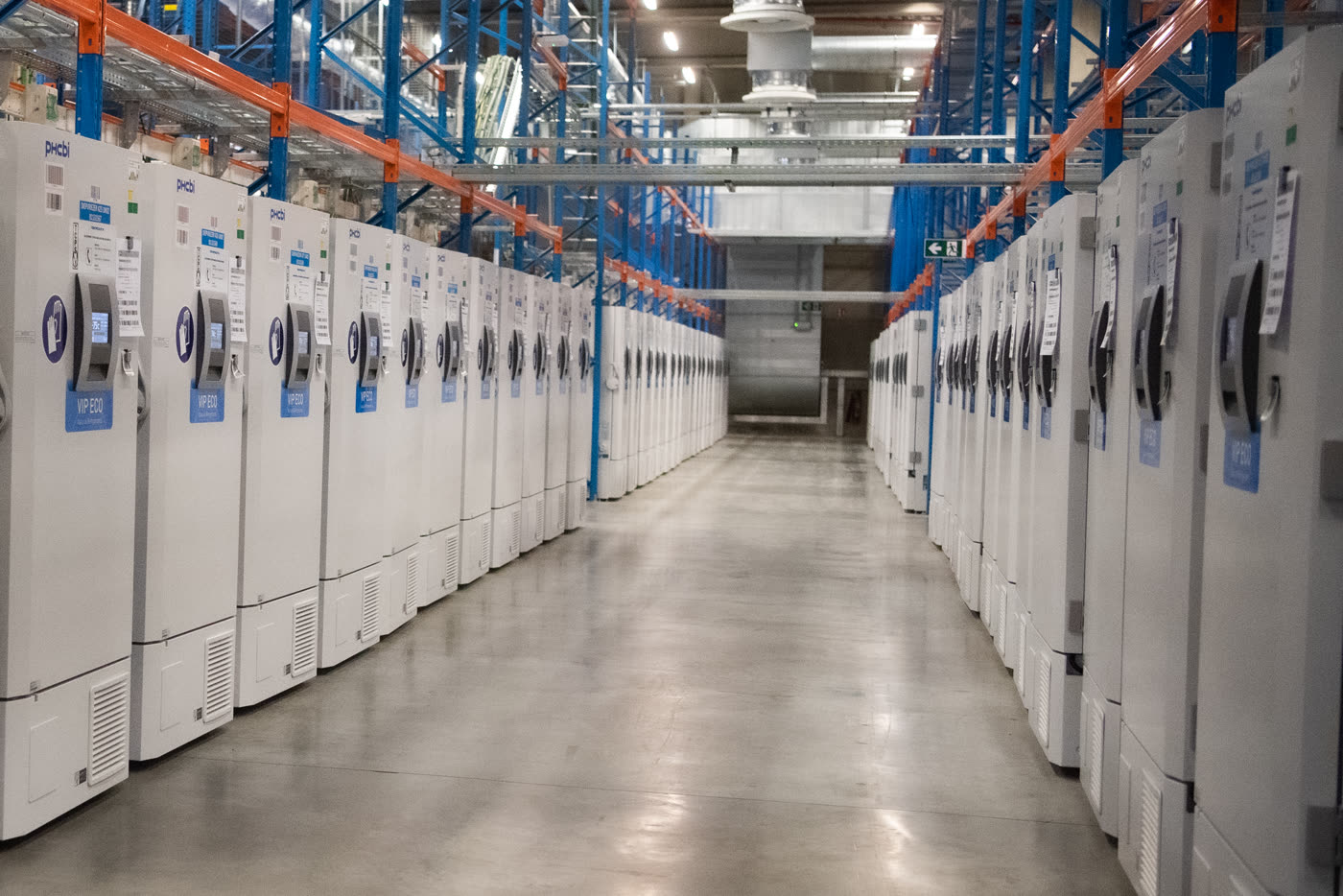
Image context: the header photo shows workers inside Pfizer's factory in Puurs, Belgium. It is the right documentary image because the real argument here is about production capacity in actual manufacturing environments, not about an abstract tariff chart or a symbolic White House podium.[8]
What changed on April 2
The structure matters more than the headline number. The White House proclamation says the tariff regime applies to patented pharmaceuticals and associated pharmaceutical ingredients, not to the whole drug market at once.[1] The accompanying fact sheet is explicit that generic and biosimilar products are excluded for now, with the administration reserving a later review within a year.[2] That single choice already tells you this is not a blunt same-day import wall. Washington is starting with the branded, higher-margin part of the market where pricing pressure and investment bargaining are more politically legible.[1][2]
The order then splits that branded market into several lanes. Companies that have signed MFN pricing agreements and are actively building U.S. manufacturing projects can receive a 0% tariff through January 20, 2029; companies that are building in the United States but do not yet have an MFN pricing deal sit in a 20% lane that can rise later; and companies that do neither face the harshest escalation path.[1][2][3] AP reported that the administration gave firms 120 days to negotiate if they are bigger companies and 180 days for everyone else, while also saying 17 pricing deals had been reached and 13 had already been signed.[3]
There is another sign that this is a bargaining design, not a pure border wall. The proclamation creates additional zero-tariff treatment for a long list of specialty categories, including orphan drugs, nuclear medicines, plasma-derived therapies, fertility treatments, cell and gene therapies, and antibody-drug conjugates, where trade-framework status or urgent U.S. health need can justify relief.[1] That is policy triage. The administration is not treating every imported medicine as interchangeable. It is trying to preserve room for exceptions where the clinical or diplomatic cost of a hard tariff would be too high.
Why this behaves like a negotiation system
The tariff file makes more sense once it is placed next to the administration's parallel drug-pricing campaign. The White House has already been building a public MFN architecture through TrumpRx.gov, which it describes as a distribution channel for lower prices secured through pricing agreements with manufacturers.[5] The April 2 tariff order then makes those pricing deals part of customs treatment. In other words, the White House is no longer running price policy and trade policy as separate files. It is fusing them.
That fusion changes the practical near-term question. The most useful question is not "How much tariff revenue will customs collect this quarter?" The more useful question is "How many branded-drug companies will decide that signing a pricing deal and announcing U.S. investment is cheaper than sitting in the escalator lane?"[1][2][3][5] That is why I read the proclamation as a negotiation machine. It turns tariff pain into leverage over two separate corporate choices at once: U.S. list-price posture and U.S. plant location.
This also explains why the order is full of conditions, timing windows, and preferred-treatment clauses. If the administration's only goal were immediate border protection, it would have had a much simpler design. Instead it wrote a system built to sort companies by cooperation. That is a political-economy tool, not just a tariff table.[1][2]
Why the physical supply chain still moves slower
The harder problem is that pharmaceutical manufacturing is not software deployment and not even ordinary consumer-goods assembly. The administration's own May 2025 order on domestic production of critical medicines said industry estimates suggest that building new pharmaceutical manufacturing capacity can take 5 to 10 years.[6] That is an important admission. Even a very aggressive White House does not believe the hardware side of this system can be rebuilt in one budget cycle.
Its own later August 2025 order on the Strategic Active Pharmaceutical Ingredients Reserve sharpened the point. That order said nearly two in five prescription finished drug products are made in the United States, but only about 10% of the API volume for finished drug products used in the country is made here.[7] The bottleneck is not just tablet pressing or vial filling. It is the upstream chemical and biological input chain.
FDA's own October 2025 announcement on an ANDA prioritization pilot shows the same dependency from another angle. FDA said more than half of pharmaceuticals distributed in the United States are manufactured overseas, and that only 9% of API manufacturers are U.S.-based, compared with 22% in China and 44% in India.[4] Those are not the numbers of a system that can become meaningfully self-sufficient because of one tariff proclamation and a few investment press releases. They are the numbers of a system that would need years of plant construction, qualification work, supplier duplication, and inspection throughput before the geography really changes.
The public-health constraint tariffs do not erase
Tariff strategy also does not erase the FDA's operating limits once a shortage risk shows up. FDA's shortage planning has long been explicit on this point: the agency cannot require manufacturing redundancy, cannot force a company to keep making a drug, and cannot require a firm to hold a given level of inventory.[9] That matters because the April 2 order is being sold as both a national-security move and a supply-chain-strengthening move. Those goals are not achieved just by making imports more expensive. They are achieved when the system has more reliable capacity than it had before.
FDA's latest CY 2024 shortages report shows why this remains a live constraint. The agency said it worked with manufacturers to prevent 283 shortages during the year, yet 15 new shortages still emerged.[10] That is not evidence that tariffs will fail. It is evidence that the supply chain remains structurally fragile even before another layer of trade pressure is added. If domestic capacity is not ready when imports get more expensive or more complicated, the stress can migrate into pricing exceptions, narrow supplier dependence, or outright shortage-management mode.[9][10]
That is why I would resist the clean triumphal version of the story. The White House has created a serious negotiating instrument, and it may win real concessions. But winning concessions is not the same as having already built resilience.
What would confirm or break this view
Three signals matter more than the slogan.
First, watch for actual facility milestones, not only press releases: construction starts, FDA pre-approval progress, validated API lines, and long-duration supply contracts with domestic inputs.[4][6][7]
Second, watch whether the administration keeps expanding the policy through deals and exemptions rather than through rapid physical output gains. If the next year is dominated by more MFN signings, more category-specific carve-outs, and more company-specific tariff treatment, that would confirm the bargaining-first interpretation.[1][2][3][5]
Third, watch the shortage file. A convincing reshoring story would eventually show up in fewer emergency workarounds, broader manufacturing redundancy, and a supply chain that needs less crisis management from FDA.[9][10]
The narrow conclusion is the useful one. Pharmaceutical tariffs now function as an architecture for sorting drugmakers into preferred and penalized lanes. That may prove effective as negotiation. It is not yet the same thing as a same-quarter repair of America's pharmaceutical manufacturing base.[1][2][3][4][6][7]
Sources
- The White House, "Adjusting Imports of Pharmaceuticals and Pharmaceutical Ingredients into the United States" (April 2, 2026).
- The White House, "Fact Sheet: President Donald J. Trump Bolsters National Security and Strengthens U.S. Supply Chains by Imposing Tariffs on Patented Pharmaceutical Products" (April 2, 2026).
- Associated Press, "Trump unveils 100% tariff on some patented drugs on 'Liberation Day' anniversary" (April 2, 2026).
- U.S. Food and Drug Administration, "FDA Announces New ANDA Prioritization Pilot to Support U.S. Generic Drug Manufacturing and Testing" (October 3, 2025).
- The White House, "President Trump Launches TrumpRx.gov, Delivering Massive, Immediate Savings to Millions of Americans" (February 6, 2026).
- The White House, "Regulatory Relief to Promote Domestic Production of Critical Medicines" (May 8, 2025).
- The White House, "Ensuring American Pharmaceutical Supply Chain Resilience by Filling the Strategic Active Pharmaceutical Ingredients Reserve" (August 13, 2025).
- Wikimedia Commons, "File:Inside view of the Pfizer factory.jpg" (image source).
- U.S. Food and Drug Administration, FDA's Strategic Plan for Preventing and Mitigating Drug Shortages (2013) - on FDA's inability to require redundancy, inventory, or continued production.
- U.S. Food and Drug Administration, Report to Congress: Drug Shortages CY 2024 (released 2025).