As of 2026-04-05 23:03 UTC, the Council on Environmental Quality's January 8 final rule has changed the federal permitting map, but the change is easy to misread if you stop at the White House headline. CEQ adopted its earlier interim final rule without changes and removed all iterations of its NEPA implementing regulations from 40 CFR parts 1500-1508.[1][2] That is a meaningful administrative break. It is also short of a repeal of the National Environmental Policy Act itself, which still requires agencies to conduct environmental review under the statute Congress left in place.[2][3][7]
The practical consequence is that the live bottleneck has moved. For decades, project sponsors, agencies, and courts could begin from one government-wide CEQ rulebook. Now the decisive questions sit lower in the stack: what a particular agency's current NEPA procedures say, how CEQ's post-rescission guidance fills gaps, and how courts respond when agencies try to move faster under a thinner common framework.[3][5][6][7] The result is less one grand permitting victory than a new era of permitting by agency.
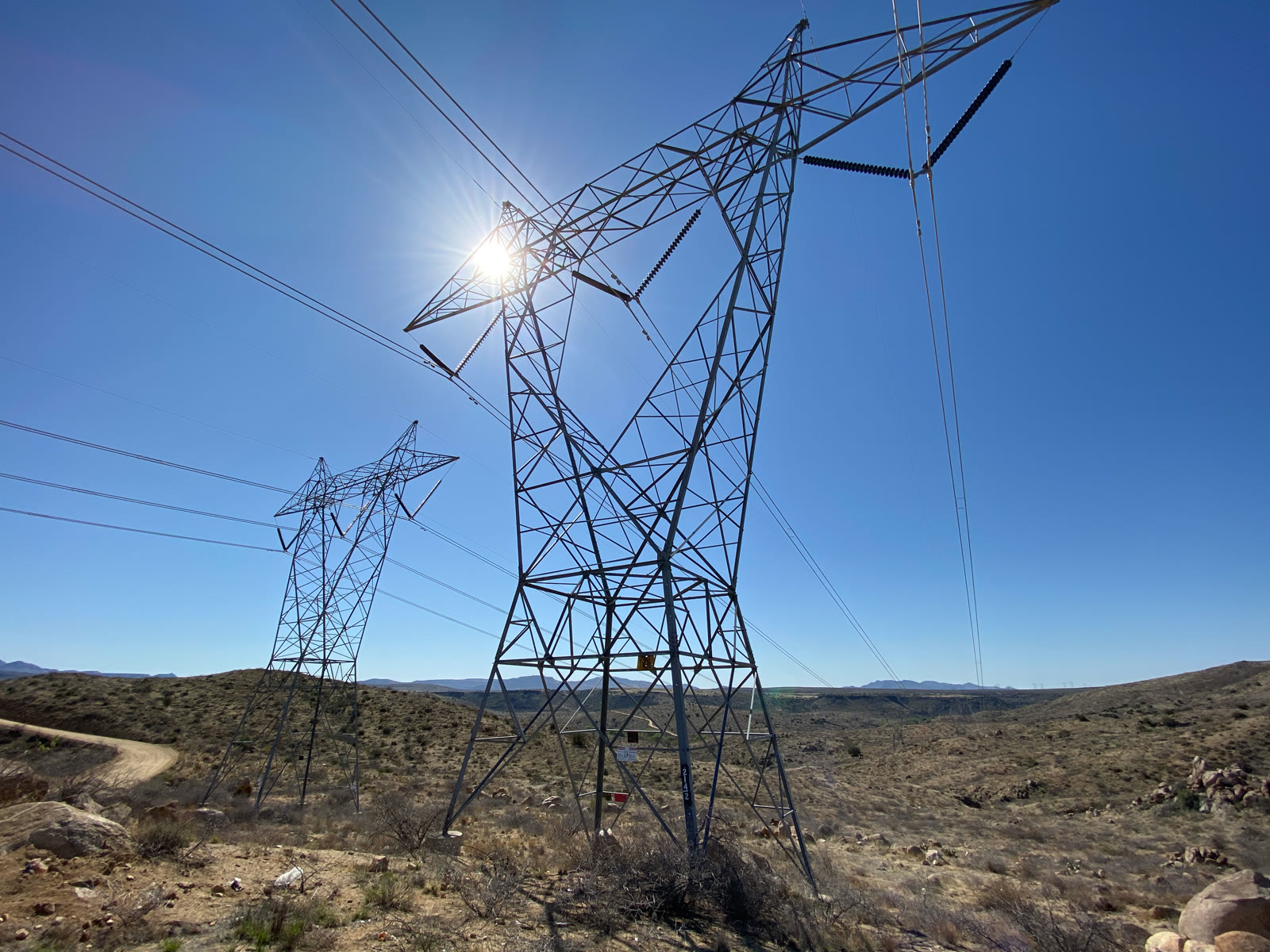
Image context: the header photo shows electric transmission lines on Bureau of Land Management land in Arizona. It is the right documentary image because the current story is about how real infrastructure corridors get reviewed after the old CEQ-wide framework has been removed and replaced by agency-level procedures.[8]
Fact file
- January 8, 2026: CEQ's final rule became effective and adopted the February 2025 interim rule without changes, removing all CEQ NEPA regulations from the Code of Federal Regulations.[2]
- Current implementation posture: CEQ says agencies should not delay pending or ongoing NEPA analyses while revising their procedures, and should keep using their current procedures with adjustments needed to match statute, case law, and CEQ guidance.[3]
- Agency rewrite phase: DOE announced updated NEPA procedures on June 30, 2025, and the SBA Office of Advocacy reported that a wider wave of agencies, including FERC, Interior, USDA, Transportation, and the Army Corps, began updating their own NEPA regulations between June 30 and July 3, 2025.[4][5]
- Political overlay: AP reported that Congress was simultaneously considering legislation to speed permitting and limit judicial review, meaning the post-CEQ picture was never going to be settled by the rescission alone.[6]
What actually changed
The January final rule matters because it ends a long period in which CEQ's regulations functioned as the common federal starting point for NEPA procedure.[2][7] The Federal Register notice says CEQ is finalizing the earlier interim action and is "removing all iterations" of those regulations from the CFR.[2] The White House celebrated that move as the completion of a major deregulatory effort and cast it as a way to restore agency authority and reduce permitting delay.[1]
That administrative shift is real. Yet the same Federal Register notice also reminds readers what remained after the deregulation language: NEPA's statutory framework still requires agencies to prepare environmental documents for major federal actions under the categories and thresholds Congress preserved and amended.[2] CEQ's role also did not disappear entirely. Its updated guidance says agencies must revise or establish their own NEPA procedures, use a CEQ template where helpful, and keep consulting the statute, post-2023 amendments, case law, and CEQ guidance while those rewrites are underway.[3]
This is why the clean slogan version of the story fails. If you call the January rule a full permitting reset, you miss how much work moved downstream into agency manuals and court defensibility. If you call it empty symbolism, you miss that the federal government truly did remove the old government-wide procedural text that used to anchor a large share of NEPA practice.[2][3][7]
Where the bottleneck moved
The first new choke point is agency-specific procedure. DOE's June 30 package said the department was rescinding its own NEPA regulations and shifting to updated NEPA guidance procedures built around deadlines, page limits, lead-agency coordination, and wider use of categorical exclusions.[4] The SBA Office of Advocacy then documented that this was not an isolated move: between June 30 and July 3, multiple agencies published updates to their NEPA regulations, including Interior, USDA, Transportation, the Army Corps, and FERC.[5] Those examples matter because they show what post-CEQ permitting acceleration now looks like in practice. It is not one universal federal rewrite. It is a series of agency rewrites.
The second choke point is gap-filling guidance. CEQ's own implementation memo says ongoing reviews should keep moving under current agency procedures, with adjustments for the NEPA statute, Executive Order 14154, case law, and CEQ's updated guidance.[3] That helps agencies avoid a freeze. It also means many reviews are now being managed through an interim blend of old agency procedures, new statutory instructions, and advisory guidance rather than through one stable government-wide regulation set. That is workable, but it is not the same thing as full simplification.
The third choke point is litigation and statutory follow-through. AP's January 7 report noted that Congress was considering additional legislation aimed at speeding permitting reviews and limiting judicial review.[6] CRS made the same structural point in more formal language: if Congress worries that the absence of binding government-wide CEQ regulations could produce more inconsistencies across agencies, it can explicitly authorize and direct CEQ to issue binding rules again.[7] Inference: once the shared CEQ rulebook is gone, courts and Congress matter even more because they are the institutions that can either stabilize or further fragment the new landscape.
Decision impact by horizon
In the next 24 hours, the main takeaway for project sponsors and their advisers is straightforward: stop treating the January 8 rescission as self-executing relief. The relevant question is no longer "What did CEQ's old rule say?" but "What does the lead agency's current procedure, guidance, and litigation posture say right now?"[3][4][5]
Over the next 7 days, the useful work is agency mapping. Energy and infrastructure sponsors should identify which agency actually owns the NEPA process, whether that agency has already revised its procedures, and whether it is still relying on pre-rescission procedures with CEQ-guided adjustments.[3][4][5] A DOE-led file and a FERC-led file can already look different from a file at an agency that has moved more slowly.
Over the next 30 days, the bigger strategic question is whether Washington can convert deregulatory momentum into a legally durable permitting regime. If more agencies rewrite their procedures quickly and courts accept those revised procedures, timelines could compress. If rewrites remain uneven or court challenges pile up, the delay problem can return in a different form.[5][6][7]
Scenario map
- Base case: permitting gets faster at agencies that already rewrote their procedures, while lagging agencies continue to produce a patchwork review environment. Trigger: more agencies publish updated procedures and continue using CEQ guidance as a bridge.[3][4][5]
- Upside case: Congress adds procedural or judicial-review limits and agencies lean harder on lead-agency coordination, categorical exclusions, and page-limit discipline. Trigger: statutory follow-through plus broad agency adoption of revised manuals.[4][6][7]
- Downside case: the common CEQ framework disappears faster than agencies can replace it with legally durable substitutes, and project timelines become less predictable across agencies. Trigger: high-profile remands, injunctions, or conflicting agency interpretations in major infrastructure cases.[3][5][7]
Action checklist
- Identify the lead agency before you make any timing assumption.
- Read the agency's current NEPA procedure document, not just the January CEQ final rule.[3][4][5]
- Check whether the agency is using a newly revised procedure or an older one with CEQ-guided adjustments.[3]
- Re-underwrite litigation risk; fewer common federal rules can mean more interpretation risk across agencies.[5][7]
- Separate facts from policy slogans. The fact is that CEQ removed its rulebook. The interpretation question is whether agency rewrites and courts turn that gap into durable speed.[1][2][5][7]
The useful bottom line is narrow. CEQ's final rule closed one chapter by removing the old government-wide NEPA regulations.[1][2] The live permitting fight now sits inside agency procedure rewrites, CEQ bridge guidance, and the courts' willingness to accept a faster, thinner framework as legally sufficient.[3][5][7]
Sources
- The White House, "CEQ Fixes Decades-Long Permitting Failure Through Deregulation" (January 7, 2026).
- Federal Register, "Removal of National Environmental Policy Act Implementing Regulations" (Council on Environmental Quality final rule, January 8, 2026).
- Council on Environmental Quality, Agency NEPA Implementation Guidance (updated 2025 PDF).
- U.S. Department of Energy, "Energy Secretary Announces Updated NEPA Procedures to End Permitting Paralysis and Unleash American Energy" (June 30, 2025).
- U.S. Small Business Administration Office of Advocacy, "Federal Agencies Begin to Update NEPA Regulations" (July 3, 2025).
- Associated Press, "White House completes plan to curb bedrock environmental law" (January 7, 2026).
- Congressional Research Service, Council on Environmental Quality Rescinds NEPA Regulations: Legal and Policy Considerations (IF12960, 2025 PDF).
- Wikimedia Commons, "File:Electric transmission lines passing through rights of way on public lands connect American communities to essential energy resources on Bureau of Land Management land in Arizona, 2025.jpg" (cover image source).