As of 2026-07-27 16:35 UTC, the New South Wales Independent Commission Against Corruption has opened an expected eight-week public inquiry into alleged political-donation schemes, Liberal Party recruitment, outcomes allegedly sought for property developer Jean Nassif, and a separate strand of alleged misconduct involving Strathfield councillors.[1] The scope is wide; the finding so far is narrow: none of those allegations has been proved by the opening of a hearing.
The central question is not whether party factions fought for members, influence or council candidates. Those facts can be politically corrosive without establishing an electoral offence or corrupt conduct. Operation Rosny’s decisive test is whether investigators can trace money through people and entities, show how it was used, and then connect it to an exercise—or attempted distortion—of public power.
That last link is why the inquiry matters beyond the NSW Liberal Party. A branch membership is an internal party asset. A councillor’s vote, a regulator’s independence and a minister’s official authority belong to the public. The investigation becomes a corruption case only where the evidence crosses that boundary.
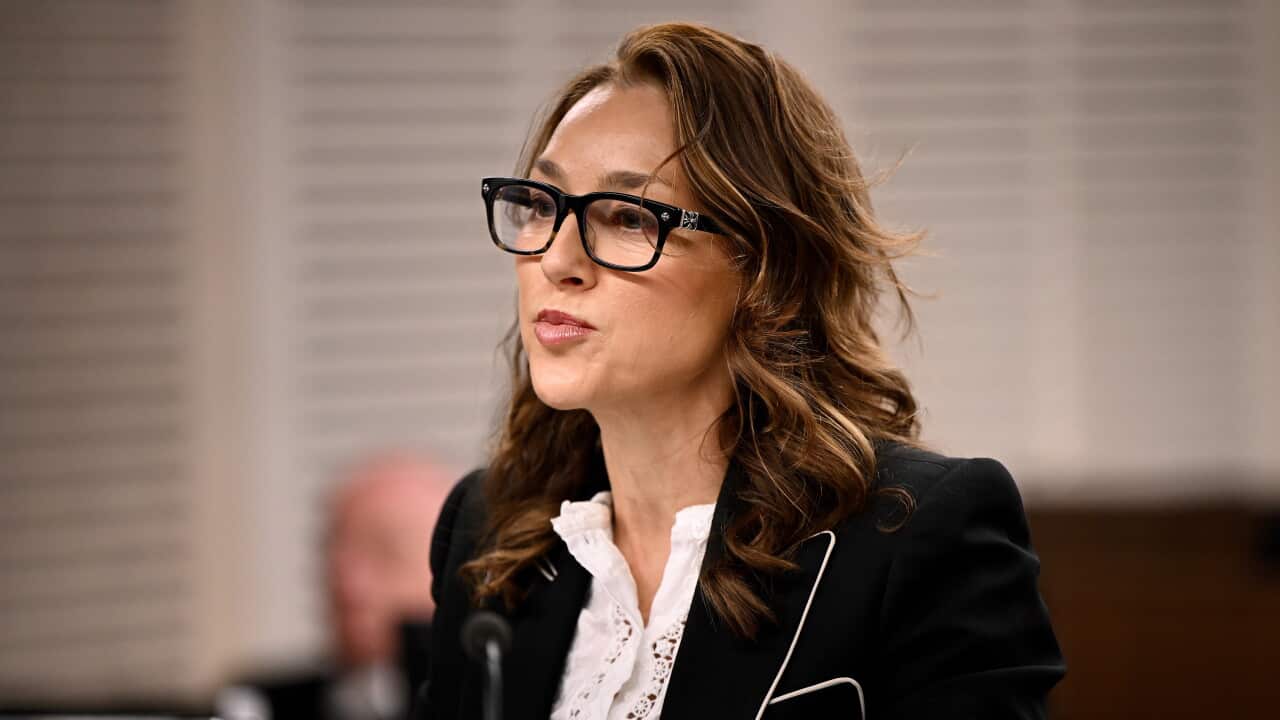
Image context: the cover is an AAP photograph of counsel assisting Peggy Dwyer delivering the opening statement on July 27. It documents the inquiry beginning; it does not depict or prove any alleged transaction.[9]
The Evidence Ledger at Opening
| Time and source | What the record establishes | Confidence boundary |
|---|---|---|
| July 27, 2026 — NSW ICAC | Operation Rosny is a current investigation with three published allegation groups. The first two concern alleged political donations, party recruitment and outcomes sought for Nassif; the third concerns alleged conduct by two Strathfield councillors toward another councillor.[1] | High confidence in the scope, no finding on the merits. The Commission repeatedly frames each proposition as something it is investigating. |
| July 27, 2026 — ICAC process rules | A public inquiry is an investigatory tool, not a judicial proceeding. ICAC must weigh public exposure, seriousness, privacy and possible reputational prejudice when deciding to hold one.[2] | High confidence in the procedural status. Public questioning can expose evidence, but it is not a conviction, a civil judgment or the Commission’s final report. |
| Current NSW electoral-funding rules | Property developers and certain close associates are prohibited donors. Donation caps aggregate contributions from the same donor to the same recipient, and making, accepting or disguising an unlawful donation can carry legal consequences.[3] | High confidence in the rules, open application to the facts. The inquiry must still establish the true donor, recipient, amount, knowledge and purpose of any transaction. |
| March 2023 — NSW parliamentary committee | The committee found that a meeting occurred at which Christian Ellis and Jean-Claude Perrottet asked businessman Frits Maré for $50,000 for an operation to unseat federal MP Alex Hawke. It said that finding and witness conduct added weight to allegations Ray Williams had raised in Parliament.[4] | A parliamentary finding, not an ICAC finding. Maré said he was not interested; the earlier record did not establish that he paid the money. Key people did not give evidence to that inquiry, limiting what it could resolve.[4][6] |
| July 24–25, 2026 — ABC reporting | ABC published text messages showing Williams warning then-premier Gladys Berejiklian in November 2020 about an alleged developer-linked effort to move branches, plus committee notes and a chronology from the internal dispute to the current inquiry.[5] | Strong documentary reporting, still subject to testing. The messages establish that warnings were made; they do not by themselves prove the alleged funding source, payment path or promised public outcome. |
| July 27, 2026 — opening statement and first witness | Dwyer said the Commission expected evidence of disguised payments and an anticipated $2 million from Nassif; first witness Michael O’Hara acknowledged that advice described on invoices was not provided and explained the arrangement as promoting his conservative values.[7][8] | Material first-day evidence, not a finding. “Expected” and “anticipated” do not establish that $2 million was transferred. O’Hara’s evidence about the consultancy does not by itself decide whether a donation was unlawful. |
| July 27, 2026 — opening-day photograph | The inquiry opened in Sydney, documented in a same-day AAP photograph carried by SBS.[9] | High confidence that proceedings began. The photograph records the hearing, not any alleged transaction. |
Day One Adds Invoices, Not Yet a Complete Chain
The opening statement moved the public record beyond the broad allegation sheet. Dwyer said phone intercepts and WhatsApp messages indicated Charles Perrottet may have used his party position to benefit Nassif’s business interests. She said the Commission expected evidence that Christian Ellis, Jeremy Greenwood and Charles Perrottet anticipated receiving a total of $2 million from Nassif, divided among them, and that Toplace money was allegedly routed through companies connected to Greenwood.[7][8]
Every verb in that account matters. This is what counsel said the evidence is expected to show. The $2 million was described as anticipated, not as a transfer the Commission has already found occurred. Former premier Dominic Perrottet, who referred the allegations to ICAC in 2022, is not accused of wrongdoing.[7][8]
The first witness supplied a more concrete but still bounded piece of the payment puzzle. O’Hara acknowledged that “strategic wealth strategy investment advice” described in an email and invoices had not been provided. He said he understood the arrangement as Ellis promoting his conservative values within the Liberal Party. The hearing also examined an undeclared $25,000 payment to the Reformers. That testimony may bear on the use and description of money; it does not on its own establish every element of an unlawful-donation offence, including the true legal donor, the recipient’s knowledge and intent.[7][8]
ICAC also displayed a text exchange in which Greenwood referred to “schools’ money,” Jean-Claude Perrottet cautioned against putting the remark in writing, and Greenwood replied that it deletes. Dwyer said the Commission would rely on the exchange in arguing that people knew the arrangements were improper.[7][8] The exchange is plainly relevant to the knowledge question. Its context, authorship, surrounding messages and evidentiary weight still have to be tested.
Why Party Machinery Is Not Enough
The earlier record exposes the jurisdictional hinge. According to ABC’s reconstruction, a dossier reached ICAC in 2021 alleging that Liberal figures had offered to replace sitting Hills Shire councillors with candidates more supportive of Nassif’s developments. In March 2022, the Commission declined to investigate on the material then before it, explaining that internal party manoeuvring was not enough without information indicating a reasonable likelihood that public officials’ conduct had been affected.[5]
That distinction was not a technical escape hatch. It identified the proof problem Operation Rosny now has to solve.
Party branches influence preselections. Preselections shape who reaches public office. But neither a recruited member nor an unusual preselection outcome proves that a prohibited donor paid for it. Even proof of an unlawful donation would not automatically prove a bargain over a development, regulator or minister. The evidence has to carry the chain farther.
The Commission’s published scope now names the alleged public-power connection directly. It is investigating whether donations by or on behalf of Nassif and Toplace were solicited or accepted for party recruitment, involved schemes to evade electoral-funding rules, and/or were made in exchange for pursuing outcomes Nassif allegedly wanted. The listed outcomes include damage to former minister David Elliott’s political career and the removal of Building Commissioner David Chandler—or preventing Chandler from exercising official functions concerning Nassif’s developments.[1]
That is the missing link in plain view. If the evidence establishes only factional organising, the corruption theory contracts. If it establishes hidden or prohibited funding but no public quid pro quo, an electoral-funding case may remain while the public-office theory weakens. If it establishes a traceable exchange between funding and action against a regulator, officeholder or council process, the case changes category.
Three Allegation Streams Must Stay Separate
The breadth of the inquiry creates a second risk: guilt by narrative proximity. Operation Rosny’s published scope contains three streams that should not be blended merely because they share one hearing.
The first concerns alleged donations between 2019 and 2023. ICAC names individuals and two specific organisational pathways: alleged payments by Catholic Schools NSW arranged and approved by chief executive Dallas McInerney, and alleged donations by Paslibdan Pty Ltd on behalf of hotelier Michael O’Hara. It also asks whether people used schemes to circumvent Part 3 of the Electoral Funding Act.[1]
The second concerns alleged donations by or on behalf of Nassif and Toplace between about 2020 and 2023. It adds the claimed exchange for political or regulatory outcomes. This is the stream that can connect party finance to public power.[1]
The third concerns whether Strathfield councillors Sharangan Maheswaran and/or Karen Pensabene engaged in dishonest or partial conduct toward councillor Matthew Blackmore, including conduct that could involve blackmail or breaches of surveillance law.[1] It is an official-function allegation, but it is not proof of either donation stream. Reporting that collapses all three into one “network” would erase the Commission’s own distinctions.
The same discipline applies to people named around the inquiry. ABC reports that Nassif called the allegations against him “not credible”; Jean-Claude Perrottet described allegations against him as “completely false”; Charles Perrottet reserved his position regarding commentary he characterised as speculative and defamatory; Jeremy Greenwood denied knowledge of branch-stacking; and Maheswaran disputed allegations against him. Catholic Schools NSW was reported to have told Commonwealth authorities it was not aware of donations by the organisation to political parties. ABC’s July 25 response round-up said O’Hara, Christian Ellis and Pensabene had not publicly commented at that point; O’Hara then gave evidence on the inquiry’s opening day.[6][7][8]
Those positions do not settle the matter. They are part of the live record and a reason to wait for documents, testimony and cross-examination rather than letting the inquiry’s scale substitute for proof.
What the 2023 Inquiry Could Not Finish
The parliamentary committee supplied one concrete finding and a conspicuous evidence gap. It accepted Maré’s evidence that Ellis and Jean-Claude Perrottet had asked him for $50,000 for an operation to unseat Hawke. It also found that several people had made serious and deliberate attempts to evade service or avoid giving evidence, and it referred the influence of property developers and others in Hills Shire’s legal, political and democratic processes to ICAC.[4]
But the committee’s strongest language was still calibrated: the $50,000 meeting and witness conduct added weight to Williams’s broader allegations. They did not prove the broader allegation. The committee lacked testimony from several central figures, and Maré’s account stopped before a transfer because he said he rejected the approach.[4]
ABC’s newly published messages fill in the warning chronology. Williams told Berejiklian in November 2020 that moving three branches into the local-government conference was an attempt to install councillors supportive of a developer. Later committee notes, as reported by ABC, recorded Charles Perrottet moving for endorsement of a candidate list without the usual supporting paperwork and for no nomination-review process; the state executive subsequently bypassed the ordinary preselection procedure.[5]
That sequence is important, but sequence is not causation. The public inquiry needs records capable of answering five distinct questions:
- Source: Who supplied the money or thing of value?
- Route: Which person, company, invoice, reimbursement or membership payment carried it?
- Knowledge: What did each recipient know about the true source and legal status?
- Use: Was it spent on recruitment, renewals, campaigning or another purpose?
- Return: Was any public act sought, promised, attempted or performed because of it?
A document may answer one question and leave four open. A membership spreadsheet can show use without source. A bank transfer can show route without purpose. A hostile message can show motive without payment. A regulator’s removal being discussed does not show that a donor caused it. The integrity of the final finding will depend on keeping those differences visible.
Decision Impact: 24 Hours, 7 Days, 30 Days
Next 24 hours — preserve the opening record. The Commission should publish transcripts, exhibits and any non-publication orders as soon as checking permits. Newsrooms should cite the allegation number and document behind each claim, identify whether a statement came from counsel, a witness or an exhibit, and attach the relevant response. The immediate question is not who produced the sharpest opening quote; it is which links in the source-route-knowledge-use-return chain have documentary support.
Next 7 days — test the payment mechanics. The first week should begin showing whether alleged donations can be reconciled with bank records, invoices, party membership data and disclosure returns. Apparent discrepancies need an identified payer, recipient and period. Where a witness disputes a document’s meaning, the disagreement should remain attached to it instead of being dropped from summaries.
Next 30 days — separate electoral offences from corrupt conduct. By then, the inquiry should have enough public material for a provisional evidence map. That map should distinguish allegedly unlawful funding from the stronger proposition that funding was exchanged for interference with a councillor, minister or regulator. Political parties, Catholic Schools NSW and relevant public bodies should preserve records and disclose governance responses without predicting the Commission’s findings.
Three Paths Through the Hearing
Base path — the funding picture sharpens, while the public-power link remains contested. Documents and testimony identify recruitment activity and possible payment routes, but evidence of a promised or performed official outcome remains incomplete. Trigger: corroborated financial or membership records without equally strong evidence tying them to action against Chandler, Elliott or a council process.
Accountability upside — independent records connect the full chain. Contemporaneous financial records, communications and witness evidence corroborate one another on source, route, knowledge, use and a sought public act. Or they conclusively clear a named person or entity from a strand that should then be narrowed. Trigger: primary records survive cross-examination and resolve contradictions rather than merely repeating allegations.
Evidence downside — the hearing generates heat without a reliable chain. Witness memory conflicts, crucial records are unavailable, separate allegation streams are merged in public discussion, and reputational damage outruns what the Commission can ultimately find. Trigger: repeated reliance on uncorroborated accounts, missing transaction records or reporting that presents an opening assertion as an adjudicated fact.
These paths concern evidence quality, not political preference. The Commission’s eventual report may include findings of corrupt conduct, recommendations for prosecution consideration, systemic reforms—or no adverse finding on a particular allegation. ICAC reports and criminal prosecutions are separate stages; the Commission can prepare a brief for the Director of Public Prosecutions, but the public inquiry itself is not a trial.[10]
An Audit Checklist for a Public Corruption Inquiry
- Label the claim: allegation, witness evidence, exhibit, parliamentary finding, ICAC finding or court outcome.
- Follow the value: identify the true donor, intermediary, recipient, amount and date instead of treating association as a money trail.
- Follow the authority: name the public function allegedly influenced and the official capable of exercising it.
- Test the counterfactual: ask whether the political or regulatory action had an independent explanation and what evidence would distinguish it from a purchased outcome.
- Carry the response: keep denials, alternative explanations and cross-examination beside the claim they answer.
- Keep the streams apart: do not use evidence about the Strathfield allegation to imply proof of a donation allegation, or vice versa.
- Invalidation condition: revise the central assessment if the public record shows no traceable funding route, no relevant recipient knowledge or no evidence connecting any payment to the exercise of public authority. Strengthen it only when independently corroborated records close those links.
Operation Rosny began with a large cast and a long allegation sheet. Its public value will come from subtraction: removing claims the evidence cannot sustain, separating electoral breaches from corrupt conduct, and showing precisely where private money did—or did not—reach public power.
Sources
- NSW Independent Commission Against Corruption, “Allegations concerning possible offences under the Electoral Funding Act and other matters (Operation Rosny)” — current official scope, allegation streams, inquiry status and document portal.
- NSW Independent Commission Against Corruption, “Public inquiries and compulsory examinations” — official explanation that public inquiries are investigatory rather than judicial proceedings and of the public-interest test for holding one.
- NSW Electoral Commission, “Unlawful political donations” — current official rules on prohibited donors, donation caps, indirect contributions and consequences for unlawful donations.
- Parliament of New South Wales, “Allegations of impropriety against agents of the Hills Shire Council and property developers in the region” — inquiry page, March 2023 final report, findings, evidence, correspondence and government response.
- Sean Nicholls, “The texts that warned Gladys Berejiklian about a looming Liberal corruption scandal.” ABC Investigations, July 24, 2026 — contemporaneous messages, party-committee records and chronology preceding Operation Rosny.
- Emily Baker, “Jean Nassif, NSW Liberal Party and ICAC’s Operation Rosny investigation, explained.” ABC News, July 25, 2026 — current allegation map, roles and publicly reported responses or non-responses from people and organisations named.
- NSW Independent Commission Against Corruption, Operation Rosny transcript, 27 July 2026, 10:00 a.m.–1:06 p.m. — primary opening statement, directions and first-witness evidence.
- Chantelle Al-Khouri, “Jean Nassif allegedly wanted to use Perrottet brothers to influence government decisions, ICAC hears.” ABC News, July 27, 2026 — independent same-day account of the opening statement, first-witness evidence and alleged payment routes.
- SBS Hindi, “Top News: New South Wales political donations under scrutiny at a public inquiry” (July 27, 2026) — same-day confirmation of the hearing and source page for Bianca De Marchi’s AAP photograph of the opening statement.
- NSW Independent Commission Against Corruption, “Investigation reports” — official explanation of possible report findings, prevention recommendations and the separate referral of evidence briefs to the Director of Public Prosecutions.