As of 2026-07-27 12:34 UTC, Australia’s first nationwide test of AusAlert has produced one clear infrastructure result and one unresolved public-safety question. Emergency Management Minister Kristy McBain said 94% of targeted cell towers successfully broadcast the alert. Phones sounded in homes, parks, libraries and cinemas, yet reporters also found people whose devices stayed silent or received no notification at all.[1][7]
The 94% figure shows that most towers selected for the test completed their part of the broadcast. It does not show that 94% of Australians—or 94% of compatible devices—received, displayed, sounded or understood the warning. AusAlert is deliberately a one-way system: it broadcasts without collecting phone numbers, locations or delivery receipts from individual devices.[3][5] That privacy-preserving design is one of its strengths. It also means the government needs other evidence before calling the end-to-end test complete.
The distinction matters because AusAlert is scheduled to become available for operational use in October, ahead of Australia’s higher-risk weather season. The July 27 test was a Critical Alert sent nationally at about 2 p.m. AEST through active 4G and 5G networks. It was meant to test the chain under real conditions, not merely demonstrate that a siren could make a room of phones erupt at once.[2][3][4] Within hours, Queensland’s fire and disaster-recovery minister said the state fire department would keep using its existing text-message alert system for the coming bushfire season while it sought comparable landline coverage and more test evidence.[7]
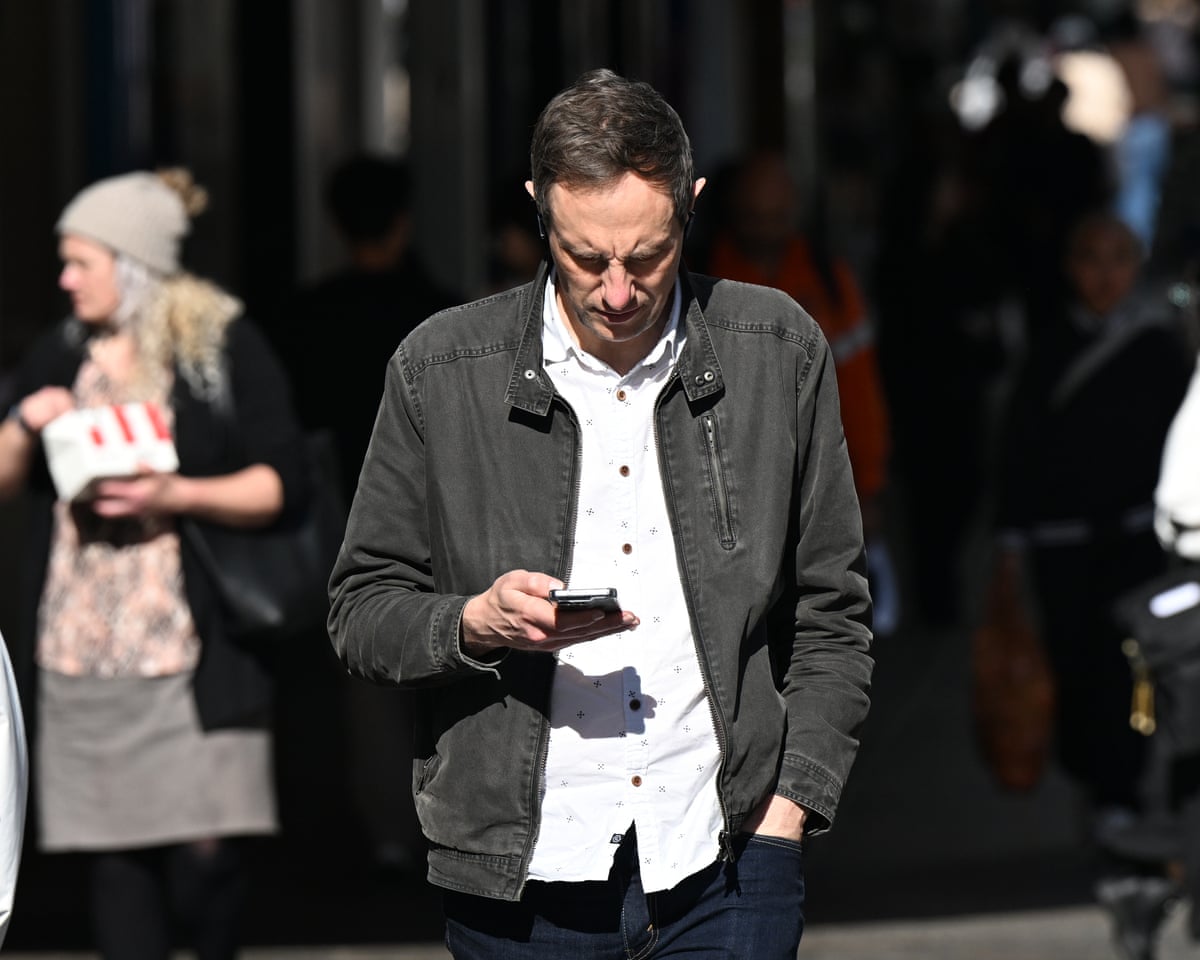
Image context: the cover is an AAP news photograph of a person checking a phone during the national test. It documents the human endpoint of the system—the place where a successful tower broadcast still has to become a visible, audible and useful warning.[1]
What the test established
| Test layer | Confirmed result | Confidence boundary |
|---|---|---|
| National send | A Critical Alert was initiated at the scheduled national test time and was observed on mobile devices around the country.[1][2] | High confidence. This establishes that the national command-and-broadcast chain operated at scale, not that every target received the same experience. |
| Tower broadcast | The minister reported successful broadcast from 94% of targeted cell towers, above NEMA’s 90% benchmark. The remainder were described as offline for maintenance, under upgrade or otherwise unusable.[1][7] | High confidence in the announced aggregate; limited diagnostic value. No public denominator, carrier split, location list or count within each cause category accompanied the figure. |
| Device receipt | Authorities expected support on iPhone 11 and later devices running iOS 26.4 or later, Apple Watch SE2/SE3 and Series 6 or later on watchOS 26.4 or later, and Android devices running Android 12 or later. Some older or non-iOS/Android devices may also work.[4] | Mixed evidence. Reporters received accounts of apparently compatible phones that did not alert, but anecdotes cannot establish a national failure rate.[1] |
| Presentation | Many devices produced a siren-like sound and displayed the test message; some users reported a notification without the expected sound or a briefer alert than anticipated.[1] | Confirmed variation, unknown prevalence. Device model, software, settings, tower connection and carrier can all affect the experience.[2][4] |
| Accessibility and personal safety | NEMA had already found inconsistent behaviour with some hearing aids, cochlear implants and refreshable braille displays. Critical Alerts can also expose hidden safety phones because silent and do-not-disturb settings do not suppress them.[4][6] | Known design boundary, not a marginal exception. The national test’s accessibility results and the number of people affected have not yet been published. |
The table reveals why “worked” is too blunt a verdict. An emergency warning must pass through several layers: an authorised message must be created, the platform must deliver it to the correct towers, towers must broadcast it, compatible devices must receive and present it, and people must understand what to do. The published 94% addresses one layer.
Six percent is a map, not just a remainder
McBain said the remaining 6% of targeted towers were offline for maintenance, being upgraded or otherwise unusable.[7] But towers are not interchangeable units. A tower serving a dense city block and one covering a long regional road do not represent equal numbers of devices, equal geographic areas or equal consequences during a fire, flood or cyclone.
The next useful disclosure is therefore not a more polished national percentage. It is a failure map and cause ledger: which target areas lacked a successful broadcast, whether failures clustered by carrier or equipment, whether cross-border targeting behaved as intended, and whether the problems arose before or at the tower. NEMA says operational alerts will be targetable to areas as small as roughly 160 metres and can remain active so that a compatible device entering the affected area receives the message.[3] Precision claims at that scale need geographic test evidence.
The same discipline applies to reports from people who heard nothing. A missed alert may reflect an unsuccessful tower broadcast, no active mobile coverage, incompatible hardware, outdated software, aeroplane mode, a powered-off device or a presentation problem after receipt. The official test guidance explicitly warned that two nearby devices might behave differently because they use different providers, towers, software versions or hardware.[2] A missed test is a data point worth reporting; by itself it does not identify the failed layer.
Nor can the platform quietly count its way out of that uncertainty. NEMA described AusAlert to ABC News Verify as a one-way broadcast that receives nothing back from a device.[5] This means any population-reach estimate will have to combine tower logs with structured carrier data, controlled handset testing and representative field sampling. A voluntary feedback form can surface failure modes, but its respondents are self-selected and cannot supply a national denominator.
The alert’s loudness is both feature and risk
For a life-threatening event, overriding silent mode is the point. A Critical Alert is designed to interrupt. For someone hiding a second phone from an abusive partner, the same behaviour can reveal the device. AusAlert’s safety guidance advised people at risk to keep hidden phones off or in aeroplane mode for 24 hours after the national test; it separately noted that the test alert could remain active for up to one hour.[6]
That tension does not make Critical Alerts a mistake. It makes personal safety a core operational requirement. In a real emergency, “turn the hidden phone off” trades warning access against discovery risk. Before October, agencies need protocols developed with domestic-violence services that explain how long an alert remains active, how a survivor can check warnings through another safe channel, and how support workers should prepare for unscheduled real alerts—not only announced tests.
Accessibility needs the same treatment. NEMA says tests with cochlear implants, hearing aids and refreshable braille displays have produced varied results depending on configuration and age. Text-to-speech, vibration, screen wake and connected assistive devices may work, but not uniformly.[4] The national result should therefore separate receipt from usable presentation. A message that arrives but is not perceivable is not an end-to-end success.
Decision impact: 24 hours, 7 days, 30 days
Next 24 hours — preserve the raw test record. NEMA, carriers and device partners should reconcile the targeted-tower list with broadcast logs before routine retention windows or later configuration changes blur the evidence. Public feedback should capture device model, operating-system version, carrier, approximate location, time, whether a message appeared and whether sound, vibration or accessibility features worked. Users who missed the test should not assume their device is permanently excluded; the official first step is to update and restart it, then record what happened.[2][4]
Next 7 days — publish the layers separately. A useful preliminary report would state the number of targeted towers, identify the unsuccessful regions at an appropriate safety-preserving resolution, group causes, and show sampled results by carrier, device family and software version. It should report accessibility and safe-phone findings alongside network performance, not in an appendix. “94% of towers” should remain labelled as a tower metric.
Next 30 days — set an October readiness gate. Governments should publish which defects must be fixed before operational availability, which can be mitigated through the existing text system or other channels such as radio, television, websites and emergency apps, and which require device-maker updates.[2][7] NEMA says automated landline voice capability is planned for AusAlert in the future.[3] Queensland’s decision to retain its existing text system for the next bushfire season makes that multi-channel boundary operational rather than theoretical.[7]
Three conditional paths to October
Base path — launch with documented limitations and layered backup. Tower-broadcast defects are traced and corrected, device guidance is tightened, and jurisdictions introduce AusAlert while continuing other warning channels. Triggers: a public test report, named remediation owners, retests in failed areas and explicit fallback procedures.
Upside path — the unexplained gap proves narrow and fixable. Analysis shows most missed experiences came from a small number of known software or configuration issues rather than broad geographic holes; accessibility retesting produces reliable device guidance. Triggers: high success in representative handset sampling, no concentration of tower failures in high-risk regions, and verified fixes before the October availability date.
Downside path — aggregate success hides unequal reach. Unsuccessful towers cluster in regional, remote or disaster-prone areas, or compatible devices continue to miss or mis-present alerts across several carriers. Queensland has already deferred use by its fire department for the coming bushfire season; the downside deepens if other jurisdictions follow without a dated path back or if the detailed test record validates their concern.[7] Triggers: recurring geographic failures, unresolved assistive-technology problems, delayed device updates or additional emergency-service agencies deferring operational use.
These are conditions, not forecasts. NEMA says it is still analysing technical and performance data.[1] The evidence can move the assessment quickly.
Action checklist and invalidation conditions
- NEMA and carriers: publish tower, geography and cause data without presenting infrastructure success as population reach.
- Device and assistive-technology makers: provide a tested compatibility matrix and clear update paths, including known presentation failures.
- Emergency services: rehearse fallback channels and define when a failed or uncertain broadcast must be repeated through another system.
- Safety and disability organisations: review the post-test findings and co-design guidance for real, unannounced emergencies.
- Newsrooms and the public: report specific device experiences, but do not convert anecdotes—or the 94% tower figure—into an unsupported national receipt rate.
Invalidation conditions: revise this report’s central assessment if NEMA publishes representative endpoint data that establishes a defensible device- or population-reach rate, or if detailed logs show the reported tower gap did not represent unsuccessful broadcast attempts. Strengthen the concern if the final analysis finds failures concentrated in high-risk locations, across supported devices, or in accessibility configurations. Until those records appear, the fair conclusion is narrower: Australia proved that AusAlert can broadcast nationally at scale, while the test of who could actually receive and use the warning remains open.
Sources
- Kat Wong, “For a few seconds, AusAlert blared around parks, libraries and cinemas—but some didn’t get the alert at all.” The Guardian, July 27, 2026 — post-test reporting, the 94% tower result, observed device variation, ministerial response and source page for the AAP cover photograph.
- AusAlert, “National test” — official test schedule, expected device variation, possible reasons for a missed alert and the role of public feedback.
- National Emergency Management Agency, “AusAlert” (updated July 22, 2026) — system architecture, targeting, October availability, active-alert behaviour, participating agencies and continued warning-channel boundaries.
- National Emergency Management Agency, “Understanding AusAlert and the national test” (July 7, 2026) — supported-device guidance and testing boundaries for hearing aids, cochlear implants, braille displays and other assistive technology.
- Lucy Carter, “Conspiracy theories about AusAlert test spreading online.” ABC News Verify, July 24, 2026 — independent expert explanation and NEMA’s description of the system as a one-way broadcast with no device response.
- AusAlert, “Staying safe with AusAlert” — official guidance on hidden safety devices, Critical Alert behaviour, personal-data boundaries and the national test.
- Fergus Gregg, “AusAlert test a ‘success’ as millions of devices nationwide receive alert siren.” ABC News, July 27, 2026 — NEMA’s benchmark and explanation of non-broadcasting towers, public experience reports, and Queensland’s decision to retain its existing text-message system for the bushfire season.