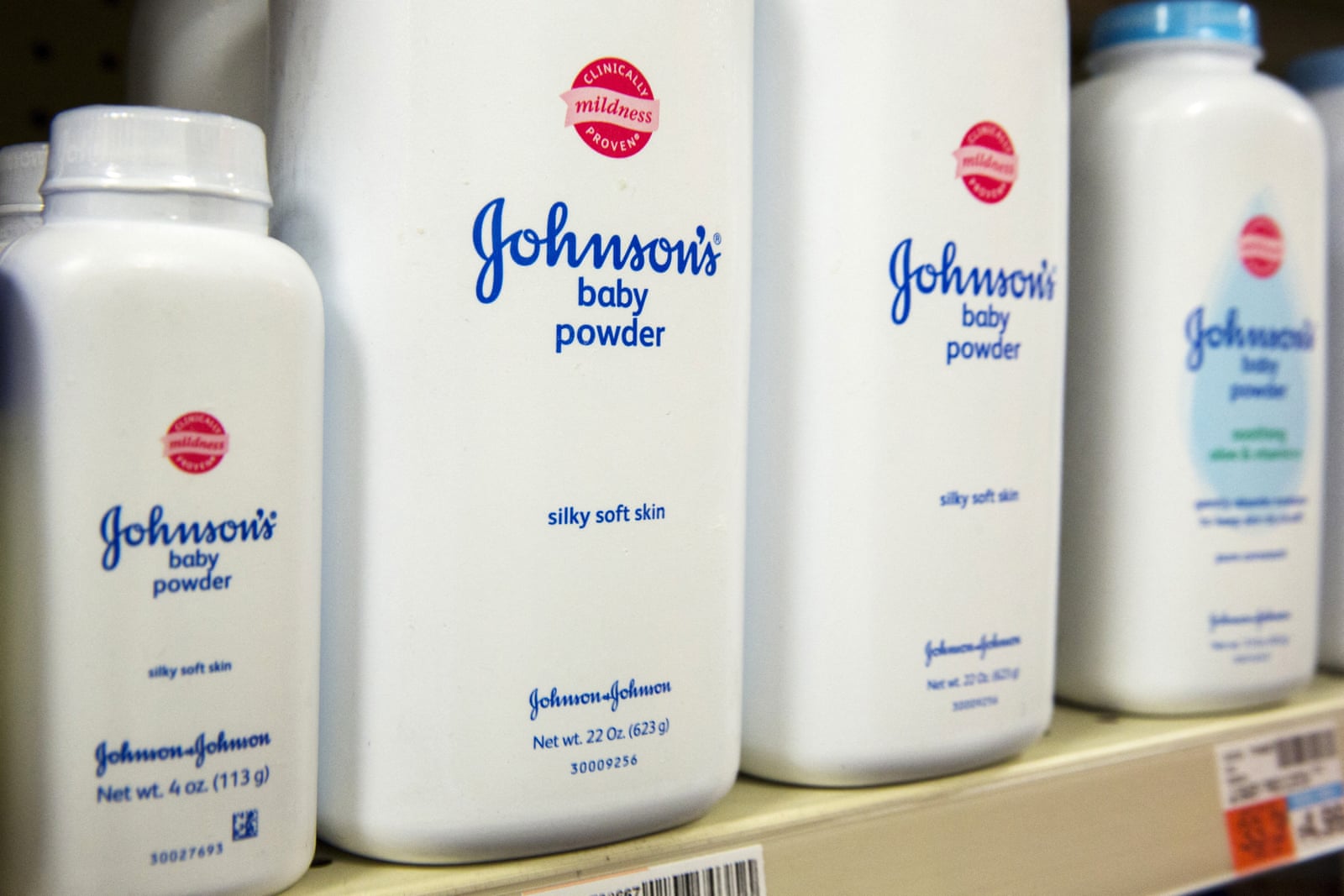
As of 2026-07-28 06:35 UTC, Johnson & Johnson has a proposed route out of roughly 76,000 existing U.S. ovarian-talc claims: a settlement carrying a $5.5 billion commitment, negotiated with the law firms leading the federal multidistrict litigation and related state cases. It is not final. The agreement is conditioned, among other requirements, on participation by firms representing at least 95% of the remaining claims.[1][2]
The design matters more than the headline number. This is a narrower bargain than the bankruptcy plans J&J tried three times to use: it addresses existing ovarian-cancer claims, leaves future lawsuits outside, and does not convert a settlement into a scientific finding about whether talc caused any particular person's cancer. In exchange for that narrower scope, plaintiffs' negotiator Chris Seeger says current claims can be paid within 18 months, rather than across more than a decade.[2]
That is the transaction at the center of the news: J&J is buying speed and a high level of present-day participation, not universal finality.
Fact Line
| Timestamp / source | Verified signal | Confidence boundary |
|---|---|---|
| J&J, July 27 | The company announced a proposed resolution of roughly 76,000 ovarian-talc claims, requiring at least 95% participation. It committed $5.5 billion, with no more than $3 billion due in 2027 and no further payment before 2028.[1] | High for the company's announced terms. The full agreement, claim grid, participation count, and every condition were not published on the release page. |
| Reuters, July 27–28 | Lead plaintiffs' firms confirmed the deal. Seeger said qualifying claims receive assigned values, current claims would be paid within 18 months, future claims are excluded, and the eventual payout could reach $7 billion or more.[2] | High for the parties' public accounts. “$5.5 billion” is therefore a commitment or estimate, not necessarily an absolute ceiling. |
| U.S. bankruptcy court history, March 31, 2025 | A judge rejected J&J subsidiary Red River Talc's third bankruptcy plan, which had proposed about $9 billion for ovarian and other gynecological claims, after finding faults in the claimant-vote solicitation.[3] | High for the dismissal and stated reason. That bankruptcy proposal and today's negotiated tort settlement have different scope, process, and payment terms. |
| IARC, July 2024 | The WHO cancer agency classified talc as “probably carcinogenic to humans,” citing limited human evidence, sufficient animal evidence, and strong mechanistic evidence.[4] | This is a hazard classification. It does not establish that a particular product exposure caused a particular claimant's ovarian cancer. |
| FDA and NCI, current guidance | FDA says research has long suggested a possible association between genital talc use and ovarian cancer, while NCI says studies have not found clear evidence of increased risk.[5][6] | The official summaries show a real evidence dispute. Neither is a ruling on an individual lawsuit, and neither makes the proposed settlement a scientific verdict. |
The Headline Number Is Not a Clean Ceiling
J&J's announcement calls for per-claim payments backed by a $5.5 billion commitment. It also sets a cash schedule: the first payment will be no more than $3 billion in 2027, with no additional payment due before 2028.[1] Those details make the proposal more concrete than a single lump-sum headline, but they do not reveal what every claimant would receive.
Reuters reports a crucial qualification from Seeger, who represents about 2,500 talc clients and helped negotiate the agreement. The settlement assigns values to qualifying claims but does not cap the company's total payout, he said; depending on participation, J&J could ultimately pay $7 billion or more.[2]
The two descriptions are not necessarily contradictory. A company can commit a base amount while a claim grid, participation level, or other agreement terms produce a larger final bill. Until the settlement document and valuation schedule are available, the responsible shorthand is “a proposed settlement with a $5.5 billion commitment,” not “J&J has capped all talc liability at $5.5 billion.”
The same discipline applies to the claim count. “Roughly 76,000” describes the docket J&J says the agreement is designed to resolve.[1] The number ultimately paid will depend on eligibility, participation, documentation, and the final agreement. A mass-tort inventory is not the same thing as 76,000 identical claims.
Narrower Scope Buys a Faster Payment Clock
The failed bankruptcy strategy aimed for a broader channel-wide resolution. In March 2025, Red River Talc sought confirmation of a plan worth about $9 billion. The bankruptcy court rejected it after finding the voting process defective, and J&J said it would return to the civil tort system.[3] Litigation then resumed.
The new proposal works within that tort system. Its central concession is scope: unlike the bankruptcy plans, Reuters reports, it covers existing claims only and does not resolve future lawsuits.[2] That choice leaves J&J without the complete future release it had pursued, but it lets money be concentrated on a defined current pool. Seeger says the resulting payment window is 18 months rather than more than a decade.[2]
For current claimants, speed is substantive. Long payment schedules transfer delay risk to people whose health, family circumstances, or legal representation can change while a plan remains open. A shorter schedule reduces that exposure. It does not answer whether the assigned values are adequate or fairly distributed; those questions require the claim grid.
For J&J, the bargain converts litigation volatility into a more legible cash schedule. The company has won many ovarian cases, lost or appealed others, and spent years trying to consolidate the docket.[2] Settlement can be rational even when a defendant denies liability: it can remove trial costs, unpredictable verdicts, management attention, and the continuing need to litigate thousands of files one by one.
That logic is commercial, not exculpatory. Paying to end litigation does not concede causation. Refusing to concede causation does not erase the payment.
The Courtroom Proof Problem Is Not the Whole Science Question
The timing gave J&J leverage. Its July 27 release followed a federal multidistrict-litigation ruling that, in the company's account, ordered plaintiffs to explain why remaining cases should not be dismissed after specific-causation experts were withdrawn in two bellwether cases. Reuters likewise reports that the judge cast doubt on whether individual plaintiffs could show that talc specifically caused their ovarian cancer.[1][2]
“Specific causation” is the hinge. A population-level association or a hazard classification does not automatically demonstrate that exposure caused one person's disease under courtroom evidence rules. Individual cases may require reliable testimony about the product used, route and duration of exposure, diagnosis, competing risk factors, and a method that connects the general evidence to that claimant.
But the reverse inference also fails. Difficulty proving thousands of individual cases does not establish that talc is harmless in every context. IARC's 2024 working group placed talc in Group 2A, “probably carcinogenic to humans,” based on a combination of limited evidence in humans, sufficient evidence in experimental animals, and strong mechanistic evidence.[4] FDA describes a possible association in the literature and separately monitors the problem of asbestos contamination in talc-containing cosmetics.[5] NCI's patient summary says studies of perineal talc use have not found clear evidence of increased ovarian-cancer risk.[6]
Those statements can coexist because they answer different questions with different standards. IARC identifies whether an agent can cause cancer under some circumstances; epidemiological guidance weighs the clarity and consistency of observed risk; a court asks whether admissible evidence proves causation in a particular case. The settlement resolves none of those frameworks. It responds to the legal and financial position produced by all three.
What Remains Outside
The proposal's perimeter should be stated plainly:
- It is conditional, not completed; the 95% participation requirement is the first visible gate.[1][2]
- It concerns the remaining ovarian-talc litigation led through the federal MDL and related U.S. state proceedings.[1]
- It excludes future claims, according to plaintiffs' negotiator.[2]
- J&J says it has separately resolved about 95% of filed mesothelioma cases, all state consumer-protection claims, and talc-supplier disputes.[1] “About 95%” is not 100%.
- It does not turn the discontinuation of talc-based Johnson's Baby Powder—U.S. sales ended in 2020 and worldwide sales in 2023—into a release from every later-filed or non-U.S. dispute.[1][2]
This is why “the talc litigation is over” would be premature. A better description is that J&J and the lead firms have designed a conditional exit for the largest remaining pool of current U.S. ovarian claims.
Decision Impact
Next 24 hours: the controlling information is the written deal, not the press-release total. Claimants need the eligibility rules, valuation factors, release language, participation method, payment sequence, treatment of liens, and consequences of opting out. Reporters and investors should label the agreement “proposed” until its conditions are met.[1][2]
Next 7 days: watch the denominator behind 95%. The decisive measure is not how many law firms endorse the deal, but whether participating firms represent the required share of eligible remaining claims. Any dispute over inventory, authority to enroll clients, or claim qualification could change both the threshold and the eventual cost.
Next 30 days: three records should begin to align: the MDL court's case-management schedule, the participation process, and J&J's accounting disclosures. If the deal is advancing, filings should clarify what happens to the pending show-cause process, when releases become effective, and how the $5.5 billion commitment maps onto 2027 and 2028 cash payments.[1]
Scenario Map
Base case — the threshold is met and the current docket compresses. Firms representing at least 95% of remaining claims participate, valuation disputes are manageable, and the settlement becomes effective. Existing ovarian claims move toward an 18-month payment process, while future claims and residual opt-outs remain in the tort system.[1][2]
Upside case — disclosure makes the bargain durable. The parties publish a clear claim grid, participation count, appeal process, and payment calendar; claimants can compare settlement value with the delay and causation risk of trial. High informed participation reduces later challenges, and J&J's eventual cost remains predictable even if it rises above the $5.5 billion headline.
Downside case — the denominator or the releases break the deal. The 95% threshold is missed, eligibility fights multiply, or claimants reject values after seeing the grid. The federal causation dispute then returns to the foreground and state cases continue, restoring the trial-by-trial volatility both sides negotiated to avoid.[1][2]
Uncertainty boundary: the public sources do not provide the full agreement, payment grid, opt-out mechanics, participation deadline, release text, treatment of liens, or a final court order implementing the proposal. Any assessment of individual recovery would be speculation.
Action Checklist
- For claimants: treat the filed agreement and individualized advice from counsel—not a per-claim average derived from $5.5 billion—as the basis for a decision.
- For courts and reporters: publish the participation numerator and denominator, and keep “announced,” “accepted,” and “effective” as separate milestones.
- For investors: model the disclosed 2027–28 cash timing and a total that may exceed $5.5 billion; do not treat the commitment as a proven all-liability cap.[1][2]
- For health communicators: distinguish hazard, population-level risk, product contamination, and individual causation. The sources do not support collapsing them into one yes-or-no claim.[4][5][6]
- Invalidation condition: this analysis fails if the final agreement broadly releases future ovarian claims, removes the 95% participation condition, or fixes $5.5 billion as an absolute total regardless of participation. Those terms would make the bargain materially broader or more capped than the parties have publicly described.[1][2]
The settlement's significance is not that $5.5 billion settles the science. It is that a failed attempt at sweeping bankruptcy finality has been replaced by a narrower exchange: faster money for a defined current pool, in return for releases that stop short of tomorrow's claims. Whether that exchange becomes real now depends on the 95% who have not yet been shown in a final public count.
Sources
- Johnson & Johnson, “Johnson & Johnson Announces a Proposed Resolution of Ovarian Talc Litigation” (July 27, 2026) — company announcement covering the 95% condition, roughly 76,000 claims, $5.5 billion commitment, payment timing, separately resolved claim categories, product withdrawal, and the company's causation position.
- Reuters via The Guardian, “Johnson & Johnson to pay $5.5bn settlement in talc cancer lawsuit” (July 28, 2026) — independent account of the negotiations, claimant threshold, potential total above $5.5 billion, 18-month payment claim, court context, and exclusion of future claims; also the source page for the Lucas Jackson photograph.
- Associated Press, “Bankruptcy judge denies J&J settlement plan related to baby powder containing talc” (April 1, 2025) — independent account of the third bankruptcy dismissal, the proposed $9 billion plan, voting-process defect, and return to civil litigation.
- International Agency for Research on Cancer, “Volume 136: Talc and acrylonitrile” (July 5, 2024) — official summary of the Group 2A talc classification and its human, animal, and mechanistic evidence basis.
- U.S. Food and Drug Administration, “Talc” (current agency page) — regulatory overview of cosmetic talc, asbestos-contamination concerns, testing, and the literature on a possible ovarian-cancer association.
- U.S. National Cancer Institute, “Ovarian, Fallopian Tube, & Primary Peritoneal Cancers Prevention (PDQ®) — Patient Version” (current evidence summary) — NCI's boundary on the clarity of evidence from studies of perineal talc use.