As of 2026-06-11 03:03 UTC, the National Park Service comment release has changed the story around the Trump administration's "negative history" review. The policy was built to surface exhibits, signs, brochures, films, and other interpretive materials that officials considered too disparaging toward Americans or insufficiently celebratory of national landscapes.[3][4] The public record now shows something else: many visitors used the same channel to object to the premise.
The Associated Press analyzed more than 35,000 comments submitted in the second half of 2025 and recently made public through litigation. Its finding is the central fact: more than half of the comments, even before duplicate submissions are counted, pushed back against the review itself rather than identifying historical interpretation that should be removed.[1] The National Park Service's own FOIA page separately lists "Secretarial Order 3431 Public Comments Received from June 4, 2025 - January 14, 2026" as a frequently requested Washington Office release added on May 22, 2026.[2]
That makes this less a culture-war anecdote than an administrative record problem. A visitor-feedback system can be useful for correcting errors. But when the question is framed around "negative" portrayals of Americans, the agency is not only collecting information; it is asking the public to police the emotional valence of history.
Fact File
| Item | What is known now | Confidence note |
|---|---|---|
| Source record | NPS lists a release for Secretarial Order 3431 public comments covering June 4, 2025 to January 14, 2026, added May 22, 2026.[2] | High; direct NPS FOIA page. |
| Fresh finding | AP says it analyzed more than 35,000 comments and found a large share criticized the effort itself.[1] | High for AP's analysis; individual comment coding remains an interpretive step. |
| Policy basis | Executive Order 14253 told Interior to ensure covered monuments and markers do not contain content that "inappropriately disparage" Americans and instead emphasize achievement, progress, and landscape grandeur.[3] | High; official order text. |
| Interior implementation | DOI's Secretary Order 3431, dated May 20, 2025, is the department-level order tied to the park review.[4] | High for existence and date; DOI's public page gives limited detail. |
| Local reporting | KUNC reported that NPS published 35,000 comments and that nearly 7,000 came from parks in the Mountain West.[5] | High for reported counts; local geography depends on the released dataset. |
| Early warning | Government Executive reviewed early submissions in June 2025 and reported that visitors were already praising park interpretation or opposing erasure rather than pointing to targeted examples.[6] | Medium-high; based on early documents and reporting before the full release. |
What The File Shows
The public response matters because the original prompt was unusually loaded. The White House order did not merely ask agencies to correct inaccurate signs. It told the Secretary of the Interior to act against descriptions, depictions, or content that "inappropriately disparage" Americans, while steering federal historical sites toward solemn and uplifting presentations.[3] That language leaves a large discretionary space between factual error, uncomfortable truth, and political displeasure.
The visitor comments pushed into that space. KUNC's Mountain West reporting found that the release included comments from sites across the country, with many saying they opposed efforts to downplay difficult history.[5] It highlighted examples where visitors defended factual interpretation at places such as Bryce Canyon and Sand Creek Massacre National Historic Site, including the importance of naming the 1864 killing of Cheyenne and Arapaho people as a massacre rather than smoothing it into a neutral battlefield label.[5]
AP's broader analysis reinforces the same pattern. The administration asked visitors to identify negative content; many respondents instead treated the request as the negative content. That inversion is the investigation's key point. The feedback system did produce data, but the data did not neatly validate the premise behind the system.[1]
The Difference Between Accuracy And Mood
There is a legitimate version of public feedback. Park signs can contain mistakes, outdated scholarship, confusing wording, broken QR codes, or inaccessible design. Government Executive reported that Interior gave examples of visitor comments about a mislabeled postcard at Capitol Reef and a Washington Monument web video claim about George Washington's inaugural oath, both of which were reviewed for correction or clarification.[6] That is ordinary quality control.
The problem is the second lane: complaints that a fact is too negative. At a site about incarceration, slavery, dispossession, battlefield violence, labor exploitation, or environmental change, the historical burden is often precisely that the honest story is painful. If a comment system treats discomfort as a signal of inaccuracy, it can turn interpretation away from evidence and toward sentiment management.
National parks sit at that intersection because they are not only scenic places. They are also public archives, classrooms, memorial landscapes, and contested civic spaces. Manzanar, Sand Creek, Stonewall, Independence, Little Bighorn, and many other sites exist because the country decided some hard events deserve durable public explanation. The question is not whether every panel is perfect. It is who gets to decide whether a panel is too honest.
What Is Still Unclear
The most important uncertainty is operational. The release shows what visitors submitted, but it does not by itself show every internal routing decision, every exhibit flagged by staff, or every replacement order that followed. NPCA, an advocacy group, says Park Service staff were told to inventory signage, interpretation, and books, and that the administration began sending letters instructing some parks to remove, cover, or replace content it deemed noncompliant.[7] That is a serious allegation about implementation, but readers should separate the public comment file from the full internal review record.
The second uncertainty is how much weight officials will give the comments. A public file can be acknowledged and then ignored. It can also become evidence in litigation, oversight, and future agency decision-making. The release matters because it makes the political feedback visible, not because it guarantees a policy reversal.
The third uncertainty is duplication and representativeness. AP notes duplicate submissions in its analysis boundary.[1] Public-comment systems are never clean polls. They show who responded, not what every park visitor thinks. But this dataset still matters because the administration asked for public input under a specific theory, and the responses are part of the administrative trail created by that theory.
Decision Impact
Next 24 hours: the practical fact is the released record itself. Journalists, litigants, congressional staff, historians, park advocates, and agency officials can now cite a named NPS FOIA release instead of relying only on leaked samples or scattered local reports.[2][6]
Next 7 days: the issue to watch is whether Interior or NPS explains how the comments were coded, routed, or used. A transparent process would distinguish factual-error reports from ideological objections, accessibility complaints, jokes, duplicates, and comments defending existing interpretation.
Next 30 days: the harder test is whether exhibits or signs change in ways that track evidence or politics. If removals continue without a public rationale, the comment release becomes stronger evidence that the process is not ordinary interpretive maintenance. If NPS publishes criteria, review logs, and correction decisions, the agency can argue that it is separating historical accuracy from political pressure.
Scenarios
Base case: the comment file becomes a public-accountability document. The administration keeps defending the order, but watchdogs and reporters use the released comments to show that the public-feedback channel produced broad resistance alongside ordinary maintenance notes.[1][2][5]
Upside case: the release forces a cleaner standard. NPS could narrow future feedback to factual accuracy, accessibility, preservation needs, and visitor-service issues, while leaving professional historical interpretation to documented scholarship and public consultation rather than a mood-based complaint prompt.[6]
Downside case: the file is treated as noise while internal content review continues. In that branch, the public has technically been heard, but the practical decisions still happen through opaque directives about what counts as disparaging, negative, or insufficiently patriotic.[3][4][7]
The bottom line is narrow but important: the comment release does not settle how every park should interpret every difficult chapter of American history. It does show that when the government asked visitors to flag negative history, many visitors answered by defending the public value of telling history whole.
Sources
- Associated Press, "A Trump order asked national park visitors to flag 'negative' historical info. They had other ideas" (June 10, 2026).
- National Park Service, "FOIA - Frequently Requested Documents," listing Secretarial Order 3431 public comments release (added May 22, 2026).
- Federal Register, "Executive Order 14253 of March 27, 2025: Restoring Truth and Sanity to American History" (published April 3, 2025).
- U.S. Department of the Interior, "SO 3431 - Restoring Truth and Sanity to American History" (May 20, 2025).
- KUNC / Mountain West News Bureau, Rachel Cohen, "The Trump administration asked national park visitors to report negative historical signs. Here's how they responded" (June 2, 2026).
- Government Executive, Eric Katz, "'Censorship:' See the National Park visitor responses after Trump requested help deleting 'negative' signage" (June 18, 2025; updated June 19, 2025).
- National Parks Conservation Association, "Erasing History, Silencing Science" (Oct. 1, 2025).
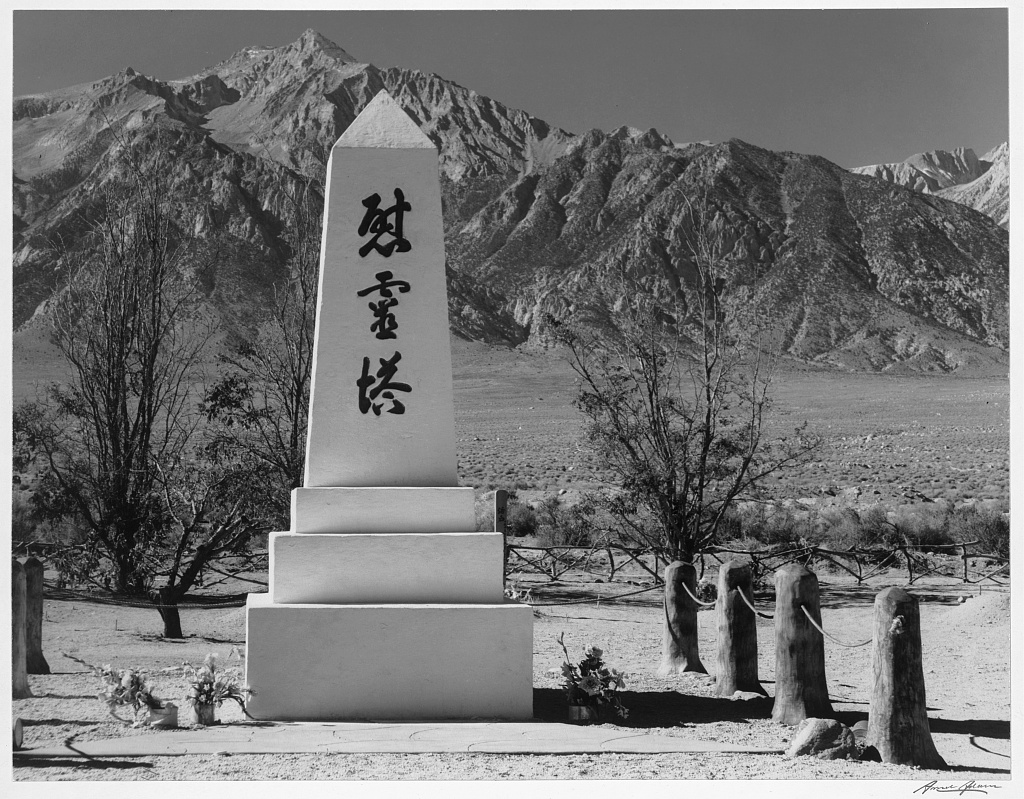
- Library of Congress, "Monument in cemetery, Manzanar Relocation Center, California" - Ansel Adams photograph used as the replacement article image.
- WUSF / NPR, Chloe Veltman, "Asked to flag 'negative' National Park content, visitors gave their own 2 cents instead" (June 26, 2025) - reporting on the DOI feedback sign campaign.
Editor’s Pick Review
This article takes today’s merged standard/add-on editor-pick slot because it is the strongest 24-hour candidate under the stricter curation rubric: it turns a live policy controversy into a documented administrative-record analysis, anchors the claims to the released NPS/FOIA trail alongside AP, local, and advocacy reporting, separates factual correction from mood-based censorship pressure, names the remaining uncertainties, and gives time-bound scenarios rather than flattening the story into outrage. Its Manzanar image is immersive, topic-grounded, and documentary—an actual memory landscape rather than an analytical visual—while the Chinese edition preserves the investigation’s argument in formal, readable Chinese with stable terminology and low translationese.