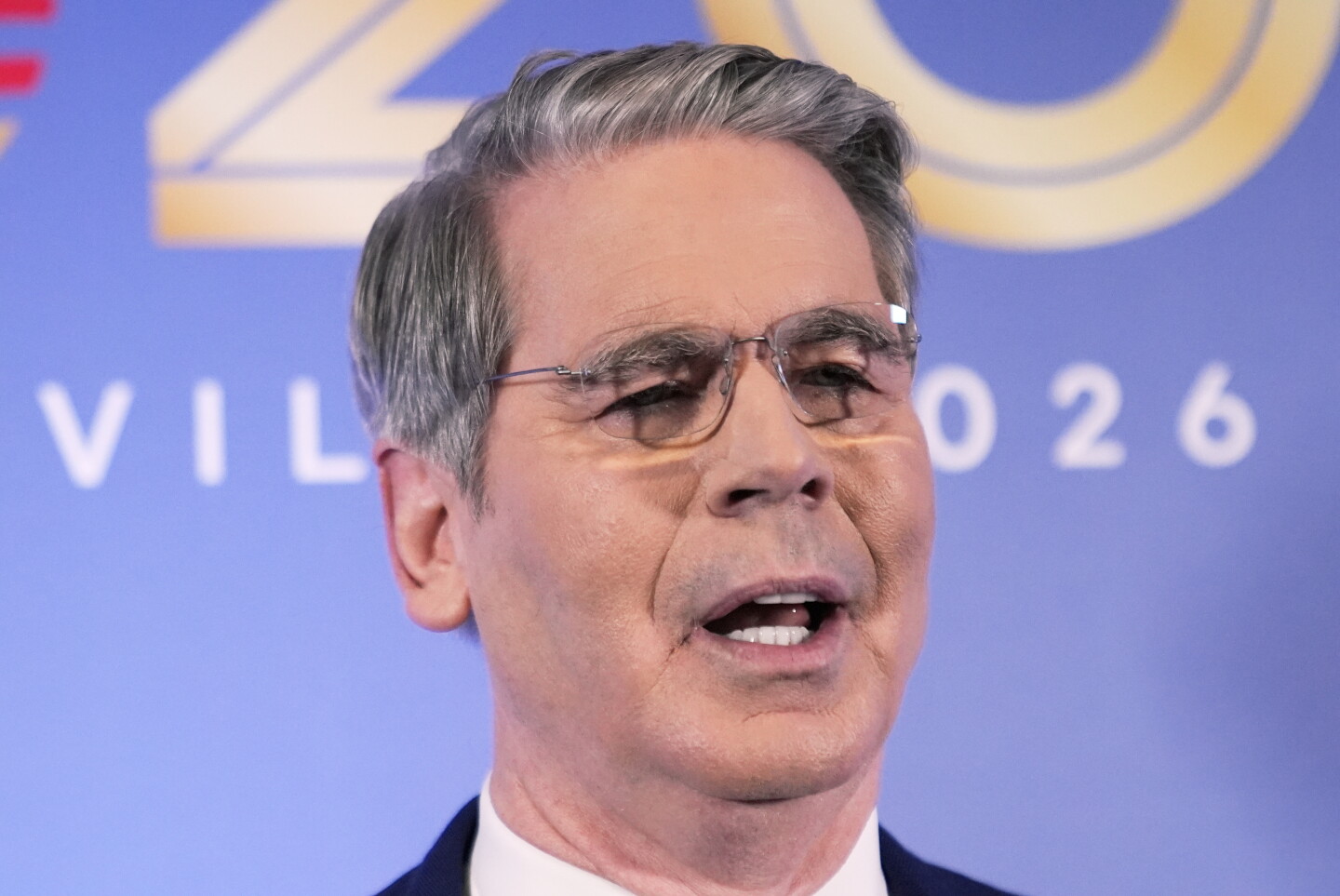
As of 2026-08-31 19:40 UTC, the U.S. Treasury had opened the G20 Finance Ministerial in Asheville, North Carolina, after approving what it said were nearly 300 journalists from approximately 12 countries. It had also rejected credential applications from experienced reporters at The New York Times and The Wall Street Journal, along with numerous Bloomberg News journalists based in several countries.[2][3][4]
The scale of the press corps is not an answer to the selective decisions. Treasury's public credential notice gave an application deadline and said passes were subject to security screening and approval. It published no selection criteria, capacity rule, reason codes or appeal route. After the rejections became public, Secretary Scott Bessent said they had “nothing to do with point of view,” while a department statement invoked factual reporting and “established journalistic standards.” Neither statement explained why any named application failed.[1][2][4]
That is the finding at the center of the record: Treasury has defended the breadth of access without making the boundary of access auditable. The available evidence does not prove retaliation, viewpoint discrimination or an unlawful decision. It does show that the public cannot test Treasury's reassurance against a disclosed rule.
This account is based on Treasury's notice, contemporaneous reporting, newsroom and press-group statements, event coverage and current court context. No applicant, Treasury official or G20 organizer was interviewed anew. The sources establish the reported decisions and public explanations; they do not reveal the complete application files, private security checks or Treasury's internal deliberations.
What the record establishes
| Record | What it establishes | Confidence and boundary |
|---|---|---|
| Treasury notice, August 5 | Media could apply through August 24. Approved journalists would later receive instructions on screening, access, camera positions and filing facilities. Credentials were non-transferable and subject to security screening and approval.[1] | High for the published process. The page does not show what may have been sent privately to applicants. |
| Reported decisions, August 30–31 | AP reported that individual journalists from the Times, Journal and Bloomberg were not credentialed. Bloomberg said numerous applications were rejected; one Times journalist was approved while its Treasury reporter Alan Rappeport was not.[2][3][4] | High that selective rejections occurred. No complete applicant or approval roster is public. |
| Treasury response | Bessent denied a viewpoint basis. Treasury said it approved nearly 300 journalists from about 12 countries and stressed access plus standards of factual reporting.[2][4] | High that Treasury made those claims. Unresolved whether the standards were used as selection criteria and, if so, how. |
| Meeting stakes | The ministerial runs August 31–September 1 amid disputes over Iran, tariffs, sovereign debt and global growth. AP's opening-day report shows Bessent using the meeting to seek support for U.S. economic and sanctions policy.[1][6] | High for the schedule and publicly stated agenda; outcomes remain live. |
The published rule ends where scrutiny should begin
Treasury's August 5 notice is operationally clear until the moment an application is judged. It identifies the event, deadline and later logistics for approved media. Its final substantive rule says credentials are subject to security screening and approval.[1]
That language reserves discretion; it does not discipline it. The notice does not say whether priority turns on beat expertise, outlet reach, geographic balance, application order, room capacity, a background check or prior conduct. It does not distinguish a security rejection from an administrative rejection. It provides no published process for correcting an error or asking for reconsideration.
Any of those criteria could, in principle, be neutral. Secure international meetings routinely limit movement, inspect equipment and control room occupancy. But a neutral reason becomes testable only when the rule and its application can be compared. “Subject to approval” describes who holds power, not how that power is used.
The later Treasury statement added a possible standard but not a procedure. According to TheWrap, the department said broad access carried a responsibility for factual reporting and should not prioritize sensationalism. It also pointed to the nearly 300 approvals and interviews across the political spectrum.[4] That may describe Treasury's preferred press culture. It does not identify a benchmark, an alleged breach, who made each decision or whether applicants could respond.
If “journalistic standards” played no role in the rejections, the statement is beside the point. If they did, the missing particulars become more important: which published rule authorized that review, what evidence was considered, and was the same test applied to every applicant?
A selective pattern, not a total blackout
The exclusions should be described precisely. Treasury did not close the meeting to media, and the record does not show that every journalist from each named outlet was barred. The department approved a large press corps. The Times had one journalist admitted and another rejected. Bloomberg reported numerous rejected applications across the United States, France, Italy, Japan and China. The Journal declined to comment to AP.[2][3][4]
Those facts cut in two directions. They weaken an exaggerated claim that Treasury banned all independent coverage. They also make a blanket explanation such as “the venue was closed” impossible. Selective admission requires selection. Without a disclosed criterion or applicant-specific reason, observers cannot distinguish ordinary allocation from inconsistent judgment.
The affected outlets are not interchangeable seats. A reporter who follows Treasury or international finance over years arrives with a map of prior commitments, technical vocabulary and unresolved questions. Another credentialed journalist can still report the meeting, but access cannot be perfectly transferred after the fact: the informed follow-up that one beat reporter would ask is not guaranteed to occur in another reporter's interview.
That is interpretation, not evidence of motive. It explains why the decision matters even when hundreds of other journalists enter the room. Access determines not only how many reports are produced, but which officials face which accumulated questions while a policy is still being made.
What remains unknown—and what this does not prove
Five factual questions remain unanswered in the public record:
- What written criteria governed approval and rejection?
- Who made the final decisions, and were they reviewed?
- What reason applied to each rejected application?
- Were applicants offered a chance to correct information or appeal?
- Did Treasury retain a contemporaneous record showing consistent treatment?
The National Press Club called on Treasury to reverse the decisions and explain how and why the journalists were excluded.[5] That is an advocacy position, not independent proof that Treasury acted improperly. Bessent's denial of viewpoint discrimination is likewise an official assertion, not a disclosed decision record.[2]
A separate Pentagon credentialing dispute supplies context but does not decide this case. In March, a federal district judge found that a Defense Department press policy gave officials unclear, viewpoint-discriminatory discretion; subsequent orders and appeals have addressed revised access and escort restrictions.[7] Asheville involves a different agency, venue, policy and factual record. No cited source reports a court ruling on these G20 denials. Treating the Pentagon judgment as an automatic answer would outrun the evidence.
The accountability clock
Next 24 hours — explain while access still has value. Before the ministerial ends on September 1, Treasury can publish the operative criteria, give each rejected applicant a reason, identify a reconsideration contact and disclose whether any decision changed. A remedy after the final press opportunity is not equivalent to admission during the meeting.
Next 7 days — make the pattern measurable. Treasury can release an anonymized ledger showing applications, approvals, rejections and reason categories, broken out without exposing security-sensitive personal data. The affected newsrooms can preserve submission receipts, correspondence, requested corrections and decision times. Together, those records would test consistency without requiring speculation about politics.
Next 30 days — write the rule for the next meeting. If no contemporaneous explanation appears, document requests, congressional oversight or litigation may become the only routes to the internal record. Treasury can reduce that risk by adopting a written standard for later U.S.-hosted G20 events: objective eligibility rules, narrowly defined security grounds, documented capacity allocation, a reason notice and prompt review.
Three paths now follow from what Treasury publishes:
- Base path — the meeting ends before the reason appears. Trigger: no criteria or applicant-specific notices by September 1. Coverage continues through approved reporters, while the credentialing dispute shifts from live access to records and oversight.
- Upside path — a neutral rule becomes testable. Trigger: Treasury releases contemporaneous criteria, reason codes and review records that explain the different outcomes consistently. That would not guarantee agreement with every judgment, but it would materially weaken the finding that the boundary is unauditable.
- Downside path — vague standards become a repeatable gate. Trigger: later G20 events use the same unpublished discretion, more established beat reporters are rejected, or official statements tie access to undefined judgments about coverage. Press groups and newsrooms would then have evidence of a continuing system rather than one unexplained event.
The immediate checklist is short:
- Treasury: publish the rule, decision owner, reason category and review path; separate security facts from editorial judgments.
- Affected newsrooms: disclose application timelines and correspondence, while withholding personal security information.
- Credentialed reporters: ask which written standard controlled the denials and whether the same standard governed every applicant.
- Readers: do not confuse a large press corps with a transparent selection process, or an unexplained process with proved retaliation.
This assessment should be revised if Treasury produces contemporaneous, neutral reasons that fit a published rule—for example, a missed deadline, incomplete application, objective capacity sequence or documented security failure applied consistently. It should also be revised if the reported applicant pattern changes. Until then, Treasury's strongest public argument is that many journalists got in. The unanswered question is why these journalists did not.
Sources
- U.S. Department of the Treasury, “Media Credentialing Opens for the United States G20 Finance Ministerial in Asheville, North Carolina” (August 5, 2026) — schedule, application deadline, logistics and the published screening-and-approval language.
- Ben Finley and Fatima Hussein, Associated Press, “US Treasury blocks certain journalists from G20 meeting in North Carolina” (August 30, 2026) — affected outlets and reporters, newsroom responses, Bessent's statement and the limits of Treasury's public explanation.
- Bloomberg News via Bloomberg Law, “US Treasury Bars Reporters From Some Outlets From G20 Summit” (August 30, 2026) — Bloomberg's first-party account of multiple rejected applications and the absence of an applicant-specific explanation.
- A.J. Katz, TheWrap, “Treasury Blocks NY Times, Bloomberg and WSJ Reporters From G20 Meeting” (August 31, 2026) — Treasury's nearly-300 figure, multi-country scope, standards defense and selective approval pattern.
- National Press Club via PR Newswire, “National Press Club statement on exclusion of journalists from G20 meeting” (August 31, 2026) — institutional call for reversal and a public explanation.
- Fatima Hussein, Associated Press, “Bessent huddles with G20 to try to rally allies on Iran as tariffs strain ties” (August 31, 2026) — opening-day agenda, meeting context and source of Gerald Herbert's event photograph.
- Reporters Committee for Freedom of the Press, “Federal judge: Pentagon press access policy is unconstitutional” (updated through April 27, 2026) — separate-case context on standards, viewpoint discrimination, later restrictions and appellate limits.