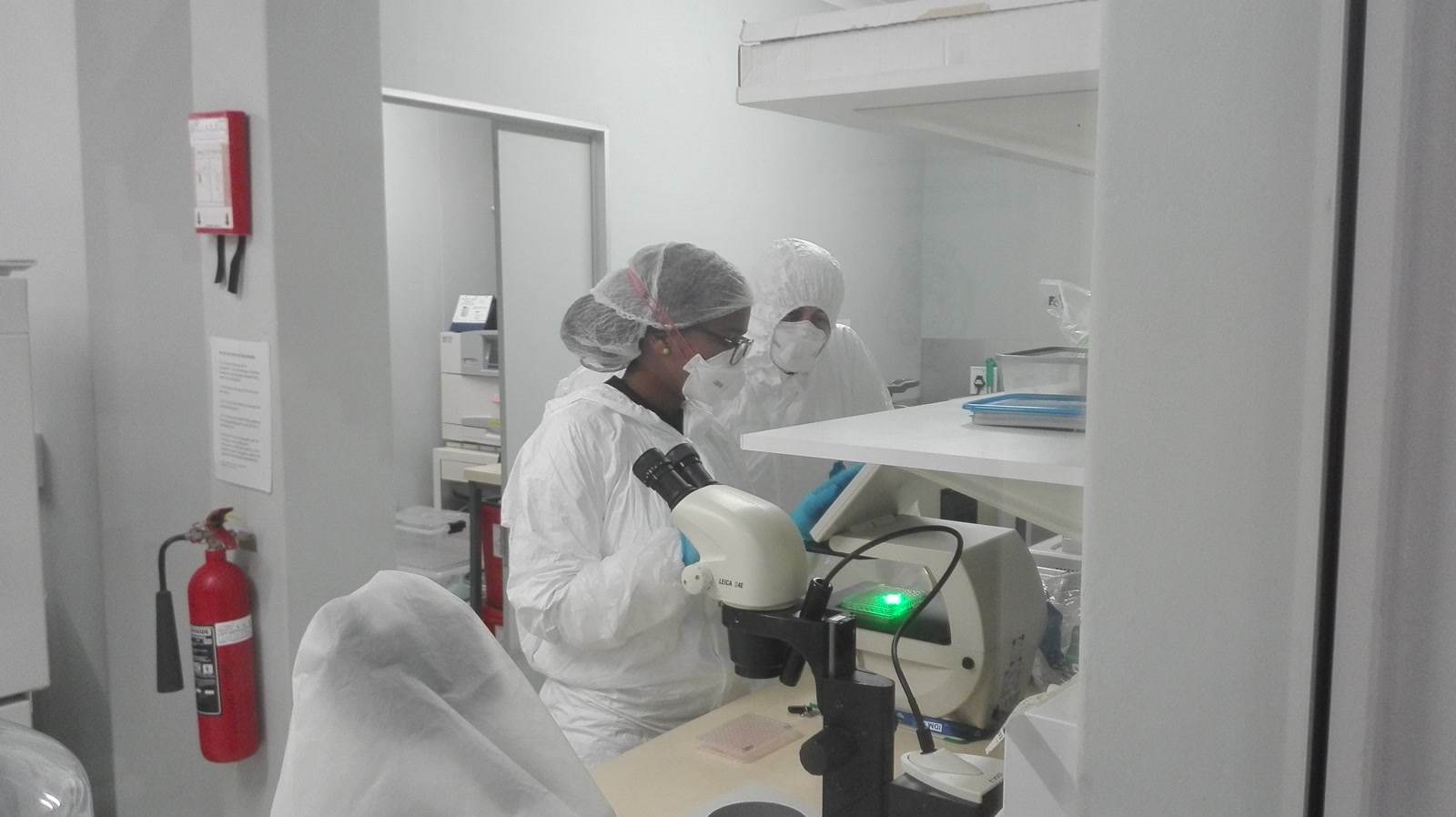
As of 2026-08-30 17:39 UTC, South Africa's Cabinet had publicly endorsed preparations to register and introduce the M72/AS01E tuberculosis vaccine candidate if its Phase 3 trial succeeds. Cabinet also welcomed an agreement intended to ready manufacturing for global supply.[1]
The condition is the story. M72 is not approved, South Africa has not begun an M72 vaccination programme, and the pivotal trial has not reported efficacy results. Its registry lists 20,080 participants, an “active, not recruiting” status and an estimated primary-completion date in April 2028; the sponsor anticipates results in late 2028 and possible regulatory submissions beginning in 2029 if the evidence is positive.[3][4]
The need is substantial. WHO estimates that 10.7 million people developed TB and 1.23 million died from it in 2024. BCG vaccination protects infants and young children particularly against severe forms of TB, but offers limited protection against the pulmonary disease that drives transmission among adolescents and adults.[6][7] Early preparation could shorten the wait after a successful trial. It could also blur the line between a promising candidate and a product that has proved its value, passed regulatory review, secured supply and reached patients.
This is a reported explainer based on official documents, a trial registry, peer-reviewed research and published expert commentary. No participant was interviewed anew. Gates-linked organizations are both sources and participants in M72's development; their claims are identified and checked against independent records where possible.
The record at the cutoff
- Government position — high confidence: Cabinet acknowledged preparatory work on August 28; it did not approve the candidate. Neither Cabinet's statement nor the Health Department's August 2 release gives a launch date, procurement award, final target population, price or dose allocation.[1][2]
- Trial position — high confidence: the randomized, masked Phase 3 study is active but no longer recruiting. It covers 54 locations in South Africa, Kenya, Malawi, Zambia and Indonesia and enrolls people aged 15–44 in defined cohorts with and without evidence of TB infection, including people living with controlled HIV.[3]
- Prior efficacy signal — high confidence within a bounded population: Phase 2b estimated 49.7% efficacy against bacteriologically confirmed pulmonary TB after three years, with a 95% confidence interval of 2.1% to 74.2%, in infected, HIV-negative adults aged 18–50. That justified a larger trial; it did not establish performance in every population now being studied.[5][6]
- Manufacturing position — high confidence for the announced intent: Serum Institute of India is expected to manufacture the M72 antigen, GSK to supply the AS01E adjuvant, and Serum Institute to invest more than US$100 million in readiness. The public agreement does not establish efficacy, approval or a guaranteed South African allocation.[4]
- Availability date — uncertain: April and late 2028 are trial and sponsor estimates, not authorization or rollout dates. Both can move.[3][4]
What exactly did Cabinet announce?
Cabinet acknowledged preparatory work and welcomed a manufacturing agreement; it did not approve M72. Its August 28 statement notes the Phase 3 trial and says government is preparing for registration and introduction should that trial succeed.[1]
That builds on an August 2 Health Department statement naming M72/AS01E and saying the department stood ready to support production and introduction once results were known and the South African Health Products Regulatory Authority, or SAHPRA, had registered the vaccine. The department said it had been informed that the agreement covers the number of doses to be produced and sold globally, but the statement did not give a figure.[2]
So Cabinet has publicly endorsed preparation, not rollout. The cited records do not show that a dossier has been submitted to SAHPRA, public funds have purchased doses, or a vaccination schedule has been adopted. Those milestones should remain separate in public communication: trial result, regulatory application, authorization, procurement and programme launch.
What did Phase 2 establish—and what must Phase 3 answer?
The earlier trial produced an important signal. Among 3,289 participants in its according-to-protocol efficacy cohort, 13 vaccine recipients and 26 placebo recipients developed cases meeting the primary definition. That yielded the 49.7% efficacy estimate at month 36.[5]
But the confidence interval was wide and the study population had clear boundaries: participants already had evidence of Mycobacterium tuberculosis infection, were HIV-negative and were 18–50 years old. Its point estimate cannot simply be carried into adolescents, people without prior infection or people living with HIV.[5][6]
Phase 3 tests a broader proposition. The registered plan gives two doses on day 1 and day 29, compares the candidate with saline placebo, and uses laboratory-confirmed pulmonary TB as the primary disease endpoint in the infection-positive cohort. Secondary measures cover infection-negative participants, people living with HIV, immune response and safety.[3] The decisive question is not merely whether the candidate produces an immune response. It is whether vaccination prevents confirmed pulmonary disease with an acceptable safety profile in populations that might ultimately be included in a regulatory application.
Why prepare manufacturing before the clinical answer?
A positive result cannot transfer a production process, validate equipment or coordinate two separately supplied components overnight. Gates Medical Research Institute and Serum Institute say they will begin transferring the technology and know-how needed to manufacture the M72 antigen, while GSK will supply AS01E under a separate agreement. The sponsor says this early work is intended to compress the delay between a successful result and scaled supply.[4]
That makes manufacturing readiness a rational hedge, not evidence that the candidate works. The clinical and industrial bets are distinct: Phase 3 determines whether benefit and safety support a regulatory application; manufacturing preparation determines whether supply could scale if regulators authorize the product.
Nor does the agreement guarantee production or access in South Africa. The partners say they intend to engage local manufacturers in South Africa and Indonesia to support critical parts of the supply chain over time, but the public documents do not name a South African facility, a local production volume or a transfer timetable.[2][4] They also do not disclose the candidate's eventual price or allocation rules. A global supply agreement is not automatically an affordable national procurement deal, and a role in one production step is not automatically an entitlement to doses.
What preparation is justified now?
Government can prepare the route without prejudging the destination. Five workstreams follow from the known gates, although the sources do not establish that all five are already complete.
- Regulatory sequence: seek scientific advice from SAHPRA, map the dossier and inspection pathway, and plan post-authorization safety monitoring without assuming a favorable decision.
- Demand scenarios: model eligible groups and delivery channels under different efficacy, duration and indication outcomes. The trial's ages of 15–44 are an enrollment criterion, not a final product label.[3]
- Supply terms: convert a global manufacturing announcement into disclosed South African roles, quality responsibilities, quantities, price principles and contingencies if either antigen or adjuvant falls behind.[2][4]
- Service design: test how a two-dose course could fit TB, HIV, adolescent and primary-care services, while leaving storage, presentation and handling requirements open until validated product information exists.
- Community participation: build vaccine literacy and feedback with TB survivors, community health workers and civil-society groups before a launch decision. Russell Rensburg, divisional director of the Rural Health Advocacy Project, which hosts the TB Accountability Consortium, argues that trust should be treated as readiness infrastructure rather than a communications campaign added at the end.[8]
That final point is an attributed policy argument, not proof of an existing government programme. Spotlight discloses Gates Foundation funding while stating that its editorial decisions are independent.[8] The argument explains why speed matters; it cannot substitute for the trial result or regulatory judgment.
What evidence would change the plan?
At the public level, Cabinet's statement changes no individual's vaccination options today. As proposed transparency benchmarks for this analysis—not government, regulator or sponsor commitments—the Health Department should keep M72's investigational boundary explicit within 24 hours, name the owner and deliverable for each readiness stream within seven days, and publish within 30 days a roadmap that separates sponsor estimates from government commitments and identifies undisclosed supply terms. Missing that 30-day benchmark would not prove preparation has stopped; it would leave Cabinet's word “preparing” difficult to assess.
After that, the result creates three conditional paths rather than one inevitable rollout:
- Base path — preparation continues while the trial runs. Trigger: no primary result or regulatory filing, with the registry and sponsor timetable broadly unchanged. Reversible regulatory, supply and service planning can proceed, but mass procurement should not be treated as unlocked.[3][4]
- Upside path — evidence and readiness converge. Trigger: published positive primary results showing clinically meaningful benefit and acceptable safety, followed by a complete regulatory filing. Manufacturing validation, financing and transparent allocation terms would still be needed; a factory announcement alone is not the trigger.
- Downside path — a gate breaks the chain. Trigger: negative or ambiguous efficacy, a material safety issue, a narrower-than-planned indication, a substantial delay, regulatory refusal, or supply terms that cannot support affordable programmatic use. Preparation should then narrow, pause or stop according to the failed gate.
The action boundary is simple:
- Public and clinicians: treat M72 as investigational; do not defer established TB prevention, diagnosis or treatment while waiting for it.
- Government and suppliers: publish the owner, deliverable and decision threshold for each gate, including the proposed South African supply-chain role, rather than merging readiness into approval.
- Newsrooms: use “vaccine candidate” and “preparing for possible introduction” until the evidence and regulator justify stronger language.
Revise the scientific assessment as soon as Phase 3 primary results appear, whether positive, mixed or negative. The pre-result framing ends when those results are public; the preapproval framing ends only if SAHPRA authorizes M72. A manufacturing agreement, Cabinet endorsement or readiness exercise alone meets neither condition.
South Africa can save time without borrowing certainty from the future. The useful test of readiness is whether every clinical, regulatory, industrial and community gate has an owner—and whether the plan can accelerate after a positive result, narrow after a mixed one or stop after a negative one.
Sources
- Government Communication and Information System, “Full statement on the Cabinet meeting of Wednesday, 26 August 2026” (published August 28, 2026) — official statement that preparation is conditional on Phase 3 success.
- South African National Department of Health, “South Africa prepares for potential new adult TB vaccine” (August 2, 2026; PDF) — registration condition, manufacturing description and stated readiness intent.
- ClinicalTrials.gov, “Study to Assess Efficacy and Safety of M72/AS01E-4 Mycobacterium Tuberculosis Vaccine in Adolescents and Adults,” NCT06062238 — current status, enrollment, design, cohorts, locations, outcomes and estimated dates.
- Gates Medical Research Institute, “Gates Medical Research Institute and the Serum Institute of India Reach Agreement for the Manufacture of M72/AS01E Tuberculosis Vaccine Candidate, Pending Successful Phase 3 Outcomes” (July 16, 2026) — manufacturing roles, investment, trial status and sponsor timeline.
- PubMed record for Dereck R. Tait et al., “Final Analysis of a Trial of M72/AS01E Vaccine to Prevent Tuberculosis,” New England Journal of Medicine 381 (2019) — Phase 2b efficacy, confidence interval, cases, population and safety results.
- World Health Organization, “Vaccines and immunization: Investigational vaccine candidate M72/AS01E” — candidate composition, prior evidence, BCG boundary and development context.
- World Health Organization, “Tuberculosis” fact sheet (March 24, 2026) — 2024 global incidence and mortality estimates and current prevention-and-treatment context.
- Russell Rensburg, Spotlight, “SA is one step closer to a new TB vaccine, but there is a lot of work ahead” (August 28, 2026) — disclosed opinion on community participation and system readiness.
- Wikimedia Commons, “TB Researchers” (photographed November 28, 2017) — source, location, authorship and CC BY-SA 4.0 license for the archival University of Cape Town laboratory photograph.