As of 2026-07-11 20:37 UTC, the United Nations has put a deceptively simple proposition into the middle of its urban agenda: a home is not one item on a city checklist. Where it is, what it costs, whether a resident can remain there, and whether water, transport, work, schools and public space can be reached from it shape nearly every other urban outcome.
UN-Habitat launched its SDG 11 Global Report 2026 on July 9 during the High-level Political Forum in New York. The report lands just before the UN General Assembly's July 16-17 midterm review of the New Urban Agenda, giving governments a near-term forum in which to turn its findings into commitments.[1][5]
What follows is a reported, synthesized interview with the evidence. The questions are ours; the answers draw from the new report, the UN's wider 2026 progress assessment and the public record around the launch. They are not quotations attributed to a single speaker.
Why move housing from one target to the center of the whole city agenda?
Because the report defines adequate housing as a bundle of relationships, not just a roof. Affordability matters, but so do secure tenure, habitability, accessibility, cultural adequacy, services and location. A formally built home far from jobs and transit can still impose punishing costs. A dwelling near opportunity can still be inadequate if eviction is arbitrary, water is unreliable or extreme heat makes it unsafe.[2][6]
That is why the report treats housing as a platform connecting all ten SDG 11 targets. Its location affects transport demand and access to work. Its construction and siting affect disaster exposure and energy use. Its density helps determine whether streets, sewers and public transport can be provided efficiently. Its tenure rules influence whether residents can invest in a neighborhood without fearing removal. Counting completed units alone cannot reveal those connections.
This reframing also changes the policy question. Instead of asking only, "How many homes were built?", it asks, "What kind of urban life did those homes make possible?"
Is the crisis basically a shortage of homes?
No. Shortage is part of the story, but the report describes a mismatch among supply, price, location, tenure and household need.
Its headline estimates are enormous: at least 3 billion people live in inadequate housing, including more than 1.16 billion people in slums or informal settlements. Nearly 45% of households worldwide are estimated to spend more than 30% of income on housing-related expenses, while the global house-price-to-income ratio rose from 9.3 in 2010 to 11.2 in 2023.[1][2]
Those figures require boundaries. The 30% threshold is an indicative comparison, not a universal definition of affordability; the same housing share can be crushing for a poor household and manageable for a rich one. The global total also combines different failures, from homelessness and overcrowding to insecure tenure and missing basic services. It should not be read as three billion people living in one uniform condition.[2]
Nor will any unit solve any deficit. Vacant or underoccupied homes can coexist with overcrowding when they are in the wrong place or priced for the wrong households. New supply on disconnected land can lower a construction cost while raising a family's transport and time costs. The report's housing-first argument is therefore not an argument against building. It is an argument for judging supply by affordability, security, services and access as well as volume.[2][6]
Is every measure moving in the wrong direction?
No, and the exceptions matter. They show both what progress looks like and why a single global verdict can mislead.
The estimated share of the world's urban population living in slums or informal settlements declined from 25.3% in 2015 to 24.8% in 2024. Yet urban population growth meant the absolute number rose by more than 130 million over the same period. A slightly better proportion and a much larger affected population can both be true.[2][3]
Public-transport proximity also improved in a sample of 414 cities across 126 countries: the share of urban residents with convenient access rose from 53.2% in 2020 to 61.5% in 2025. But the measure mainly captures distance to a stop or station. It does not fully capture fare affordability, frequency, safety, accessibility or reliability, and some of the recorded gain may reflect better mapping of existing routes. About four in ten residents in the sample still lacked convenient access.[2][3]
The honest answer is uneven progress. The UN's wider 2026 assessment says cities are using land somewhat more efficiently, while informal-settlement populations, service gaps and disaster exposure remain severe. At the wider Sustainable Development Goals Report 2026 launch on July 7, UN statistics officials made the same distinction: services are improving in places, but are not keeping pace with need.[3][4]
What does "upgrade, don't displace" mean in practice?
It means starting with residents and the systems already sustaining a place. The report recommends in-situ upgrading wherever feasible: improve water, sanitation, drainage, waste collection, transport access, public space, structural safety and tenure security together, with residents sharing real power over design and priorities.[2]
This is not a claim that every household can safely remain on every site. Some locations face hazards that cannot be reduced to an acceptable level. The distinction is between relocation justified by a demonstrated safety need and clearance used as a substitute for difficult service delivery or valuable-land politics. A rights-based process needs evidence, alternatives, compensation, continuity of livelihoods and a meaningful choice for affected residents.
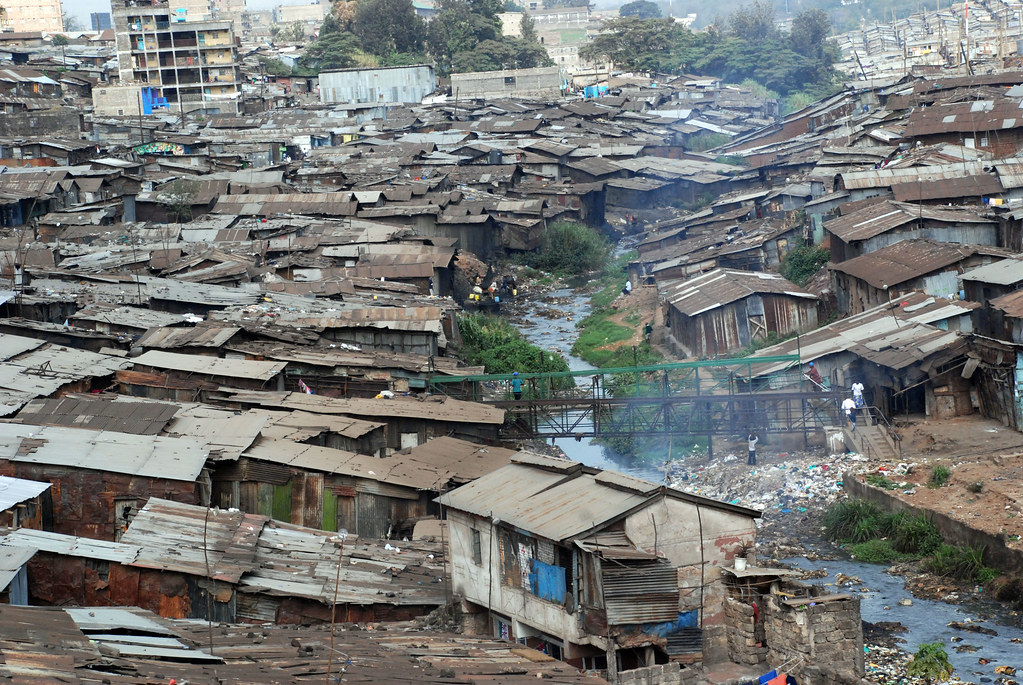
The photo above is useful precisely because it resists abstraction. It shows a specific settlement, Mathare, at a specific moment in 2008. It cannot prove a current trend, but it reminds the reader that words such as "upgrading" describe interventions in neighborhoods where homes, work, social ties and infrastructure deficits occupy the same ground.[7]
If the goal is global, who actually has to deliver it?
National governments control much of the enabling machinery: housing law, infrastructure budgets, land rules, financial systems and transfers. Local and regional governments, however, are often the institutions expected to manage growth, issue approvals, maintain streets, coordinate services and respond when plans fail.
The report identifies that mismatch as a central bottleneck. Many cities are given large responsibilities without predictable revenue, adequate technical staff or enough authority over investment. Its proposed remedy is not a single global fund. It is a stronger delivery compact: more dependable transfers, better municipal revenue systems, access to climate and development finance, technical support and clearer coordination across levels of government.[2][5]
That makes next week's General Assembly review consequential but limited. A declaration can set direction. The stronger evidence will come later in national budgets, serviced-land programs, city staffing, tenure reforms and neighborhood-level upgrading that residents can verify.[1]
Can better data rescue the agenda?
It can improve decisions, but it cannot substitute for them. The report says that only one SDG 11 indicator now has enough data to estimate distance from its target reliably, compared with five indicators in the 2023 assessment. Gaps are especially serious at neighborhood level and for women, children, people with disabilities and residents of informal settlements.[1][2]
Earth observation, administrative records, community mapping and machine learning can make rapidly changing settlements more visible. The report describes a system that produced more than 1.5 million building footprints across eThekwini in 72 hours, a task that previously took months. But it also sets a sensible limit: models need transparent methods, good inputs and validation against local reference data. A fast map can reproduce a blind spot faster if residents and local institutions cannot inspect or challenge it.[2]
The report applies that caution to itself. Its experimental AI-assisted reading of 397 Voluntary National Reviews measures how much attention governments give urban themes in their reports; it does not measure whether policies worked on the ground. That is a valuable distinction between political language and lived outcomes.[2]
The next 24 hours, seven days and 30 days
In the next 24 hours, delegations and city advocates still working through the High-level Political Forum can press one question: will "housing at the center" appear as an integrated delivery commitment, or only as a headline? The useful language would connect housing to tenure, transport, basic services, safer land, local authority and measurable outcomes.[1][2]
Within seven days, the July 16-17 General Assembly review of the New Urban Agenda becomes the first visible political checkpoint. It cannot build a home or upgrade a drain, but it can reveal whether governments accept the report's diagnosis and whether they identify who must finance and deliver the response.[1]
Within 30 days, the signal moves away from conference rooms. National and city institutions should be able to show where the report enters an existing budget, land program, settlement-upgrading plan or data system. A new declaration without an implementing institution, baseline or funding path would leave the central bottleneck unchanged.[2][5]
Three paths now separate:
- Base path — endorsement without a delivery reset. Governments repeat the housing-first language, while programs and budgets remain fragmented. The trigger is an outcome document rich in principles but thin on named institutions, finance and reporting dates.
- Upside path — integration becomes operational. Governments pair in-situ upgrading and affordable supply with secure tenure, services, transit, risk reduction and stronger local fiscal capacity. The trigger is a published package that joins those elements to a baseline, responsible authority and funded timetable.[2][5]
- Downside path — unit counts conceal deeper exclusion. Clearance, peripheral construction or weakly targeted subsidies expand while residents lose access to livelihoods or face higher total housing-and-transport costs. The trigger is rising output alongside worsening or unmeasured affordability, tenure, service access and disaster exposure.[2]
The action checklist is short: publish neighborhood baselines and definitions; show the responsible institution and money; assess tenure, services, transport and risk together; and give affected residents a documented role in upgrading decisions. A government's claim to have implemented the report should be treated as invalid if it can show more units but cannot show whether people are more secure, connected, safe and able to afford daily life.[2]
The UN's housing-first turn will matter if it changes what governments connect. Homes must connect to secure tenure, transport, services, safer land and local delivery capacity. Data must connect to budgets and public accountability. Global meetings must connect to decisions that residents can see. The new report supplies a sharper diagnosis; the July review begins the test of whether institutions will act on it.
Sources
- UN-Habitat, "Delivering housing and transforming slums is key to achieving SDG 11, new UN report says" (July 9, 2026) — launch findings, headline estimates and briefing context.
- UN-Habitat, SDG 11 Global Report 2026: Housing at the Centre of Sustainable Cities and Communities — full report, methods, indicator boundaries and recommendations.
- United Nations Economic and Social Council, Progress towards the Sustainable Development Goals: Report of the Secretary-General (2026) — official Goal 11 indicator summary.
- United Nations, "Press Conference on the Launch of the Sustainable Development Goals Report 2026" (July 7, 2026) — automated launch transcript and statistical framing.
- United Nations Department of Economic and Social Affairs, "Goal 11" — current target-level data and integrated priorities for housing, planning, local governance and disaggregated data.
- UN-Habitat, World Cities Report 2026: The Global Housing Crisis — Pathways to Action — broader housing-system evidence and policy context.
- Julius Mwelu / UN-Habitat Photo Gallery, "Slum Upgrading" — 2008 documentary photograph of Mathare, Nairobi, used as the cover image.