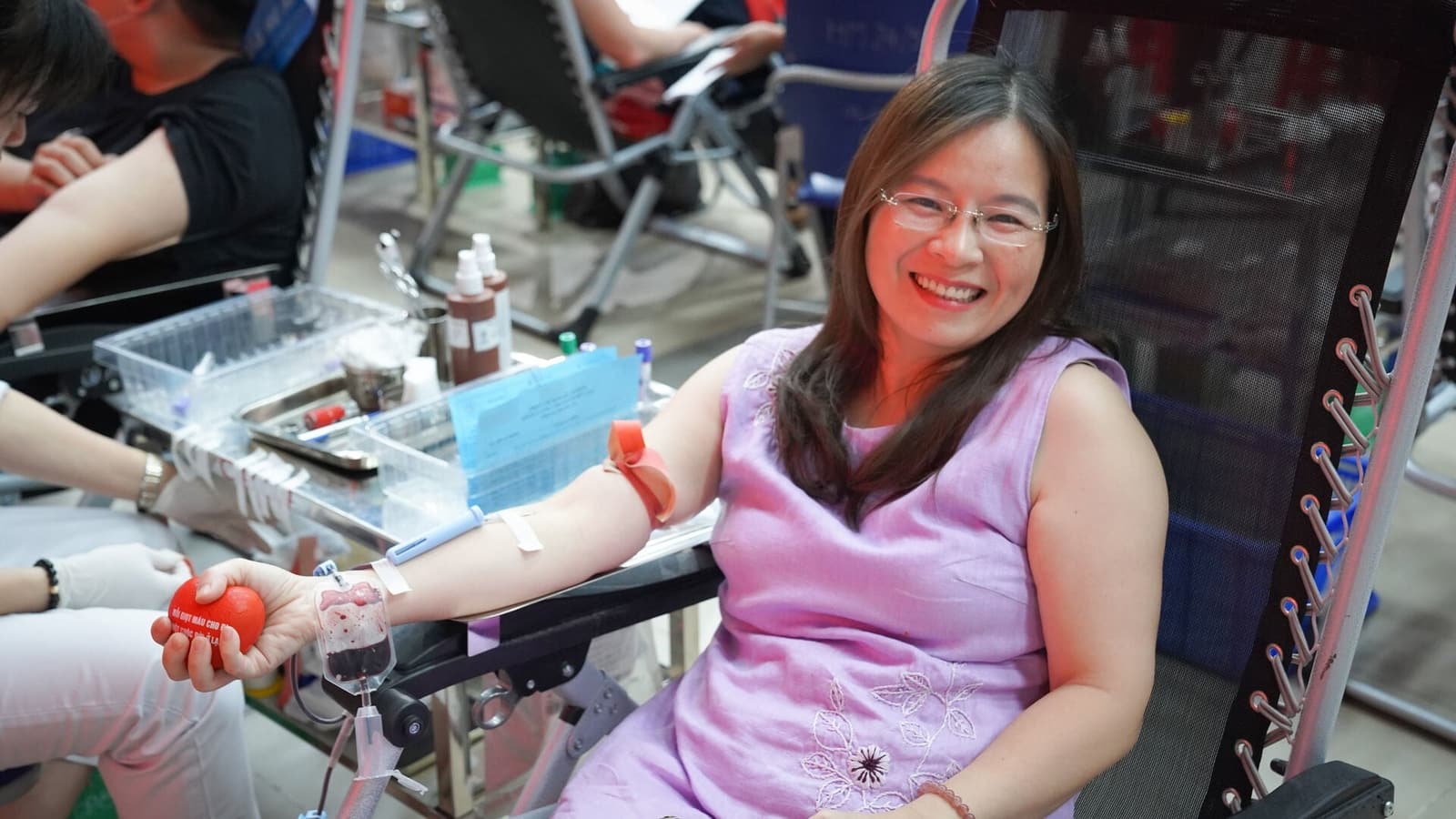
As of 2026-06-14 01:32 UTC, the useful headline for World Blood Donor Day is not simply "more people are giving blood." WHO's new data point to real progress: global blood collections rose by nearly 19% between 2013 and 2023, and voluntary, unpaid donors accounted for more than 85% of the estimated 120 million blood donations in 2023.[1] But the same release frames the remaining problem sharply: safe blood is still not reliably available to many patients, especially in lower-income settings.[1]
That makes today's campaign, "One Drop of Humanity. Give Blood. Save Lives," both a thank-you note and a systems test.[2] A donor can start the chain, but the chain also needs collection sites, testing supplies, cold storage, trained staff, haemovigilance, financing, regulation, hospital ordering discipline, and transport that works under pressure. Blood cannot be manufactured on demand, and it cannot sit forever waiting for the perfect emergency.[3][4]
The news, then, is a split-screen result: voluntary donation is becoming a stronger global norm, while the patient-access gap remains stubbornly local.
Facts Now
| Item | What changed or matters | Confidence note |
|---|---|---|
| WHO data release | WHO said collections rose nearly 19% from 2013 to 2023, with voluntary unpaid donors providing over 85% of estimated 2023 donations.[1] | High; WHO news release based on reported country data. |
| Coverage of the new report | WHO said the 2025 global status report draws on data from 168 countries, covering 97% of the world's population, with findings based mainly on 2023 data.[1][4] | High for scope; country-reported data can vary in completeness and quality. |
| Unequal availability | WHO reported that high-income countries have 15% of the global population but collect 36% of donations.[1] | High; official WHO summary. |
| Low collection threshold | WHO said 24 countries reported fewer than 5 donations per 1000 population.[1] | High; useful warning indicator, not a complete measure of patient outcomes. |
| Voluntary-donor gap | WHO's fact sheet says 80 countries collect more than 90% of their supply from voluntary unpaid donors, while 59 countries still rely on family/replacement or paid donors for more than half of supply.[3] | High; WHO fact sheet, updated for the current campaign cycle. |
| Americas signal | PAHO's campaign and regional messaging put the emphasis on strengthening voluntary, regular, unpaid donation in the Americas.[5] | Medium-high; regional policy framing rather than a single global estimate. |
Why a Donor Campaign Is Also Infrastructure News
Blood drives are easy to understand because the human act is visible: one person sits down, gives blood, and leaves behind something a patient may urgently need. The less visible part is the infrastructure that turns that act into safe, timely care. WHO's release points to governance, financing, regulation, quality assurance, clinical use, surveillance, and data systems as the policy layer behind the donor appeal.[1]
That distinction matters because a country can have generous donors and still have an access problem. If collection is irregular, test kits stock out, budgets are unstable, or hospitals overuse blood where alternatives would be safer, the donor base alone cannot guarantee reliable transfusion care. Conversely, a well-run national blood system can make each donation travel farther by separating blood into components, matching supply to clinical need, reducing wastage, and keeping safety checks consistent.[3][4]
The patient groups named in WHO's release show why this is not a niche medical supply issue. Safe blood supports childbirth emergencies, children with severe anaemia, trauma and burn care, surgery, cancer treatment, and chronic conditions such as sickle-cell disease, thalassaemia, haemophilia, and immune deficiencies.[1] The American Red Cross shows the operational version of the same pressure in the United States: it says it must collect up to 14,000 donations per day to meet patient needs, and that whole-blood donors can be eligible again 56 days after a donation.[6]
The access gap is therefore not just "need more donors." It is "need more regular donors inside systems that can use donations safely and predictably."
The Equity Problem Behind the Good News
The headline global figure can hide the hardest geography. WHO says high-income countries collect more than a third of global donations while representing a much smaller share of the world's population.[1] That does not mean every high-income system is comfortable or every low-income system is failing. It does mean the global aggregate is not the patient's experience.
For a woman with postpartum haemorrhage, a child with severe anaemia, or a crash victim in a district hospital, the relevant question is not whether the world collected 120 million donations. It is whether compatible, tested blood is available within the local emergency window. WHO's note that 24 countries reported fewer than 5 donations per 1000 population is an alarm bell because thin collection rates leave little room for disasters, seasonal demand, transport breakdowns, or routine surgical need.[1]
Family and replacement donation also show why the type of donation matters. WHO continues to promote regular voluntary unpaid donation because it creates a more stable and safer base than last-minute family replacement or paid supply.[3][4] The campaign slogan is emotional, but the operating goal is administrative: make donation routine enough that hospitals are not asking families to solve a national inventory problem at the bedside.
Decision Impact
Next 24 hours: World Blood Donor Day messaging will likely focus on gratitude, but health agencies should use the attention window to convert one-time interest into repeat donor registration, appointment scheduling, and local eligibility education.[2][5]
Next 7 days: the better metric is not social-media reach. It is whether national and regional blood services report filled appointment slots, new regular donors, and inventory recovery in blood groups that are usually tight. Public appeals should point people to official local blood services rather than generic encouragement.
Next 30 days: ministries and blood agencies should read WHO's report as a financing and regulation checklist. The weak points to watch are budget lines, inspection systems, licensing, accreditation, data reporting, testing supply continuity, and whether clinical transfusion practice reduces avoidable use.[1][4]
Scenarios
Base case: World Blood Donor Day produces a short-term donor bump, and WHO's new report gives health ministries a fresh evidence base for policy work. The access gap narrows slowly because infrastructure and financing improvements take longer than a campaign cycle.[1][4]
Upside case: countries use the campaign to build regular donor panels, not just one-day events. If repeat appointment systems improve and national blood systems get stable funding, voluntary donation becomes a year-round supply base rather than an annual awareness spike.[2][3]
Downside case: campaign attention fades while the structural weaknesses remain. If countries with low donation rates also lack budget, inspection, licensing, testing continuity, or reliable transport, patients may still face dangerous delays even as global voluntary donation figures look better.[1][4]
Action Checklist
- Donate only through official, licensed local blood services or recognized Red Cross/Red Crescent channels.
- If eligible, book a repeat appointment rather than treating donation as a one-day observance.
- Health agencies should publish local inventory needs by blood type where operationally appropriate.
- Ministries should pair donor recruitment with financing, testing, cold-chain, inspection, and haemovigilance plans.
- Hospitals should review transfusion practice so scarce blood is used where it changes outcomes.
The practical lesson of World Blood Donor Day 2026 is that solidarity starts the supply chain, but policy finishes it. A regular donor matters. So does the boring machinery that makes that donation safe, tested, stored, matched, and available before a patient runs out of time.[1][3][4]
Sources
- World Health Organization, "Safe blood supply improves as voluntary donations exceed 85%, but many people still lack access" (June 12, 2026) - new WHO data release, global collection figures, inequity metrics, governance gaps, and image credit.
- World Health Organization, "World Blood Donor Day 2026: One Drop of Humanity. Give Blood. Save Lives." - campaign date, theme, and public-health framing.
- World Health Organization, "Blood safety and availability" - fact sheet on donation types, country distribution, policy requirements, and blood-system organization.
- World Health Organization, Global status report on blood safety and availability 2025 - publication page for the 2026 report based mainly on 2023 country data.
- Pan American Health Organization, "World Blood Donor Day 2026" - regional campaign page and voluntary donation emphasis for the Americas.
- American Red Cross Blood Services, "Welcome, Blood Donor!" - U.S. collection-demand example, repeat-donation interval, and patient-need framing.