As of 2026-05-09 04:33 UTC, the useful way to read President Donald Trump's May 7 proclamation of "Victory Day for World War II" is as a commemorative move, not an operational rewrite of the federal calendar.[1] The proclamation explicitly designates May 8, 2026 as a day in celebration of victory in Europe during World War II.[1] What it does not do is alter the statutory list of federal holidays in 5 U.S.C. 6103, place May 8 on the Office of Personnel Management's 2026 holiday schedule, or by itself create a paid day off across the federal government.[2][3][4]
That distinction is the whole story. The White House is trying to give May 8 a firmer place in American public memory. The legal machinery that governs closures, pay, and leave is still running through statute, OPM guidance, and, when used, executive orders that actually designate federal holidays for pay-and-leave purposes.[2][3][4] In other words, the proclamation is real, but its effect is symbolic first.
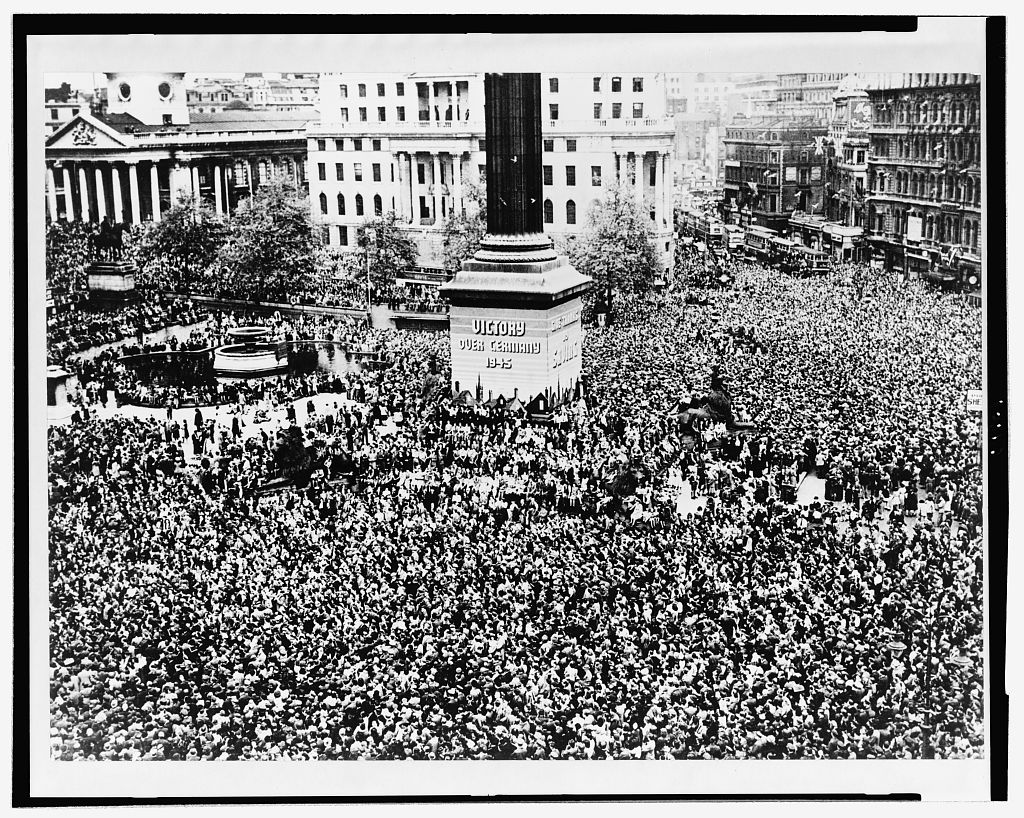
Image context: the cover uses an archival Library of Congress photograph of V-E Day crowds in Trafalgar Square.[7] That visual works here because the proclamation is less about changing a work schedule than about attaching the United States more visibly to a May 8 commemorative tradition that has long had a stronger public profile in Europe.
Fact file
| Item | What is live now | Confidence note |
|---|---|---|
| New White House action | Trump issued the proclamation on May 7, 2026, and declared May 8, 2026 a day in celebration of Victory Day for World War II.[1] | High; direct from the proclamation text. |
| Federal holiday list | The legal public holidays listed in 5 U.S.C. 6103(a) do not include May 8.[4] | High; direct statutory text. |
| 2026 federal schedule | OPM's 2026 Holiday Schedule includes Memorial Day on May 25 but no May 8 holiday.[2] | High; direct OPM schedule. |
| How federal holiday pay rules work | OPM says designated holidays include statutory holidays, "in lieu of" holidays, Inauguration Day where applicable, and holidays declared by Executive order for pay-and-leave purposes.[3] | High; direct OPM guidance. |
| Historical anchor | The National Archives says the German surrender document was signed on May 7, 1945, with active operations to cease at 2301 hours Central European time on May 8.[5] | High; direct archival record. |
| Why May 8 is the chosen date | Defense Department history describes May 8, 1945 as V-E Day, the public celebration point for the end of the war in Europe.[6] | High; direct official historical summary. |
What changed, and what did not
The cleanest way to understand the proclamation is to separate ceremonial designation from federal holiday administration.
What changed is straightforward. The president used a proclamation to tell agencies, media, schools, veterans' groups, and the public that the administration wants May 8 to be observed as a named day of remembrance and celebration.[1] The text frames Nazi Germany's collapse as a decisive turning point for freedom and ties that wartime memory to the White House's broader patriotic messaging in the United States' 250th year.[1] That is a political and commemorative act, even if no one gets an automatic day off because of it.
What did not change is just as important. OPM's own 2026 holiday calendar still lists the standard federal holidays and does not include May 8.[2] The underlying federal holiday statute still names the same legal public holidays and does not include a World War II Victory Day entry.[4] OPM's pay-and-leave fact sheet does leave room for holidays declared by Executive order to be treated as holidays for pay and leave purposes.[3] But this White House action was a proclamation, and no matching OPM holiday update or pay-and-leave closure guidance appeared alongside it.[1][2][3]
That is why the practical result is narrow. Agencies do not suddenly move schedules, close offices, or trigger holiday premium pay simply because the president labeled the day in a proclamation. To get that kind of effect, the federal personnel system needs a different legal hook.[2][3][4]
Why May 8 is an awkward American date
The proclamation is also trying to solve a memory problem. In Europe, May 8 is a natural public landmark because it marks the end of the war there.[5][6] In the United States, World War II memory has often been split between the European and Pacific theaters, with September 2, 1945 remaining the formal endpoint for the war as a whole. The result is that May 8 carries clear historical meaning, but it has never had the same settled place on the U.S. civic calendar that Memorial Day, Veterans Day, or even D-Day anniversaries often occupy.
The National Archives record helps explain the date's slightly awkward fit.[5] Germany's surrender was signed in the early hours of May 7 at Reims, yet the surrender terms required hostilities to stop on May 8. That is one reason May 8 became the public celebration date. The Defense Department's V-E Day history shows how quickly that date turned into a mass civic event across Allied countries.[6] Trump's proclamation is effectively importing that date more aggressively into U.S. presidential language.
That does not make the choice artificial. It does mean the White House is working in the realm of commemorative emphasis rather than legal calendar administration. The administration is choosing what to spotlight, not rewriting the federal leave code.[1][2][4]
Why the legal distinction matters
For ordinary readers, this may sound technical. For employers, federal workers, schools, and local institutions, it is the difference between a headline and an actionable calendar change.
OPM's holiday pages exist because federal holiday status has operational consequences: excused absence, holiday premium pay, "in lieu of" treatment when a holiday falls on a nonworkday, and all the downstream scheduling that follows.[2][3] Those rules are intentionally formalized. The same guidance even spells out that executive-order holidays can count for pay-and-leave purposes.[3] That makes the absence of such an order here the crucial boundary.
In practice, then, the proclamation behaves more like a presidential invitation to commemorate. Veterans organizations, museums, schools, military communities, and state or local leaders can use it as a reason to hold ceremonies or issue statements.[1][6] Federal payroll systems do not have a new holiday to process, and the statutory holiday list still looks exactly the same the next morning.[2][4]
Decision impact
Next 24 hours
The immediate question is not whether federal offices close. They do not appear to have received that kind of instruction.[1][2][3] The immediate question is whether agencies and public institutions treat the proclamation as a cue for ceremonies, statements, educational programming, or symbolic observance.
Next 7 days
Watch whether the White House or OPM follows with any additional personnel guidance. Without that, the event remains a commemorative designation rather than an administrative one.[1][2][3]
Into future anniversaries
The longer-run test is whether May 8 becomes a recurring presidential memory marker, perhaps joining the existing ecosystem of D-Day, Memorial Day, and Veterans Day rhetoric, or whether it remains a one-day symbolic flourish that leaves little institutional residue.[1][6]
Scenarios
- Base case: May 8 settles in as a presidential commemoration point with speeches and museum programming, but no durable change to the federal holiday calendar.[1][2][4]
- Upside case: repeated annual observance gives V-E Day a clearer place in U.S. public memory, especially during the final years of major World War II anniversary cycles.[1][5][6]
- Downside case: the proclamation becomes mostly a culture-war talking point about patriotism and naming, while failing to build any lasting civic practice around the date.[1][2]
Action checklist
- For federal workers and contractors: follow OPM schedules and agency leave guidance, not proclamation headlines, when judging whether a day is actually off.[2][3][4]
- For schools, museums, and civic groups: treat the proclamation as a legitimate prompt for May 8 programming about the European end of World War II, but do not imply that the federal holiday statute changed.[1][5][6]
- For readers tracking the politics: separate memory signaling from calendar law. This action clearly changes the first and leaves the second untouched.[1][2][4]
- Invalidation condition: if the administration later issues an Executive order or Congress changes the statute, then the article's core claim about the proclamation's limited operational effect would need to be revised.[3][4]
Sources
- The White House, "Victory Day for World War II, 2026" proclamation (May 7, 2026).
- U.S. Office of Personnel Management, "Federal Holidays" - 2026 Holiday Schedule.
- U.S. Office of Personnel Management, "Fact Sheet: Federal Holidays - Work Schedules and Pay."
- U.S. House of Representatives Office of the Law Revision Counsel, 5 U.S.C. 6103, "Holidays."
- U.S. National Archives, "Surrender of Germany (1945)."
- U.S. Department of Defense, "VE-Day."
- Library of Congress Prints and Photographs Division, "(VE Day celebrations in Trafalgar Square, London)" - source page for the archival photograph used with this article.