As of 2026-05-09 19:03 UTC, the Food and Drug Administration's new pilot of one-day inspectional assessments is easy to misread as a softer inspection regime.[1] The stronger reading is narrower and more operational. FDA is trying to build a faster screening layer for lower-risk facilities so investigators can touch more sites, collect more comparable signals, and reserve longer inspections for places where the risk picture is worse or the facts on the ground justify escalation.[1][6]
The timing of FDA's second May 6 announcement makes that logic clearer. On the same day, the agency said it had consolidated more than 40 data sources and submission systems into a new platform called HALO and upgraded its internal AI tool Elsa so staff can query data and build workflows more directly.[2] Read together, the two announcements describe a single operating model: shorter site assessments at the edge, more centralized signal processing in the middle, and more targeted decisions about where full inspection time should go next.[1][2]
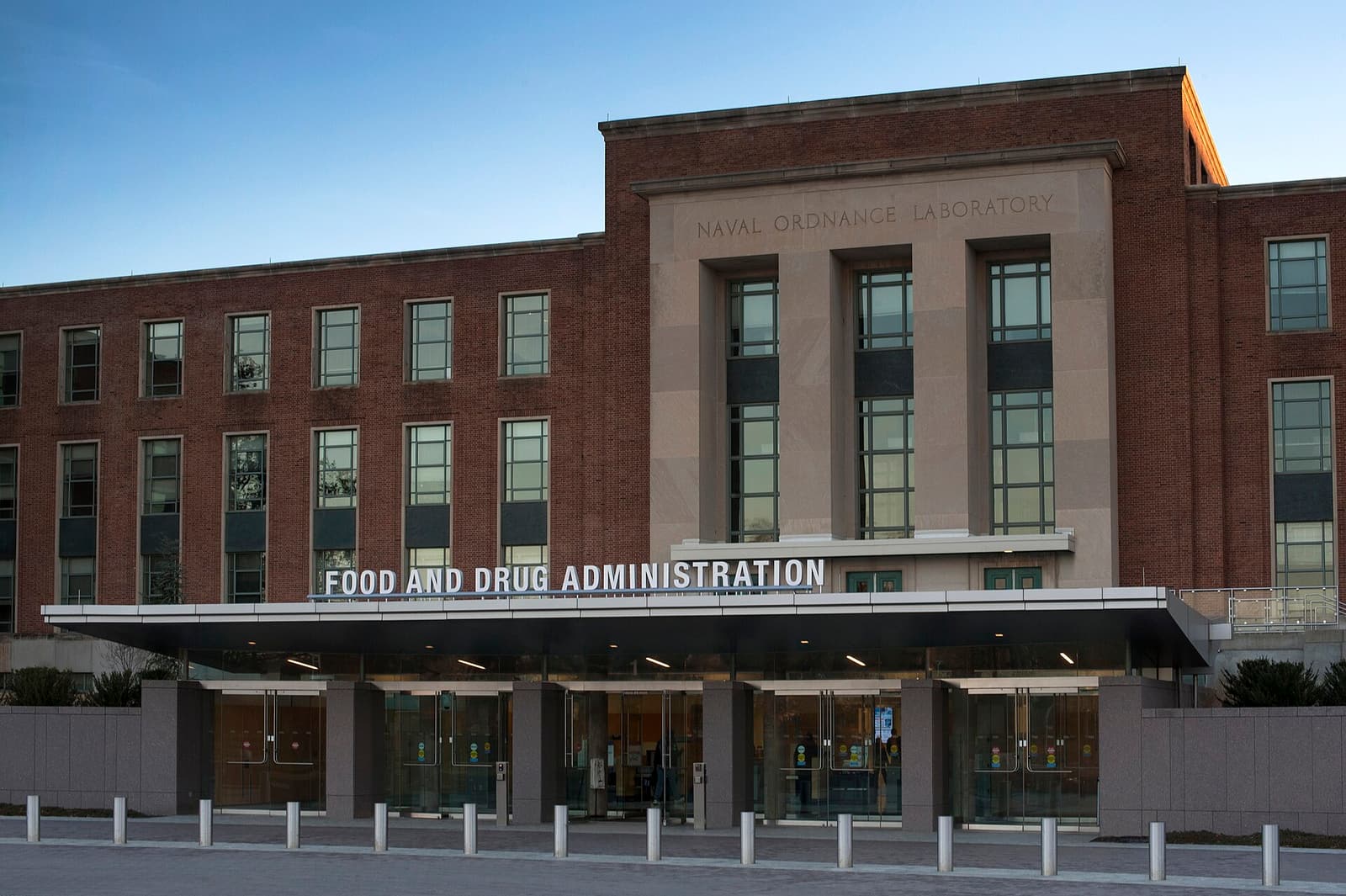
Image context: the cover uses a real photograph of FDA's White Oak entrance.[7] That is the right documentary image here because the live story is institutional rather than theatrical. The agency is changing how it sorts facilities, routes investigator time, and turns small inspectional observations into a larger oversight map.
Fact file
| Item | What is live now | Confidence note |
|---|---|---|
| Pilot timing | FDA said the one-day inspectional-assessment pilot launched in April 2026 and was announced publicly on May 6, 2026.[1] | Strong. Direct from FDA's press release. |
| Early scale | FDA said that as of late April 2026, it had completed about 46 one-day assessments.[1] | Strong. Direct from FDA's press release. |
| Who is covered | The pilot spans human and animal foods, biologics, medical products, and clinical research programs.[1] | Strong. Direct from FDA's press release. |
| Selection logic | Facilities are chosen using risk-based criteria such as product type, prior inspection outcomes, and operational characteristics.[1] | Strong. Direct from FDA's press release. |
| What the pilot is not | FDA said the assessments do not replace standard inspections and do not apply to higher-risk or more complex facilities.[1] | Strong. Direct from FDA's press release. |
| Data layer | FDA said HALO consolidated 40+ application and submission data sources, and Elsa is being integrated on top of that environment.[2] | Strong. Direct from FDA's press release. |
| Extra implementation detail | RAPS reported Commissioner Marty Makary described the one-day visits as a "safety screening," said AI would help identify low-risk facilities, and said the pilot would continue through FY 2026 while FDA develops evaluation metrics.[6] | Moderate to strong. Secondary report based on on-stage remarks and agency statements. |
What actually changed
The agency did not rewrite what an FDA inspection is. Its own inspection basics page still defines an inspection as an onsite examination of a facility's compliance with federal law and says inspections are one part of a broader oversight approach rather than a self-sufficient guarantee.[3] What changed is the shape of the first pass. FDA now wants some facilities to receive a shorter, more focused visit that can confirm whether the site still looks routine, whether records and operations line up, and whether anything warrants a deeper look.[1][3]
That move fits a pattern already visible elsewhere in the agency's inspection toolkit. FDA's remote-oversight page says the agency uses remote regulatory assessments to evaluate compliance, review corrective actions, and pivot into a conventional inspection when the signal coming back is concerning.[4] One-day onsite assessments extend the same logic into physical fieldwork: use a lighter first screen where risk is lower, keep the option to intensify immediately, and treat each contact as one input into a wider surveillance system.[1][4]
Calling this a throughput screen is an inference from the official record and Makary's conference remarks, not FDA's formal label.[1][6] But it is the cleanest way to understand the change. The agency is not claiming that one day on site can answer every compliance question. It is claiming that one day can often answer the first question: does this facility still look low risk, or does it deserve more time right now?
Why this is not a softer standard
FDA's own press release draws the boundary tightly. The pilot does not apply to higher-risk or more complex facilities, investigators can extend the assessment beyond one day when significant observations surface, and the initiative does not change enforcement policy.[1] That matters because the durable legal consequences of an inspection still depend on review, classification, and follow-up, not on how short the initial visit was.
The inspection-classification page is the clearest reminder of that point. FDA does not treat NAI, VAI, and OAI as casual labels handed out at the doorway. It says final classification depends on the inspection findings plus other information, including the facility's response to Form FDA 483 observations and any corrective actions proposed or completed.[5] A one-day visit can therefore shorten the time spent gathering the first set of facts without lowering the bar for how the agency later evaluates those facts.
In that sense, the pilot is best understood as a triage tool inside the same old enforcement architecture. A compliant facility may clear the screen faster. A questionable facility may simply reach the next stage sooner.
Why the HALO and Elsa announcement matters
The same-day AI and data announcement is what makes this file more than an isolated field experiment. FDA said one-day assessments will feed information such as recurring compliance themes, facility-specific risk scores, and discrepancies between registered and actual operations into more robust risk models.[1] A few hours later, the agency said HALO had consolidated dozens of previously separate systems and that Elsa would increasingly sit on top of that data environment.[2]
That pairing suggests a larger institutional bet. Shorter assessments only create value if the agency can absorb the resulting signals quickly enough to change future targeting. Otherwise, FDA merely trades long visits for more paperwork. HALO and Elsa are meant to solve that middle problem by giving investigators and reviewers a common data layer where shorter observations can be compared, queried, and routed into the next oversight decision.[2]
This is also where the pilot becomes strategically important for industry. A facility that thinks "low risk" means "lightly watched" is reading the change backward. The more signals FDA can process cheaply, the easier it becomes to revisit facilities whose records, registrations, prior observations, or operational profile start drifting away from the norm.[1][2][6]
Decision impact by horizon
Next 24 hours
Quality, regulatory, and site-leadership teams should stop thinking about the new pilot as a courtesy call. Even a one-day assessment can still produce observations, can still expand in scope, and can still feed a facility's risk history inside FDA systems.[1][5]
Next 7 days
Facilities that plausibly fall into a lower-risk bucket should review whether their registrations, site master data, product scope, and actual operations line up cleanly. FDA explicitly said discrepancies between registered and actual operations are one of the signals the pilot can surface.[1]
Next 30 days
The important external signal will be whether FDA keeps describing the pilot as a narrow experiment or starts turning it into a standing inspection lane with clear metrics and cross-center reuse. RAPS reported that the pilot is intended to run through FY 2026, so the next few months should show whether the agency sees real throughput gains or only modest operational convenience.[6]
Scenarios
Base case: FDA keeps the pilot focused on lower-risk facilities, uses it to widen surveillance coverage, and preserves conventional inspections as the main tool for complex or concerning sites.[1][3][5]
Upside case for the agency: HALO and Elsa make short assessments analytically useful enough that FDA can spot drift, prioritize follow-up faster, and move investigator time away from low-yield routine visits toward higher-value enforcement work.[1][2]
Downside case for industry: companies underestimate the pilot because the visits are brief, then discover that short assessments generate durable risk signals and quicker escalation when records, registrations, or corrective-action stories do not match what investigators see on site.[1][5][6]
Action checklist
- Treat a one-day assessment like a real inspection event, not a lighter pre-inspection conversation.
- Reconcile registrations, product listings, and actual site operations before FDA finds mismatches first.[1]
- Make sure FDA-483 response processes are fast and well owned, because final classification still depends on follow-up quality as well as onsite observations.[5]
- For multi-site operators, review which facilities genuinely belong in a lower-risk bucket and which ones would predictably trigger expansion if screened.[1][6]
The narrow conclusion is the useful one. FDA's May 6 pilot is best read as a surveillance-throughput upgrade rather than an enforcement retreat. The agency wants a quicker way to confirm that low-risk facilities still look low risk, a better data spine for ranking what it learns, and a faster path toward longer inspections where the signal says they are needed.[1][2][6]
Sources
- U.S. Food and Drug Administration, "FDA Launches One-Day Inspectional Assessments to Strengthen and Expand Oversight" (May 6, 2026).
- U.S. Food and Drug Administration, "FDA Expands AI Capabilities and Completes Data Platform Consolidation" (May 6, 2026).
- U.S. Food and Drug Administration, "Inspection Basics: What Does FDA Inspect?" (accessed May 9, 2026).
- U.S. Food and Drug Administration, "FDA's Remote Oversight Tools" (content current July 7, 2025; accessed May 9, 2026).
- U.S. Food and Drug Administration, "Inspection Classifications" (accessed May 9, 2026).
- RAPS, Joanne S. Eglovitch, "Makary announces one-day inspection pilot for low-risk facilities" (May 6, 2026).
- Wikimedia Commons, "File:FDA Entrance (16792957331).jpg" - source page for the article image.