As of 2026-06-20 06:32 UTC, the June solstice has two clocks running at once on Salisbury Plain. The first is the astronomical one: the Northern Hemisphere reaches its June solstice on Sunday, 21 June 2026, at about 08:24-08:25 UTC, or 09:24 BST in the United Kingdom.[3][4] The second is archaeological: days before that gathering, archaeologists reported a nearby Bulford timber alignment that may push the landscape's solstice story earlier than the famous stone circle itself.[1]
That does not mean Stonehenge has been "solved." It means the weekend's familiar image of people watching sunrise through the stones now has a sharper context. If the Bulford interpretation holds, communities near Stonehenge were marking the midsummer sunrise and midwinter sunset with wood before the sarsens became the dominant monument. The news is not that prehistoric people cared about the sun. The news is that a specific, measured alignment has been reported about 5 kilometers from Stonehenge, and researchers are treating it as part of the same longer ceremonial landscape rather than as a stray curiosity.[1][2]
Facts Now
| Point | What is verified | Confidence note |
|---|---|---|
| Solstice timing | EarthSky lists the 2026 June solstice at 08:25 UTC on 21 June; the Royal Observatory Greenwich lists 09:24 BST in the UK.[3][4] | Strong for public timing; sources differ by rounding conventions, so the article uses an 08:24-08:25 UTC window rather than over-claiming to the second. |
| Stonehenge alignment | English Heritage says Stonehenge was built to align with the sun on the solstices, with the summer-solstice sunrise behind the Heel Stone.[5] | Strong for the monument's public-facing alignment explanation; it does not settle every interpretive debate about purpose. |
| Bulford report | AP reports that Wessex Archaeology described two wooden poles, about 120 meters apart, aligned to the summer-solstice sunrise and winter-solstice sunset.[1] | Strong for what the team announced; "prototype" remains an interpretive label, not a demonstrated construction sequence. |
| Local context | Wessex Archaeology's Bulford project page documents archaeological work on MOD land, including Neolithic pits, ring ditches, special deposits, animal bone, pottery, and a rare discoidal flint knife.[2] | Strong for site background; the public project page predates some of the newest alignment reporting. |
| Season mechanics | NWS explains that seasons come from Earth's axial tilt, while the warmest weather lags the longest day in many mid- and high-latitude places.[6] | Strong for basic science; weather outcomes remain local and variable. |
What Changed
The phrase to handle carefully is prototype. It is useful because it tells a reader why the Bulford find matters: the reported posts appear earlier than the iconic Stonehenge stone setting and use the same kind of solar horizon logic.[1] But it can also mislead. A prototype, in modern engineering, is a version built to test a later product. Prehistoric ceremonial landscapes did not necessarily work that way.
The better reading is evolutionary, not linear. Bulford suggests that the Stonehenge landscape may have been accumulating solar practices, gatherings, and horizon knowledge over generations. Wessex's background material on Bulford already shows a dense ritual environment: Neolithic pits with carefully placed objects, animal bones, pottery, worked flints, chalk objects, and ring ditches with complex histories.[2] The new alignment claim gives that environment a more precise astronomical edge.
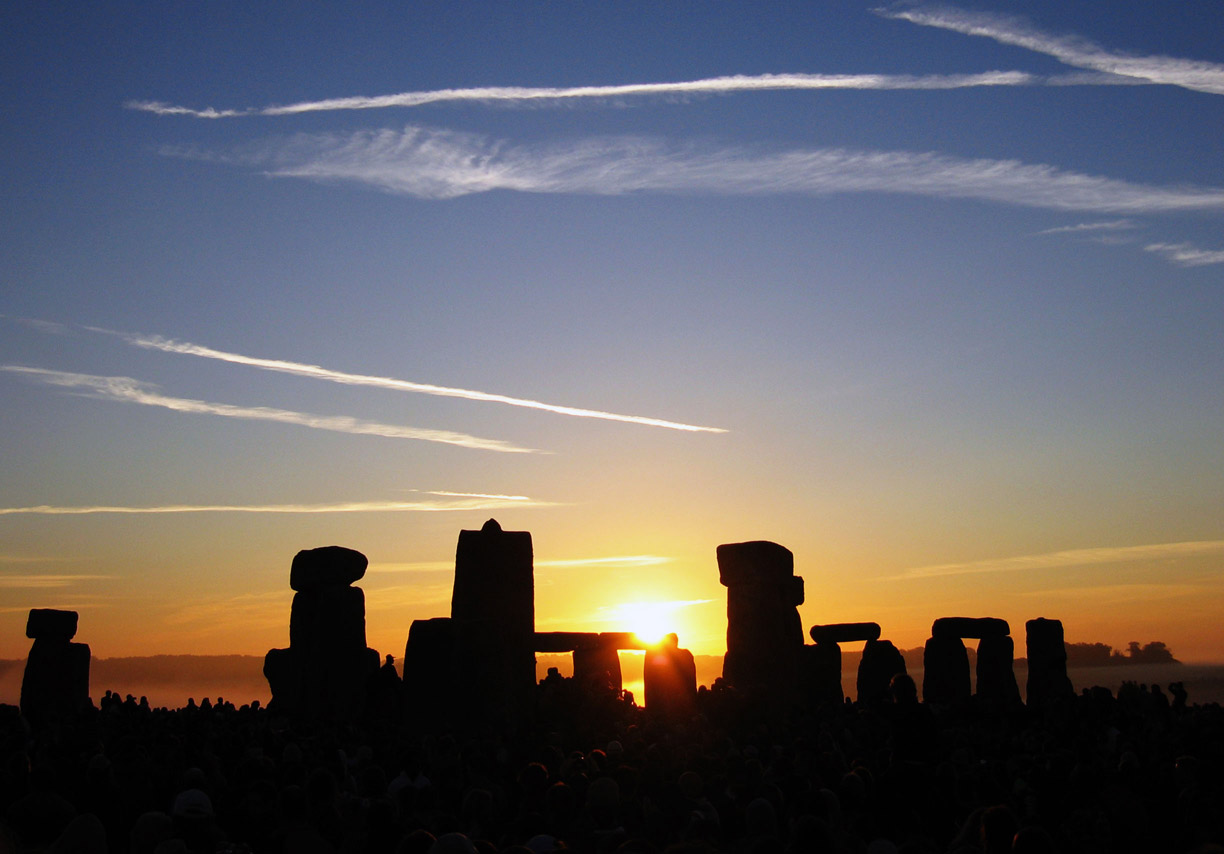
That is why the timing of the announcement matters. Thousands of modern visitors focus on the sunrise at Stonehenge because the stones make the alignment visible. English Heritage's explanation is deliberately simple: at summer solstice, the sun rises behind the Heel Stone and the first rays reach into the monument.[5] Bulford asks readers to imagine a less photogenic version of the same act: timber posts, horizon sightlines, seasonal gathering, and a marker that left only pits after the wood decayed.
Decision Impact
For visitors heading to Stonehenge this weekend, the practical advice is not complicated: treat the sunrise as a managed public event, check English Heritage's current attendance details, and do not confuse the newly reported Bulford site with an open visitor destination.[5] The value of the news is interpretive. The sunrise crowd is not merely watching a picturesque ancient ruin; it is participating in a place where solar timing appears to have mattered across a wider and older landscape.
For editors, educators, and museums, the key boundary is evidence discipline. "Stonehenge prototype found" is punchy, but it should be followed immediately by what was actually found: postholes from a likely timber structure, a proposed solstitial alignment, radiocarbon dating that places the activity earlier than the famous stone phase, and associated evidence for gathering or ritual activity.[1][2] The public story improves when the uncertainty is visible.
For archaeology watchers, the next useful documents will be technical publication, dating details, horizon modeling, excavation plans, and a clearer account of how the alignment was tested. AP's report gives the headline facts; Wessex's existing Bulford page gives the wider site inventory; neither should be treated as the final specialist monograph.[1][2]
For science communicators, the solstice itself still needs ordinary precision. It is not "the longest day" everywhere in the same way; it is the Northern Hemisphere's longest daylight interval and the Southern Hemisphere's shortest. It is also not the hottest day by default. The National Weather Service's seasons explainer notes that Earth's tilt drives seasons, while temperature usually lags the daylight peak because land, ocean, snow, and atmosphere take time to warm.[6]
Scenarios
Base case: the Bulford alignment becomes a durable addition to the Stonehenge landscape story. In this version, the public language settles down from "prototype" toward "earlier aligned timber monument," and the find helps explain Stonehenge as one phase in a longer pattern of solar marking and gathering.[1][2]
Upside case: later publication strengthens the alignment argument, clarifies dating, and connects the postholes, pits, and deposits into a more coherent account of how people used the Bulford site. That would make the discovery more than a pre-solstice news hook; it would become a stronger piece of evidence for how ceremonial landscapes developed before the most visible stones were raised.[2]
Downside case: the prototype label outruns the evidence. If later technical work weakens the dating, alignment, or connection to Stonehenge's builders, the find would still matter as part of the Bulford ritual landscape, but it would no longer support the stronger story that it foreshadowed the famous monument.[1][2]
Action Checklist
- Use 21 June 2026, about 08:24-08:25 UTC as the public timing anchor for the 2026 June solstice, with local conversions stated separately.[3][4]
- Describe Stonehenge's public alignment through the Heel Stone, but avoid implying that every question about the monument's purpose is settled.[5]
- Call Bulford an earlier reported timber alignment near Stonehenge before using "prototype," and make the uncertainty explicit.[1][2]
- Separate astronomy from weather: the longest daylight interval does not automatically mean the hottest day.[6]
- Watch for the next technical archaeological publication before treating the Bulford interpretation as complete.[1][2]
The weekend headline is therefore narrower and more interesting than a solved mystery. The solstice crowd will still gather for the familiar Stonehenge sunrise. What has changed is the surrounding frame: the line between people, horizon, and sun may have been drawn nearby in wood before it was made famous in stone.[1][5]
Sources
- Associated Press, Pan Pylas, "Archaeology team unearths 'prototype' of world-famous Stonehenge monument just a few miles away" (17 June 2026).
- Wessex Archaeology, "Bulford" project page - background on MOD-land excavations, Neolithic pits, ring ditches, and associated finds.
- EarthSky, "June solstice in 2026: All you need to know" (14 June 2026) - solstice timing and practical sky context.
- Royal Observatory Greenwich, "Summer solstice" - 2026 UK timing and explanation of the solstice as an exact moment.
- English Heritage, "Solstice at Stonehenge" - Stonehenge solstice alignment and 2026 attendance information hub.
- National Weather Service, "The Seasons, the Equinox, and the Solstices" - axial tilt, daylight, and seasonal temperature lag.
- Wikimedia Commons, "Summer Solstice Sunrise over Stonehenge 2005.jpg" - Andrew Dunn archival photograph used as the article image.