As of 2026-05-01 17:03 UTC, the U.S. New World screwworm response has become more layered than the older shorthand suggests. The headline change this week is that the Food and Drug Administration added two new emergency-use treatments in four days: an over-the-counter ointment on April 24 and Negasunt Powder on April 27.[1][2] That does not mean the United States is now fighting domestic infestations at scale. USDA's current status page still says New World screwworm is not currently present in the United States, and all southern ports of entry remain closed to livestock trade.[4] What changed is the shape of preparedness. The federal government is no longer relying only on sterile-fly suppression and border surveillance. It is building a field-treatment ladder for the moment when detection, wound care, and distribution speed could matter at the same time.[1][3][4][6][7]
That distinction matters because New World screwworm is not a pest you can treat as a slow-burn paperwork problem. CDC's clinician advisory describes a parasite whose larvae feed on living tissue and whose wounds can worsen quickly in animals and people.[7] In that setting, a response system built only around keeping flies south of the border is incomplete. Once a suspicious wound appears, the practical questions become brutally local: who can diagnose it, who can legally use which product, how quickly treatment can start, and whether enough surveillance is in place to keep one case from becoming a cluster.[1][3][4][7]
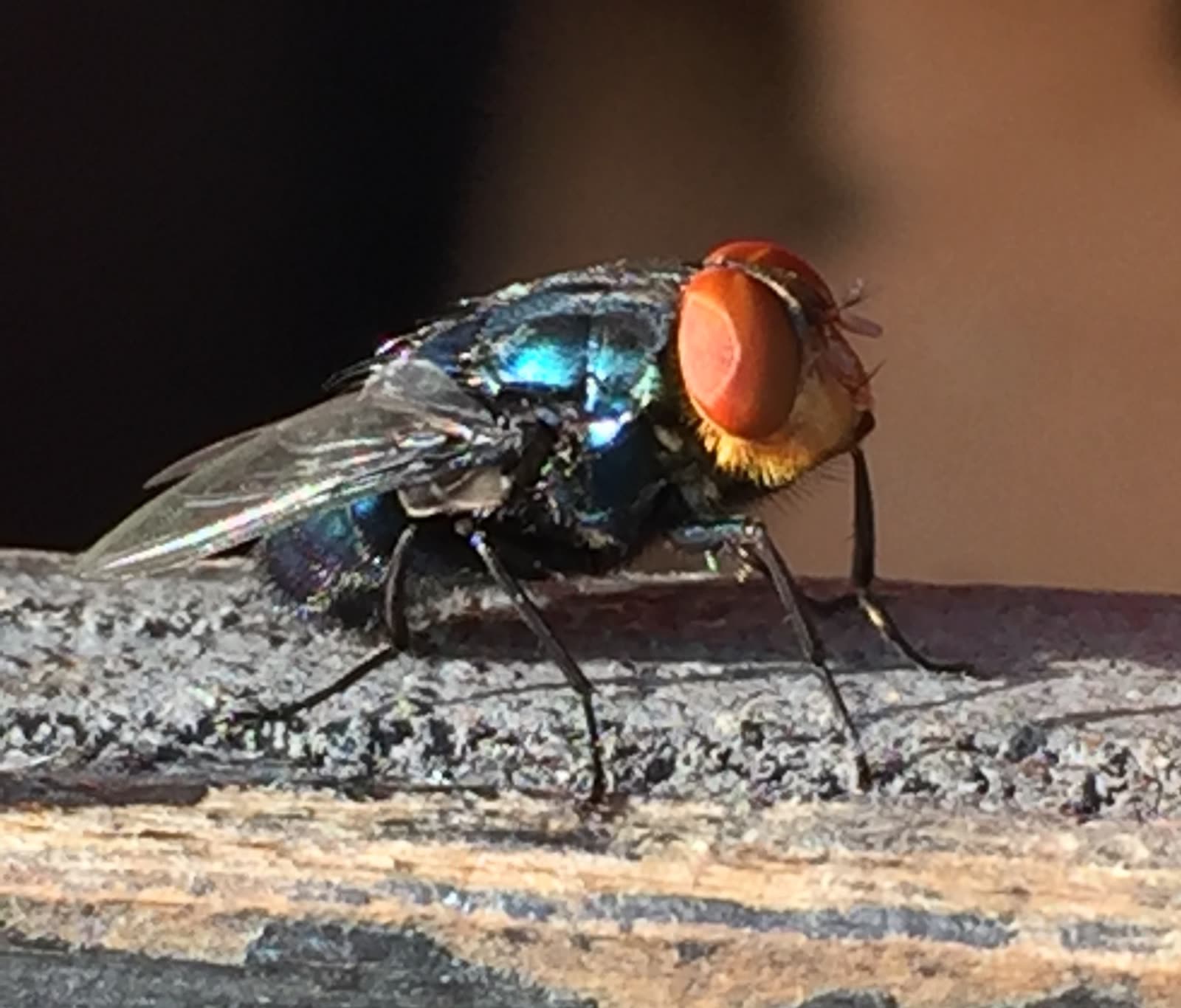
Image context: the cover uses a real USDA photo of an adult New World screwworm fly from APHIS's screwworm gallery. That is the right visual for this story because the news is about operational readiness against a specific parasite, not about abstract border politics or a generic agriculture backdrop.[8]
Fact file
| Item | What is live now | Confidence note |
|---|---|---|
| U.S. status | USDA says New World screwworm is not currently present in the United States.[4] | Stated on the current-status page last modified April 28, 2026. |
| Trade posture | All southern ports of entry are closed to livestock trade.[4] | Listed as a current safeguard, not a hypothetical trigger. |
| New drug this week, part 1 | FDA authorized F10 Antiseptic Barrier Ointment with Insecticide on April 24 for prevention and treatment in multiple species, but not in domestic dogs and cats.[2] | Product scope and exclusions are explicit in the FDA notice. |
| New drug this week, part 2 | FDA authorized Negasunt Powder on April 27 for prevention and treatment in multiple species.[1] | FDA says the sponsor intends to limit distribution to USDA for further distribution to authorized users. |
| Response ladder | FDA's screwworm overview now shows a sequence of tools added across February, March, and April 2026, including injectable, companion-animal, spray, ointment, and powder options.[3] | The agency's consolidated page provides the chronology. |
| Sterile-fly backbone | USDA says it continues to disperse 100 million sterile insects per week in Mexico.[4] | Repeated on current-status materials and facility pages.[4][6] |
| Capacity expansion | USDA says the Texas dispersal facility can handle up to 100 million sterile flies per week, while a South Texas production facility is projected for 300 million per week.[6] | Facility page gives current status and capacity targets. |
| Human-health posture | CDC warned clinicians in January that the outbreak had moved into northern Mexico, and it describes NWS as a risk for people with wounds or exposed body openings.[7] | CDC guidance is primary public-health documentation, but case geography can change between updates. |
Why the treatment ladder matters more than it looks
The simplest reading of this week's FDA actions would be that Washington is just throwing more products at the same problem. That misses the deeper signal. The consolidated FDA screwworm page now reads less like a one-off authorization log and more like an attempt to assemble a usable response stack across species, wound types, and regulatory categories.[3] February brought products for dogs, cats, and cattle; March added a topical spray; April added an ointment and then a powder.[1][2][3] That progression says federal planners are trying to reduce the chance that a suspicious case reaches the field before an authorized treatment option does.
Negasunt in particular shows how operational this has become. FDA says the sponsor intends to limit distribution to USDA for further distribution to authorized users, and before any U.S. incursion the product is restricted to government personnel and people acting under their authority.[1] In other words, this is not a retail-comfort story for ranchers or pet owners. It is a stockpile-and-chain-of-command story. The product exists, but access still runs through public-response channels. If a case crosses into U.S. response zones, the bottleneck may not be the chemistry. It may be whether the right people can move the product into the right place without losing a day.[1][4]
The ointment decision from April 24 points to the same logic from another angle. FDA explicitly pairs the authorization with slaughter-withdrawal and milk-discard rules for food-producing animals.[2] That is the kind of detail that matters only when a policy file is getting close to real field use. A response posture built around sterile-fly dispersal alone does not need those instructions. A posture preparing for wound treatment in cattle, goats, sheep, horses, wildlife, and other species does.[2][3]
What is still doing the heavy lifting
None of this means sterile-fly suppression has become secondary. USDA's own materials still describe that as the backbone of eradication strategy. The current-status page says the United States continues to disperse 100 million sterile insects per week in Mexico, while the facilities page says the Moore Air Base dispersal site in Texas is operational and can disperse up to 100 million sterile flies per week if needed.[4][6] The same page says Mexico expects new production capacity in Metapa as early as summer 2026, and USDA is pushing toward a South Texas production facility with a 300 million-per-week target.[6]
That tells you where the federal government thinks the real win condition still sits: not serial treatment of many U.S. cases, but prevention of establishment. Drugs help when an infestation appears. Sterile-fly operations, border surveillance, and movement controls are what keep the response from becoming a domestic recurring-care problem.[4][5][6]
CDC's January health alert is the bridge between those two layers.[7] The agency warned clinicians after cases moved into northern Mexico, which is exactly the kind of geography shift that turns a veterinary problem into a wider readiness problem. Once that happens, animal-health officials, physicians, wildlife managers, and border agriculture teams stop operating in separate lanes. The response needs wound recognition, specimen handling, treatment authority, surveillance data, and movement controls to line up on the same clock.[4][6][7]
The 24-hour, 7-day, and 30-day watchlist
In the next 24 hours, the important question is whether state and tribal animal-health teams, livestock groups, and large veterinary practices are reading this week's FDA actions as paperwork or as deployment planning. USDA's current status page still says there is no U.S. presence, which can tempt local actors to file the news under "good to know later." The structure of the authorizations points the other way.[1][2][4]
Over the next 7 days, the real test is distribution clarity. Which products sit with USDA only, which can move through veterinarians under specific conditions, and how quickly can officials explain that to producers who may assume every newly authorized product is now generally available?[1][2][3] If that communication is muddy, the response ladder will look stronger on paper than it is in practice.
Over the next 30 days, the harder question is whether North American containment starts to look more durable or more fragile. The positive trigger would be steady surveillance, no U.S. detections, and visible progress toward the added sterile-fly capacity USDA wants online by summer.[4][6] The negative trigger would be more northern detections or evidence that treatment access, not scientific authorization, is the slowest part of the chain.[4][7]
Scenarios
Base case: the United States stays free of New World screwworm, and the new FDA authorizations function as contingency tools rather than mass-use products.[1][4] The trigger for this case is simple: U.S. surveillance stays clean and Mexico-facing suppression holds the line through spring.
Upside case: the response gets stronger before it gets tested. Mexico's added production capacity comes online on schedule, the Texas facilities keep improving dispersal flexibility, and the treatment ladder gives officials more confidence to act fast on isolated detections without broader spread.[3][4][6]
Downside case: a U.S. detection forces the system to move from preparedness language to wound-by-wound execution. In that scenario, product access rules, authorized-user limits, food-safety constraints, and reporting speed become the stress points rather than the absence of a treatment option itself.[1][2][3][7]
Action checklist
For livestock producers and wildlife operators, the immediate action is inspection discipline. Treat unusual wounds as reportable events, not as routine fly-strike problems, and route suspicious cases to animal-health officials quickly.[4][7]
For veterinarians and state or tribal responders, the useful move is inventory rather than improvisation. Map which products are authorized for which species, which ones remain in agency channels, what withdrawal or disposal rules apply, and who has authority to use them under current conditions.[1][2][3]
For public-health and emergency managers, the lesson is that this is no longer only an agricultural containment file. CDC has already framed screwworm as a human clinical recognition issue when wounds are present, and that means hospital, public-health, and animal-health workflows should be reading from the same response sheet.[7]
The invalidation condition is clear. If USDA confirms a U.S. detection or reopens livestock trade at southern ports, the current balance between prevention and treatment changes immediately. Until then, the live story is narrower and more revealing: the United States is still trying to prevent New World screwworm from arriving, but this week's FDA actions show officials are also preparing for the first moments after arrival, when the success of the response will depend less on slogans about the border than on whether treatment authority and field logistics are already in place.[1][2][4][6]
Sources
- U.S. Food and Drug Administration, "FDA Issues Emergency Use Authorization for Topical Powder to Prevent and Treat New World Screwworm in Multiple Species" (April 27, 2026).
- U.S. Food and Drug Administration, "FDA Issues Emergency Use Authorization for Ointment to Prevent and Treat New World Screwworm in Multiple Species, Including Cattle, Sheep, Goats, Horses, Wild and Exotic Mammals, Wild and Pet Birds" (April 24, 2026).
- U.S. Food and Drug Administration, "Animal Drugs for New World Screwworm" (accessed May 1, 2026).
- USDA APHIS, "Current Status of New World Screwworm" (last modified April 28, 2026).
- USDA APHIS, "USDA Shifts Sterile Fly Dispersal Efforts to Defend U.S. Border" (January 30, 2026).
- USDA APHIS, "Sterile Fly Production and Dispersal Facilities" (last modified April 29, 2026).
- Centers for Disease Control and Prevention, Health Alert Network (HAN): New World Screwworm: Outbreak Moves into Northern Mexico (January 20, 2026 PDF).
- USDA APHIS, "New World Screwworm Photo Gallery" (source page for the USDA adult-fly photograph).