As of 2026-04-30 20:35 UTC, the Securities and Exchange Commission and Commodity Futures Trading Commission have not proposed to scrap Form PF. They have proposed to narrow who must file it and to peel back parts of the more expansionary reporting regime that the agencies adopted in 2023 and 2024 but never fully put into effect.[1][3][4][5][6]
That distinction is the useful one. The April proposal is a rollback in burden, but not a retreat from the idea that private funds should still provide confidential systemic-risk information to regulators. The SEC and CFTC say the filing threshold for all Form PF advisers would rise from $150 million in private fund assets under management to $1 billion, the large hedge fund threshold would rise from $1.5 billion to $10 billion, and the form would still capture more than 90% of private-fund gross assets while continuing to require detailed exposure information from the largest hedge fund managers.[1][2][3]
The practical news is that Washington is trying to redraw the reporting perimeter before the last rewrite even becomes operational. The 2024 amendments were already pushed back to October 1, 2026 so the agencies could review them. The April 2026 proposal now uses that delay window to argue that the form should be slimmer when the next compliance clock eventually starts.[3][5]
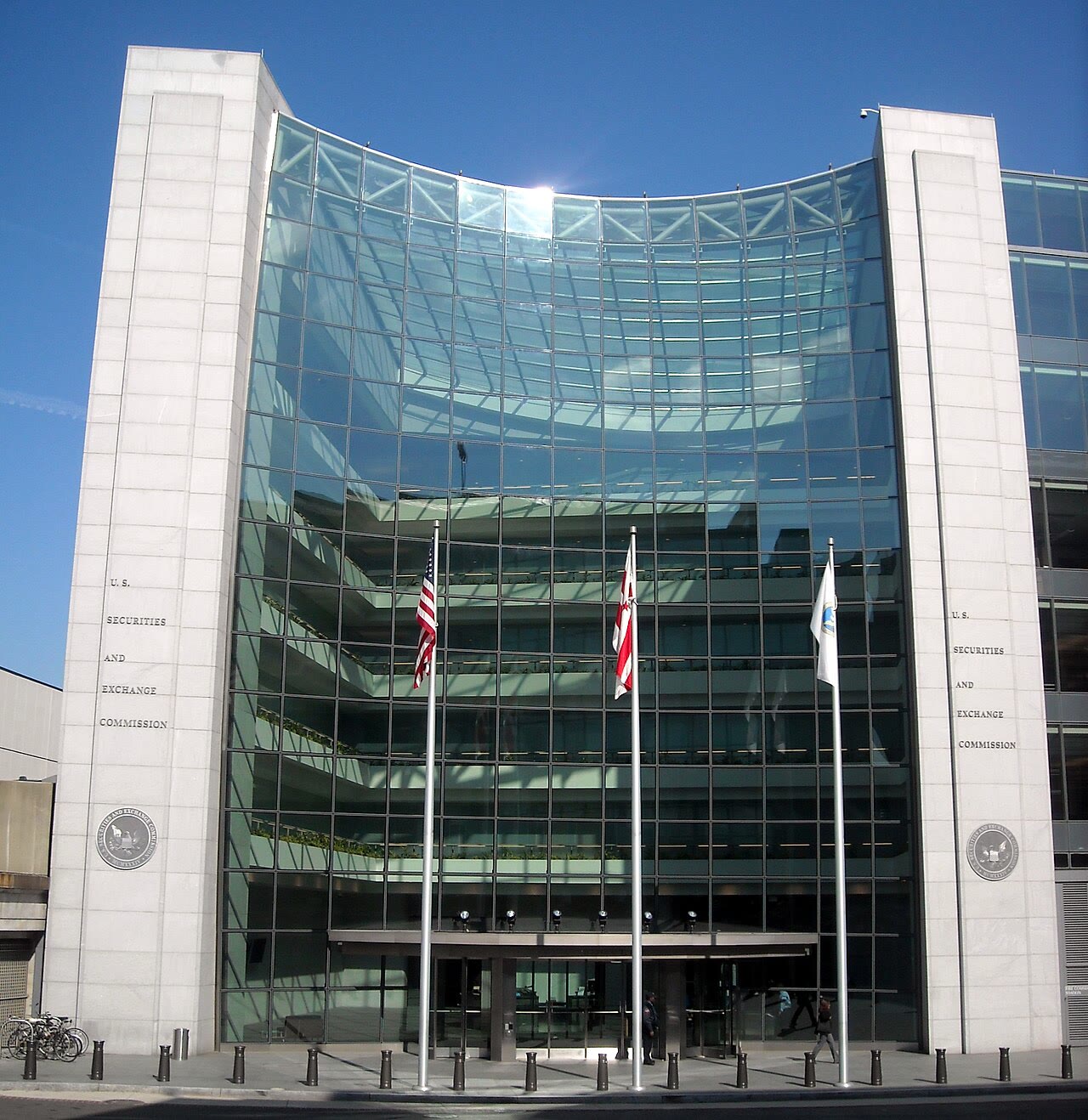
Image context: the cover uses a real photograph of SEC headquarters because this story is administrative rather than theatrical. The key event is not a trading-floor shock or a courtroom scene. It is a joint agency decision to rewrite the private-fund reporting boundary at the regulator's desk.[7]
Facts on the file
| Item | What is live now | Confidence note |
|---|---|---|
| Proposal date | The SEC and CFTC announced the proposal on April 20, 2026.[1][2] | High; both agencies published same-day releases. |
| Federal Register clock | The proposal was published in the Federal Register on April 24, 2026 and comments are due June 23, 2026.[4] | High; the CFTC Federal Register page gives the date and deadline. |
| All-filer threshold | The filing trigger would rise from $150 million to $1 billion in private fund AUM.[1][3] | High; stated in the SEC release and fact sheet. |
| Large hedge fund threshold | The reporting threshold would rise from $1.5 billion to $10 billion in hedge fund AUM.[1][2][3] | High. |
| Current baseline | The more detailed 2024 amendments were delayed to October 1, 2026 pending further review.[3][5] | High; stated in the fact sheet and 2025 extension release. |
| What would still remain | The agencies say Form PF would still collect information on over 90% of private-fund gross assets, keep detailed exposure reporting for large hedge fund managers, and add a way to identify private-credit activity.[1][3] | High for the agencies' stated design goal. |
What the agencies are actually proposing
The headline threshold changes are only the front door. The fact sheet says the agencies also want to eliminate filing obligations for smaller advisers, eliminate some reporting requirements for smaller hedge fund advisers, eliminate quarterly event reporting for all private equity fund advisers, and simplify other questions that had become more granular over time.[3] The proposed rule lays out that same structure in more technical terms: fewer look-through exercises, less volatility reporting, simpler counterparty exposure reporting, less current reporting for large hedge fund advisers, and the removal of Form PF section 6 quarterly private-equity event reports.[4]
So this is not one narrow threshold adjustment. It is a broader attempt to make Form PF look more like a high-level systemic-risk tool and less like a constantly expanding surveillance instrument for every part of the private-fund market. SEC Chairman Paul Atkins framed it as a balance-and-cost issue, while CFTC Chairman Michael Selig described it as a streamlining move meant to cut unnecessary filing burdens.[1]
The agencies are also not pretending the new perimeter would be tiny. Their own public case rests on preserving broad asset coverage even while they drop many smaller advisers from the filing population.[1][2][3] In plain English, the argument is that a smaller number of filers can still give Washington most of the macro picture if those filers remain the biggest ones.
Why this is a rollback before the previous rewrite took effect
The strongest structural point in this file is the timing. The 2023 SEC amendments had already expanded event reporting by requiring large hedge fund advisers to file reports within 72 hours after certain stress events and private equity fund advisers to report certain events on a quarterly basis within 60 days after quarter-end.[6] The 2024 joint amendments then added still more granular reporting requirements.[3][4]
But those 2024 changes never reached their live compliance date. In September 2025, the SEC and CFTC pushed the deadline to October 1, 2026, saying they needed time for a substantive review and might propose further amendments.[5] The April 2026 proposal is the concrete result of that review. It means part of the current fight is not over a form that has been operating for years in its latest version. It is over whether a stricter version, already adopted on paper, should be softened before advisers ever have to build for it.[3][4][5]
That sequencing matters because it changes who is under pressure now. Advisers are not responding to a surprise same-week compliance event. They are responding to a proposal that could rewrite the October baseline before that baseline arrives. For compliance teams, that means the live work is comparison, comment drafting, and systems planning rather than immediate rebuild.[4][5]
What is not changing
The easiest mistake is to call this a wholesale retreat from oversight. The source record does not support that. The SEC release says Form PF would still collect information on over 90% of private-fund gross assets.[1] The CFTC says the proposal would still preserve quarterly information on over 80% of hedge fund gross assets while reducing burdens for many advisers that currently fall into the large-hedge-fund bucket.[2]
The proposal also keeps the core Dodd-Frank logic in place. Form PF remains a confidential reporting channel for regulators and for the Financial Stability Oversight Council's systemic-risk monitoring role.[1][4] Even Commissioner Hester Peirce's supportive statement argues for restoring the form to its intended purpose, not for eliminating the purpose itself.[4]
There is also one forward-looking twist that cuts against a pure deregulation reading. The SEC release says the amended form would still enable a method to identify funds active in the private-credit market.[1] That suggests the agencies want a narrower form, but not a blind one. They are trying to keep signal in parts of the market that have become too large to ignore.
What to watch next
The first checkpoint is the June 23, 2026 comment deadline.[4] That is where private fund advisers, law firms, investors, and trade groups will decide whether the agencies have found a workable boundary or whether they have cut too deep.
The second checkpoint is the compliance baseline. If the proposal is adopted broadly as written, the October 2026 world could look much lighter than the one advisers were planning for after the 2024 amendments.[3][5] If the agencies retreat from parts of the proposal after comments, some of the detailed 2024 framework could still survive.
The third checkpoint is conceptual. The agencies are trying to redefine Form PF as a big-manager systemic-risk form rather than a form that steadily expands downward into smaller and mid-sized advisers. If that framing holds, future fights will center less on whether private funds report at all and more on where Washington draws the line between “big enough to matter” and “too costly to require.”[1][3][4]
The narrow conclusion is the right one. As of April 30, 2026, the SEC and CFTC are not proposing to zero out private-fund reporting. They are proposing to shrink the reporting net before the most recent expansion becomes real. The next two months decide whether that narrower net becomes the new Form PF baseline.[1][2][3][4][5][6]
Sources
- U.S. Securities and Exchange Commission, "SEC and CFTC Jointly Propose Amendments to Reduce Private Fund Reporting Burdens" (April 20, 2026).
- Commodity Futures Trading Commission, "CFTC and SEC Jointly Propose Amendments to Strengthen Disclosure and Reduce Private Fund Reporting Burdens" (Release No. 9216-26, April 20, 2026).
- U.S. Securities and Exchange Commission, Fact Sheet: Proposed Amendments to Form PF (April 20, 2026).
- Commodity Futures Trading Commission, "2026-07993 | Form PF; Reporting Requirements for All Filers" (Federal Register publication, April 24, 2026).
- U.S. Securities and Exchange Commission, "SEC and CFTC Extend Form PF Compliance Date to Oct. 1, 2026" (September 17, 2025).
- U.S. Securities and Exchange Commission, "SEC Adopts Amendments to Enhance Private Fund Reporting" (May 3, 2023).
- Wikimedia Commons, "File:U.S. Securities and Exchange Commission headquarters.JPG" (photograph source).