As of 2026-05-06 19:35 UTC, the useful way to read the White House's 2026 National Drug Control Strategy is to treat it as two plans bound into one document. The second half is recognizable public health: easier treatment access, broader recovery support, naloxone everywhere, and a continuum-of-care frame that tries to reach people before, during, and after addiction.[1][2] The first half is the live operational shift. It treats the drug crisis as a supply-chain, border, and intelligence problem to be pushed through Homeland Security Task Forces, de minimis controls, cargo screening, source-country pressure, wastewater monitoring, and AI-assisted threat detection.[2][3][6]
That distinction matters because the strategy arrives during a moment of partial statistical improvement. CDC's current public page says preliminary data predict 70,231 U.S. drug overdose deaths for the 12 months ending in November 2025, a 15.9% decline from the previous year.[4] The new strategy does not read that decline as a reason to narrow the federal posture. It reads it as proof that the government should keep the public-health language in place while hardening the intelligence-and-interdiction side of the response.[2][3][4]
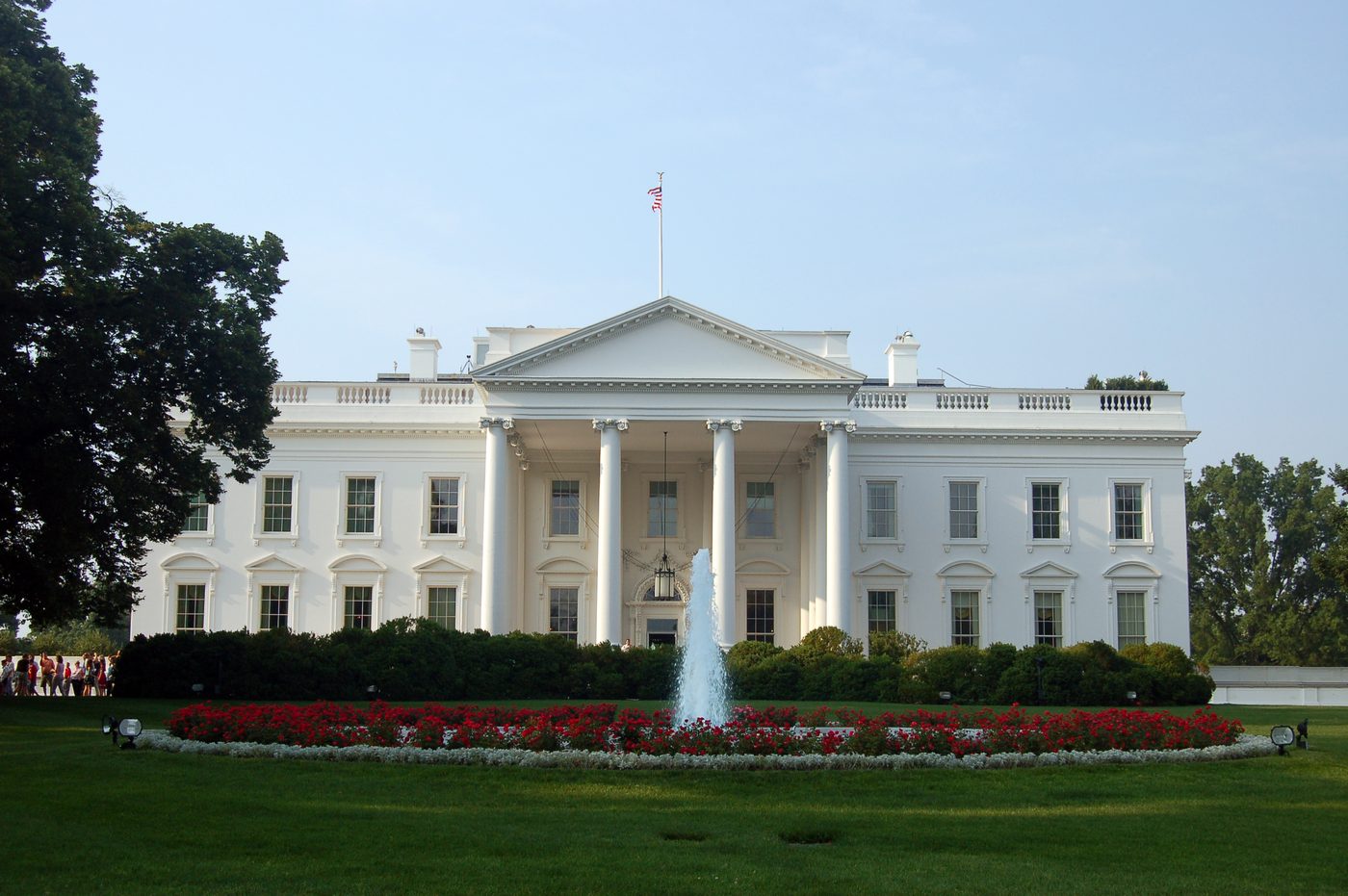
Image context: the cover uses a real Wikimedia Commons photograph of the White House North Lawn. That is the right documentary image because this release is fundamentally about presidential coordination power. The strategy is an Executive Office document that tries to pull border operations, law enforcement, health systems, data collection, and public messaging into one chain of execution.[7]
Fact file
| Item | Verified now | Confidence |
|---|---|---|
| Release timing | The White House released the strategy on May 4, 2026; CBS reported the pre-release draft at 195 pages, which matches the final PDF's length.[1][2][6] | High |
| Current death trend | CDC says preliminary data predict 70,231 overdose deaths for the 12 months ending in November 2025, down 15.9% year over year.[4] | High |
| Official scorecard | The strategy uses 79,384 overdose deaths as its 2024 baseline, with targets of 71,630 in 2026 and 60,000 in 2029.[2] | High |
| Surveillance buildout | The strategy calls for a national wastewater-based monitoring system, biosurveillance, and AI use cases for cargo screening, overdose-risk detection in health records, and emerging-threat analysis.[2][6] | High |
| Supply-chain focus | The strategy says de minimis package volume rose from 150 million in 2016 to over one billion annually, and presents the suspension of broad duty-free treatment as a counternarcotics tool.[2] | High |
| Public-health scale | The strategy says 73.6 million Americans misused drugs in the past year, 48.4 million had a substance use disorder, 23.5 million adults were living in recovery, and 67.5% of 2024 overdose decedents had at least one prior intervention opportunity.[2] | High |
What the release actually changed
The most immediate change is not a single new criminal statute or treatment rule. It is a new ordering principle. The White House release and fact sheet describe a whole-of-government strategy that tries to connect foreign-source pressure, interdiction, domestic investigation, prevention, treatment, recovery, and overdose rescue under one federal frame.[1][3] The strategy itself makes that ordering explicit in its table of contents: first define emerging threats, then secure the global supply chain, then stop the flow into American communities, and only after that move through drug-free social norms, treatment, recovery, and overdose response.[2]
That sequence is important because federal strategies are often read too literally as though every chapter carries equal operational weight. In practice, chapter order, implementation detail, and measurable targets tell you where the center of gravity sits. Here, the document spends substantial early energy on how to generate a faster operational picture of the market and how to make trafficking harder all the way from source countries to local distribution networks.[2][3]
Just as important, the strategy notes that it does not include specific budgetary resource information; those counter-drug budgets are handled through a separate ONDCP certification process.[2] That means the document is best read as a directive about priorities and sequencing rather than as a spending bill in prose.
Where the interpretation starts
The hard facts are straightforward. The released strategy contains both enforcement and treatment language. It explicitly supports mainstream addiction care, recovery infrastructure, naloxone distribution, and post-overdose intervention.[2] It also explicitly calls for source-country accountability, supply-chain security, de minimis tightening, expanded interdiction, wastewater monitoring, and AI-assisted analysis.[2][3]
The interpretation in this article is narrower: the operational center of gravity is on the border-and-data side. That reading comes from the density of implementation detail attached to those sections. The strategy is precise about wastewater systems, biosurveillance, de minimis parcel controls, Homeland Security Task Forces, and AI use cases such as screening cargo at ports of entry and identifying overdose risk in health data.[2][6] The treatment half is real, but much of it is framed as mission, principle, and scale rather than as an equally specific new operating machine.[2]
Why the border-and-data half is the live story
The strategy's own supply-chain language shows how far it wants to push the frame outward. It does not limit the crisis to local dealers or to emergency-room response. It describes source countries as accountable for weak chemical and pharmaceutical controls, treats low-data parcels as a national-security loophole, and argues that de minimis reforms force packages back into a customs process with enough data for better targeting.[2] In the document's telling, drugs move through logistics systems, and the state should answer with tighter logistics intelligence.
The data layer matters just as much. Wastewater surveillance is not presented as an academic side project. The strategy treats it as a way to monitor drug consumption in real time and pair that signal with toxicology, emergency department data, electronic health records, and seizure information.[2][6] AI is described less as a futuristic flourish than as a workflow multiplier: screen cargo, detect hidden patterns, build overdose-risk use cases, and surface emerging threats earlier.[2][6]
That combination changes who the relevant federal actors are. Public health remains in the picture, but customs systems, border operators, prosecutors, intelligence networks, and data integrators become more central to day-to-day execution.[2][3] The strategy is therefore not merely "anti-drug" in the old generic sense. It is trying to turn overdose policy into a shared operational picture across law enforcement and health data systems.
What remains genuinely public-health in the document
It would still be a mistake to read the strategy as enforcement only. The public-health half is not decorative. The document says 48.4 million Americans had a past-year substance use disorder, 23.5 million adults were living in recovery, and treatment should be easier to obtain than illicit drugs themselves.[2] It also says 67.5% of people who later died of overdose had at least one earlier intervention opportunity, which is really an argument for earlier clinical contact, not just for later arrest.[2]
The naloxone language is especially revealing. The strategy says overdose-reversal medications must be as common as epinephrine for allergic reactions.[2] That is a mass-availability standard, not a niche emergency-service standard. The same document also leans on schools, educators, healthcare professionals, and faith leaders as social infrastructure for prevention and recovery support.[2][6]
So the sharper reading is not that treatment has been removed. The sharper reading is that treatment has been placed inside a larger architecture whose most developed implementation tools currently sit in surveillance, interdiction, and supply-chain pressure.
Decision impact
- Next 24 hours: federal, state, and county officials should watch for follow-on guidance that turns the strategy's data language into actual interagency tasks, especially around overdose surveillance, cargo screening, and coordination between health and law-enforcement systems.[1][2][3]
- Next 7 days: healthcare systems, behavioral-health providers, and local overdose-response teams should check whether the public-health half of the strategy changes grant guidance, referral expectations, or naloxone-distribution priorities, because the document's treatment rhetoric is broad but its operating consequences are not yet automatic.[2]
- Next 30 days: customs-adjacent operators, port-screening vendors, and state public-health data teams should expect the strongest near-term movement around detection, intelligence sharing, and threat monitoring, because those are the areas where the released strategy is most operationally specific.[2][3][6]
Scenario map
- Base case: the administration operationalizes the strategy first through interdiction, source-country pressure, and better threat detection, while treatment and recovery remain important but slower-moving parts of the same file. Trigger: follow-up actions concentrate on HSTFs, customs data, and surveillance systems.[1][2][3]
- Upside case: the new data systems actually improve care linkage as much as interdiction, using earlier overdose and consumption signals to move people into treatment before crisis deepens. Trigger: agencies pair monitoring tools with clear referral, naloxone, and community-treatment pathways.[2][4]
- Downside case: surveillance expands faster than treatment capacity, producing a sharper map of risk without enough accessible care to absorb it. Trigger: more federal attention to detection and targeting than to workforce, access, and evidence-based treatment capacity.[2][6]
Action checklist
- Public-health agencies should identify which of the strategy's data ambitions they can actually connect to local overdose-response workflows, rather than assuming new surveillance automatically becomes usable intervention.
- Hospital systems and behavioral-health providers should map where overdose-risk identification could feed treatment intake, because the document repeatedly treats nonfatal overdose as a missed intervention opportunity.[2]
- State and county governments should watch federal grant and reporting language closely; the strategy is directionally clear, but the real shift will appear in implementation documents, performance expectations, and procurement.
- Readers should separate the falling overdose trend from the administration's chosen response. The current decline is real in CDC's provisional data, yet the White House is using that moment to justify a broader coercive-and-analytic operating model rather than a narrower clinical one.[3][4]
Sources
- The White House, "2026 National Drug Control Strategy Released" (May 4, 2026).
- The White House, National Drug Control Strategy 2026 (PDF, released May 2026).
- The White House, "Fact Sheet: 2026 National Drug Control Strategy" (May 4, 2026).
- Centers for Disease Control and Prevention, "Data and Statistics" - provisional overdose data page updated April 15, 2026.
- Drug Enforcement Administration, "National Drug Threat Assessment" - 2025 national threat overview page.
- CBS News, "New White House drug abuse strategy floats wastewater testing, AI, more treatment and faith-based options" (updated May 1, 2026).
- Wikimedia Commons, "File:The White House North Lawn (5945796963).jpg" - source page for the cover photograph.