As of 2026-05-06T11:05:51Z (UTC), the European Parliament's vote on the renewed Generalised Scheme of Preferences should be read as more than a routine trade-file rollover. On April 28, MEPs backed the revised GSP by 459 votes to 127, with 70 abstentions, preserving low- or zero-tariff access for vulnerable developing countries while tightening the conditions attached to that access.[1] The important shift is that the EU's long-running development trade instrument now carries a clearer migration lever inside it: countries can face withdrawal of preferences for continued non-cooperation on the readmission of their own nationals who are irregularly present in the EU.[1][2][3]
That does not turn GSP into a migration law in disguise. The scheme still does its old work: tariff preferences, Everything But Arms continuity, and a sustainability framework built around rights, labor, climate, environment, and governance.[3][4][5] But the April vote confirms that Brussels now wants one instrument to do several jobs at once. Development support remains the headline. Readmission pressure, stronger monitoring, and sectoral protection for rice now sit inside the same package.[1][2][3][6][7]
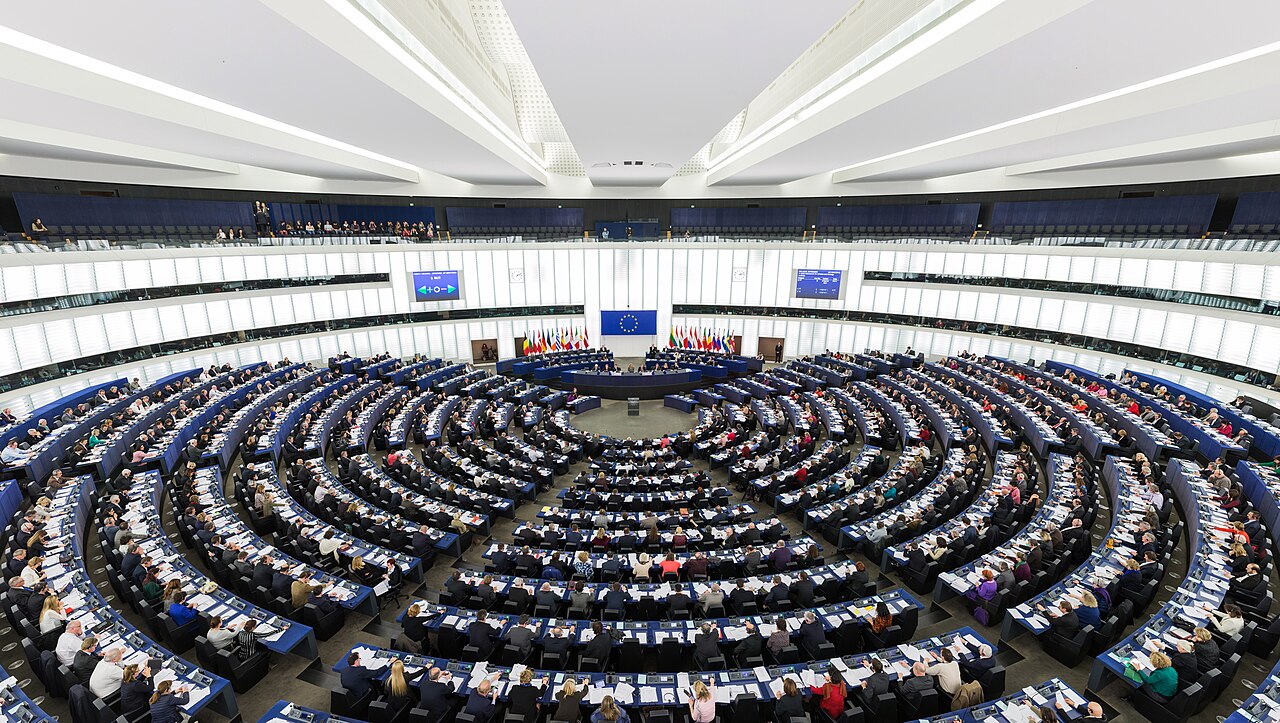
Image context: the cover uses a real archival photograph of the European Parliament hemicycle in Strasbourg because this story turns on how a parliamentary vote and a Council-Parliament settlement redefined an existing instrument. Border imagery would overstate the event; the live change is institutional design.[8]
Fact file
- Vote result: Parliament approved the renewed GSP on April 28, 2026, by 459-127-70.[1]
- Application date: the revised framework is set to apply from January 1, 2027.[2][3][4]
- Country coverage: the Commission says the new scheme will provide reduced or zero tariffs to imports from 65 developing countries.[3][4]
- Core structures kept: the scheme still rests on Standard GSP, GSP+, and Everything But Arms (EBA).[2][3]
- New political lever: tariff preferences can now be tied to cooperation on readmission of a beneficiary country's own nationals who are irregularly present in the EU.[2][3]
- Guardrails around that lever: Parliament says the mechanism comes with a longer evaluation procedure, at least 12 months of engagement, and a two-year delay before the readmission condition can be applied to least developed countries.[1][6][7]
- Agricultural protection: Parliament says an automatic rice safeguard triggers after a 45% surge over a 10-year average; the Commission frames it as a rice-import surge above historical averages that can suspend preferences and impose a tariff-rate quota the following year.[1][3][6]
What changed in practice
The easiest way to miss the story is to look only at continuity. Yes, the GSP still advertises itself as the EU's flagship trade-and-development instrument. Yes, it still offers broad preferential access to poorer countries and keeps EBA in place for least developed countries.[3][4] The Commission's April 28 note leans hard on that continuity, describing the renewed GSP as support for poverty reduction and sustainable development at a time of global uncertainty.[4]
But the legal and political shape of the instrument has shifted over several steps. The Commission's 2021 proposal already tried to widen the scheme beyond classic human-rights and labor conditionality by adding stronger climate, environmental, and governance hooks.[5] The decisive December 2025 Council-Parliament provisional agreement then added a direct link between trade preferences and cooperation on migration readmission.[2] Parliament's April 2026 vote locked that bargain into the file.[1]
That sequence matters because it changes what GSP is for. Under the older public story, preferences were mainly a development incentive with sustainability conditions attached. Under the renewed story, preferences are also part of a broader external-relations toolkit. Trade access still rewards development and standards compliance, but it now also helps the EU pressure third countries on migration cooperation.[2][3][5][7]
Why the readmission clause matters even if it is hard to trigger
The strongest counterargument is obvious: if the readmission conditionality is surrounded by procedures, delays, and political caution, then perhaps it is mostly symbolic. There is evidence for that view. Parliament's own account says MEPs inserted stricter criteria before preferences can be withdrawn for non-cooperation on migrant readmission.[1] Brussels Times reports that this includes a longer evaluation process and at least a year of mandatory engagement with the country concerned, while least developed countries get an extra two-year delay.[6] EUobserver also quoted Bernd Lange saying the conditionality would be "very hard to trigger" in practice.[7]
That procedural thickness does not erase the significance of the clause. It tells you where the EU wants bargaining power to sit. A sanction does not need to be frequently used to matter; sometimes it changes the negotiation landscape simply by existing inside the instrument. Once readmission cooperation becomes an explicit condition of tariff preferences, development policy is no longer insulated from migration politics. Ministries, diplomats, and partner governments now have to read the scheme as a mixed signal: market access and sustainability incentives on one side, return-cooperation expectations on the other.[2][3][7]
This is the real analytical shift. The readmission provision does not replace the development rationale. It overlays a second rationale on top of it. That makes the GSP less legible as a single-purpose anti-poverty tool and more legible as a multi-objective foreign-policy mechanism.[2][3][5]
Why the development lane still remains real
It would be equally wrong to flatten the renewed GSP into a pure migration story. The development core still has material weight. The Commission says the new framework will cover 65 developing countries for the next decade and keep EBA in place indefinitely for the world's least developed countries.[4] The Q&A also says countries graduating from UN least-developed status keep a generous transition: Bangladesh, Lao PDR, and Nepal are scheduled to graduate in 2026 but can continue benefiting from EBA preferences at least through the end of 2029, and can try to shift into GSP+ if they meet the conditions.[3]
The sustainability side is also thicker than before. The revised scheme expands the convention set to 32 relevant conventions, adds instruments such as the Convention on the Rights of Persons with Disabilities and the Optional Protocol on the Involvement of Children in Armed Conflict, and ties GSP+ more explicitly to implementation plans and monitoring.[1][3][5] That is not cosmetic language. It means the EU still wants the scheme to act as a governance and standards channel, not only a customs preference.
So the best reading is layered. The old development instrument survives, but it survives in a more crowded policy architecture. Poverty reduction, standards enforcement, migration cooperation, and agricultural protection are now packed more tightly together than before.[1][2][3][4]
Why rice and safeguards belong to the same story
The rice provision can look like a side issue, yet it reinforces the same broader conclusion. Parliament highlights a new automatic safeguard for rice, while the Commission describes a mechanism that can suspend preferences for the rest of the year and impose a tariff-rate quota the next year when imports surge above historical norms.[1][3] The Council's December agreement also describes a more active safeguard logic for sensitive imports, including textiles and ethanol, plus a stronger surveillance mechanism for agricultural disturbances.[2]
This matters because it shows the revised GSP is not only about values and migration. It is also about domestic political manageability inside the EU. If Brussels wants to keep a generous preference scheme alive through a more protectionist and politically fragmented period, it has to show member states and producer groups that it can respond faster when imports spike.[1][2][3][6] In that sense, the rice safeguard and the readmission clause are parallel moves. Both make the scheme easier to defend politically at home.
What to watch next
The first checkpoint is the remaining formal path to publication and application. Parliament has voted, the political settlement with the Council is already in place, and the new framework is scheduled to apply from January 1, 2027.[1][2][3] The second checkpoint is implementation detail: how the Commission describes insufficient readmission cooperation, how often it invokes engagement procedures, and whether the clause remains mainly deterrent or becomes an active negotiating tool.[2][3][7]
The third checkpoint is partner-country adaptation. Existing GSP+ beneficiaries will need to reapply under the new admission rules, including the expanded convention set and implementation plans.[3] The fourth is whether the safeguard machinery changes the politics of the scheme inside Europe. If rice or other sensitive sectors become regular flashpoints, that will tell you the revised GSP is being used not just as foreign policy, but as a domestic coalition-management device too.[1][2][3]
The narrow conclusion is the useful one. As of May 6, 2026, the renewed EU GSP still carries its development label honestly enough: it remains a tariff-preference system for lower-income countries and keeps a real sustainability lane.[3][4][5] But the sharper news signal is that Brussels has now written migration leverage and stronger defensive safeguards directly into the same tariff instrument.[1][2][3] That is a meaningful change in what the scheme is expected to do, even if the new tools are used sparingly.
Sources
- European Parliament, "Parliament endorses renewed EU trade instrument for development" (April 28, 2026).
- Council of the European Union, "Trade: Council and Parliament strike a deal to reinforce rules on trade preferences to developing countries" (December 1, 2025; updated January 9, 2026).
- European Commission, "Questions & Answers on the new EU Generalised Scheme of Preferences."
- European Commission, "New Generalised Scheme of Preferences approved for application in 2027" (April 28, 2026).
- European Commission, "Commission proposes new EU Generalised Scheme of Preferences to promote sustainable development in low-income countries" (September 22, 2021).
- The Brussels Times, "MEPs toughen trade scheme rules with stricter human rights, migration criteria" (April 28, 2026).
- EUobserver, "MEPs vote to slap tariffs on countries that refuse to take back migrants" (April 28, 2026).
- Wikimedia Commons, "File:European Parliament Strasbourg Hemicycle - Diliff.jpg" - source page for the photograph used with this article.