As of 2026-03-28 04:35 UTC, the European Union's Savings and Investments Union should not be read mainly as a campaign to persuade households to buy more investment products. The live file in Brussels is narrower and more consequential: a legislative push to change how capital markets are supervised, how market infrastructure scales across borders, and how much room member states are willing to give the European Securities and Markets Authority (ESMA).[2][3][6][8]
That shift matters because the branding can mislead. The SIU strategy launched in March 2025 with a broad promise: connect savings to productive investment, widen financing options for companies, and help mobilise the capital Europe says it needs for competitiveness, climate, technology, and security.[1][5] But by late March 2026, the part of the agenda moving through the Council is not the soft retail layer. It is the market-integration and supervision package: the hard-plumbing file that decides whether the EU really wants a more centralised capital-markets architecture or merely a cleaner slogan about savings.[2][4][6][7][8]
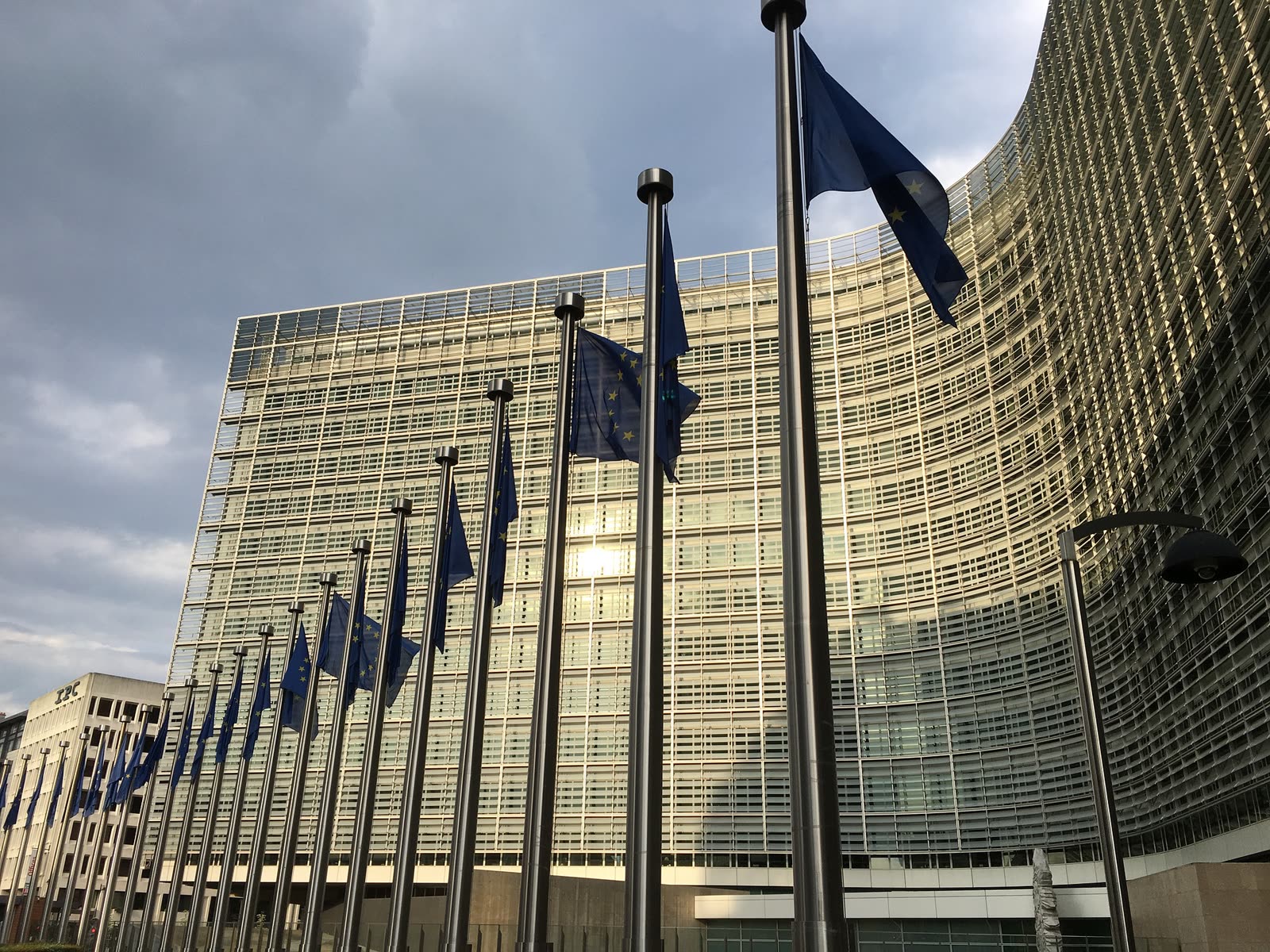
Image context: the header photo shows the Berlaymont building in Brussels, used here because this story is about EU-level rulemaking and supervisory design, not about a single trading-day market move.[9]
What the SIU was supposed to do
The Commission's strategy page from 19 March 2025 sets the high-level case clearly. Europe says it needs much more private capital, especially for small and medium-sized firms and innovative companies, and it argues that deeper capital markets must sit alongside banking integration if savings are going to move more efficiently into investment.[1] The Council's own explainer sharpens the political sales pitch with two numbers: around EUR10 trillion of household savings sit in low-yield deposits, and a genuine SIU could redirect hundreds of billions of euro a year toward the European economy.[5]
Read that way, SIU sounds like a household-finance story with a competitiveness gloss. But the policy architecture underneath it always had four strands, and one of them was explicit from the start: efficient supervision in the single market.[4][5] That strand is now carrying the real weight.
Why the current fight is about supervision, not just savings
The decisive turn came on 4 December 2025, when the Commission published the market integration and supervision package.[2] The package is not a single retail-investor reform. It is a three-part legislative set: a master regulation, a master directive, and a new settlement finality regulation.[2][7] Its stated purpose is to remove barriers to cross-border activity, improve market functioning, and simplify the regulatory and supervisory framework so firms can scale more easily across the single market.[2][7]
The European Parliament's think tank briefing on the master regulation is especially useful because it strips away the marketing layer. It says the package is trying to address fragmentation created by uneven national supervision, and that the master regulation would primarily transfer supervisory powers to ESMA in some specific markets and areas, strengthen ESMA's coordination instruments, and modify its governance.[3] That is the hinge. Once the debate is framed that way, SIU becomes less a conversation about whether Europeans save enough and more a conversation about where supervisory authority should live.
This is also where the retail rhetoric starts to matter less. A separate Parliament briefing on the wider SIU notes that the Commission's financial-literacy and savings-account initiatives launched in September 2025 were not legislative proposals.[4] By contrast, the market-integration package is legislative and operational. It is the part that can actually rearrange incentives, supervisory leverage, and cross-border market structure in the near term.[2][4]
What changed in March 2026
The 10 March 2026 ECOFIN meeting turned this from a strategy narrative into an active political negotiation.[6][7] Ministers exchanged views on the market integration and supervision package, and the Council's readout showed both momentum and friction. There was broad support for accelerated technical work, but member states split on the supervision question itself.[6]
Some governments backed the Commission's stronger ESMA role. Others argued that the real value lies in better supervisory convergence and coordination among national authorities rather than a larger EU-level supervisor.[6] A further group warned about unintended effects on smaller national financial markets.[6] That three-way split is the real content of the story. Europe is not debating whether capital markets should matter. It is debating whether market integration can happen without upsetting national supervisory control and local market structures.
The Council's background brief for that meeting makes the stakes even clearer. It describes the package as a central pillar of the SIU, says it would fundamentally restructure the single market for capital, and states that it is meant to create conditions for market-led consolidation across trading, post-trading, asset management, and emerging technologies.[7] In other words, this is not only a securities-law cleanup. It is an attempt to make cross-border scale easier and more normal.
Why the next week matters more than the last year of speeches
The strongest sign that SIU has moved into an operational phase is procedural. On 17 March 2026, the Council secretariat circulated a notice for the Working Party on Financial Services and the Banking Union. It set 30 and 31 March 2026 meetings dedicated to the market integration and supervision package, specifically the master regulation and master directive.[8]
That is the point where political language starts turning into article-by-article bargaining. Once a file reaches that stage, the live questions are not abstract. They become specific:
- Which supervisory powers move to ESMA, and which remain national?
- How far will member states go in removing cross-border barriers that currently protect local market structures?
- Will the package really support consolidation in trading and post-trading, or will that ambition be softened in compromise text?[3][6][7][8]
These are not secondary details. They determine whether the SIU ends up as a genuine integration project or as a partial harmonisation exercise that leaves the basic fragmentation pattern intact.
Who should care now
The first audience is market infrastructure operators, exchanges, post-trade firms, asset managers, and cross-border intermediaries. The package is written directly into their operating environment.[2][3][7] If the rules simplify scaling across jurisdictions and supervision becomes more consistent, these firms gain a clearer single-market pathway. If the final deal stops at modest convergence language, many of the old frictions remain.
The second audience is national ministries and supervisors in smaller markets. The Council readout shows why: some delegations are explicitly worried that a new framework could have negative effects on smaller domestic markets.[6] That is a real political fault line, not a drafting footnote.
The third audience is anyone still reading SIU as a consumer-finance awareness drive. The retail layer still exists, but the March calendar shows where the centre of gravity has moved. The near-term file is about supervision, market structure, and whether Europe is willing to centralise enough authority to make cross-border capital markets behave more like one market.[3][4][6][8]
What to watch over the next 30 to 90 days
- Whether Council working-party discussions preserve the Commission's stronger ESMA logic or trim it back toward coordination-only language.[3][6][8]
- Whether the package keeps its market-structure ambition across trading, post-trading, and settlement rather than narrowing into a smaller supervisory tweak.[2][7]
- Whether member-state concern about smaller national markets hardens into blocking coalitions or stays manageable through technical carve-outs.[6]
- Whether Parliament's reading keeps the file centred on integration and scale, or rebalances the debate toward narrower consumer-facing SIU elements.[3][4]
The cleanest way to read the SIU on 28 March 2026 is therefore simple. The political slogan is still "savings and investments." The live legislative contest is about supervision, market infrastructure, and the governance conditions for cross-border scale. If that contest stalls, the EU will still have an SIU narrative. What it may not have is the more integrated capital market that narrative is supposed to produce.[2][3][6][7][8]
Sources
- European Commission, "Savings and investments union strategy to enhance financial opportunities for EU citizens and businesses" (19 March 2025).
- European Commission, "Market integration and supervision package" (4 December 2025).
- European Parliamentary Research Service, "Capital markets integration and supervision: Master regulation" (16 February 2026).
- European Parliamentary Research Service, "Savings and investments union: Overview and state of play" (2025 briefing PDF).
- Council of the European Union, "Savings and investments union" policy page.
- Council of the European Union, "Economic and Financial Affairs Council, 10 March 2026" main results page.
- Council of the European Union, "Background brief 6 March 2026 Economic and Financial Affairs Council 10 March 2026, Brussels" (PDF).
- Council of the European Union, "CM 2105/26: Notice of meeting and provisional agenda" (17 March 2026 PDF).
- Wikimedia Commons file page for the Berlaymont building photograph used as the article image.