As of 2026-03-27T20:10:36Z (UTC), the European Commission's March 10 clean-energy investment strategy is best read as an execution brief about finance rather than a fresh statement of climate ambition. The headline number is large enough to make that clear on its own: the Commission says the energy transition now requires about EUR 660 billion a year through 2030, rising to EUR 695 billion annually between 2031 and 2040.[1][2] That scale pushes the debate away from whether the EU wants more clean energy and toward a harder question: can Europe make grids, efficiency projects, and newer technologies investable fast enough for private capital to close the gap?[1][2]
The answer proposed in Brussels is not "spend more public money and hope it scales." The strategy explicitly says public money has to behave as a catalyst that de-risks projects, stretches financing costs over asset lifetimes, and attracts a wider investor base, especially institutional capital.[1][2] In other words, the Commission is now treating financing architecture itself as energy policy.
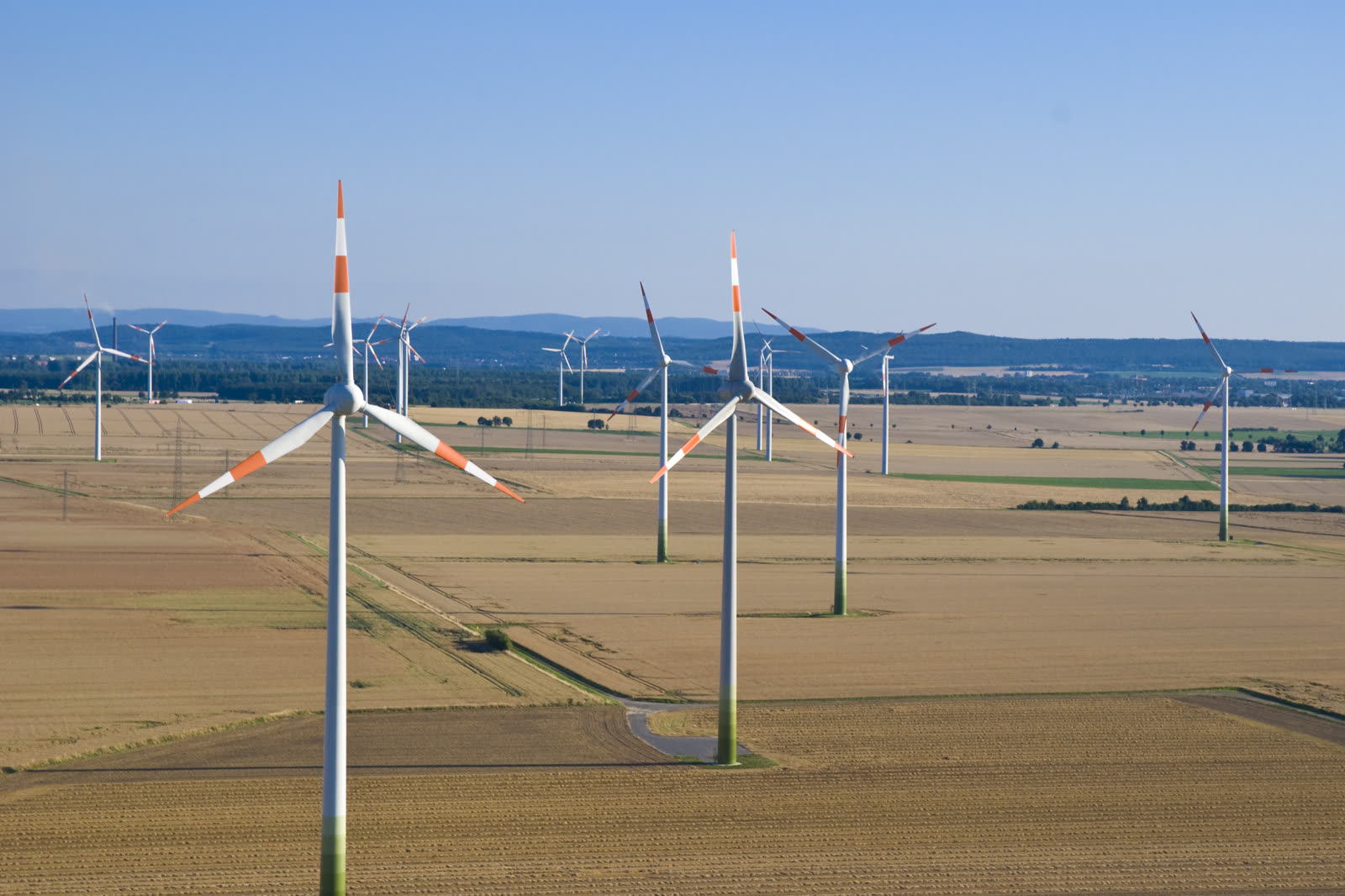
Image context: the header photo shows turbines and transmission infrastructure together, which matches the article's central point that new generation is not the scarce political concept anymore; the scarce thing is bankable infrastructure that can actually connect, finance, and deliver power at system scale.[6]
What changed
- The Commission adopted the Clean Energy Investment Strategy on March 10, 2026, framing it as a tool to mobilise additional private investment rather than a stand-alone subsidy package.[1][2]
- The European Investment Bank intends to provide over EUR 75 billion of financing over the next three years in support of the strategy and the broader energy transition.[1]
- The most concrete grid measure is a planned strategic infrastructure investment fund with an indicative EIB commitment of up to EUR 500 million to help provide equity for electricity-grid operators.[1][2]
- The Commission and the EIB also want to explore a facility that would let operators securitise future revenue streams in exchange for earlier liquidity, which is a capital-markets move rather than a classic grant programme.[1][2]
- On efficiency, the strategy includes a EUR 500 million pilot to accelerate "energy efficiency as a service" financing models in 2026.[1][2]
Why this matters now
The reason this deserves to be read as a news brief rather than a generic policy note is that it changes where the next European energy story probably sits. For most of the past cycle, the public argument was dominated by targets, industrial strategy, and crisis-era affordability. Those elements remain in place. The Clean Industrial Deal still says the EU will mobilise over EUR 100 billion to support EU-made clean manufacturing, and the Commission's affordable-energy package still centres lower bills, faster electrification, and stronger interconnection.[3][4] But the March 10 strategy narrows the operational bottleneck. If the investment need is several hundred billion euros a year, then the system does not fail first on narrative. It fails on whether assets can reach a form that insurers, pension funds, banks, and infrastructure investors will actually fund at scale.[1][2][3][4]
That is why the grid sections matter more than the slogans. The Communication says plainly that lengthy permitting and grid-connection processes still slow deployment, fragmented markets raise transaction costs, and in many areas the full system value of clean-energy investments is not reflected in project economics.[2] Put differently, Europe can approve more generation on paper and still lose time if network operators cannot raise equity smoothly, if small operators remain stuck in narrow bank channels, or if future cash flows stay too illiquid to pull in deeper pools of capital.[2]
This is also where the strategy becomes more interesting than a normal "funding announced" item. Its core tools sit at the junction of infrastructure finance and policy credibility: equity support for grids, securitisation of revenue streams, efficiency-project aggregation, and a standing mechanism to collect investor feedback through an Energy Transition Investment Council.[1][2] Those are not symbolic additions. They are attempts to turn projects that are socially necessary but financially awkward into assets the market can underwrite.
Where the strategy can still stall
The Commission's own document gives the caution signs. Public funding capacity remains far below the scale of need, so the strategy works only if it genuinely crowds in private money rather than displacing it.[2] The same document also notes that market fragmentation, slow permits, and connection delays keep raising risk and cost even where the policy direction is already clear.[2] That means the strategy can succeed on paper and still disappoint in practice if the financing tools arrive before projects become faster to permit, easier to aggregate, and more predictable at the grid-connection stage.
There is also a sequencing problem. The Communication says the first meeting of the Energy Transition Investment Council will be convened in Q2 2026, while a broader post-2030 legislative package and an Energy-System Needs Assessment for the Clean Transition are due in Q4 2026.[2] That gives Brussels a relatively short runway to prove that this is a live financing programme rather than a bridge document that mostly points to the next policy package.
What to watch in the next 90 days
- Whether the EIB and the Commission publish more operating detail on the grid equity fund and any revenue-securitisation mechanism.[1][2]
- Whether the first Energy Transition Investment Council meeting in Q2 2026 produces concrete investor-facing priorities instead of broad signalling.[2]
- Whether the affordability and clean-industrial packages start to line up with the new financing tools, especially around electrification, interconnection, and manufacturing bankability.[3][4][5]
Bottom line
The EU's clean-energy investment strategy matters because it admits where the constraint has moved. Europe already knows how to describe the transition. The harder step is financing the wires, efficiency contracts, and risk-sharing structures that let clean capacity arrive on time and on balance sheet. Read that way, March 10 was less a new climate announcement than a bankability test for the next phase of the energy system.[1][2][3][4]
Sources
- European Commission, "Commission launches strategy to accelerate clean energy investment" (March 10, 2026).
- European Commission, "Communication on the Clean Energy Investment Strategy" (COM/2026/116).
- European Commission, "Clean Industrial Deal" policy page.
- European Commission, "Commission presents measures to increase EU's energy independence and affordability" (March 10, 2026).
- European Investment Bank, The EIB Group Operational Plan 2026-2028 (January 29, 2026 PDF).
- Wikimedia Commons, "File: Windpark-Wind-Farm.jpg".